Wedding dress and clothingSouth AsiaHinduMuslim
Indian wedding clothes
Traditional garments worn by Indian couples and guests across multiple days of celebration

Indian wedding attire consists of specific regional outfits worn by the bride, groom, and guests over several days. The clothing varies significantly by geography and faith, reflecting local customs and religious beliefs.
When is Indian wedding clothes kept?
Indian wedding clothes is kept on throughout the multi-day wedding celebrations.
Attire plays a central role in Indian weddings, where couples change outfits for each distinct ceremony. These garments are not merely decorative but carry deep symbolic weight regarding marriage and future prosperity. Regional traditions dictate specific fabrics, colors, and styles that honor local heritage and religious identity.
Regional variations
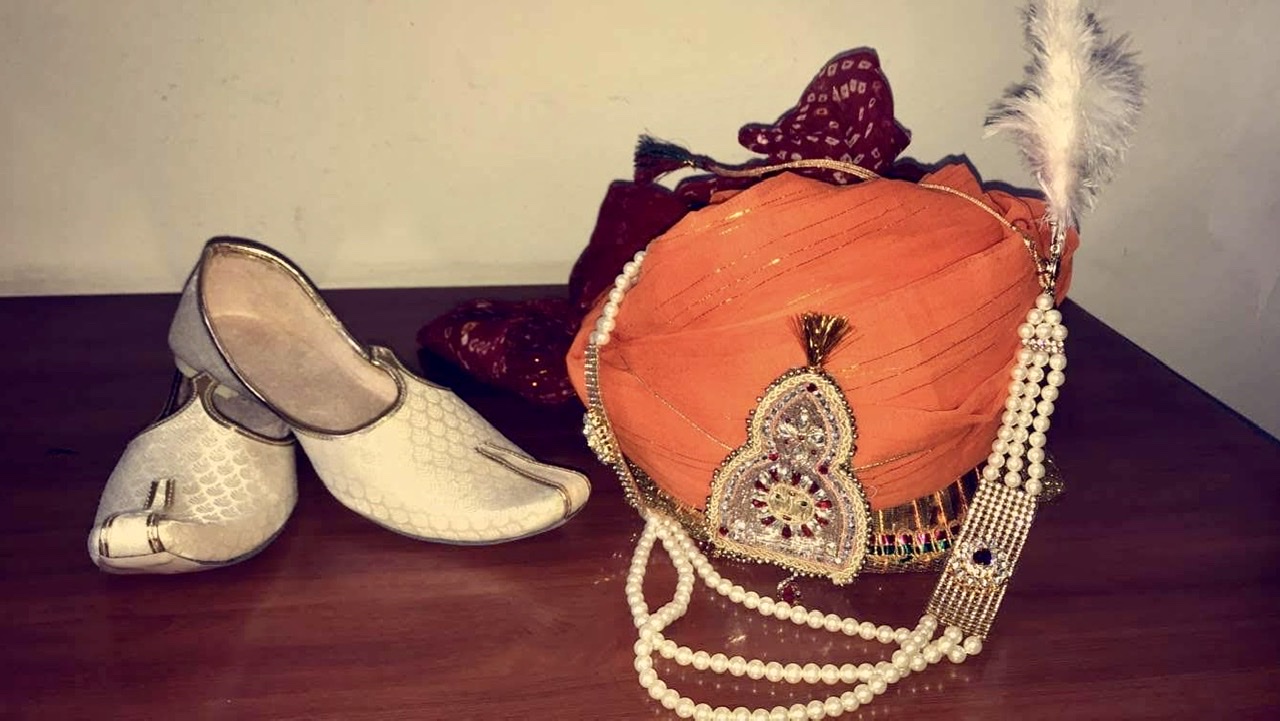
Clothing choices depend heavily on where the couple originates. Northern grooms often wear a sherwani or jodhpuri suit, while southern men may choose a dhoti, mundu, or veshti. Some southern grooms pair these with a shirt or an angavastra cloth covering the chest, and others go without a top entirely. Brides in the north typically select a lehenga, whereas those in the south prefer a sari. In the northeast, the mekhela sador is the standard choice. Each region maintains its own distinct aesthetic throughout the festivities.
Ceremonial changes
Weddings in India span multiple days, requiring the couple to don new clothes for every event. The sequence begins with rituals like tilak, sangeet, haldi, and baraat before the main union. Each occasion demands fresh attire to mark its unique significance. These pre-wedding functions have different names across regions, such as simant puja in western areas or mangalasnanam in the south. The constant changing of garments highlights the importance of each stage in the marital journey.
Faith-based customs
Religious identity shapes bridal and groom wear. Hindu brides favor red as the most auspicious color, receiving their wedding dress from the groom’s family as a blessing. Muslim grooms traditionally wear a taqiyah cap during the entire ceremony. Christian weddings in India often adapt Western styles, with grooms in black suits or tuxedos and brides in white gowns. South Canarese Christians may transition from a church gown to a sari for reception dances, blending traditions.
Guest appearance
Attendees also dress formally, often incorporating gold jewelry into their outfits. Women frequently apply intricate henna designs to their hands, arms, legs, and feet. This adornment adds to the festive atmosphere and signifies beauty and good fortune. The collective visual splendor of guests wearing bright colors and metallic accessories complements the couple’s attire, creating a unified celebratory environment.
How Indian wedding clothes is kept
The couple wears specific traditional garments determined by their regional background and religion. Grooms in the north don sherwanis, while southern grooms wear dhotis or veshtis. Brides choose lehengas in the north and saris in the south. Guests wear formal ethnic wear and gold jewelry. Henna is applied to women’s bodies. Outfits change daily for each ritual, from tilak to the final reception. Christian couples may mix Western suits and gowns with local saris.
When and where
It occurs throughout the multi-day wedding period. New clothes are worn for every separate ceremony, including pre-wedding events like sangeet and haldi, and the main wedding day. The timing is tied to the specific ritual schedule rather than a single calendar date.
This custom is practiced across India, with distinct regional styles prevailing in the north, south, east, and northeast. It is also observed among Indian Christian and Muslim communities, who follow specific religious guidelines for their wedding attire.
What Indian wedding clothes means
The attire symbolizes the meaning of marriage and the life that follows. Red represents auspiciousness for Hindu brides. Changing clothes marks the progression through different stages of commitment. Gold jewelry and henna signify wealth, beauty, and blessings. The variety of styles reflects the cultural diversity and unity of the nation.
Who takes part
- The bride: Wears a regional outfit like a sari or lehenga, often in red, and receives it as a gift
- The groom: Wears a sherwani, dhoti, or veshti depending on his region and faith
- Female guests: Wear formal ethnic wear and apply henna patterns to their skin
- The groom's family: Provides the bride's wedding dress as a shagun or blessing
If you are a guest
Guests attend in formal ethnic clothing, often accessorized with gold jewelry. Women commonly get henna applied to their hands, arms, and feet. The attire is bright and celebratory, matching the festive mood of the multi-day event. Guests do not need to bring gifts specifically related to clothing, as the focus is on shared visual celebration.
Then and now
Christian grooms in South Canara stopped wearing dhotis in the 1960s due to Western influence. Modern weddings may blend traditional and contemporary styles. Despite these changes, the core practice of wearing specific regional and religious attire remains strong across the country.
On the wedding table
Symbols: The colour red Gold and jewellery Henna


Questions people ask about Indian wedding clothes
When is Indian wedding clothes kept?
Indian wedding clothes is kept on throughout the multi-day wedding celebrations.
What does the bride wear?
Brides wear regional outfits like saris in the south or lehengas in the north. Red is the preferred color for Hindu brides, and the dress is often given by the groom's family as a blessing.
Why do they change clothes?
Indian weddings last several days. Couples wear new outfits for each ceremony, such as tilak, sangeet, and the main wedding, to mark the significance of each ritual.
What do guests wear?
Guests wear formal ethnic attire and gold jewelry. Women often apply henna to their skin. The clothing is bright and celebratory, reflecting the festive nature of the event.
See also
 Kanchipuram silk sariThe heavy silk bridal garment woven in Kanchipuram with contrasting borders and gold zari.KasavuThe white cotton and gold border attire worn by Malayalis for weddings and festivals.MadisarThe nine-yard sari drape worn by Tamil Brahmin women during weddings and religious rites.
 BandhaniA traditional Indian tie-dye method that creates intricate dot patterns by binding small sections of cloth before dyeing
Good reading and sources
The facts on this page come from the Wikipedia article "Indian wedding clothes", written by its contributors and used under the CC BY-SA 4.0 licence, and from its Wikidata record (CC0). EveryShaadi rewrote the text in its own words, with AI assistance, and compares every page with the article to make sure no passage is copied. It may be reused under the same CC BY-SA 4.0 licence with a link back.
It may contain mistakes. Wedding customs differ from one family, village and community to the next, and the people who keep them know them best. If something is wrong, tell us. Last refreshed 2026-10-05.
More from India
All the traditions of India
🇮🇳 Kanchipuram, IndiaKanchipuram silk sari
The heavy silk bridal garment woven in Kanchipuram with contrasting borders and gold zari.Attire · The ceremony
🇮🇳 Kochi, IndiaKasavuകസാവ്
The white cotton and gold border attire worn by Malayalis for weddings and festivals.Attire · The weeks before
🇮🇳 IndiaMadisarமடிசார் (Madisar)
The nine-yard sari drape worn by Tamil Brahmin women during weddings and religious rites.Attire · The ceremony
🇮🇳 Bhuj, India and 1 moreBandhani
A traditional Indian tie-dye method that creates intricate dot patterns by binding small sections of cloth before dyeingAttire · Engagement and betrothal
The same idea elsewhere
The wedding dress and what the couple wear compared 🇼🇸 Samoa and 3 moreʻIe tōga
Prestige woven mats exchanged at Samoan weddings to honor family ties and chiefly status.Attire · The ceremony
🇼🇸 Samoa and 3 moreʻIe tōga
Prestige woven mats exchanged at Samoan weddings to honor family ties and chiefly status.Attire · The ceremony
 🇳🇬 Lagos, Nigeria and 3 moreAso ebiAsọ-Ẹbí
Matching outfits worn by groups to show solidarity at Yoruba weddings and other ceremoniesAttire · The weeks before
🇳🇬 Lagos, Nigeria and 3 moreAso ebiAsọ-Ẹbí
Matching outfits worn by groups to show solidarity at Yoruba weddings and other ceremoniesAttire · The weeks before
 🇲🇱 MaliWeddings in Mali
Multi-day Malian wedding traditions blending Islamic rites, civil law, and local customs with bazin attire.Rite · Engagement and betrothal
🇲🇱 MaliWeddings in Mali
Multi-day Malian wedding traditions blending Islamic rites, civil law, and local customs with bazin attire.Rite · Engagement and betrothal
 🇳🇬 NigeriaYoruba traditional weddingIgbeyawo
The multi-day Yoruba marriage ceremony featuring traditional attire, family introductions, and the Eru Iyawo gift list.Attire · Engagement and betrothal
🇳🇬 NigeriaYoruba traditional weddingIgbeyawo
The multi-day Yoruba marriage ceremony featuring traditional attire, family introductions, and the Eru Iyawo gift list.Attire · Engagement and betrothal