Music, dance and processionSub-Saharan Africa
Bakisimba
A lively Baganda circle dance performed at weddings and royal ceremonies in Uganda.

Bakisimba is a traditional dance of the Baganda people from the Buganda Kingdom in Central Uganda. It is a vigorous performance featuring rhythmic footwork and drumming, often danced in a circle during weddings and other festive community gatherings.
When is Bakisimba kept?
Bakisimba is kept during weddings, coronations, and cultural celebrations.
The Bakisimba dance brings communities together through energetic movement and music. Originating in the Buganda Kingdom of Uganda, this traditional form is a staple at weddings and royal events. Dancers move to the beat of drums and rattles, celebrating union and heritage with joyous steps that honor ancestors and invite prosperity.
Origins and history
The dance traces its roots to the ancient Buganda Royal Court. Legend says it began when King Ssuuna moved while intoxicated, creating a rhythm that others followed. For centuries, the Baganda people have kept this tradition alive. It started as a way to honor spirits and seek protection from ancestors. Over time, it evolved into a symbol of unity and pride. Today, it remains one of the most common dances in Uganda, linking modern celebrations to deep historical roots.
How the dance is kept
Men and women join in a circle to perform the dance. Individual dancers take turns showing their skills while the group claps and sings. The movements are vigorous, involving jumps, stomps, and hip motions. Performers use hand gestures to add expression. The rhythm comes from instruments like gourd rattles called Nseege and cow horn trumpets known as engoombe. Drums such as the Mpuunyi and Nankasa provide the steady beat that guides the dancers' feet.
Meaning and significance
This dance tells stories and expresses emotions for the community. It marks important milestones in the lives of individuals and families. By dancing together, people reinforce bonds between generations. It serves as a source of identity, helping members connect with their heritage. The performance embodies togetherness and harmony. It also brings good luck and prosperity to those who watch and participate, making it essential for joyful occasions like weddings.
How Bakisimba is kept
Dancers form a circle where men and women participate equally. Individuals step forward to showcase energetic moves while the rest clap and sing. The choreography includes stomps, jumps, and hip movements set to drums and rattles. This communal structure allows everyone to share in the celebration while highlighting individual skill within the group rhythm.
When and where
It occurs at weddings, coronations, and harvest festivals. The dance fits into the reception or after-party stages of these events. Dates are set by the community calendar for specific celebrations rather than fixed annual days.
The custom belongs to the Baganda people of the Buganda Kingdom in Central Uganda. It is strongest in Uganda, where it has become part of the national cultural landscape. Performances appear at local tribal ceremonies and international festivals alike.
What Bakisimba means
The dance honors ancestors and seeks their blessings. It promotes unity and cultural preservation among the Baganda. Movements express joy and tell stories of community life. The shared rhythm reinforces social bonds and identity. Performing it invites good luck and prosperity for the couple and the wider group.
Who takes part
- The dancers: Perform vigorous steps and gestures in a circle
- The musicians: Play drums, rattles, and horns to set the rhythm
- The community: Clap, sing, and support the performers
If you are a guest
Guests stand around the dancers in a circle. They clap their hands and sing along to the music. Their participation supports the performers and adds energy to the event. Guests may join the circle later to dance themselves, sharing in the communal joy and celebration of the occasion.
Then and now
The dance has spread beyond the Baganda community. It is now a significant part of Uganda's cultural identity. Contemporary artists incorporate its elements into modern music. It appears at national events and international showcases, representing the country's diverse heritage to global audiences.


Questions people ask about Bakisimba
When is Bakisimba kept?
Bakisimba is kept during weddings, coronations, and cultural celebrations.
What is Bakisimba?
It is a traditional dance of the Baganda people from Uganda. It features energetic movements, drumming, and circle formations. The dance is performed at weddings and cultural events to celebrate community and heritage.
Is it legal?
Yes. Bakisimba is a celebrated cultural tradition in Uganda. There are no legal restrictions on performing it. It is recognized as an important part of the nation's intangible cultural heritage.
See also
 EkitaguriroA traditional Ankole dance celebrating cattle and community milestones like marriage.GazeA traditional dance of the Lugbara people in Northern Uganda performed at weddings and festivals
 LarakarakaAn Acholi courtship dance where young men display agility to attract a partner.
Good reading and sources
The facts on this page come from the Wikipedia article "Bakisimba", written by its contributors and used under the CC BY-SA 4.0 licence, and from its Wikidata record (CC0). EveryShaadi rewrote the text in its own words, with AI assistance, and compares every page with the article to make sure no passage is copied. It may be reused under the same CC BY-SA 4.0 licence with a link back.
It may contain mistakes. Wedding customs differ from one family, village and community to the next, and the people who keep them know them best. If something is wrong, tell us. Last refreshed 2026-10-06.
More from Uganda
All the traditions of Uganda
🇺🇬 UgandaEkitaguriro
A traditional Ankole dance celebrating cattle and community milestones like marriage.Performance · The wedding feast
🇺🇬 UgandaGaze
A traditional dance of the Lugbara people in Northern Uganda performed at weddings and festivalsPerformance · Engagement and betrothal
 🇺🇬 UgandaOkeme
A lively Lango folk dance performed at weddings to bring the community together.Performance · Engagement and betrothal
🇺🇬 UgandaOkeme
A lively Lango folk dance performed at weddings to bring the community together.Performance · Engagement and betrothal
The same idea elsewhere
Wedding music and the dance floor compared 🇹🇷 Kayseri, Turkey and 4 moreHalay
A traditional line and circle dance performed across Turkey and surrounding regions at weddings.Performance · The ceremony
🇹🇷 Kayseri, Turkey and 4 moreHalay
A traditional line and circle dance performed across Turkey and surrounding regions at weddings.Performance · The ceremony
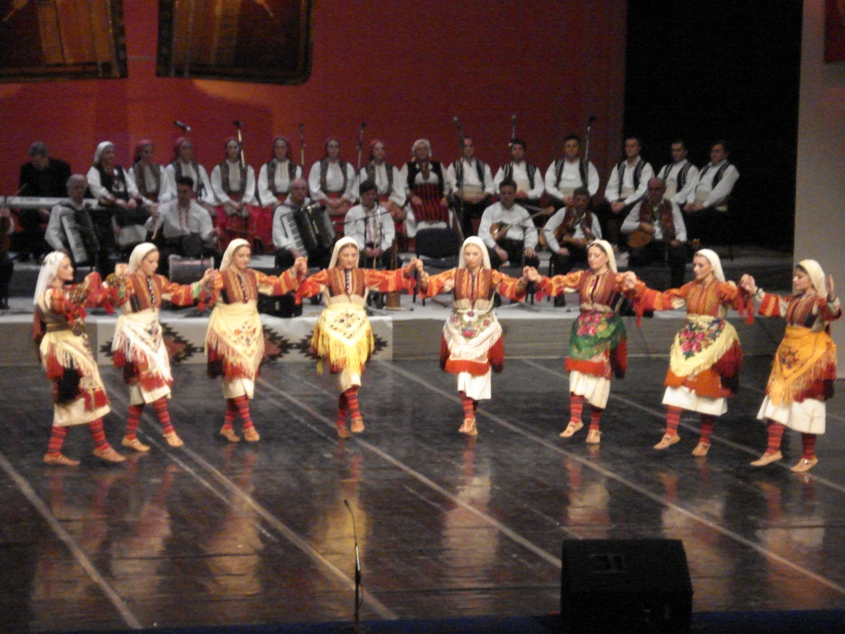 🇷🇴 Romania and 7 moreHorahora (Romanian), horo (Bulgarian), oro (Macedonian), horah (Hebrew)
A circle dance held at weddings across Southeast Europe and among Jewish communities worldwide.Performance · Reception, dance and gifts
🇷🇴 Romania and 7 moreHorahora (Romanian), horo (Bulgarian), oro (Macedonian), horah (Hebrew)
A circle dance held at weddings across Southeast Europe and among Jewish communities worldwide.Performance · Reception, dance and gifts
 🇱🇹 Lithuania and 1 moreLithuanian wedding songsvestuvinės dainos
The polyphonic songs and weeping rituals that mark a Lithuanian bride's transition to her new family.Performance · Engagement and betrothal
🇱🇹 Lithuania and 1 moreLithuanian wedding songsvestuvinės dainos
The polyphonic songs and weeping rituals that mark a Lithuanian bride's transition to her new family.Performance · Engagement and betrothal
 🇦🇿 AzerbaijanAzerbaijani wedding traditionsAzərbaycanın toy adətləri
The multi-step family rituals of Azerbaijani weddings, from matchmaking to the henna night.Rite · Finding a match
🇦🇿 AzerbaijanAzerbaijani wedding traditionsAzərbaycanın toy adətləri
The multi-step family rituals of Azerbaijani weddings, from matchmaking to the henna night.Rite · Finding a match