Wedding dress and clothingSub-Saharan Africa
Dashiki suit
The tailored tunic and trousers worn by grooms in West African and diaspora weddings
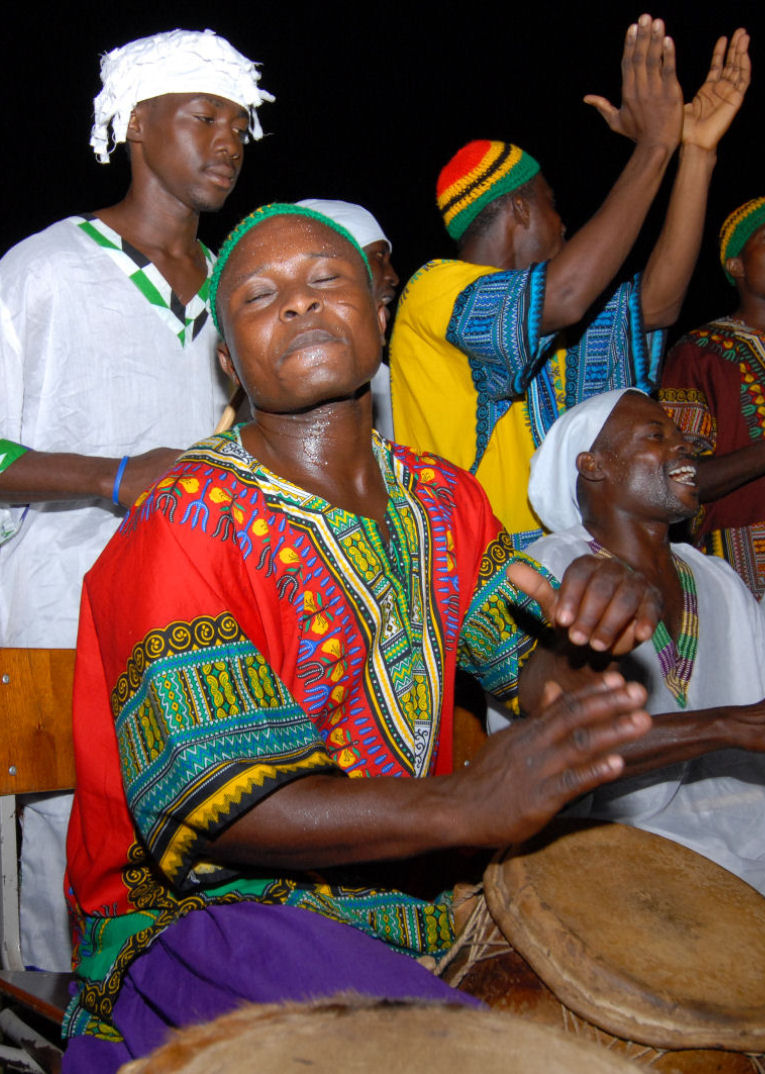
The dashiki suit is a formal wedding outfit for grooms in West Africa. It consists of an embroidered tunic and matching pants. The style spread to the African diaspora as a symbol of heritage.
When is Dashiki suit kept?
Dashiki suit is kept during the wedding ceremony.
Grooms in West Africa wear the dashiki suit to mark their union. This tailored ensemble signals status and cultural pride. The design draws from historical trade patterns and local textile arts. It remains a staple for ceremonial dress across the region.
Design and structure
The garment covers the upper body with a loose fit. An ornate V-shaped collar frames the neck. Embroidery lines the sleeves and front opening. Formal versions pair the tunic with drawstring sokoto pants. A brimless kufi cap often completes the look. Variations include ankle-length shirts called Senegalese kaftans. Some styles add a flowing gown over the trousers. These grand boubous serve as another formal option.
Historical origins
The word derives from Yoruba and Hausa terms for inner garments. The modern printed design stems from Dutch wax prints. Designer Toon van de Mannaker created patterns for Vlisco. He drew inspiration from silk tunics worn by Ethiopian noblewomen. Ghanaian music popularized specific patterns like the Angelina print. South African musicians also helped spread the aesthetic globally.
Cultural significance
African Americans adopted the dashiki during the Civil Rights era. It became a marker of Black Power and identity. The garment appeared in films and on television shows. Politicians and musicians wore it to express heritage. In Tennessee, a lawmaker faced backlash for wearing one in office. The suit remains a powerful symbol of connection to African roots.
How Dashiki suit is kept
The groom wears a tailored dashiki tunic with matching sokoto pants. He may also don a kufi cap. The outfit features intricate embroidery around the neckline. Colors vary from traditional grey to white or royal purple. Couples sometimes choose blue to signify peace. The attire is worn throughout the ceremony and reception.
When and where
Worn during the main wedding ceremony. Dates depend on local customs and family preference.
Strongest in West Africa, especially among Yoruba communities. Also common in the United States among African Americans.
What Dashiki suit means
Represents African heritage and dignity. Purple signifies royalty. Blue stands for harmony. White denotes purity. The suit connects the wearer to ancestral traditions.
Who takes part
- the groom: wears the tailored dashiki suit and kufi cap
- the bride: wears a matching or complementary traditional outfit
- tailors: create the embroidered tunic and matching pants
If you are a guest
Guests wear formal attire that respects the couple's culture. Bright colors are appropriate. Avoid black or red, which signal mourning. Bring gifts if customary in the community.
Then and now
The suit remains popular for weddings. Modern adaptations include lace fabrics. Hybrid styles mix Western skirts with male dashikis. Political figures still use it for statements.
On the wedding table
Questions people ask about Dashiki suit
When is Dashiki suit kept?
Dashiki suit is kept during the wedding ceremony.
What is a dashiki suit?
It is a formal wedding outfit for grooms. It includes an embroidered tunic and matching pants. The style originates from West Africa.
What do the colors mean?
Purple represents royalty. Blue symbolizes love and peace. Grey is traditional. White is also common for grooms.
See also
 Aso okeHand-woven cloth worn by the Yoruba for weddings and formal gatherings
 ZuriaThe ankle-length dress with woven hem bands worn by Tigrinya and Amhara women for weddings and holidays.
 Aso ebiMatching outfits worn by groups to show solidarity at Yoruba weddings and other ceremonies
 Kente clothHand-woven silk and cotton strips from Ghana that mark weddings and graduations
Good reading and sources
- Dashiki on WikipediaEncyclopedia
- More photos on Wikimedia CommonsPhotos and video
- Wikidata recordOpen data
The facts on this page come from the Wikipedia article "Dashiki", written by its contributors and used under the CC BY-SA 4.0 licence, and from its Wikidata record (CC0). EveryShaadi rewrote the text in its own words, with AI assistance, and compares every page with the article to make sure no passage is copied. It may be reused under the same CC BY-SA 4.0 licence with a link back.
It may contain mistakes. Wedding customs differ from one family, village and community to the next, and the people who keep them know them best. If something is wrong, tell us. Last refreshed 2026-10-07.
More from Nigeria
All the traditions of Nigeria
🇳🇬 Iseyin, Nigeria and 2 moreAso okeAṣọ òkè
Hand-woven cloth worn by the Yoruba for weddings and formal gatheringsAttire · The ceremony
🇳🇬 Lagos, Nigeria and 3 moreAso ebiAsọ-Ẹbí
Matching outfits worn by groups to show solidarity at Yoruba weddings and other ceremoniesAttire · The weeks before
🇬🇭 Ghana and 2 moreKente clothnwentoma
Hand-woven silk and cotton strips from Ghana that mark weddings and graduationsAttire · The ceremony
 🇳🇬 Nigeria and 2 moreGeleGèlè
The towering Yoruba head tie that crowns the bride and marks her status on the wedding day.Attire · The weeks before
🇳🇬 Nigeria and 2 moreGeleGèlè
The towering Yoruba head tie that crowns the bride and marks her status on the wedding day.Attire · The weeks before
The same idea elsewhere
The wedding dress and what the couple wear compared 🇮🇹 Rome, ItalyWeddings in ancient Rome
The religious ceremonies and attire that marked a union in the city of Rome before the rise of Christianity.Rite · The weeks before
🇺🇦 UkraineSong about the RushnykПісня про рушник (Pisnia pro rushnyk)
A Ukrainian song that celebrates the embroidered cloth used in weddings and family life.Performance · The ceremony
🇮🇹 Rome, ItalyWeddings in ancient Rome
The religious ceremonies and attire that marked a union in the city of Rome before the rise of Christianity.Rite · The weeks before
🇺🇦 UkraineSong about the RushnykПісня про рушник (Pisnia pro rushnyk)
A Ukrainian song that celebrates the embroidered cloth used in weddings and family life.Performance · The ceremony
 🇲🇽 Oaxaca, Mexico and 1 moreHuipilhuīpīlli
The traditional tunic worn by indigenous women in Mexico and Central America for weddings and daily life.Attire · The weeks before
🇲🇽 Oaxaca, Mexico and 1 moreHuipilhuīpīlli
The traditional tunic worn by indigenous women in Mexico and Central America for weddings and daily life.Attire · The weeks before
 🇲🇦 Tangier, MoroccoNegafanggafa (Tamazight); ziyyāna (Arabic)
The traditional Moroccan bridal dresser who manages the bride's appearance and wedding rituals.Attire · The weeks before
🇲🇦 Tangier, MoroccoNegafanggafa (Tamazight); ziyyāna (Arabic)
The traditional Moroccan bridal dresser who manages the bride's appearance and wedding rituals.Attire · The weeks before