Wedding dress and clothingNorth America
Hope chest
A wooden chest where a bride collects linens and gifts before her wedding.
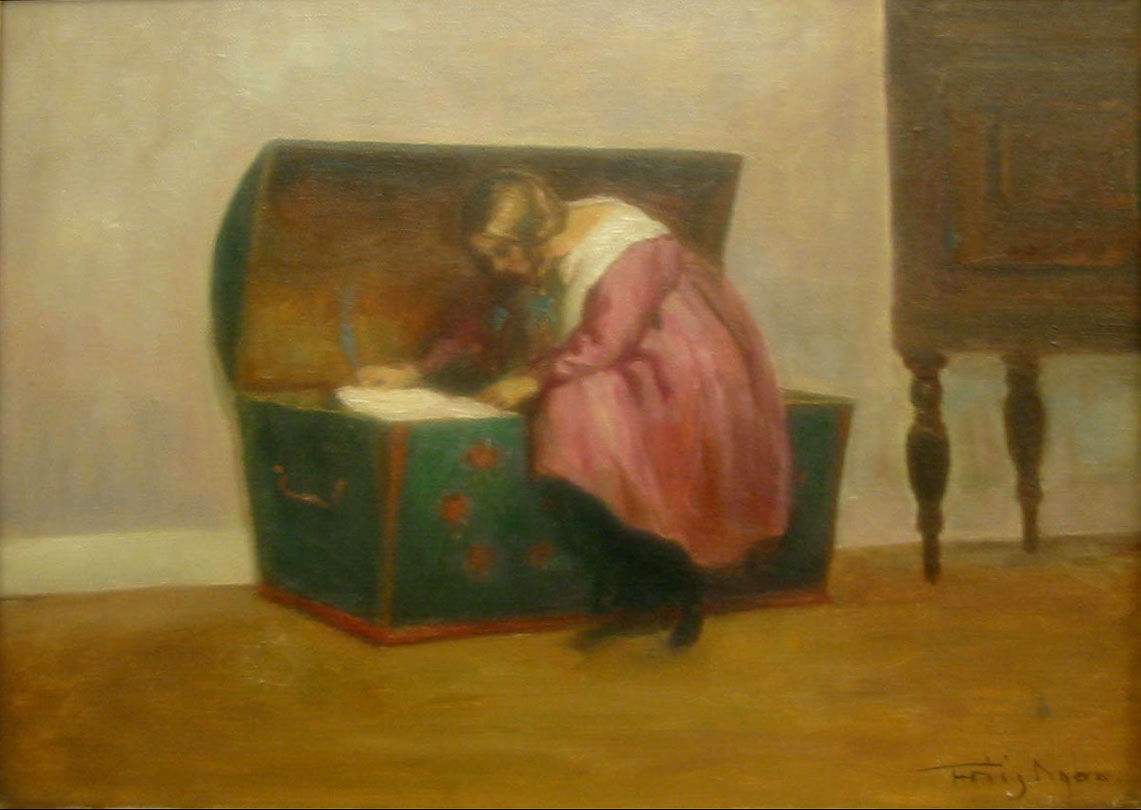
A hope chest is a piece of furniture used by unmarried women to store household goods and clothing in preparation for marriage. It was a common coming-of-age rite in the United States, the United Kingdom, and Australia until the mid-twentieth century. The practice involved collecting items like linen and quilts as part of the dowry or trousseau.
When is Hope chest kept?
Hope chest is kept during the years leading up to the wedding.
A hope chest serves as a storage vessel for a bride-to-be's personal belongings and household essentials. Historically, young women filled these chests with linens, clothing, and gifts while they were engaged. This tradition functioned as a practical step toward married life, allowing families to prepare for the new union through accumulated goods rather than immediate cash payments.
What it contains
The chest typically held items essential for setting up a new home. These included table linens, towels, bed sheets, and quilts. Some chests also contained dishware or clothing. In the United Kingdom, the term bottom drawer referred to reserving one drawer in a larger piece of furniture for this purpose. The contents represented the bride's contribution to the household, often gathered from family members and friends over time.
Historical origins
Large Italian cassoni were used for dynastic marriages in the fifteenth and sixteenth centuries. Dutch kasts and German schranks served similar purposes in Northern Europe. American settlers brought these traditions to the Midwest and Pennsylvania. Arab dower chests in Egypt held personal possessions and matching pairs for other goods. These early examples influenced the design and function of later hope chests across different cultures.
Decoration styles
Chests featured various decorative techniques depending on the region. Carving was common in oak chests during the seventeenth and eighteenth centuries. Engraving allowed for personalization, especially in Amish communities. Painting followed traditional Scandinavian and German styles. Modern Arab chests were often metal and painted red with architectural designs. Gesso and sulfur inlay added further detail to some historical pieces.
Modern changes
The custom declined significantly after the 1950s. Today, furniture makers may refer to these items as heirloom storage or general-purpose chests. The Lane Furniture Company produced cedar chests for decades but stopped production in 2001. Safety concerns led to recalls of self-locking lids due to child suffocation risks. Many owners now remove the locks entirely to ensure safety.
How Hope chest is kept
Unmarried women collected household linens, clothing, and gifts in the chest during their engagement. Family members and friends would contribute items such as quilts, towels, and dishware. The chest served as a central repository for these goods until the wedding day. After marriage, the chest often became a standard piece of furniture for the bride to use in her new home. Some chests were designed for portability if the bride moved away upon marriage.
When and where
It was kept during the engagement period, often starting when a girl reached marriageable age. The collection process took place in the years leading up to the wedding. By the mid-twentieth century, the practice had largely faded in Western countries.
The tradition was strongest in the United States, the United Kingdom, and Australia. Historical roots extend to Italy, the Netherlands, Germany, and Egypt. Different regions used specific terms like glory box or bottom drawer to describe the same concept.
What Hope chest means
The hope chest symbolized preparation for married life and domestic responsibility. It represented the bride's ability to manage a household and maintain comfort for her future family. The accumulation of goods reflected social status and familial support. It served as a tangible link between the bride's upbringing and her new role as a wife.
Who takes part
- The bride: Collects linens, clothing, and gifts in the chest
- Family members: Contributes items like quilts, towels, and dishware
- Friends: Gives small gifts or household items
- Furniture makers: Constructs and decorates the chest with carvings or paint
If you are a guest
Guests at an engagement or pre-wedding gathering might bring small household items or linens to add to the hope chest. They could offer advice or share stories about married life. The focus remained on supporting the bride's preparation for her new role within the community.
Then and now
The practice has largely disappeared in Western countries since the 1950s. Modern furniture makers view these chests as antique storage solutions rather than bridal necessities. Safety recalls have removed many original locks from older models. The tradition persists only in historical contexts or among specific cultural groups maintaining older customs.


Questions people ask about Hope chest
When is Hope chest kept?
Hope chest is kept during the years leading up to the wedding.
What is a hope chest?
A hope chest is a wooden box used by unmarried women to store household linens, clothing, and gifts in preparation for marriage. It was a common custom in the United States, the United Kingdom, and Australia until the mid-twentieth century.
What items go inside a hope chest?
Common contents include table linens, towels, bed sheets, quilts, and sometimes dishware or clothing. These items were often gifts from family and friends, representing the bride's contribution to her new household.
Are hope chests still made today?
Most furniture makers no longer produce them specifically for brides. Some companies still make cedar chests for general storage or heirloom preservation. The Lane Furniture Company stopped production in 2001 due to changing market demands and safety concerns.
See also
 DirndlThe bodice, skirt and apron dress worn by brides in the German-speaking Alps.
 White weddingA formal Western ceremony marked by a white bridal gown and traditional Christian rituals.
 Wedding dressThe ceremonial garment worn by the bride during her marriage rite.
 Bridal bouquetThe handheld flower arrangement carried by the bride during her wedding ceremony.
Good reading and sources
- Hope chest on WikipediaEncyclopedia
- More photos on Wikimedia CommonsPhotos and video
- Wikidata recordOpen data
The facts on this page come from the Wikipedia article "Hope chest", written by its contributors and used under the CC BY-SA 4.0 licence, and from its Wikidata record (CC0). EveryShaadi rewrote the text in its own words, with AI assistance, and compares every page with the article to make sure no passage is copied. It may be reused under the same CC BY-SA 4.0 licence with a link back.
It may contain mistakes. Wedding customs differ from one family, village and community to the next, and the people who keep them know them best. If something is wrong, tell us. Last refreshed 2026-10-06.
More from the United States
All the traditions of the United States
🇬🇧 United Kingdom and 2 moreWhite wedding
A formal Western ceremony marked by a white bridal gown and traditional Christian rituals.Attire · Engagement and betrothal
 🇬🇧 United Kingdom and 5 moreRing fingerdigitus annularis
The fourth digit of the hand where wedding and engagement rings are traditionally worn.Attire · The ceremony
🇬🇧 United Kingdom and 5 moreRing fingerdigitus annularis
The fourth digit of the hand where wedding and engagement rings are traditionally worn.Attire · The ceremony
 🇬🇧 United Kingdom and 5 moreWhite tie
The highest level of formal Western evening attire for men and womenAttire · The ceremony
🇬🇧 United Kingdom and 5 moreWhite tie
The highest level of formal Western evening attire for men and womenAttire · The ceremony
 🇮🇱 Jerusalem, Israel and 1 moreBekisheבעקישע (bekishe) or בעקעטשע (beketche)
A long black coat worn by Hasidic men on the Sabbath and at weddings.Attire · The ceremony
🇮🇱 Jerusalem, Israel and 1 moreBekisheבעקישע (bekishe) or בעקעטשע (beketche)
A long black coat worn by Hasidic men on the Sabbath and at weddings.Attire · The ceremony
The same idea elsewhere
The wedding dress and what the couple wear compared 🇼🇸 Samoa and 3 moreʻIe tōga
Prestige woven mats exchanged at Samoan weddings to honor family ties and chiefly status.Attire · The ceremony
🇼🇸 Samoa and 3 moreʻIe tōga
Prestige woven mats exchanged at Samoan weddings to honor family ties and chiefly status.Attire · The ceremony
 🇲🇱 MaliWeddings in Mali
Multi-day Malian wedding traditions blending Islamic rites, civil law, and local customs with bazin attire.Rite · Engagement and betrothal
🇲🇱 MaliWeddings in Mali
Multi-day Malian wedding traditions blending Islamic rites, civil law, and local customs with bazin attire.Rite · Engagement and betrothal
 🇳🇬 Lagos, Nigeria and 3 moreAso ebiAsọ-Ẹbí
Matching outfits worn by groups to show solidarity at Yoruba weddings and other ceremoniesAttire · The weeks before
🇳🇬 Lagos, Nigeria and 3 moreAso ebiAsọ-Ẹbí
Matching outfits worn by groups to show solidarity at Yoruba weddings and other ceremoniesAttire · The weeks before
 🇳🇬 NigeriaYoruba traditional weddingIgbeyawo
The multi-day Yoruba marriage ceremony featuring traditional attire, family introductions, and the Eru Iyawo gift list.Attire · Engagement and betrothal
🇳🇬 NigeriaYoruba traditional weddingIgbeyawo
The multi-day Yoruba marriage ceremony featuring traditional attire, family introductions, and the Eru Iyawo gift list.Attire · Engagement and betrothal