Music, dance and processionMiddle East
Horon
In its own language: χορόν (Pontic Greek)
The fast shoulder-shimmying line dance of the Eastern Black Sea Region performed at weddings and festivals

Horon is a traditional folk dance from the Eastern Black Sea Region of Turkey. It is performed in lines or semicircles by men, women, or mixed groups to lively music featuring bagpipes and drums.
When is Horon kept?
Horon is kept at weddings, engagement ceremonies, and highland festivals.
Horon is a lively group dance from Turkey's Eastern Black Sea coast. Dancers move in lines or semicircles with rapid shoulder movements and sudden squats. The performance accompanies major life events like weddings and engagements, bringing communities together through shared rhythm and movement.
What the dance looks like
Dancers form a line or a semicircle. They perform fast shoulder shimmies and tremble their entire bodies. The routine includes sudden squats that require speed and agility. Groups can be all male, all female, or mixed. The energy is high and physical.
Music and instruments
The dance relies on specific regional instruments. Musicians play the tulum, which is a type of bagpipe. They also use the kemenche, a bowed string instrument. Drums known as davul and wind instruments called zurna provide the beat. Sometimes singers add türkü vocals to the mix.
Where it is performed
This custom belongs to the Eastern Black Sea Region of Turkey. It stretches from Samsun toward the Georgian border. People perform it at weddings and engagement ceremonies. It also appears at highland festivals and military send-off events. Over fifty variations exist across this area.
How Horon is kept
A group of dancers stands in a line or semicircle. Musicians play bagpipes, drums, and strings nearby. The dancers move quickly, shaking their shoulders and trembling their bodies. They drop into sudden squats while keeping the rhythm. The group may consist of only men, only women, or both genders together.
When and where
It happens during weddings and engagement parties. It also marks highland festivals and military departures. There is no fixed calendar date for these events.
The dance is rooted in the Eastern Black Sea Region of Turkey. It is common from Samsun to the Georgian border. Variations exist in provinces like Ordu and Giresun.
What Horon means
The dance shares roots with ancient Greek war dances. It reflects the cultural history of the Pontic region. The physical intensity demonstrates skill and community spirit.
Who takes part
- Dancers: Move in lines with fast shoulder shimmies and squats
- Musicians: Play bagpipes, drums, and string instruments
If you are a guest
Guests watch the performance at weddings and festivals. They may join the dance if invited. The atmosphere is celebratory and communal.
Then and now
Over fifty variations are identified today. The dance remains a key part of local identity. It continues to be performed at major social gatherings.

Questions people ask about Horon
When is Horon kept?
Horon is kept at weddings, engagement ceremonies, and highland festivals.
What is Horon?
Horon is a traditional folk dance from Turkey's Eastern Black Sea Region. Dancers move in lines with fast shoulder movements and sudden squats.
What instruments are used?
Musicians typically play the tulum (bagpipe), kemenche (bowed string), davul (drum), and zurna (wind instrument). Vocals may also accompany the dance.
See also
 Iranian weddingA multi-stage ceremony rooted in Zoroastrianism and Islam that binds families through courtship, feasts, and sacred vows
 DabkeA Levantine line dance performed at weddings to celebrate union and community.UlulationA high-pitched trilling sound made by women to celebrate weddings and share good news across many cultures.
 KartuliA romantic Georgian wedding dance where the couple dances apart without touching.
Good reading and sources
The facts on this page come from the Wikipedia article "Horon", written by its contributors and used under the CC BY-SA 4.0 licence, and from its Wikidata record (CC0). EveryShaadi rewrote the text in its own words, with AI assistance, and compares every page with the article to make sure no passage is copied. It may be reused under the same CC BY-SA 4.0 licence with a link back.
It may contain mistakes. Wedding customs differ from one family, village and community to the next, and the people who keep them know them best. If something is wrong, tell us. Last refreshed 2026-10-05.
More from Turkey
All the traditions of Turkey 🇹🇷 Kayseri, Turkey and 4 moreHalay
A traditional line and circle dance performed across Turkey and surrounding regions at weddings.Performance · The ceremony
🇹🇷 Kayseri, Turkey and 4 moreHalay
A traditional line and circle dance performed across Turkey and surrounding regions at weddings.Performance · The ceremony
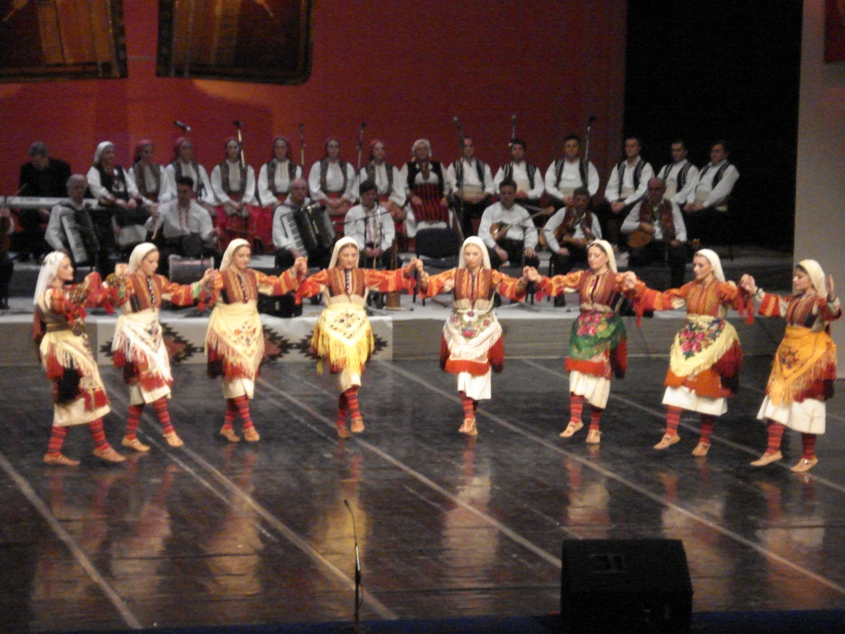 🇷🇴 Romania and 7 moreHorahora (Romanian), horo (Bulgarian), oro (Macedonian), horah (Hebrew)
A circle dance held at weddings across Southeast Europe and among Jewish communities worldwide.Performance · Reception, dance and gifts
🇷🇴 Romania and 7 moreHorahora (Romanian), horo (Bulgarian), oro (Macedonian), horah (Hebrew)
A circle dance held at weddings across Southeast Europe and among Jewish communities worldwide.Performance · Reception, dance and gifts
 🇧🇬 Bulgaria and 5 moreBulgarian wedding musicсватбарска музика
Fast-paced instrumental music played at Bulgarian weddings that blends folk, Romani, and Turkish styles.Performance · The ceremony
🇧🇬 Bulgaria and 5 moreBulgarian wedding musicсватбарска музика
Fast-paced instrumental music played at Bulgarian weddings that blends folk, Romani, and Turkish styles.Performance · The ceremony
 🇹🇷 Turkey and 5 moreKarsilamaskarşılama (Turkish), καρσιλαμάς (Greek)
A face-to-face folk dance in 9/8 time that marks the joy of wedding gatherings across the Aegean.Performance · The wedding feast
🇹🇷 Turkey and 5 moreKarsilamaskarşılama (Turkish), καρσιλαμάς (Greek)
A face-to-face folk dance in 9/8 time that marks the joy of wedding gatherings across the Aegean.Performance · The wedding feast
The same idea elsewhere
Wedding music and the dance floor compared 🇲🇦 Imilchil, MoroccoImilchil Marriage FestivalAgdoud N'Oulmghenni
A Berber marriage festival in Morocco where tribes gather to arrange unions and celebrate with music and dance.Betrothal · Finding a match
🇲🇦 Imilchil, MoroccoImilchil Marriage FestivalAgdoud N'Oulmghenni
A Berber marriage festival in Morocco where tribes gather to arrange unions and celebrate with music and dance.Betrothal · Finding a match
 🇱🇹 Lithuania and 1 moreLithuanian wedding songsvestuvinės dainos
The polyphonic songs and weeping rituals that mark a Lithuanian bride's transition to her new family.Performance · Engagement and betrothal
🇱🇹 Lithuania and 1 moreLithuanian wedding songsvestuvinės dainos
The polyphonic songs and weeping rituals that mark a Lithuanian bride's transition to her new family.Performance · Engagement and betrothal
 🇬🇧 United Kingdom and 5 moreWedding superstitions
Traditional beliefs about luck and omens that shape wedding rituals across culturesAttire · The weeks before
🇬🇧 United Kingdom and 5 moreWedding superstitions
Traditional beliefs about luck and omens that shape wedding rituals across culturesAttire · The weeks before
 🇦🇿 AzerbaijanAzerbaijani wedding traditionsAzərbaycanın toy adətləri
The multi-step family rituals of Azerbaijani weddings, from matchmaking to the henna night.Rite · Finding a match
🇦🇿 AzerbaijanAzerbaijani wedding traditionsAzərbaycanın toy adətləri
The multi-step family rituals of Azerbaijani weddings, from matchmaking to the henna night.Rite · Finding a match