Wedding dress and clothingCentral Asia and the Caucasus
Kimeshek
In its own language: кимешек (Kazakh/Karakalpak), элечек (Kyrgyz)
The traditional white headgear worn by married women with children in Central Asia

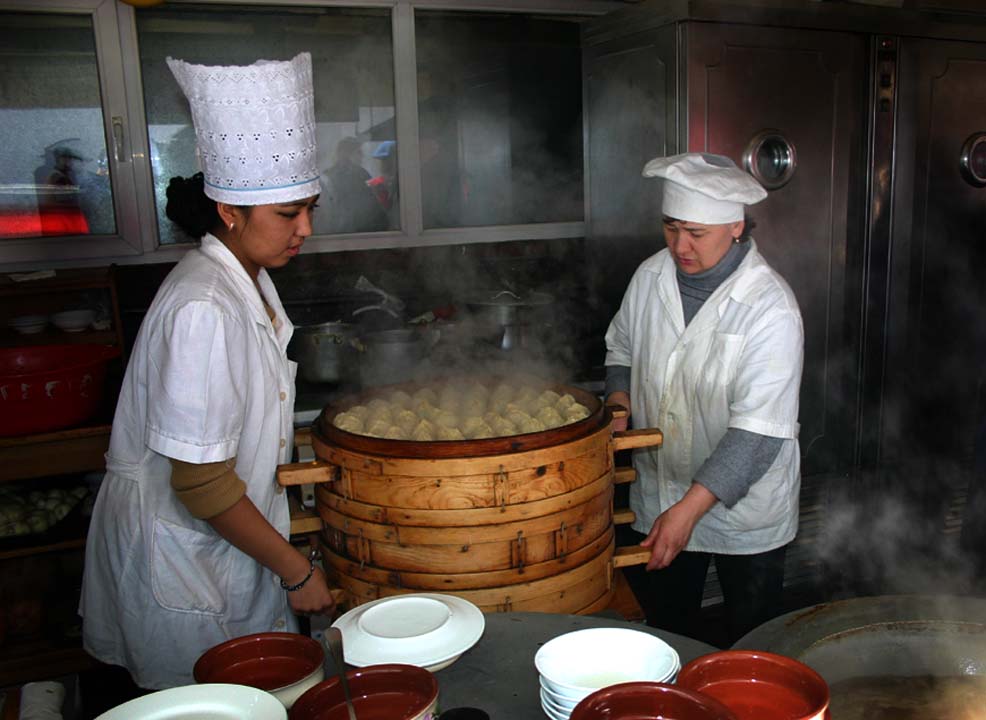
The kimeshek is a traditional head covering for married women who have children in Kazakhstan, Kyrgyzstan and Karakalpakstan. It marks the wearer as part of a family and is made from white cloth with patterned edges.
When is Kimeshek kept?
Kimeshek is kept on after marriage and the birth of children.
The kimeshek is a traditional head covering worn by married women with children in Central Asia. It signals that a woman has started her own family. The headdress is usually white with detailed patterns along the edge. Its design changes as the wearer ages.
What it is
The kimeshek serves as a marker of marital status and motherhood. Only women who are married and have children wear this headgear. It is crafted from white cloth and features decorative patterns along the border. The specific designs and colors can vary depending on the wearer's social standing, age and family background. A similar style called lachak is worn by Uzbek and Tajik women.
History and origins
This tradition extends beyond Muslim communities to include Central Asian Jewish women. In Karakalpakstan, distinct types exist based on life stages. Younger married women traditionally wore a red version known as qızıl kiymeshek. As women aged, they switched to a white variant called aq kiymeshek. Despite switching styles, older women kept their original red headdress because giving one away was considered taboo.
How it is kept
A girl preparing for marriage typically makes her own kimeshek before the wedding. This personal creation becomes a lifelong possession. After marriage and childbirth, she wears it regularly. The garment remains important throughout her life. Even when changing to a different color or style later in life, the original piece is preserved rather than discarded or shared with others.
Modern recognition
The Elechek represents significant cultural knowledge in Kyrgyzstan. In 2023, UNESCO added it to its Representative List of the Intangible Cultural Heritage of Humanity. This recognition highlights the rituals and traditional skills involved in making and wearing the headwear. It remains a visible symbol of identity for women in Kazakhstan and Kyrgyzstan today.
How Kimeshek is kept
A bride-to-be sews her first kimeshek herself. After marriage and having children, she wears it daily. Younger women often choose red versions. Older women switch to white styles but keep their initial red headdress. The garment is never given away due to strong cultural taboos.
When and where
It is worn after marriage and the birth of children. The date is not tied to a specific season but follows life events.
It is most common in Kazakhstan, Kyrgyzstan and Karakalpakstan in Uzbekistan.
What Kimeshek means
The headgear signifies that a woman is married and has children. It marks her transition into motherhood and full adult status within the community. Keeping the original piece honors her journey.
Who takes part
- The bride: Makes her own kimeshek before marriage
- Young mothers: Wears a red version of the headdress
- Older women: Switches to a white version but keeps the red one
Then and now
UNESCO recognized the Elechek in 2023. The tradition continues among Kazakh, Kyrgyz and Central Asian Jewish women. Modern adaptations may alter designs while keeping the core meaning.
On the wedding table


Questions people ask about Kimeshek
When is Kimeshek kept?
Kimeshek is kept on after marriage and the birth of children.
Who is allowed to wear the kimeshek?
Only married women who have children are permitted to wear this headgear. It marks a specific stage in a woman's life and family status.
Is it legal to give away a kimeshek?
No, giving away a kimeshek is considered taboo in many communities. Women keep their original headdresses even if they change styles later in life.
See also
 BetasharThe lifting of the bride's veil by the groom's mother during a Kazakh wedding ceremony
 Kazakh wedding ceremonyThe multi-stage Kazakh marriage process featuring the face-revealing feast and the Islamic religious contract.
 Ala kachuuA Kyrgyz custom of taking a woman for marriage, ranging from consensual elopement to forced abduction.Polygamy in UzbekistanThe practice of men taking multiple wives in a country where the law strictly forbids it.
Good reading and sources
- Elechek, Kyrgyz female headwear: traditional knowledge and ritualsUNESCO, Heritage listing
- Elechek, Kyrgyz female headwear: traditional knowledge and ritualsUNESCO, Article
The facts on this page come from the Wikipedia article "Kimeshek", written by its contributors and used under the CC BY-SA 4.0 licence, and from its Wikidata record (CC0). EveryShaadi rewrote the text in its own words, with AI assistance, and compares every page with the article to make sure no passage is copied. It may be reused under the same CC BY-SA 4.0 licence with a link back.
It may contain mistakes. Wedding customs differ from one family, village and community to the next, and the people who keep them know them best. If something is wrong, tell us. Last refreshed 2026-10-05.
More from Kazakhstan
All the traditions of Kazakhstan
🇰🇿 KazakhstanBetasharбеташар
The lifting of the bride's veil by the groom's mother during a Kazakh wedding ceremonyRite · The ceremony
🇰🇿 Kazakhstan and 1 moreKazakh wedding ceremonyҮйлену тойы (Üilenu toiy)
The multi-stage Kazakh marriage process featuring the face-revealing feast and the Islamic religious contract.Rite · Engagement and betrothal
🇰🇬 Kyrgyzstan and 2 moreAla kachuuала качуу
A Kyrgyz custom of taking a woman for marriage, ranging from consensual elopement to forced abduction.Betrothal · Engagement and betrothal
 🇰🇬 Kyrgyzstan and 5 moreBride kidnapping
The abduction of a woman or girl by a man who wishes to marry her, ranging from consensual elopement to violent coercionBetrothal · Engagement and betrothal
🇰🇬 Kyrgyzstan and 5 moreBride kidnapping
The abduction of a woman or girl by a man who wishes to marry her, ranging from consensual elopement to violent coercionBetrothal · Engagement and betrothal
The same idea elsewhere
The wedding dress and what the couple wear compared 🇲🇱 MaliWeddings in Mali
Multi-day Malian wedding traditions blending Islamic rites, civil law, and local customs with bazin attire.Rite · Engagement and betrothal
🇲🇱 MaliWeddings in Mali
Multi-day Malian wedding traditions blending Islamic rites, civil law, and local customs with bazin attire.Rite · Engagement and betrothal
 🇲🇾 Malaysia and 4 moreBaju Kurungباجو كوروڠ
The traditional blouse and skirt worn by Malay women for weddings and religious ceremoniesAttire · The weeks before
🇮🇳 IndiaMadisarமடிசார் (Madisar)
The nine-yard sari drape worn by Tamil Brahmin women during weddings and religious rites.Attire · The ceremony
🇲🇾 Malaysia and 4 moreBaju Kurungباجو كوروڠ
The traditional blouse and skirt worn by Malay women for weddings and religious ceremoniesAttire · The weeks before
🇮🇳 IndiaMadisarமடிசார் (Madisar)
The nine-yard sari drape worn by Tamil Brahmin women during weddings and religious rites.Attire · The ceremony
 🇮🇩 Palembang, Indonesia and 2 moreSongketᬲᭀᬂᬓᬾᬢ᭄
A hand-woven brocade cloth patterned with gold or silver threads for traditional weddings in Southeast Asia.Attire · Engagement and betrothal
🇮🇩 Palembang, Indonesia and 2 moreSongketᬲᭀᬂᬓᬾᬢ᭄
A hand-woven brocade cloth patterned with gold or silver threads for traditional weddings in Southeast Asia.Attire · Engagement and betrothal