Matchmaking, courtship and engagementCentral Asia and the Caucasus
Ala kachuu
In its own language: ала качуу
A Kyrgyz custom of taking a woman for marriage, ranging from consensual elopement to forced abduction.
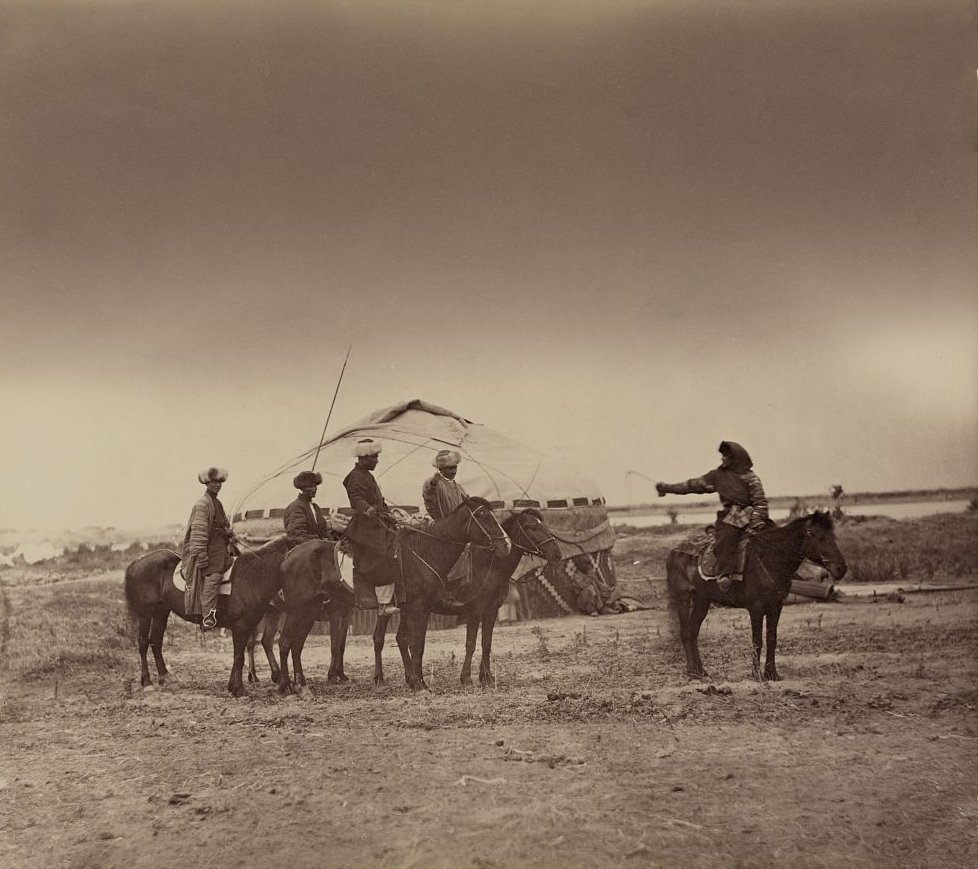
Ala kachuu is a practice in Kyrgyzstan where a man takes a woman to marry her. It exists on a spectrum from agreed elopement to violent kidnapping. The act places the woman in the groom's home until she accepts the union.
When is Ala kachuu kept?
Ala kachuu is kept on when a man decides to marry.
Ala kachuu refers to the act of taking a woman for marriage in Kyrgyz culture. The term covers a wide range of behaviors. Some instances are consensual arrangements between families. Others involve force and abduction against the woman's will. The practice remains a subject of legal and social debate in Central Asia.
What the practice involves
The process begins when a man or his family selects a bride. Male relatives or friends then take the woman to the groom's home. She is often kept in a room while older female relatives persuade her to accept the marriage. A key moment occurs when she agrees to wear a white scarf called a jooluk. This gesture marks her acceptance as a wife. If she refuses, her family may intervene to help her return home. In some cases, the woman stays only if she remains defiant by refusing food or sitting down.
History and origins
Scholars dispute how old this tradition is. Some historians argue that large-scale kidnappings were rare before the Soviet era. They suggest the practice grew due to economic pressures and the difficulty of paying bride prices. During the Soviet period, the state suppressed these customs. After independence in the 1990s, many communities revived them to assert cultural identity. Rejecting the act can be seen as rejecting Kyrgyz heritage. This pressure makes it difficult for women to refuse, even when they wish to do so.
Legal status and harm
Bride kidnapping is illegal in Kyrgyzstan. However, enforcement is weak in rural areas. Local councils of elders often handle these cases through customary law rather than state courts. These councils frequently encourage families to accept the marriage. The practice causes significant harm. Women face social stigma if they remain unmarried after being taken. Some victims experience violence or rape. The threat of suicide is common among those who feel trapped by the shame associated with refusal.
How Ala kachuu is kept
A man or his parents choose a bride. Male relatives abduct her and bring her to the groom's house. Female relatives stay with her to persuade her to agree to the marriage. She wears a white scarf to signal consent. Her family may try to rescue her or urge her to stay based on social advantages. The groom usually does not see her until she agrees to the union.
When and where
It happens when a man decides to marry. It is not tied to a specific season or calendar date. The timing depends entirely on the decision of the groom and his family to initiate the taking.
The practice is most common in Kyrgyzstan. It also occurs in parts of Kazakhstan and Mongolia. Rural villages are the primary locations where the custom persists outside of urban centers.
What Ala kachuu means
Wearing the white scarf symbolizes acceptance of the role of a married woman. The act itself is viewed by some as an assertion of masculinity. For others, being taken is considered an honor because it shows the woman is worthy of marriage. Refusal brings shame and questions about the woman's honor.
Who takes part
- The groom: Decides to marry and initiates the taking
- Male relatives: Abduct the woman and take her to the home
- Female relatives: Persuade the woman to accept the marriage
- The bride: Decides whether to wear the scarf or resist
- Elders: Adjudicate disputes and encourage acceptance
Then and now
The practice is declining in some areas but remains prevalent. Legal efforts to prosecute offenders have had limited success. Social stigma continues to pressure women into accepting marriages they did not initially want.
Questions people ask about Ala kachuu
When is Ala kachuu kept?
Ala kachuu is kept on when a man decides to marry.
Is Ala kachuu always non-consensual?
No. The term covers a spectrum. Some instances are consensual elopements arranged by families. Others involve force. Studies show a significant portion of cases are agreed upon by the couple beforehand.
What happens if the woman refuses?
She may be kept hostage for days. Her family might try to rescue her. If she remains defiant, she faces social stigma. Some women commit suicide due to the shame of refusing marriage after being taken.
Is the practice legal in Kyrgyzstan?
It is illegal under national law. However, local elder councils often handle these cases using customary rules. Prosecution of kidnappers is rare in rural areas.
Why did the practice increase after the Soviet Union?
Communities revived old customs to assert cultural identity. Economic difficulties made paying bride prices harder. Some scholars link the rise to these financial pressures.
See also
 SvayamvaraThe ancient Hindu ceremony where a princess picks her husband from assembled suitorsLeblouhThe forced fattening of girls to improve their marriage prospects, a harmful practiceNikah mut'ahA fixed-term Shia marriage contract with an agreed length and an agreed mahr
 IhiThe Newar rite in which a girl is married to Vishnu, shown by a golden figure
Good reading and sources
The facts on this page come from the Wikipedia article "Ala kachuu", written by its contributors and used under the CC BY-SA 4.0 licence, and from its Wikidata record (CC0). EveryShaadi rewrote the text in its own words, with AI assistance, and compares every page with the article to make sure no passage is copied. It may be reused under the same CC BY-SA 4.0 licence with a link back.
It may contain mistakes. Wedding customs differ from one family, village and community to the next, and the people who keep them know them best. If something is wrong, tell us. Last refreshed 2026-10-05.
More from Kyrgyzstan
All the traditions of Kyrgyzstan 🇰🇬 Kyrgyzstan and 5 moreBride kidnapping
The abduction of a woman or girl by a man who wishes to marry her, ranging from consensual elopement to violent coercionBetrothal · Engagement and betrothal
🇰🇬 Kyrgyzstan and 5 moreBride kidnapping
The abduction of a woman or girl by a man who wishes to marry her, ranging from consensual elopement to violent coercionBetrothal · Engagement and betrothal
 🇦🇿 Azerbaijan and 1 moreKyz kuu
A horse race where a man chases a woman to win a kiss or faces her whip if he failsPlay · Engagement and betrothal
🇦🇿 Azerbaijan and 1 moreKyz kuu
A horse race where a man chases a woman to win a kiss or faces her whip if he failsPlay · Engagement and betrothal
The same idea elsewhere
Arranged marriage, matchmaking and choosing a partner compared 🇲🇲 MyanmarMarriage in Myanmar
A blend of Buddhist rites, astrological timing, and family negotiations that defines union across Myanmar's diverse ethnRite · Finding a match
🇨🇦 Canada and 1 moreMarriage à la façon du paysMariage à la façon du pays
The common-law unions between European fur traders and Indigenous women that shaped North American history.Betrothal · Engagement and betrothal
🇮🇶 Mosul, IraqWedding traditions in Iraq
The arranged courtship, religious rites and multi-day celebrations that mark marriage in Iraqi society.Betrothal · Finding a match
🇲🇲 MyanmarMarriage in Myanmar
A blend of Buddhist rites, astrological timing, and family negotiations that defines union across Myanmar's diverse ethnRite · Finding a match
🇨🇦 Canada and 1 moreMarriage à la façon du paysMariage à la façon du pays
The common-law unions between European fur traders and Indigenous women that shaped North American history.Betrothal · Engagement and betrothal
🇮🇶 Mosul, IraqWedding traditions in Iraq
The arranged courtship, religious rites and multi-day celebrations that mark marriage in Iraqi society.Betrothal · Finding a match