Vows, contracts and registrationNorth America
Loyal toast
A formal salute to the head of state given at official gatherings in Commonwealth realms and other nations.
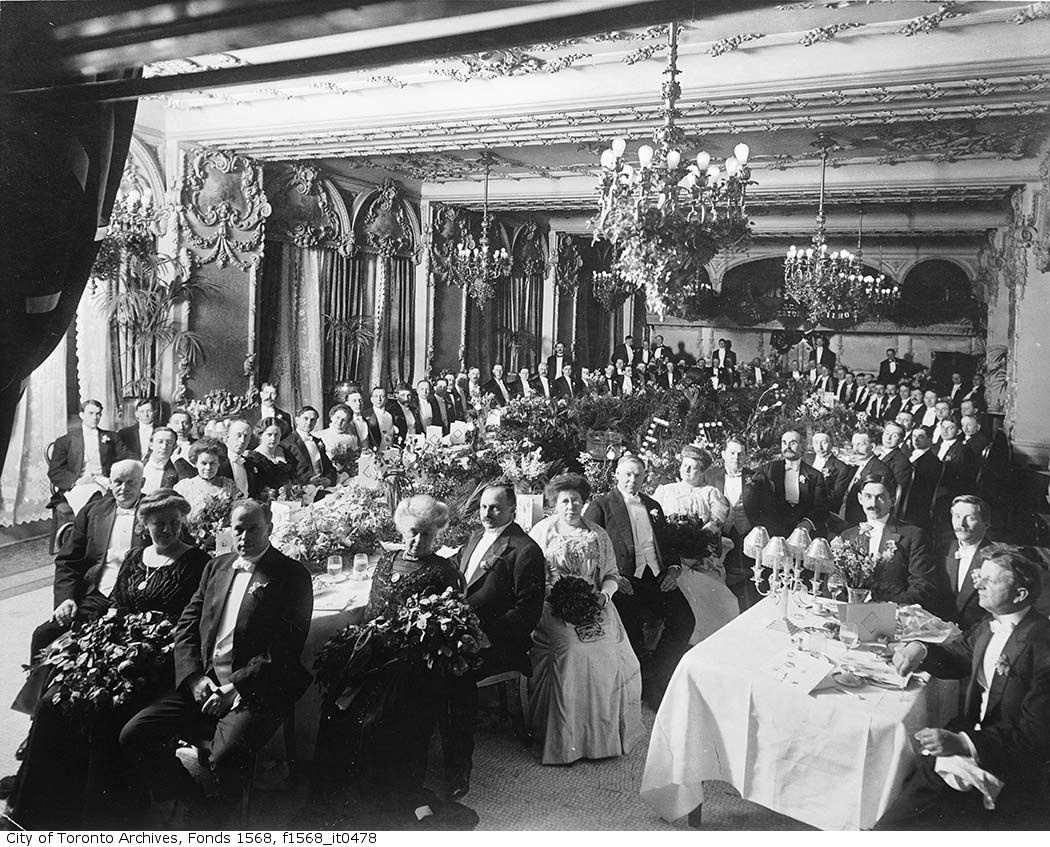
The loyal toast is a ceremonial salute to a country's monarch or president. It is standard protocol at state, military, and formal civilian events across many nations. The host initiates the words, and guests repeat them in unison while standing.
When is Loyal toast kept?
Loyal toast is kept at formal dinners and state occasions.
The loyal toast is a formal salute directed toward a nation's sovereign or head of state. It serves as a display of patriotic sentiment during official gatherings. This custom is deeply embedded in the etiquette of Commonwealth realms and other countries with monarchical traditions. It marks a specific moment of respect within formal dining and military ceremonies.
How it is kept
The host stands to request attention and recites the specific words. Guests rise to their feet and repeat the phrase in unison. They drink from a glass containing any beverage except a cocktail. After drinking, they sit down. In some military contexts, such as the Royal Navy, attendees remain seated due to historical safety concerns on ships. The toast is usually the first or last spoken element of a meal.
Words and variations
Phrases vary by region and institution. In Canada, the toast may include 'King of Canada' or mention royal ranks. Australia often uses 'The King and the People of Australia'. Unique local versions exist, such as 'The King, Duke of Lancaster' in Lancashire. Jacobite supporters historically passed drinks over water to symbolize 'the king over the water' rather than the British monarch.
History and disputes
The practice has caused diplomatic friction. In 1948, an Irish prime minister refused the Canadian loyal toast, leading Ireland to declare itself a republic. In Scotland, Jacobite protesters used water glasses to show solidarity with exiled claimants. Legal challenges have occurred in Canada regarding mandatory participation, though courts have upheld the requirement for military members to respect the head of state.
Global practices
In Sweden, guests turn toward the sovereign if present and answer 'Konungen'. Spanish military officers toast 'For Spain's first soldier', with others responding 'For the King'. In the United States, the first toast at military social occasions is traditionally to the President. These variations reflect national identity and constitutional structures within formal settings.
How Loyal toast is kept
The host rises and asks for silence. Guests stand and repeat the designated phrase together. They drink from a glass that is not a cocktail glass. In naval settings, people stay seated. Some groups use water instead of alcohol to protest. The act ends when everyone sits back down.
When and where
It occurs during formal meals or state functions. It is typically the first or final toast. Dates are set by the event schedule rather than a calendar season.
It is strongest in Commonwealth realms like Canada and Australia. It appears in military messes, government banquets, and formal civilian gatherings across Europe and North America.
What Loyal toast means
It demonstrates loyalty to the constitutional order. The unified voice represents collective allegiance. Smashing glasses prevents reuse for lesser salutes. Passing drinks over water symbolizes distant support for rival claimants without direct confrontation.
Who takes part
- The host: Initiates the toast and leads the recitation
- The guests: Stands and repeats the words in unison
- Military officers: Toasts to the head of state as commander-in-chief
- Jacobite supporters: Passes drinks over water to honor exiled pretenders
If you are a guest
Guests must stand when the host begins. They repeat the exact words provided. They drink from a non-cocktail glass. Smoking stops until the sovereign has been toasted. Silence is maintained during the recitation.
Then and now
The custom faces legal challenges regarding mandatory participation. Some jurisdictions adapt the wording to reflect changing political statuses. Diplomatic incidents have led to changes in how foreign dignitaries are treated during these ceremonies.
On the wedding table
Symbols: The ring Wine and the shared cup Breaking glass and plates

Questions people ask about Loyal toast
When is Loyal toast kept?
Loyal toast is kept at formal dinners and state occasions.
What is the loyal toast?
It is a formal salute to a nation's head of state. It happens at official dinners and military events. The host leads the words, and guests repeat them while standing.
Is it legal to refuse?
Refusal can cause diplomatic issues. Courts in Canada have ruled that military members must participate. Civilian refusal may lead to social or political consequences.
See also
 Conga lineA long processing line dance that links dancers in single file to a rhythmic drum beat.
 SevillanasA traditional Andalusian folk dance performed by couples at weddings and local festivals in Spain.
 MantillaA lace or silk veil worn over the head and shoulders by women in Spain and Latin America
 Toe ringA silver band worn on the second toe to mark a woman as married in India.
Good reading and sources
The facts on this page come from the Wikipedia article "Loyal toast", written by its contributors and used under the CC BY-SA 4.0 licence, and from its Wikidata record (CC0). EveryShaadi rewrote the text in its own words, with AI assistance, and compares every page with the article to make sure no passage is copied. It may be reused under the same CC BY-SA 4.0 licence with a link back.
It may contain mistakes. Wedding customs differ from one family, village and community to the next, and the people who keep them know them best. If something is wrong, tell us. Last refreshed 2026-10-06.
More from Canada
All the traditions of Canada 🇮🇱 Jerusalem, Israel and 5 moreInterfaith marriage in Judaismשִׁדּוּג חַלּוּץ (Shidug Chalutz) / אינטרפייט מריאז' (Interafeyt Mariyaz')
The union of a Jew and a non-Jew, viewed as void by traditional law but increasingly common in modern communities.Vow · Engagement and betrothal
🇮🇱 Jerusalem, Israel and 5 moreInterfaith marriage in Judaismשִׁדּוּג חַלּוּץ (Shidug Chalutz) / אינטרפייט מריאז' (Interafeyt Mariyaz')
The union of a Jew and a non-Jew, viewed as void by traditional law but increasingly common in modern communities.Vow · Engagement and betrothal
 🇫🇮 Finland and 5 moreBanns of marriagekuulutukset avioliittoon (Finnish)
The public announcement of an impending marriage in church or town hall to allow for legal objections.Vow · The weeks before
🇺🇸 United States and 3 moreWedding vow renewal ceremony
A service where a married couple repeats their marriage promises to reaffirm their commitment.Vow · After the wedding
🇫🇮 Finland and 5 moreBanns of marriagekuulutukset avioliittoon (Finnish)
The public announcement of an impending marriage in church or town hall to allow for legal objections.Vow · The weeks before
🇺🇸 United States and 3 moreWedding vow renewal ceremony
A service where a married couple repeats their marriage promises to reaffirm their commitment.Vow · After the wedding
 🇬🇧 United Kingdom and 3 moreMarriage bond
A financial guarantee posted to prove a couple was legally free to marry before the ceremony took place.Vow · Engagement and betrothal
🇬🇧 United Kingdom and 3 moreMarriage bond
A financial guarantee posted to prove a couple was legally free to marry before the ceremony took place.Vow · Engagement and betrothal
The same idea elsewhere
The wedding procession and the arrival compared
🇪🇸 Spain and 4 moreMantilla
A lace or silk veil worn over the head and shoulders by women in Spain and Latin AmericaAttire · The weeks before
 🇪🇹 Addis Ababa, Ethiopia and 1 moreZuria
The ankle-length dress with woven hem bands worn by Tigrinya and Amhara women for weddings and holidays.Attire · The weeks before
🇪🇹 Addis Ababa, Ethiopia and 1 moreZuria
The ankle-length dress with woven hem bands worn by Tigrinya and Amhara women for weddings and holidays.Attire · The weeks before
 🇺🇦 Ukraine and 2 moreRushnykрушник (Ukrainian), ручнік (Belarusian), ручник/рушник (Russian)
The embroidered linen cloth that marks life stages and guides the couple through the wedding ceremony in East Slavic culAdornment · The weeks before
🇺🇦 Ukraine and 2 moreRushnykрушник (Ukrainian), ручнік (Belarusian), ручник/рушник (Russian)
The embroidered linen cloth that marks life stages and guides the couple through the wedding ceremony in East Slavic culAdornment · The weeks before
 🇪🇬 Egypt and 5 moreMizmarمزمار (mizmār)
A loud double reed instrument played at weddings and festivals across Egypt and the Levant.Performance · Procession and arrival
🇪🇬 Egypt and 5 moreMizmarمزمار (mizmār)
A loud double reed instrument played at weddings and festivals across Egypt and the Levant.Performance · Procession and arrival