Henna, jewellery and body artEurope
Luckenbooth brooch
A Scottish heart-shaped silver token of love and protection worn at weddings.

The Luckenbooth brooch is a traditional Scottish heart-shaped piece of jewellery. It serves as a betrothal or wedding gift and carries meanings of love, devotion, and protection for the wearer and their children.
When is Luckenbooth brooch kept?
Luckenbooth brooch is kept at betrothal or during the wedding ceremony.
The Luckenbooth brooch is a classic Scottish heart-shaped pin made of silver or gold. Traditionally given as a promise of marriage, it symbolises love and devotion. The design often includes a crown above the heart. Beyond romance, the brooch acts as a protective charm for mothers and infants against harm.
Origins and history
The name derives from the Luckenbooths in Edinburgh, which were lockable stalls on the Royal Mile near St Giles Cathedral. These booths housed silversmiths and goldsmiths from the fifteenth century until their demolition in eighteen seventeen. While heart motifs appear in late medieval Europe, this specific Scottish design likely emerged in the seventeenth century. Legends link the brooch to Mary Queen of Scots, who may have received one from Lord Darnley or the Dauphin of France. By the mid-eighteenth century, these tokens were traded with Indigenous peoples of the Eastern Woodlands, influencing native clothing designs.
Design and materials
Craftsmen typically fashioned these brooches from silver, an affordable metal associated with luck. Wealthier clients might receive versions in gold. The standard motif features a single heart topped by a crown, though some designs show two intertwined hearts. Artisans sometimes engraved initials, dates, or mottoes onto the surface. Decorations could include Scottish symbols like the thistle or St Andrew's Cross. Stones such as garnets or semi-precious gems were occasionally set into the metal. Inexpensive glass paste imitations were also common among poorer buyers seeking the symbolic charm.
Symbolism and use
As a love token, the brooch marks a betrothal or wedding commitment. Its protective qualities extend beyond the couple. Nursing mothers wear it as a charm to aid milk flow. Parents pin it to a baby's clothing to guard against the evil eye, leading to its nickname as a witch-brooch. The heart and crown represent enduring affection and royal status. Victorian jewellers adapted the form for pebble jewellery, keeping the tradition alive through the tourist trade and Highland outfitters.
How Luckenbooth brooch is kept
A partner presents the brooch to mark a betrothal or wedding day. The recipient wears it pinned to their garment. Mothers continue to wear it after childbirth to support nursing. Families attach it to infant clothes for protection. The brooch remains a visible symbol of Scottish heritage and familial bonds across generations.
When and where
It is exchanged during the betrothal period or worn at the wedding ceremony. The custom persists today as a cultural heirloom rather than a strict annual ritual.
The practice originates in Edinburgh, Scotland. It remains strongest within Scottish communities and among those celebrating Scottish heritage globally.
What Luckenbooth brooch means
The heart represents love and devotion between partners. The crown signifies loyalty and high regard. As a protective charm, it wards off evil influences and ensures health for mothers and babies. The silver material reinforces ideas of good fortune and purity.
Who takes part
- The giver: Presents the brooch as a pledge of love or marriage.
- The recipient: Wears the brooch to signify engagement or marital status.
- The mother: Wears it to aid nursing and protect her child.
If you are a guest
Guests may observe the brooch being pinned to the bride or groom. They recognise it as a significant Scottish tradition. No specific gifts or actions are required from attendees regarding the item itself.
Then and now
The brooch remains a popular souvenir and heritage item. Modern jewellers continue to produce variations for tourists and locals. It serves as a tangible link to Scottish history and romantic tradition.
On the wedding table
Symbols: Crowns and wreaths Gold and jewellery
Questions people ask about Luckenbooth brooch
When is Luckenbooth brooch kept?
Luckenbooth brooch is kept at betrothal or during the wedding ceremony.
What is a Luckenbooth brooch?
It is a Scottish heart-shaped silver or gold brooch. It often features a crown above the heart. It serves as a traditional token of love and protection.
Why is it called a witch-brooch?
People used it to protect children from the evil eye. Pinning it to baby clothes was believed to ward off harm and ensure safety.
See also
 Gimmal ringA betrothal ring with separate hoops that join to form the wedding band.
 LovespoonA carved wooden spoon given as a romantic gift to show skill and intent.
 Engagement ringA ring given to signify a formal agreement to future marriage.
 Acrostic ringA jewelled band where gemstone initials spell a secret romantic word
Good reading and sources
- Luckenbooth brooch on WikipediaEncyclopedia
- More photos on Wikimedia CommonsPhotos and video
- Wikidata recordOpen data
The facts on this page come from the Wikipedia article "Luckenbooth brooch", written by its contributors and used under the CC BY-SA 4.0 licence, and from its Wikidata record (CC0). EveryShaadi rewrote the text in its own words, with AI assistance, and compares every page with the article to make sure no passage is copied. It may be reused under the same CC BY-SA 4.0 licence with a link back.
It may contain mistakes. Wedding customs differ from one family, village and community to the next, and the people who keep them know them best. If something is wrong, tell us. Last refreshed 2026-10-05.
More from the United Kingdom
All the traditions of the United Kingdom
🇬🇧 United Kingdom and 1 moreGimmal ring
A betrothal ring with separate hoops that join to form the wedding band.Adornment · Engagement and betrothal
🇺🇸 United States and 5 moreEngagement ring
A ring given to signify a formal agreement to future marriage.Adornment · Engagement and betrothal
🇬🇧 United Kingdom and 1 moreLovespoonLlwy garu
A carved wooden spoon given as a romantic gift to show skill and intent.Adornment · Engagement and betrothal
🇫🇷 France and 1 moreAcrostic ring
A jewelled band where gemstone initials spell a secret romantic wordAdornment · Engagement and betrothal
The same idea elsewhere
Rings, knots and tokens of promise compared 🇮🇳 India and 1 moreToe ring
A silver band worn on the second toe to mark a woman as married in India.Adornment · The ceremony
🇮🇳 India and 1 moreToe ring
A silver band worn on the second toe to mark a woman as married in India.Adornment · The ceremony
 🇪🇬 Egypt and 4 moreWaist beads
Strands of glass or seed worn around the hips to mark womanhood and track body changes in West and North Africa.Adornment · Engagement and betrothal
🇪🇬 Egypt and 4 moreWaist beads
Strands of glass or seed worn around the hips to mark womanhood and track body changes in West and North Africa.Adornment · Engagement and betrothal
 🇱🇦 Laos and 1 moreBaciບາສີ (Lao); บายศรี (Thai)
The wrist-tying ceremony that calls the soul back to restore balance and good luck.Blessing · The ceremony
🇱🇦 Laos and 1 moreBaciບາສີ (Lao); บายศรี (Thai)
The wrist-tying ceremony that calls the soul back to restore balance and good luck.Blessing · The ceremony
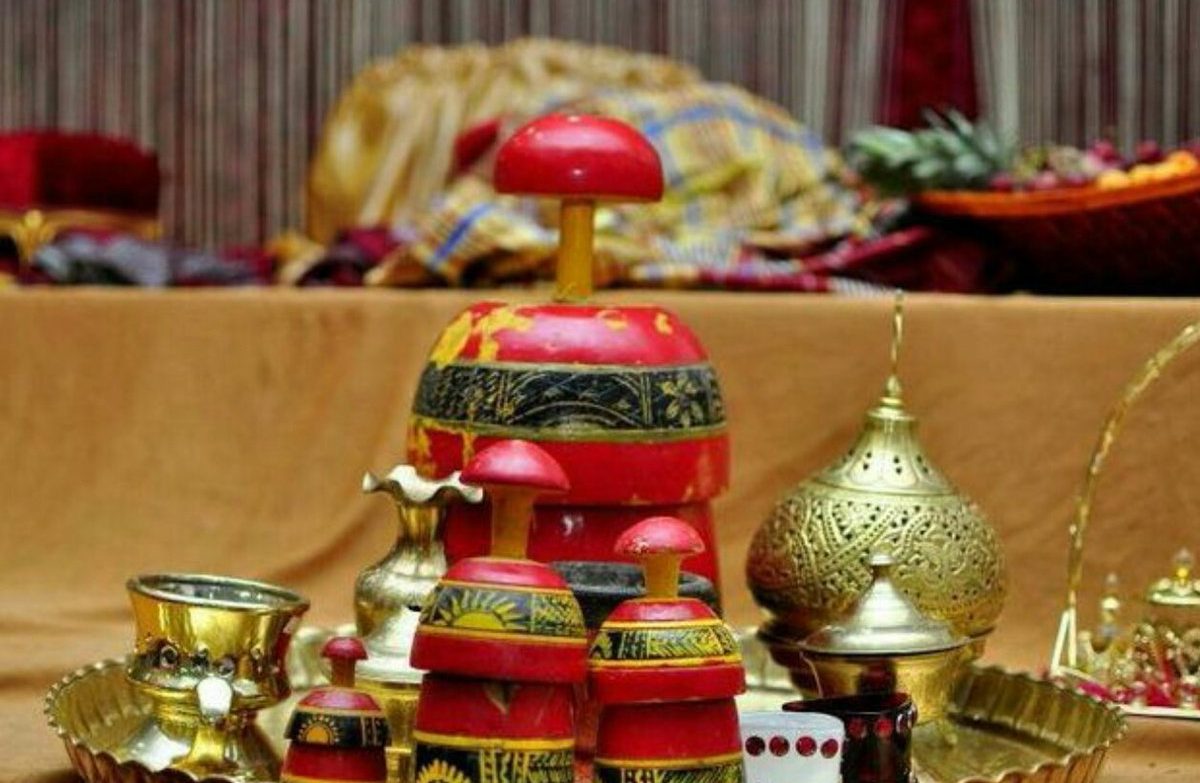 🇸🇩 Khartoum, SudanJirtigالجَرْتِقْ (Arabic)
A Sudanese inauguration ritual where the groom is symbolically crowned as a king.Rite · The weeks before
🇸🇩 Khartoum, SudanJirtigالجَرْتِقْ (Arabic)
A Sudanese inauguration ritual where the groom is symbolically crowned as a king.Rite · The weeks before