Henna, jewellery and body artSouth AsiaHindu
Sindoor
In its own language: सिंदूर (Hindi)
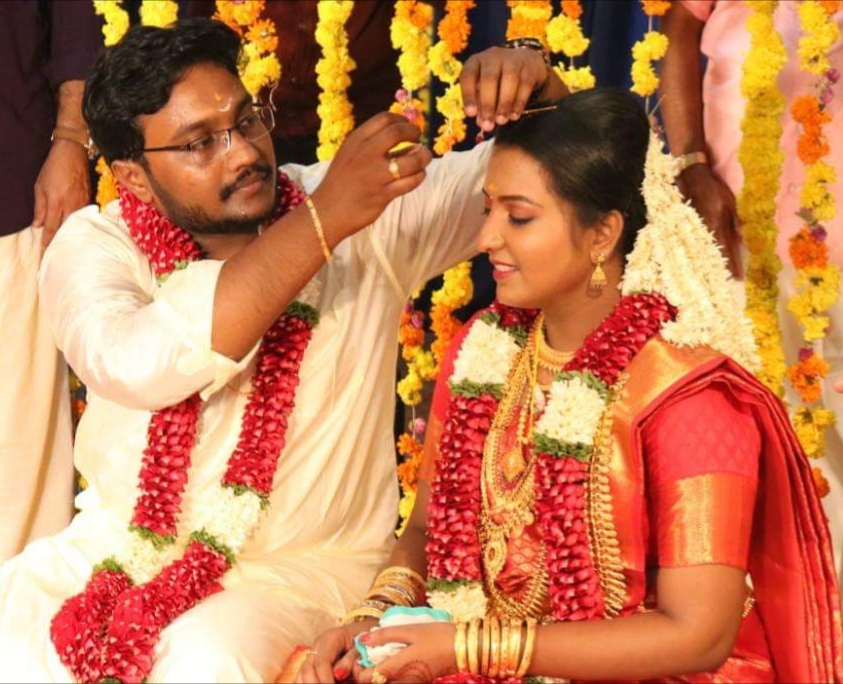
The vermilion powder a Hindu husband applies to his wife's hair parting to mark her marriage.

Married women in South Asia wear this red pigment along their hairline as a visible sign of being wed. The custom began with the Sindoor Daan ritual during the wedding ceremony and continues as a daily practice to show fidelity and auspiciousness.
When is Sindoor kept?
Sindoor is kept on daily after the wedding ceremony.
Sindoor is a bright red or orange-red cosmetic powder worn by married Hindu women across South Asia. It serves as a public marker of marital status and spiritual auspiciousness. The tradition begins when a groom applies the powder to his bride's hair parting during their wedding vows. Women continue to apply it every day to honor their union and maintain a connection to divine feminine power.
What the powder represents
This vermilion pigment acts as a clear visual signal that a woman has entered the stage of married life within Hindu communities. Wearing it signifies that she is wedded and faithful to her partner. Removing the powder typically indicates widowhood or the end of the marriage. The color red holds deep symbolic weight, representing vitality, fertility, and the protective energy of the goddess. It distinguishes married women from unmarried girls, who wear colored dots on their foreheads instead.
Origins and ancient texts
Scholars note that early Vedic scriptures do not mention this specific hair-parting custom. Its first recorded appearance comes later, in Puranic literature from roughly the fifth to tenth centuries CE. Texts like the Brahmanda Purana compare the dust from a goddess's feet to vermilion, linking the powder to divine blessings and cosmic harmony. Archaeological finds from the Indus Valley Civilization show red pigments on figurines, suggesting older roots. However, the formal religious sanction for using it as a marital symbol emerged during the medieval period through these later sacred writings.
How the powder is made
Traditional recipes rely on natural ingredients to create the vibrant hue. Artisans mix turmeric with slaked lime and alum, triggering a chemical reaction that produces a safe, bright red color. Some regional variations include powdered minerals or cinnabar, though these raise toxicity concerns due to mercury content. Modern commercial versions often use synthetic dyes or lead-based pigments for cost efficiency. In response, many producers now offer herbal alternatives using hibiscus, marigolds, or red sandalwood to provide safer, non-toxic options for contemporary users.
Application and daily routine
The ritual starts at the wedding when the groom performs Sindoor Daan, applying the powder to the center part of the bride's hair. After this ceremony, the woman applies it herself each morning. Most brides fill the entire central parting line, while others may place a small spot at the forehead or a triangular shape near the nose. Styles vary by region and personal preference. Widows traditionally remove all red pigment and jewelry, adopting plain white clothing to reflect their new social status.
How Sindoor is kept
During the wedding ceremony, the groom takes the sindoor and applies it to the central parting of the bride's hair. This act, known as Sindoor Daan, marks her official transition into married life. Following the wedding, the woman applies the powder to her hairline daily as a routine practice. She may fill the entire parting or place a small dot at the forehead depending on local customs. Unmarried women wear colored bindis but do not use this specific red powder.
When and where
The initial application occurs during the wedding ceremony itself. Afterward, it becomes a daily habit maintained throughout the marriage. The practice persists regardless of the season, serving as a constant visual indicator of the woman's marital status in both rural and urban settings.
The custom is most prevalent in India and Bangladesh, where it remains a standard marker for married Hindu women. It also appears among diaspora communities in the United Kingdom and the United States, though adherence varies. Urban fashion trends sometimes adapt the style, while traditional rural areas maintain stricter adherence to the full hair-parting application.
What Sindoor means
The red powder symbolizes the goddess Lalita and represents divine feminine power, fertility, and marital fidelity. It connects the wearer to cosmic harmony and auspiciousness. Removing the sindoor signifies the end of this protective bond, typically upon becoming a widow. The color red embodies the vitality and life force of the married woman, distinguishing her role within the community and her spiritual standing.
Who takes part
- The groom: Applies the sindoor to the bride's hair parting during the wedding vows
- The bride: Begins applying the powder to her own hairline daily after the ceremony
- The mother-in-law: May assist in removing the sindoor if the woman becomes a widow
If you are a guest
Guests observe the bride wearing the red powder during the wedding ceremony as a key moment of the ritual. They recognize the sindoor as a sign that she is officially married. Attendees do not participate in the application but witness its significance as a public declaration of the couple's new union and the bride's changed status within the community.
Then and now
Adherence varies significantly across different demographics. While over seventy percent of traditional families maintain the daily practice, some modern women view it as optional. Fashion-conscious individuals may apply it subtly or pair it with Western attire. Diaspora communities often treat it as a cultural choice rather than a mandatory rule, reflecting evolving gender norms and personal preferences.
On the wedding table
Symbols: The colour red Rice and grain Garlands and flowers Water and washing Candles and lamps Breaking glass and plates



Questions people ask about Sindoor
When is Sindoor kept?
Sindoor is kept on daily after the wedding ceremony.
What does sindoor signify for a married woman?
It serves as a public marker of her marital status and fidelity. Wearing the red powder indicates she is wedded and connected to auspicious divine energy. Removing it typically signals widowhood or the end of the marriage.
Is sindoor safe to wear?
Traditional versions made from turmeric and lime are generally safe. However, some commercial products contain synthetic dyes or heavy metals like lead and mercury. Consumers should check for herbal alternatives to avoid potential health risks associated with industrial pigments.
Do unmarried women wear sindoor?
No, unmarried women typically wear colored bindis on their foreheads. The red sindoor is reserved specifically for married women to distinguish their status. Widows also remove the powder to reflect their change in social standing.
See also
 Gimmal ringA betrothal ring with separate hoops that join to form the wedding band.
 Toe ringA silver band worn on the second toe to mark a woman as married in India.
 ShankhaWhite conch shell bangles worn by Bengali Hindu married women as a symbol of their husband's well-being.
 LovespoonA carved wooden spoon given as a romantic gift to show skill and intent.
Good reading and sources
- What is Sindoor? A peek into its history & significance in Hindu cultureDeccan Herald, Article
- Operation Sindoor: Weaponising Patriarchy in Nationalist RhetoricThe Hindu, Article
- What is Sindoor? A peek into its history & significance in Hindu cultureDeccan Herald, Article
- Operation Sindoor: Weaponising Patriarchy in Nationalist RhetoricThe Hindu, Article
- Sindoor on WikipediaEncyclopedia
- More photos on Wikimedia CommonsPhotos and video
- Wikidata recordOpen data
The facts on this page come from the Wikipedia article "Sindoor", written by its contributors and used under the CC BY-SA 4.0 licence, and from its Wikidata record (CC0). EveryShaadi rewrote the text in its own words, with AI assistance, and compares every page with the article to make sure no passage is copied. It may be reused under the same CC BY-SA 4.0 licence with a link back.
It may contain mistakes. Wedding customs differ from one family, village and community to the next, and the people who keep them know them best. If something is wrong, tell us. Last refreshed 2026-10-05.
More from India
All the traditions of India
🇮🇳 India and 1 moreToe ring
A silver band worn on the second toe to mark a woman as married in India.Adornment · The ceremony
🇮🇳 IndiaShankha
White conch shell bangles worn by Bengali Hindu married women as a symbol of their husband's well-being.Adornment · Engagement and betrothal
 🇮🇳 IndiaMehndi
The henna body art applied to brides and guests before a South Asian wedding ceremony.Adornment · The weeks before
🇮🇳 IndiaMehndi
The henna body art applied to brides and guests before a South Asian wedding ceremony.Adornment · The weeks before
 🇮🇳 India and 2 moreAltaআলতা (Bengali)
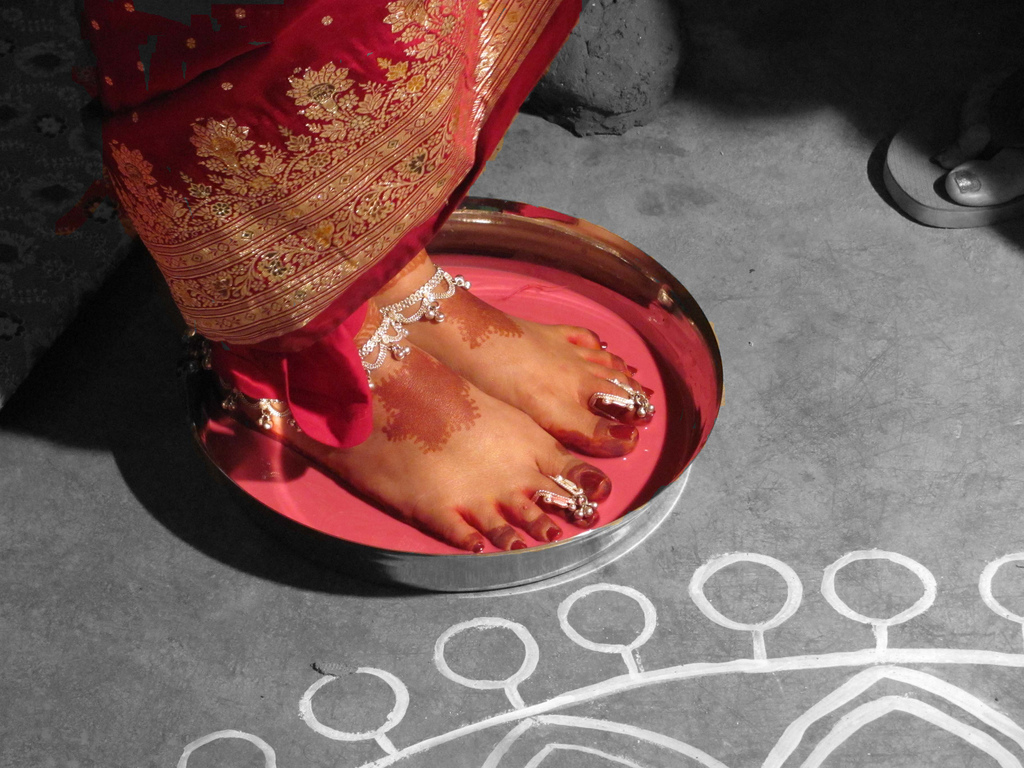
A red dye applied to hands and feet as an auspicious adornment in South Asian weddings and festivals.Adornment · The weeks before
🇮🇳 India and 2 moreAltaআলতা (Bengali)
A red dye applied to hands and feet as an auspicious adornment in South Asian weddings and festivals.Adornment · The weeks before
The same idea elsewhere
Henna, turmeric and the decorated bride compared 🇮🇷 Tehran, Iran and 1 moreIranian weddingمراسم عروسی در ایران
A multi-stage ceremony rooted in Zoroastrianism and Islam that binds families through courtship, feasts, and sacred vowsRite · Finding a match
🇮🇷 Tehran, Iran and 1 moreIranian weddingمراسم عروسی در ایران
A multi-stage ceremony rooted in Zoroastrianism and Islam that binds families through courtship, feasts, and sacred vowsRite · Finding a match
 🇮🇱 Jerusalem, Israel and 3 moreJewish wedding
The ceremony and laws that bind a couple in Jewish marriage, from the canopy to the glass.Rite · Engagement and betrothal
🇮🇱 Jerusalem, Israel and 3 moreJewish wedding
The ceremony and laws that bind a couple in Jewish marriage, from the canopy to the glass.Rite · Engagement and betrothal
 🇯🇵 Tokyo, JapanShinto wedding神前結婚 (Shinzen kekkon)
A Shinto purification ritual featuring sake sharing and kimono attire held at a shrine or venue.Rite · The ceremony
🇯🇵 Tokyo, JapanShinto wedding神前結婚 (Shinzen kekkon)
A Shinto purification ritual featuring sake sharing and kimono attire held at a shrine or venue.Rite · The ceremony
 🇮🇱 Israel and 3 moreChuppahחֻפָּה (ḥuppā)
The four-poster canopy that marks the Jewish wedding ceremony and symbolizes the couple's new home.Setting · The ceremony
🇮🇱 Israel and 3 moreChuppahחֻפָּה (ḥuppā)
The four-poster canopy that marks the Jewish wedding ceremony and symbolizes the couple's new home.Setting · The ceremony