Henna, jewellery and body artEurope
Mărțișor
The red and white string charm worn in early spring to welcome the new year.
A Mărțișor is a small charm made of twisted red and white threads, often with a pendant. People in Romania and Moldova wear it from March 1st to celebrate the arrival of spring and the old New Year.
When is Mărțișor kept?
Mărțișor is kept from March 1 until signs of spring appear.
This tradition marks the start of spring with a red and white thread charm. It connects people to ancient Roman New Year customs. The object brings good health and fortune to those who wear it during the first weeks of March.
What the charm looks like
The object consists of two strings, one red and one white, twisted together. Modern versions use silk, but older items used wool, linen, or cotton. Colors varied by region before the nineteenth century. Some areas used black and white, while others preferred red only or even blue and white. Charms hang from the strings. These were originally silver coins or cross pendants. Later designs included four-leaf clovers, ladybugs, or snowdrops. In neighboring regions, the tassels form small dolls representing male and female figures.
How people wear it
Wearers pin the charm to their chest like a brooch at the start of March. Some tie it around their wrist or neck instead. The duration varies by location. Some keep it for just a few days, while others wear it for months. The end date often matches natural signs of spring. This includes fruit trees blooming or the return of swallows. Some communities remove it on the next major holiday. Leaving it on a tree branch honors returning birds. Others place it under rocks or burn it for omens.
Meaning and history
The name means little March, derived from the old folk word for the month. The custom stems from Roman celebrations of the new year on March first. It aligns with agricultural cycles marking winter's end. The figure Baba Dochia appears in local folklore linked to this time. Observers believe the intertwined strings represent the year's rope. They symbolize the union of summer and winter. The pendant acts as a talisman for beauty and wealth. It protects the wearer from illness throughout the coming season.
How Mărțișor is kept
People craft the charm from red and white threads. They attach small metal charms or coins. Wearers pin it to clothing on March first. Children and women wear it most often. They keep it until trees bloom or birds return. Then they tie it to branches or leave it near water. This act gives the charm to nature spirits.
When and where
It begins on March first. People wear it through early spring. The end date depends on local weather. Some stop when flowers open. Others wait for specific holidays. The timing marks the seasonal shift.
This practice is central in Romania and Moldova. Similar versions exist in Bulgaria and North Macedonia. Communities across Southeastern Europe share related customs. Urban areas now treat them as souvenirs.
What Mărțișor means
The red and white colors represent life and purity. The twist symbolizes the balance of seasons. The charm protects against evil spirits. It ensures a prosperous harvest. The act of tying it to trees feeds returning migratory birds. This gesture thanks nature for winter's end.
Who takes part
- The wearer: Pins the charm to clothing or ties it to their wrist
- Children: Receive the charm from elders and wear it proudly
- Elders: Explain the meaning and help tie the charm to trees
- Crafters: Twist the threads and attach the metal pendants
If you are a guest
Guests receive a Mărțișor from hosts on March first. They wear it immediately. Guests should not remove it too soon. Tying it to a blooming tree shows respect for the tradition. Keeping it as a souvenir is acceptable today.
Then and now
Modern wearers often keep the charms as keepsakes. Many buy them from shops rather than making them. The strict rules about removal dates have relaxed. Some people wear them only for a few days. The practice remains strong in rural villages.
On the wedding table
Symbols: The colour red The colour white Trees and plantings
Questions people ask about Mărțișor
When is Mărțișor kept?
Mărțișor is kept from March 1 until signs of spring appear.
What is a Mărțișor?
It is a small charm made of red and white twisted threads. It usually has a metal pendant attached. People wear it to celebrate the start of spring and the old New Year.
Where is this tradition found?
It is main in Romania and Moldova. Bulgaria calls it Martenitsa. North Macedonia uses Martinka. Related customs exist across Southeastern Europe.
What happens to the charm after wearing?
People tie it to a flowering tree branch. This gives it to returning migratory birds. Some leave it under rocks for omens. Others burn it or place it in water.
See also
 MartenitsaWhite and red yarn charms worn in the Balkans to welcome spring and wish for good health.
 Galičnik Wedding FestivalA recreated traditional wedding in a North Macedonian village that turns a local rite into an annual festival.
 CălușariA traditional Romanian spring dance and male society known for acrobatic leaps and ritual healing.
 AnastenariaA barefoot firewalking ritual performed by Orthodox Christian communities in Greece and Bulgaria.
Good reading and sources
- Cultural practices associated to the 1st of MarchUNESCO, Heritage listing
- Cultural practices associated to the 1st of MarchUNESCO, Article
- Mărțișor on WikipediaEncyclopedia
- More photos on Wikimedia CommonsPhotos and video
- Wikidata recordOpen data
The facts on this page come from the Wikipedia article "Mărțișor", written by its contributors and used under the CC BY-SA 4.0 licence, and from its Wikidata record (CC0). EveryShaadi rewrote the text in its own words, with AI assistance, and compares every page with the article to make sure no passage is copied. It may be reused under the same CC BY-SA 4.0 licence with a link back.
It may contain mistakes. Wedding customs differ from one family, village and community to the next, and the people who keep them know them best. If something is wrong, tell us. Last refreshed 2026-10-06.
More from Romania
All the traditions of Romania
🇧🇬 Bulgaria and 3 moreMartenitsaмартеница
White and red yarn charms worn in the Balkans to welcome spring and wish for good health.Adornment · The weeks before
 🇵🇱 Poland and 6 moreKolachколач (kolach), калач (kalach), kołacz, colac, kalács
A braided or ring-shaped bread that marks weddings and major holidays across Eastern Europe.Feast custom · Engagement and betrothal
🇵🇱 Poland and 6 moreKolachколач (kolach), калач (kalach), kołacz, colac, kalács
A braided or ring-shaped bread that marks weddings and major holidays across Eastern Europe.Feast custom · Engagement and betrothal
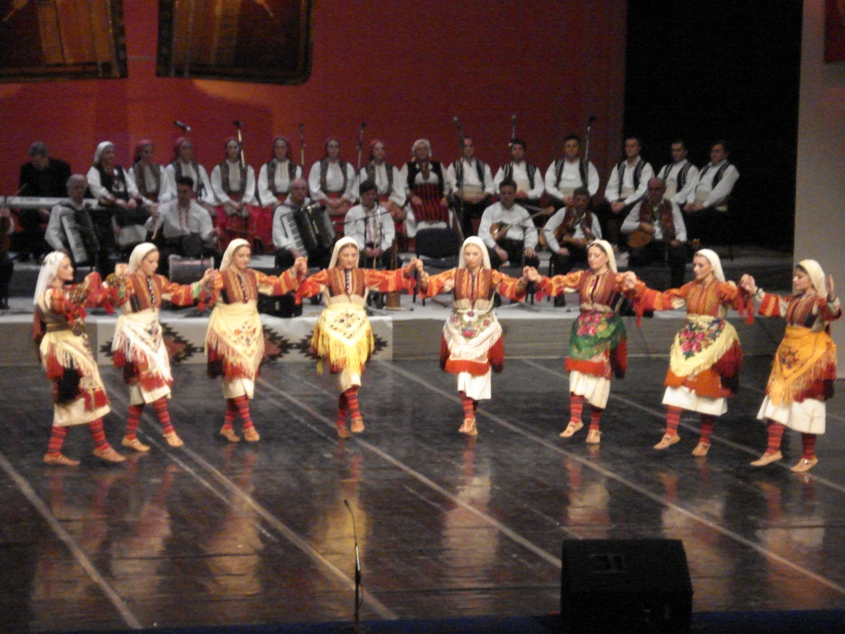 🇷🇴 Romania and 7 moreHorahora (Romanian), horo (Bulgarian), oro (Macedonian), horah (Hebrew)
A circle dance held at weddings across Southeast Europe and among Jewish communities worldwide.Performance · Reception, dance and gifts
🇷🇴 Romania and 7 moreHorahora (Romanian), horo (Bulgarian), oro (Macedonian), horah (Hebrew)
A circle dance held at weddings across Southeast Europe and among Jewish communities worldwide.Performance · Reception, dance and gifts
 🇬🇧 United Kingdom and 5 moreRing fingerdigitus annularis
The fourth digit of the hand where wedding and engagement rings are traditionally worn.Attire · The ceremony
🇬🇧 United Kingdom and 5 moreRing fingerdigitus annularis
The fourth digit of the hand where wedding and engagement rings are traditionally worn.Attire · The ceremony
The same idea elsewhere
Luck, omens and protection on the day compared 🇸🇿 Ludzidzini Royal Village, Eswatini and 1 moreUmhlanga
The annual Swazi and Zulu gathering where young women cut reeds to preserve chastity and offer tribute labour.Rite · The eve
🇸🇿 Ludzidzini Royal Village, Eswatini and 1 moreUmhlanga
The annual Swazi and Zulu gathering where young women cut reeds to preserve chastity and offer tribute labour.Rite · The eve
 🇮🇩 Indonesia and 2 moreKenduri
A communal feast and prayer gathering held by Javanese and Malay communities to mark life events.Feast custom · The weeks before
🇮🇩 Indonesia and 2 moreKenduri
A communal feast and prayer gathering held by Javanese and Malay communities to mark life events.Feast custom · The weeks before
 🇳🇪 In-Gall, Niger and 2 moreGuérewol
A week-long courtship dance where Wodaabe men display their beauty to win the attention of marriageable women.Rite · The weeks before
🇳🇪 In-Gall, Niger and 2 moreGuérewol
A week-long courtship dance where Wodaabe men display their beauty to win the attention of marriageable women.Rite · The weeks before
 🇲🇲 MyanmarMarriage in Myanmar
A blend of Buddhist rites, astrological timing, and family negotiations that defines union across Myanmar's diverse ethnRite · Finding a match
🇲🇲 MyanmarMarriage in Myanmar
A blend of Buddhist rites, astrological timing, and family negotiations that defines union across Myanmar's diverse ethnRite · Finding a match