Music, dance and processionEuropeIndigenous and traditionalSecular and civil
Călușari
In its own language: Călușarii
A traditional Romanian spring dance and male society known for acrobatic leaps and ritual healing.

The Călușari are participants in an old Romanian ritual dance called the căluș. They travel to local communities from Easter to Pentecost to perform acrobatic dances accompanied by fiddlers. The group is a secret, male-only society with origins in pre-Christian warrior traditions.
When is Călușari kept?
Călușari is kept from three weeks after Easter until Pentecost.
The Călușari represent a unique Romanian tradition where men perform a sacred dance to heal and protect their villages. This rite blends acrobatic movement with deep-rooted folk beliefs about fairies and fertility. Participants form a tight-knit brotherhood that travels through rural areas during the spring season. Their performance serves as both entertainment and a spiritual safeguard for the community.
Origins and history
The exact beginnings of this practice remain unclear, though written records appear in the seventeenth century. Historians note that the ritual contains elements unrelated to Christianity, leading to past opposition from church authorities. Some scholars link the name to Latin terms for dance groups or secret societies, while others suggest a connection to ancient horse worship. The tradition likely evolved from tribal warrior societies, maintaining its secrecy and male-only structure throughout centuries of change.
How the dance works
Young, single men join the group after taking an oath of secrecy and completing an initiation. Dressed in white tunics and trousers with colorful ribbons and ankle bells, they perform highly acrobatic movements. The choreography includes high jumps, circular walking patterns, and complex figures performed in place. Dancers often carry ornate sticks or swords, mimicking martial arts. A fool character may also participate, adding humor to the serious ritual. The dance emphasizes physical prowess and precise coordination among all members.
Spiritual meaning
The group believes they can cure those harmed by fairies or evil spirits. Their patron is the Queen of the Fairies, linking the dance to mythical beings associated with fertility and war. The high leaps create an illusion of flight, representing both galloping horses and fairy dancing. Members swear to treat each other as brothers and maintain chastity for nine days. The ritual flag serves as a central symbol of their bond and spiritual authority within the village.
How Călușari is kept
Older men recruit young, physically strong singles into the secret society. After swearing oaths and undergoing initiation, the dancers learn specific acrobatic steps. They travel to various villages between Easter and Pentecost. Accompanied by fiddlers, they perform the ritual dance on weekends. The performance involves high jumps, stick fighting, and circular formations. A designated fool adds comedic relief. The group maintains strict rules about secrecy and behavior during the nine-day ritual period.
When and where
The custom takes place during late spring, specifically from three weeks after Easter until Pentecost. This period, known locally as Rusalii, lasts approximately two weeks. The timing aligns with agricultural cycles and seasonal renewal rituals common in Eastern European folklore.
This tradition is strongest in Romania, particularly in rural villages across the country. It also exists in Moldova, Bulgaria, and North Macedonia. Small groups have appeared in Canada, such as in Vancouver, showing how the diaspora keeps the practice alive abroad.
What Călușari means
The dance symbolizes protection, healing, and community cohesion. The acrobatic leaps represent a bridge between the human and spirit worlds. The horse imagery connects to ancient myths of strength and fertility. The white clothing signifies purity, while the bells ward off evil spirits. The sword and flag reinforce the group's role as guardians of village well-being.
Who takes part
- Group leader: Recruits new members and oversees the initiation rites
- Dancers: Perform acrobatic leaps and stick routines in white attire
- Fiddlers: Provide musical accompaniment for the ritual dances
- The fool: Adds humor and breaks tension during the performance
- Village bride: A skilled female dancer chosen to join the ritual temporarily
If you are a guest
Visitors watch the performance from the village square or open spaces. They may offer food or drink to the traveling dancers as a sign of respect. Locals believe witnessing the dance brings good luck and protects their homes from harm. Guests should observe quietly and avoid interrupting the sacred movements.
Then and now
The tradition has adapted to modern times, with some groups performing on global stages. While rural roots remain strong, urban interest has grown. The secret society aspect has softened in some areas, but core rituals persist. Younger generations continue to learn the steps, ensuring the survival of this unique cultural heritage.
On the wedding table
Symbols: Horse and carriage The ring Swords and daggers Bells and noise The colour white The colour red Gold and jewellery

Questions people ask about Călușari
When is Călușari kept?
Călușari is kept from three weeks after Easter until Pentecost.
What is the Călușari?
It is a traditional Romanian male dance society that performs acrobatic rituals to heal and protect villages. The group travels during spring, combining music, dance, and spiritual practices rooted in pre-Christian beliefs.
Who can join the group?
Only young, single men who demonstrate physical strength can join. They must take an oath of secrecy and complete an initiation process. The group remains exclusive and maintains strict internal rules.
See also
 CsárdásA Hungarian folk dance that begins slowly and ends with a fast spin.
 Chicken DanceA novelty polka song and accompanying hand movements performed at weddings and festivals.
 Bulgarian wedding musicFast-paced instrumental music played at Bulgarian weddings that blends folk, Romani, and Turkish styles.
 Bachelorette partyA pre-wedding gathering for the bride-to-be and her female friends, known as a hen party in many Commonwealth nations.
Good reading and sources
- Călușari on WikipediaEncyclopedia
- More photos on Wikimedia CommonsPhotos and video
- Wikidata recordOpen data
The facts on this page come from the Wikipedia article "Călușari", written by its contributors and used under the CC BY-SA 4.0 licence, and from its Wikidata record (CC0). EveryShaadi rewrote the text in its own words, with AI assistance, and compares every page with the article to make sure no passage is copied. It may be reused under the same CC BY-SA 4.0 licence with a link back.
It may contain mistakes. Wedding customs differ from one family, village and community to the next, and the people who keep them know them best. If something is wrong, tell us. Last refreshed 2026-10-05.
More from Romania
All the traditions of Romania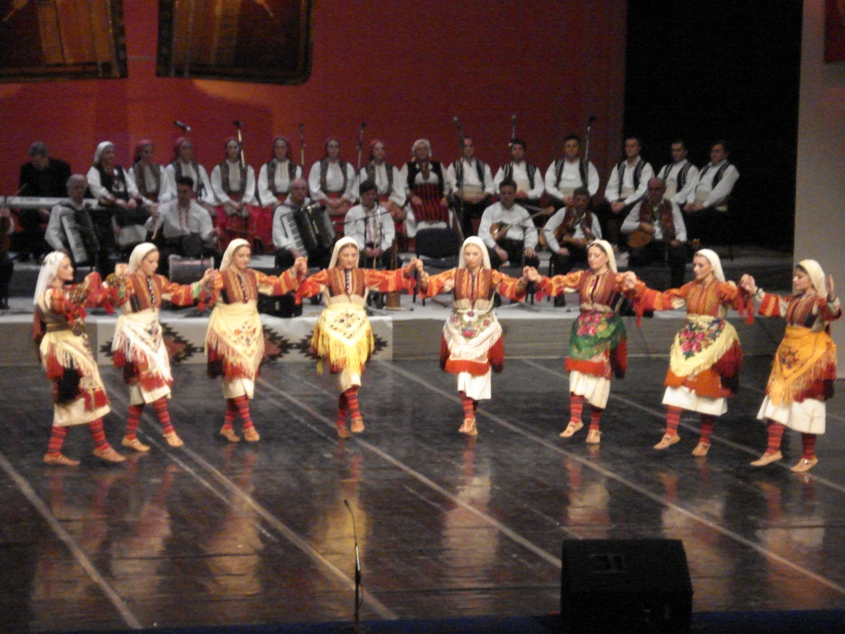 🇷🇴 Romania and 7 moreHorahora (Romanian), horo (Bulgarian), oro (Macedonian), horah (Hebrew)
A circle dance held at weddings across Southeast Europe and among Jewish communities worldwide.Performance · Reception, dance and gifts
🇷🇴 Romania and 7 moreHorahora (Romanian), horo (Bulgarian), oro (Macedonian), horah (Hebrew)
A circle dance held at weddings across Southeast Europe and among Jewish communities worldwide.Performance · Reception, dance and gifts
 🇷🇸 Serbia and 5 moreČočekčočек (Serbian/Macedonian), кючек (Bulgarian), çyçek/qyqek (Albanian), sistemul (Romanian), Tsifteteli (Greek)
A Balkan wedding dance with a distinctive nine-beat rhythm, kept alive by Romani musicians and village celebrations.Performance · The wedding feast
🇷🇸 Serbia and 5 moreČočekčočек (Serbian/Macedonian), кючек (Bulgarian), çyçek/qyqek (Albanian), sistemul (Romanian), Tsifteteli (Greek)
A Balkan wedding dance with a distinctive nine-beat rhythm, kept alive by Romani musicians and village celebrations.Performance · The wedding feast
 🇷🇴 Romania and 5 moreKlezmerקלעזמער
The instrumental wedding music of Ashkenazi Jews, blending Eastern European and Jewish ritual melodies.Performance · Engagement and betrothal
🇷🇴 Romania and 1 morePerinița
A Romanian circle dance where a pillow marks the last partner dance for unmarried youth before a wedding.Performance · The eve
🇷🇴 Romania and 5 moreKlezmerקלעזמער
The instrumental wedding music of Ashkenazi Jews, blending Eastern European and Jewish ritual melodies.Performance · Engagement and betrothal
🇷🇴 Romania and 1 morePerinița
A Romanian circle dance where a pillow marks the last partner dance for unmarried youth before a wedding.Performance · The eve
The same idea elsewhere
Wedding music and the dance floor compared 🇸🇿 Ludzidzini Royal Village, Eswatini and 1 moreUmhlanga
The annual Swazi and Zulu gathering where young women cut reeds to preserve chastity and offer tribute labour.Rite · The eve
🇸🇿 Ludzidzini Royal Village, Eswatini and 1 moreUmhlanga
The annual Swazi and Zulu gathering where young women cut reeds to preserve chastity and offer tribute labour.Rite · The eve
 🇮🇳 Chandigarh, IndiaBhangra
A vigorous Punjabi folk dance performed to the beat of a dhol drum during harvest celebrations.Performance · Reception, dance and gifts
🇮🇳 Chandigarh, IndiaBhangra
A vigorous Punjabi folk dance performed to the beat of a dhol drum during harvest celebrations.Performance · Reception, dance and gifts
 🇪🇬 Egypt and 5 moreMizmarمزمار (mizmār)
A loud double reed instrument played at weddings and festivals across Egypt and the Levant.Performance · Procession and arrival
🇪🇬 Egypt and 5 moreMizmarمزمار (mizmār)
A loud double reed instrument played at weddings and festivals across Egypt and the Levant.Performance · Procession and arrival
 🇨🇺 Havana, Cuba and 5 moreConga line
A long processing line dance that links dancers in single file to a rhythmic drum beat.Performance · Reception, dance and gifts
🇨🇺 Havana, Cuba and 5 moreConga line
A long processing line dance that links dancers in single file to a rhythmic drum beat.Performance · Reception, dance and gifts