🇷🇴 Wedding traditions of Romania
13 traditions from Romania, best known first, across 8 cities and towns.
Romanian weddings blend Orthodox or Catholic rites with deep-rooted folk traditions, featuring communal feasting and symbolic rituals like the bread-breaking ceremony. The event typically spans several days, uniting families through music, dance, and shared meals in a celebration of community and faith.
Marriage in Romania is a profound social and spiritual milestone that unites two families through religious ceremony and extensive folk custom. Whether Orthodox, Catholic, or Protestant, couples follow a path marked by ritualistic steps that emphasize community support and ancestral continuity. The celebration extends beyond the church, involving days of feasting, music, and traditional games that reinforce social bonds across generations.
A typical wedding
The ceremony usually begins with an engagement period where families negotiate terms and agree on a date. On the wedding day, the couple attends a religious service at their respective parish, followed by a reception that can last for days. A central ritual involves the breaking of a ceremonial bread loaf, symbolizing unity and prosperity. Guests participate in traditional dances and songs, often led by local musicians playing instruments like the violin or accordion. The bride may wear a white dress or traditional regional attire, while the groom wears formal clothing. The celebration emphasizes communal joy, with food and drink served abundantly to honor the guests and bless the new union.
Law and registration
Civil marriage is mandatory in Romania, requiring registration at the local town hall before any religious ceremony. The legal age for marriage is eighteen, though exceptions exist with parental consent or judicial approval for those aged sixteen to seventeen. Same-sex marriage is not legally recognized, and there are no provisions for civil unions. Interfaith marriages are permitted, but both parties must comply with civil regulations. The state does not recognize customary or informal unions as legally binding without civil registration. These laws apply uniformly across the country, ensuring all marriages are recorded in the civil registry.
Wedding season
Weddings are commonly held from late spring through early autumn, avoiding the winter months due to weather and agricultural cycles. Traditional calendars often avoid periods of fasting in the Orthodox Church, such as Lent and Advent, when celebrations are less frequent. Summer months offer favorable weather for outdoor receptions and travel for guests. Many families plan weddings around public holidays to allow more relatives to attend. The choice of date often considers astrological beliefs and family preferences, with some avoiding specific days deemed unlucky. This seasonal pattern reflects both practical considerations and cultural rhythms.
Gifts and money
Guests typically give cash gifts in envelopes, which are collected during the reception and later used to offset wedding costs or contribute to the couple’s future. Some guests may also present household items, jewelry, or handmade goods. Families often exchange gifts beforehand, including clothing, linens, and decorative pieces. The amount given varies by relationship closeness and financial means. It is customary for the bride’s family to provide dowry items such as furniture or home essentials, though this practice has evolved. Money is seen as a practical contribution to help the newlyweds establish their household.
As a guest
Guests dress formally, often wearing suits for men and elegant dresses for women, reflecting respect for the occasion. Attendance is expected as a sign of community solidarity, and absence may be viewed negatively. Guests bring gifts, usually cash, presented discreetly during the event. Participation in dances and songs is encouraged, fostering a sense of inclusion. Children are welcome and often engage in playful activities during breaks. Guests are expected to stay for the duration of the reception, sharing meals and celebrating with the families. Respectful behavior and adherence to traditional etiquette are valued throughout the festivities.
The facts in this overview come from the Wikipedia article "Culture of Romania", written by its contributors and used under the CC BY-SA 4.0 licence. EveryShaadi rewrote the text in its own words, with AI assistance, and compares every page with the article to make sure no passage is copied. It may be reused under the same CC BY-SA 4.0 licence with a link back.
A wedding in Romania, stage by stage
The customs written up so far, in the order a wedding unfolds.
Cities, towns and villages of Romania
 🇵🇱 Poland and 6 moreKolachколач (kolach), калач (kalach), kołacz, colac, kalács
A braided or ring-shaped bread that marks weddings and major holidays across Eastern Europe.Feast custom · Engagement and betrothal
🇵🇱 Poland and 6 moreKolachколач (kolach), калач (kalach), kołacz, colac, kalács
A braided or ring-shaped bread that marks weddings and major holidays across Eastern Europe.Feast custom · Engagement and betrothal
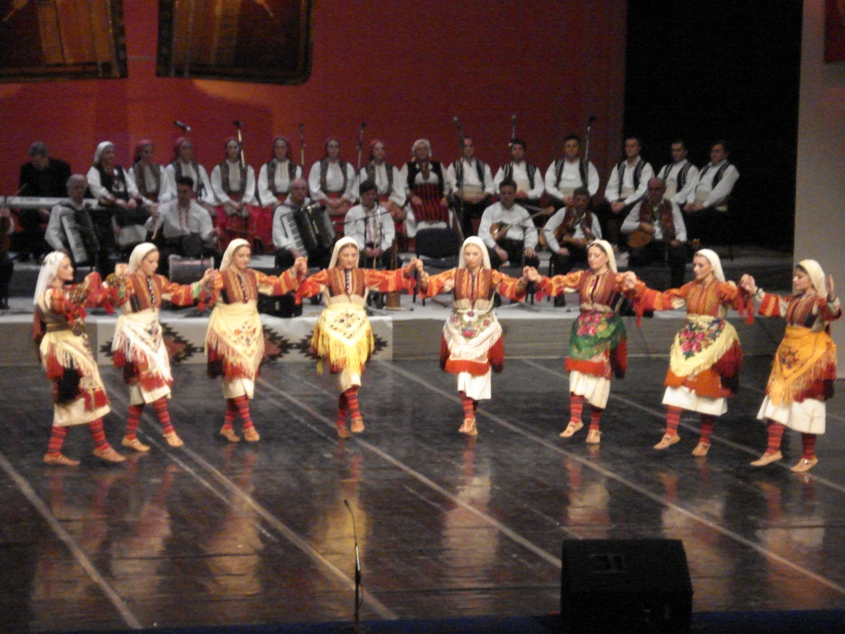 🇷🇴 Romania and 7 moreHorahora (Romanian), horo (Bulgarian), oro (Macedonian), horah (Hebrew)
A circle dance held at weddings across Southeast Europe and among Jewish communities worldwide.Performance · Reception, dance and gifts
🇷🇴 Romania and 7 moreHorahora (Romanian), horo (Bulgarian), oro (Macedonian), horah (Hebrew)
A circle dance held at weddings across Southeast Europe and among Jewish communities worldwide.Performance · Reception, dance and gifts
 🇬🇧 United Kingdom and 5 moreRing fingerdigitus annularis
The fourth digit of the hand where wedding and engagement rings are traditionally worn.Attire · The ceremony
🇬🇧 United Kingdom and 5 moreRing fingerdigitus annularis
The fourth digit of the hand where wedding and engagement rings are traditionally worn.Attire · The ceremony
 🇷🇴 Romania and 4 moreCălușariCălușarii
A traditional Romanian spring dance and male society known for acrobatic leaps and ritual healing.Performance · The weeks before
🇷🇴 Romania and 4 moreCălușariCălușarii
A traditional Romanian spring dance and male society known for acrobatic leaps and ritual healing.Performance · The weeks before
 🇷🇴 Romania and 5 moreKlezmerקלעזמער
The instrumental wedding music of Ashkenazi Jews, blending Eastern European and Jewish ritual melodies.Performance · Engagement and betrothal
🇷🇴 Romania and 5 moreKlezmerקלעזמער
The instrumental wedding music of Ashkenazi Jews, blending Eastern European and Jewish ritual melodies.Performance · Engagement and betrothal
 🇷🇸 Serbia and 5 moreČočekčočек (Serbian/Macedonian), кючек (Bulgarian), çyçek/qyqek (Albanian), sistemul (Romanian), Tsifteteli (Greek)
A Balkan wedding dance with a distinctive nine-beat rhythm, kept alive by Romani musicians and village celebrations.Performance · The wedding feast
🇷🇸 Serbia and 5 moreČočekčočек (Serbian/Macedonian), кючек (Bulgarian), çyçek/qyqek (Albanian), sistemul (Romanian), Tsifteteli (Greek)
A Balkan wedding dance with a distinctive nine-beat rhythm, kept alive by Romani musicians and village celebrations.Performance · The wedding feast
 🇧🇬 Bulgaria and 3 moreMartenitsaмартеница
White and red yarn charms worn in the Balkans to welcome spring and wish for good health.Adornment · The weeks before
🇷🇴 Romania and 3 moreMărțișor
The red and white string charm worn in early spring to welcome the new year.Adornment · The weeks before
🇷🇴 Romania and 1 morePerinița
A Romanian circle dance where a pillow marks the last partner dance for unmarried youth before a wedding.Performance · The eve
🇭🇺 Budapest, Hungary and 5 moreTáncház
A Hungarian folk dance gathering that keeps traditional music and steps alive in homes and community halls.Performance
🇷🇴 RomaniaDragobete
A Romanian spring festival where young people exchange flowers and seek romantic bonds.Betrothal · The weeks before
🇧🇬 Bulgaria and 3 moreMartenitsaмартеница
White and red yarn charms worn in the Balkans to welcome spring and wish for good health.Adornment · The weeks before
🇷🇴 Romania and 3 moreMărțișor
The red and white string charm worn in early spring to welcome the new year.Adornment · The weeks before
🇷🇴 Romania and 1 morePerinița
A Romanian circle dance where a pillow marks the last partner dance for unmarried youth before a wedding.Performance · The eve
🇭🇺 Budapest, Hungary and 5 moreTáncház
A Hungarian folk dance gathering that keeps traditional music and steps alive in homes and community halls.Performance
🇷🇴 RomaniaDragobete
A Romanian spring festival where young people exchange flowers and seek romantic bonds.Betrothal · The weeks before
 🇷🇴 Romania and 5 moreKlezmerקלעזמער
The instrumental dance music played by Ashkenazi Jewish musicians at weddings in Eastern Europe and beyondPerformance · Engagement and betrothal
🇷🇴 Romania and 5 moreKlezmerקלעזמער
The instrumental dance music played by Ashkenazi Jewish musicians at weddings in Eastern Europe and beyondPerformance · Engagement and betrothal
 🇷🇴 Ieud, RomaniaNunta mortului
A symbolic Romanian rite that dresses an unmarried dead person as a bride or groom to complete their life cycle.Rite · The weeks before
🇷🇴 Ieud, RomaniaNunta mortului
A symbolic Romanian rite that dresses an unmarried dead person as a bride or groom to complete their life cycle.Rite · The weeks before
Photo credits on this page
The small pictures above come from Wikimedia Commons under free licences. Some are cropped to fit.
- Martenitsa: Unknown author, CC BY-SA 2.0, source
- Klezmer: Syrena Records (Warsaw), Public domain, source
- Klezmer: Unknown artist identified as "M.D.", Public domain, source
- Nunta mortului: Iosif Berman, CC BY-SA 4.0, source
- Hora: Chajeshukarie ( talk ), Public domain, source
- Čoček: Модернист, CC BY-SA 4.0, source
- Ring finger: RAPMOODDE, CC BY-SA 4.0, source
- Călușari: El bes, CC BY 3.0, source
- Kolach: Лобачев Владимир, CC BY-SA 3.0, source