Wedding dress and clothingSouth Asia
Osariya
In its own language: ඔසරිය
The traditional sari style worn by Sinhalese women in Sri Lanka for weddings and formal events.

The Osariya is a traditional garment of the Sinhalese people in Sri Lanka. It serves as the national dress and is commonly worn by brides during wedding ceremonies. The style originated with the Upper class women of the Kandyan kingdom in the early twentieth century.
When is Osariya kept?
Osariya is kept during wedding ceremonies and other formal occasions.
The Osariya stands as the traditional attire for Sinhalese women in Sri Lanka. Recognized as the national dress, it holds a special place in wedding rituals. This garment reflects the cultural heritage of the Kandyan kingdom. Brides wear this distinct sari style to mark their union. The design combines local weaving traditions with historical influences from neighboring regions.
Origins and history
Scholars debate the exact roots of this garment. Some believe the Nayake dynasty of the Kandyan kingdom shaped its final form. Others point to influences from Mainland Southeast Asia and South India. These regional styles blended with local Kandyan traditions over time. Anagarika Dharmapala later influenced its modern presentation. He advocated for modesty standards aligned with Victorian morality. His vision required a blouse covering the torso completely. He also specified a cloth length of ten riyans for the sari portion.
Style and materials
This garment is a specific form of sari featuring a frill at the waist. It includes a full blouse that covers the midriff entirely. The sleeves are often puffed, adding volume to the upper body. The fabric is typically cotton, chosen for comfort and breathability. The sari is partially tucked in at the front. This styling differs from other regional sari drapes. The outfit can vary significantly depending on the event. Women wear it for daily work or significant celebrations like weddings.
Cultural significance
The Osariya represents the identity of the Sinhalese people. It is considered the national dress of Sri Lanka. The garment connects wearers to the history of the Kandyan kingdom. Upper class women in the past wore this style regularly. Today, it remains a symbol of cultural pride. Brides choose this attire to honor their heritage during marriage. The dress bridges historical customs with contemporary national identity. Its continued use ensures the preservation of traditional weaving techniques.
How Osariya is kept
Brides drape a cotton sari with a frilled waist and a full-sleeved blouse. The blouse covers the midriff and back completely. The sari is tucked at the front and draped around the body. This attire is worn during the wedding ceremony to signify cultural tradition. The style distinguishes Sinhalese weddings from other regional practices.
When and where
It is worn during the wedding ceremony itself. The garment is suitable for various formal occasions throughout the year. There is no specific seasonal restriction mentioned for its use.
The custom is strongest in Sri Lanka, particularly among the Sinhalese community. It originated in the Kandyan kingdom region. Kandy is a central location associated with its history.
What Osariya means
The dress symbolizes Sinhalese national identity and cultural continuity. It reflects the modesty standards promoted by historical figures like Anagarika Dharmapala. Wearing it honors the legacy of the Kandyan kingdom's upper class.
Who takes part
- The bride: Wears the Osariya sari and blouse during the wedding ceremony
- Upper class women: Historically wore the dress during the Kandyan period
If you are a guest
Guests observe the bride wearing the traditional sari. They respect the cultural significance of the attire. No specific guest role or gift is tied directly to the garment itself.
Then and now
The Osariya remains a popular choice for Sinhalese brides. It is worn alongside or instead of more global wedding trends. The style continues to be preserved as part of national heritage.
Questions people ask about Osariya
When is Osariya kept?
Osariya is kept during wedding ceremonies and other formal occasions.
What is the Osariya?
The Osariya is the traditional sari style of the Sinhalese people in Sri Lanka. It serves as the national dress and features a full blouse and frilled waist.
Where did it originate?
It originated with the Kandyan Sinhalese people of the Kandyan kingdom. Influences may come from Southeast Asia and South India.
See also
 TengkolokA folded songket headcloth worn by Malay and Indonesian grooms at weddings
 BeskapThe formal black jacket worn by Javanese men during weddings and official ceremonies.MadisarThe nine-yard sari drape worn by Tamil Brahmin women during weddings and religious rites.
 Baju KurungThe traditional blouse and skirt worn by Malay women for weddings and religious ceremonies
Good reading and sources
The facts on this page come from the Wikipedia article "Osariya", written by its contributors and used under the CC BY-SA 4.0 licence, and from its Wikidata record (CC0). EveryShaadi rewrote the text in its own words, with AI assistance, and compares every page with the article to make sure no passage is copied. It may be reused under the same CC BY-SA 4.0 licence with a link back.
It may contain mistakes. Wedding customs differ from one family, village and community to the next, and the people who keep them know them best. If something is wrong, tell us. Last refreshed 2026-10-05.
More from Sri Lanka
All the traditions of Sri Lanka 🇬🇧 United Kingdom and 3 moreCare cloth
A linen or silk cloth held over the heads of a bride and groom during a Christian wedding blessing.Attire · The ceremony
🇱🇰 Sri LankaBeena marriage
A pre-Islamic Arabian custom where the husband moves to the wife's home and she keeps her own tent.Betrothal · Engagement and betrothal
🇬🇧 United Kingdom and 3 moreCare cloth
A linen or silk cloth held over the heads of a bride and groom during a Christian wedding blessing.Attire · The ceremony
🇱🇰 Sri LankaBeena marriage
A pre-Islamic Arabian custom where the husband moves to the wife's home and she keeps her own tent.Betrothal · Engagement and betrothal
 🇱🇰 Sri LankaPoruwa ceremony
The Sinhalese wedding ritual performed on a carved wooden platform with betel leaves and milk rice.Rite · The ceremony
🇱🇰 Sri LankaPoruwa ceremony
The Sinhalese wedding ritual performed on a carved wooden platform with betel leaves and milk rice.Rite · The ceremony
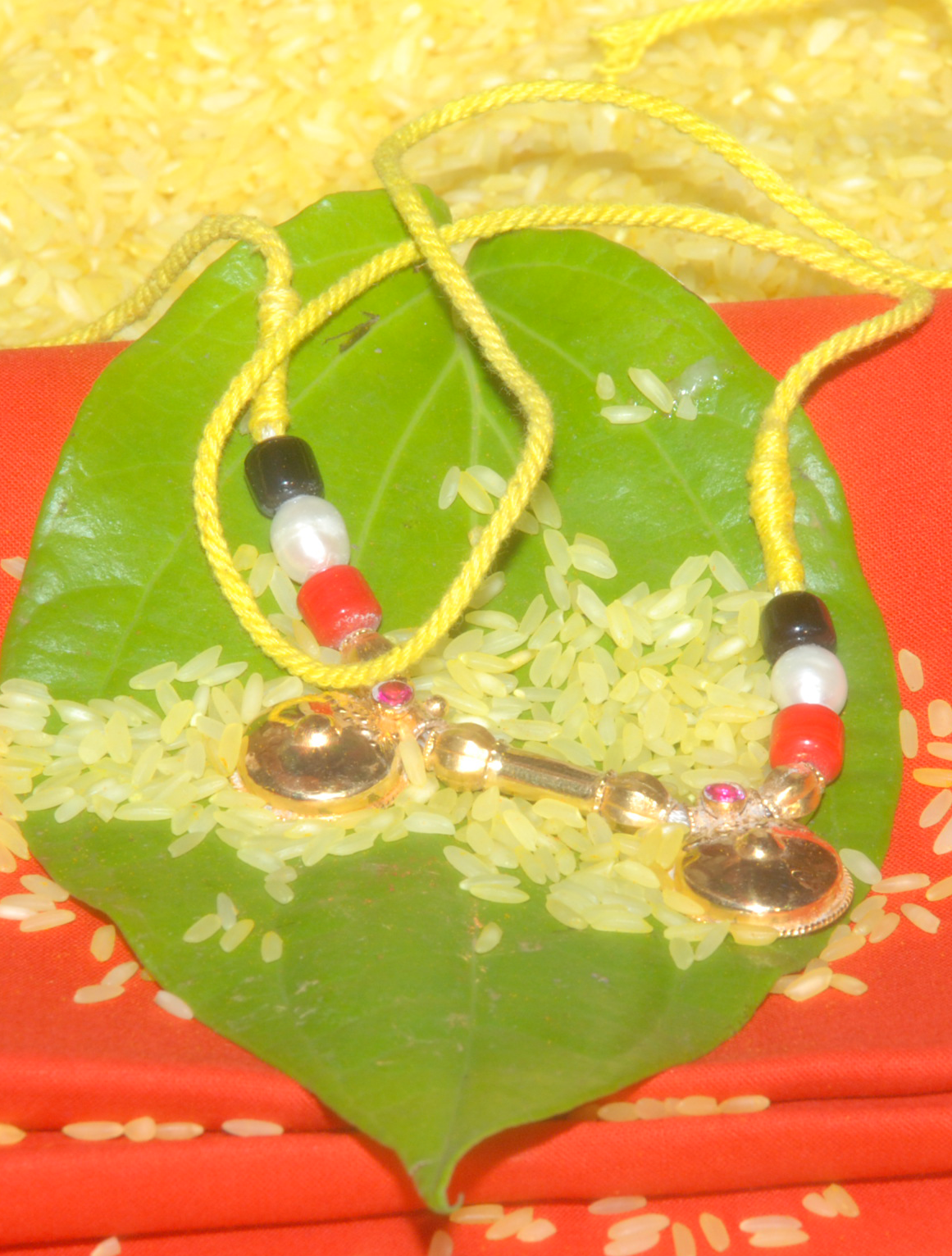 🇮🇳 India and 2 moreMangalsutraमङ्गलसूत्रम् (maṅgalasūtram)
The sacred necklace tied around the bride's neck to mark her marriage.Adornment · The ceremony
🇮🇳 India and 2 moreMangalsutraमङ्गलसूत्रम् (maṅgalasūtram)
The sacred necklace tied around the bride's neck to mark her marriage.Adornment · The ceremony
The same idea elsewhere
The wedding dress and what the couple wear compared
🇲🇾 Malaysia and 4 moreBaju Kurungباجو كوروڠ
The traditional blouse and skirt worn by Malay women for weddings and religious ceremoniesAttire · The weeks before
🇮🇩 IndonesiaBeskapꦧꦼꦱ꧀ꦏꦥ꧀
The formal black jacket worn by Javanese men during weddings and official ceremonies.Attire · The ceremony
🇧🇳 Brunei and 2 moreTengkolokتڠكولوق
A folded songket headcloth worn by Malay and Indonesian grooms at weddingsAttire · The ceremony
 🇲🇱 MaliWeddings in Mali
Multi-day Malian wedding traditions blending Islamic rites, civil law, and local customs with bazin attire.Rite · Engagement and betrothal
🇲🇱 MaliWeddings in Mali
Multi-day Malian wedding traditions blending Islamic rites, civil law, and local customs with bazin attire.Rite · Engagement and betrothal