Wedding dress and clothingEurope
Poffer
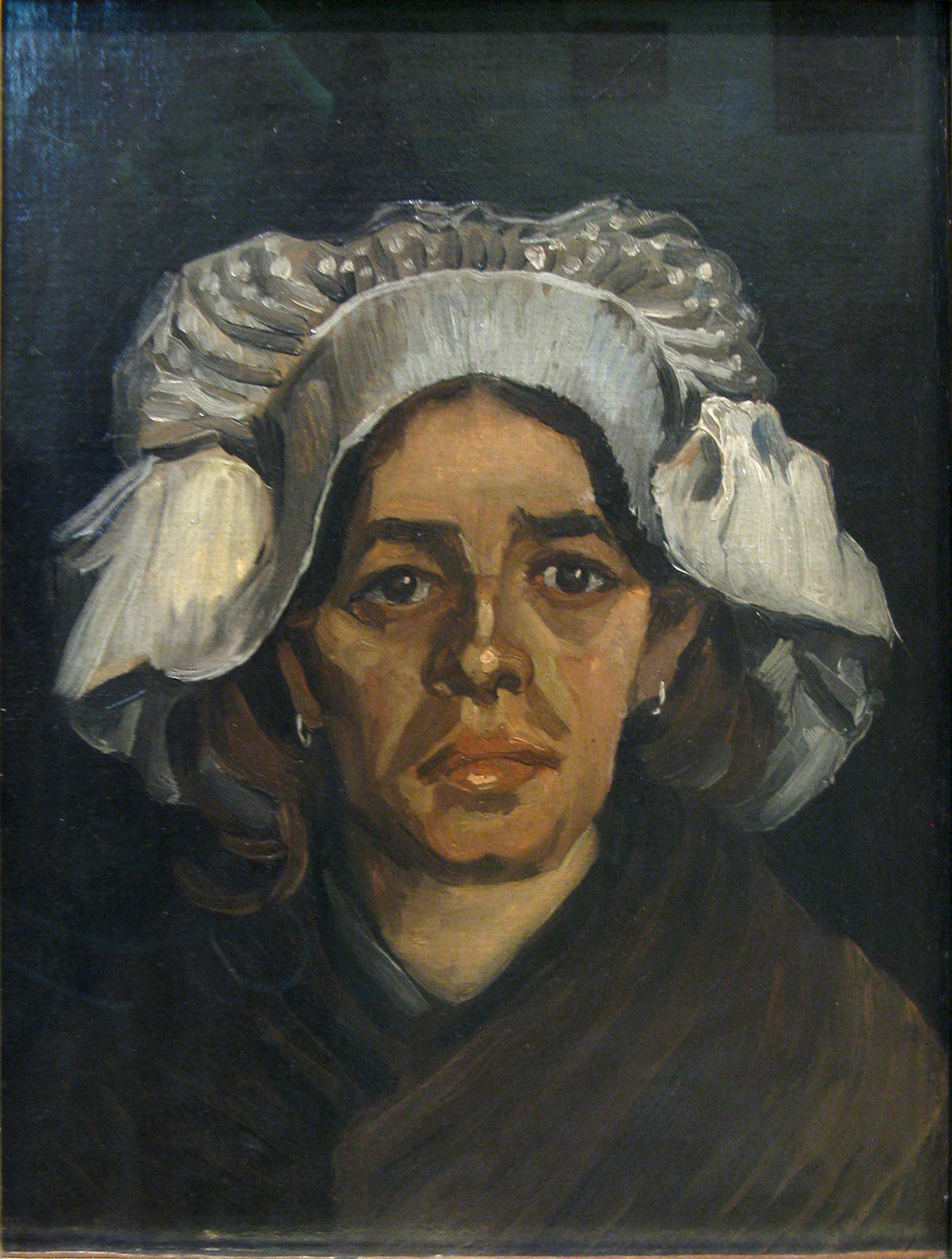
The elaborate white headdress worn by married women in the Netherlands to mark their status.

The poffer is a traditional female headpiece from North Brabant and Limburg in the Netherlands. It was worn exclusively by married women between the 1860s and the 1950s. The size and decoration of the hat reflected the husband's wealth and the wearer's social standing.
When is Poffer kept?
Poffer is kept from the 1860s to the 1950s.
The poffer served as a visible marker of marriage for women in the Dutch provinces of North Brabant and Limburg. This large, white headdress distinguished married women from unmarried girls who wore black bonnets. Its prominence signaled family prosperity and local identity through specific regional styles and decorations.
Design and appearance
The poffer consisted of a white tulle hat trimmed with lace. It featured hanging ribbons called lavaliers that draped over the shoulders. Decorations included pearls, glass beads known as dew drops, and artificial flowers or fruit. Younger women and brides wore floral motifs, while older women used silk apples or pears. The breadth of the ribbons indicated the wearer's wealth. A mourning poffer lacked lace and beads, appearing entirely white or dark depending on the village tradition.
Social history and meaning
Wearing a poffer required significant financial means, so only wives of middle-class men, wealthy farmers, and officials wore them. The hat's size grew with the region's economic improvement after 1860, peaking between 1915 and 1920. Men desired wives in elaborate poffers to display their success. The style varied by hometown, allowing observers to identify a woman's origin. Unmarried women wore simple black capotehoedje bonnets instead.
Crafting and wearing
Poffer makers crafted these hats using starch, borax, and white wax to maintain shape. Each village had specialists who consulted clients on design and fabric. Making a hat took about sixty hours. Women wore a black cap underneath to smooth their hair, followed by a lace or tulle base. The poffer was pinned or tied beneath the chin. Cleaning involved washing in soft soap and sun-bleaching on grass. Prices ranged from fifteen guilders for mourning styles to five hundred for special orders.
How Poffer is kept
A woman first wore a black cap to shape her head. She then placed a lace or tulle hat over it. Finally, she secured the poffer over-bonnet at the front or under the chin. Starch kept the fabric stiff and prevented yellowing. The hat was removed for cleaning and washed in soft soap before being laid on grass to dry. Only married women wore this garment, while unmarried girls wore black bonnets after their first communion.
When and where
It was fashionable from the 1860s until the 1950s. It fell out of favor due to impracticality for cycling and fabric shortages during World War II. Today, it appears mainly at folkloric events like boerenbruiloft peasant weddings during carnival.
It originated in North Brabant and northern Limburg, particularly around 's-Hertogenbosch. Variations existed across the German border near Xanten and in southern Gelderland. Each town maintained distinct local styles for size, shape, and decoration.
What Poffer means
The poffer displayed marital status and family wealth. Larger hats and finer ribbons showed greater prosperity. Specific decorations identified the wearer's hometown and age. Flowers signified youth and marriage, while fruit denoted older women. Mourning styles removed bright elements to show grief.
Who takes part
- Married women: Wear the poffer to display marital status and family wealth
- Unmarried women: Wear black capotehoedje bonnets instead
- Poffer makers: Design, craft, and repair the elaborate headpieces
- Husbands: Provide the financial means for expensive hats
Then and now
The poffer is no longer worn daily. It survives in museum collections and at cultural festivals like peasant weddings during carnival. Some museums hold special exhibits dedicated to these historical garments.
On the wedding table
Symbols: The colour white Gold and jewellery
Questions people ask about Poffer
When is Poffer kept?
Poffer is kept from the 1860s to the 1950s.
Who could wear a poffer?
Only married women wore the poffer. Unmarried girls wore black bonnets called capotehoedje after their first communion around age twelve. Babies and young children did not wear them.
What did the poffer symbolize?
It marked marital status and displayed the husband's wealth. Larger sizes and finer ribbons indicated higher social standing. Decorations also revealed the wearer's hometown and age group.
How much did a poffer cost?
Prices varied by quality. Ordinary hats cost thirty-five guilders. Mourning styles were fifteen guilders. Special designs with handmade lace reached one hundred guilders, with rare examples costing five hundred.
See also
 Ring fingerThe fourth digit of the hand where wedding and engagement rings are traditionally worn.
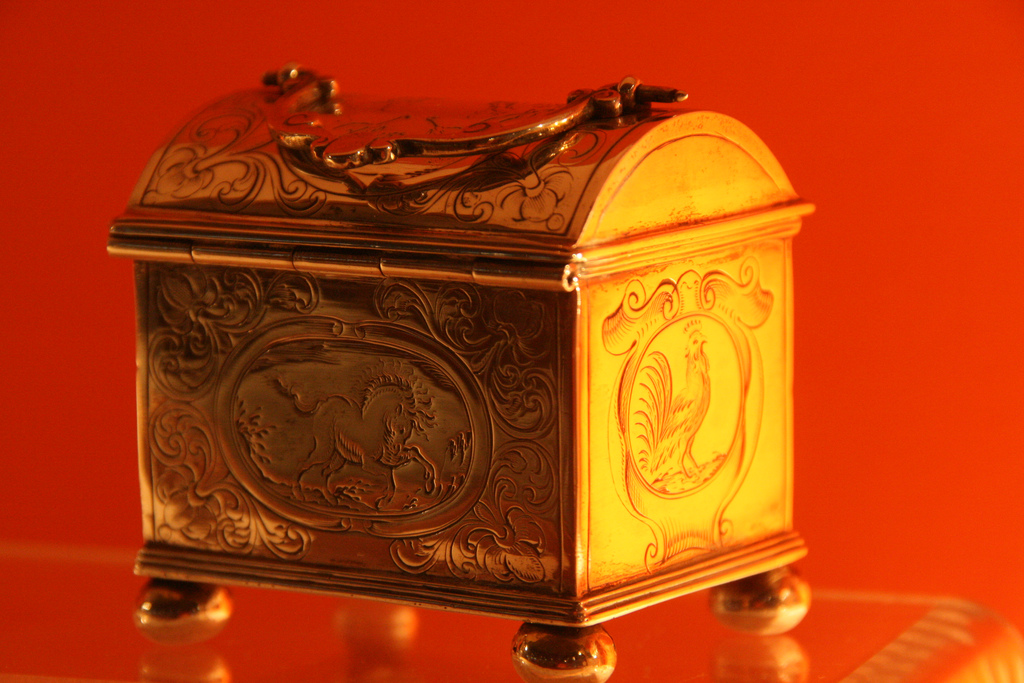 KnottekistjeA silver Frisian box that replaced a knotted cloth as the token of engagement.
 Banns of marriageThe public announcement of an impending marriage in church or town hall to allow for legal objections.Polygamy in Saudi ArabiaA legal marriage structure allowing a man to have up to four wives under Islamic law.
Good reading and sources
- Poffer on WikipediaEncyclopedia
- More photos on Wikimedia CommonsPhotos and video
- Wikidata recordOpen data
The facts on this page come from the Wikipedia article "Poffer", written by its contributors and used under the CC BY-SA 4.0 licence, and from its Wikidata record (CC0). EveryShaadi rewrote the text in its own words, with AI assistance, and compares every page with the article to make sure no passage is copied. It may be reused under the same CC BY-SA 4.0 licence with a link back.
It may contain mistakes. Wedding customs differ from one family, village and community to the next, and the people who keep them know them best. If something is wrong, tell us. Last refreshed 2026-10-06.
More from the Netherlands
All the traditions of the Netherlands
🇬🇧 United Kingdom and 5 moreRing fingerdigitus annularis
The fourth digit of the hand where wedding and engagement rings are traditionally worn.Attire · The ceremony
 🇬🇷 Greece and 5 moreWedding ring
A metal circle worn on the finger to show that a person is married.Attire · Engagement and betrothal
🇫🇮 Finland and 5 moreBanns of marriagekuulutukset avioliittoon (Finnish)
The public announcement of an impending marriage in church or town hall to allow for legal objections.Vow · The weeks before
🇬🇷 Greece and 5 moreWedding ring
A metal circle worn on the finger to show that a person is married.Attire · Engagement and betrothal
🇫🇮 Finland and 5 moreBanns of marriagekuulutukset avioliittoon (Finnish)
The public announcement of an impending marriage in church or town hall to allow for legal objections.Vow · The weeks before
 🇺🇸 United States and 5 moreBridesmaid
A female attendant who supports the bride during a Western wedding ceremony.Family role · Engagement and betrothal
🇺🇸 United States and 5 moreBridesmaid
A female attendant who supports the bride during a Western wedding ceremony.Family role · Engagement and betrothal
The same idea elsewhere
The wedding dress and what the couple wear compared 🇼🇸 Samoa and 3 moreʻIe tōga
Prestige woven mats exchanged at Samoan weddings to honor family ties and chiefly status.Attire · The ceremony
🇼🇸 Samoa and 3 moreʻIe tōga
Prestige woven mats exchanged at Samoan weddings to honor family ties and chiefly status.Attire · The ceremony
 🇳🇬 Lagos, Nigeria and 3 moreAso ebiAsọ-Ẹbí
Matching outfits worn by groups to show solidarity at Yoruba weddings and other ceremoniesAttire · The weeks before
🇳🇬 Lagos, Nigeria and 3 moreAso ebiAsọ-Ẹbí
Matching outfits worn by groups to show solidarity at Yoruba weddings and other ceremoniesAttire · The weeks before
 🇲🇱 MaliWeddings in Mali
Multi-day Malian wedding traditions blending Islamic rites, civil law, and local customs with bazin attire.Rite · Engagement and betrothal
🇲🇱 MaliWeddings in Mali
Multi-day Malian wedding traditions blending Islamic rites, civil law, and local customs with bazin attire.Rite · Engagement and betrothal
 🇳🇬 NigeriaYoruba traditional weddingIgbeyawo
The multi-day Yoruba marriage ceremony featuring traditional attire, family introductions, and the Eru Iyawo gift list.Attire · Engagement and betrothal
🇳🇬 NigeriaYoruba traditional weddingIgbeyawo
The multi-day Yoruba marriage ceremony featuring traditional attire, family introductions, and the Eru Iyawo gift list.Attire · Engagement and betrothal