Modern and changing weddingsEuropeSecular and civilHindu
Same-sex marriage in Sweden
The legal union for same-sex couples that began on 1 May 2009 after the Riksdag passed a gender-neutral law.
Sweden legalized same-sex marriage on 1 May 2009 through a new gender-neutral law. This made it the fifth country in Europe to do so, following earlier steps like registered partnerships introduced in 1995.
When is Same-sex marriage in Sweden kept?
Same-sex marriage in Sweden is kept on 1 May each year since 2009.
Sweden allows same-sex couples to marry legally. The first unions took place on 1 May 2009. This followed years of debate and earlier laws protecting cohabiting partners. The change ended the separate system of registered partnerships.
Legal history
Sweden moved from registered partnerships to full marriage rights over time. Registered partnerships started in 1995, offering many but not all marital benefits. A 2004 committee recommended merging these systems. After political debate, the Riksdag voted 261 to 22 in April 2009 to amend the Marriage Code. The law took effect on 1 May 2009, making Sweden the seventh country globally to legalize same-sex marriage.
Political context
Most political parties supported the reform. The Christian Democrats opposed it, arguing marriage should be between a man and a woman. The Church of Sweden initially suggested keeping the term 'marriage' for opposite-sex couples only. However, by October 2009, the Church allowed its priests to perform same-sex weddings. Public polling showed strong majority support for the legal recognition of these unions across the country.
Cohabitation rules
Before marriage equality, Sweden offered statutory protection for cohabiting couples known as 'sambo'. This status applies when two people live together in a joint home. It covers property division and household goods but offers fewer inheritance rights than marriage. Surviving partners must request assets from heirs rather than inheriting automatically. These rules apply regardless of the couple's gender and have evolved to allow adoption of a partner's children.
First ceremonies
The first same-sex marriage occurred at Stockholm City Hall on 1 May 2009. Alf Karlsson and Johan Lundqvist were the first couple to wed. Their ceremony was officiated by Maria Wetterstrand, a politician from the Green Party. Existing registered partnerships could be converted to marriages upon request. No new partnerships are created under the current system, as marriage is now the sole recognized union type.
How Same-sex marriage in Sweden is kept
Couples register their marriage at a civil registry office or through the Church of Sweden if they choose. The process involves submitting an application and paying a fee. Religious ceremonies are optional. Partners can convert previous registered partnerships into marriages. The state recognizes the union equally with opposite-sex marriages, granting full legal rights including inheritance and adoption.
When and where
Available any day since 1 May 2009. The law was passed in April 2009. First marriages happened on 1 May 2009. Registered partnerships existed from 1995 to 2009.
Primarily in Sweden. Available nationwide through civil offices and participating churches. Stockholm hosted the first ceremonies. Other Scandinavian countries had similar laws earlier.
What Same-sex marriage in Sweden means
Represents legal equality and social acceptance. Marks the end of a separate partnership system. Symbolizes the state's recognition of diverse family structures. Reflects public support for inclusive marriage laws.
Who takes part
- The couple: Registers their union and chooses a ceremony type
- The registrar: Officiates the civil marriage at city halls
- Priests: Perform religious ceremonies if the couple chooses the Church of Sweden
- Heirs: May receive estate portions if the surviving partner does not inherit automatically
If you are a guest
Guests attend the ceremony or reception. They may bring gifts or money. There are no specific traditional dress codes for guests. The event follows standard wedding etiquette. Guests celebrate the couple's legal union.
Then and now
All major parties support same-sex marriage. Some oppose religious officials performing them. The law remains stable. Cohabitation rules continue to evolve. No significant changes are expected soon.
Questions people ask about Same-sex marriage in Sweden
When is Same-sex marriage in Sweden kept?
Same-sex marriage in Sweden is kept on 1 May each year since 2009.
Can religious groups refuse to perform same-sex weddings?
Yes. The Church of Sweden allows priests to opt out. Other religious groups also have this right. Civil ceremonies remain available to everyone.
What replaced registered partnerships?
Marriage replaced registered partnerships. New partnerships cannot be formed. Existing ones can be converted to marriages. Marriage offers full legal equality.
Do cohabiting couples have the same rights as married couples?
No. Cohabiting couples (sambo) have limited property rights. They do not inherit automatically. Married couples have presumptive rights to all joint assets.
See also
 More danicoA Medieval Scandinavian marriage custom allowing polygyny and secular unions outside church control.
 Civil unions in ItalyThe legal framework that grants same-sex couples most marriage rights without allowing joint adoption.Polygamy in UzbekistanThe practice of men taking multiple wives in a country where the law strictly forbids it.Same-sex marriage recognition in SeychellesThe legal standing of two men or two women who wish to wed in the Indian Ocean republic.
Good reading and sources
- Suicide rates fall after gay marriage legalised in Sweden and DenmarkThe Guardian, Article
- Suicide rates fall after gay marriage legalised in Sweden and DenmarkThe Guardian, Article
The facts on this page come from the Wikipedia article "Same-sex marriage in Sweden", written by its contributors and used under the CC BY-SA 4.0 licence, and from its Wikidata record (CC0). EveryShaadi rewrote the text in its own words, with AI assistance, and compares every page with the article to make sure no passage is copied. It may be reused under the same CC BY-SA 4.0 licence with a link back.
It may contain mistakes. Wedding customs differ from one family, village and community to the next, and the people who keep them know them best. If something is wrong, tell us. Last refreshed 2026-10-08.
More from Sweden
All the traditions of Sweden
🇫🇷 France and 4 moreMore danicodansk skik
A Medieval Scandinavian marriage custom allowing polygyny and secular unions outside church control.Betrothal · Engagement and betrothal
 🇵🇱 Krakow, Poland and 4 morePolonaisePolonez, chodzony
A Polish partner dance in triple metre that opens weddings and formal celebrations with measured steps.Performance · Reception, dance and gifts
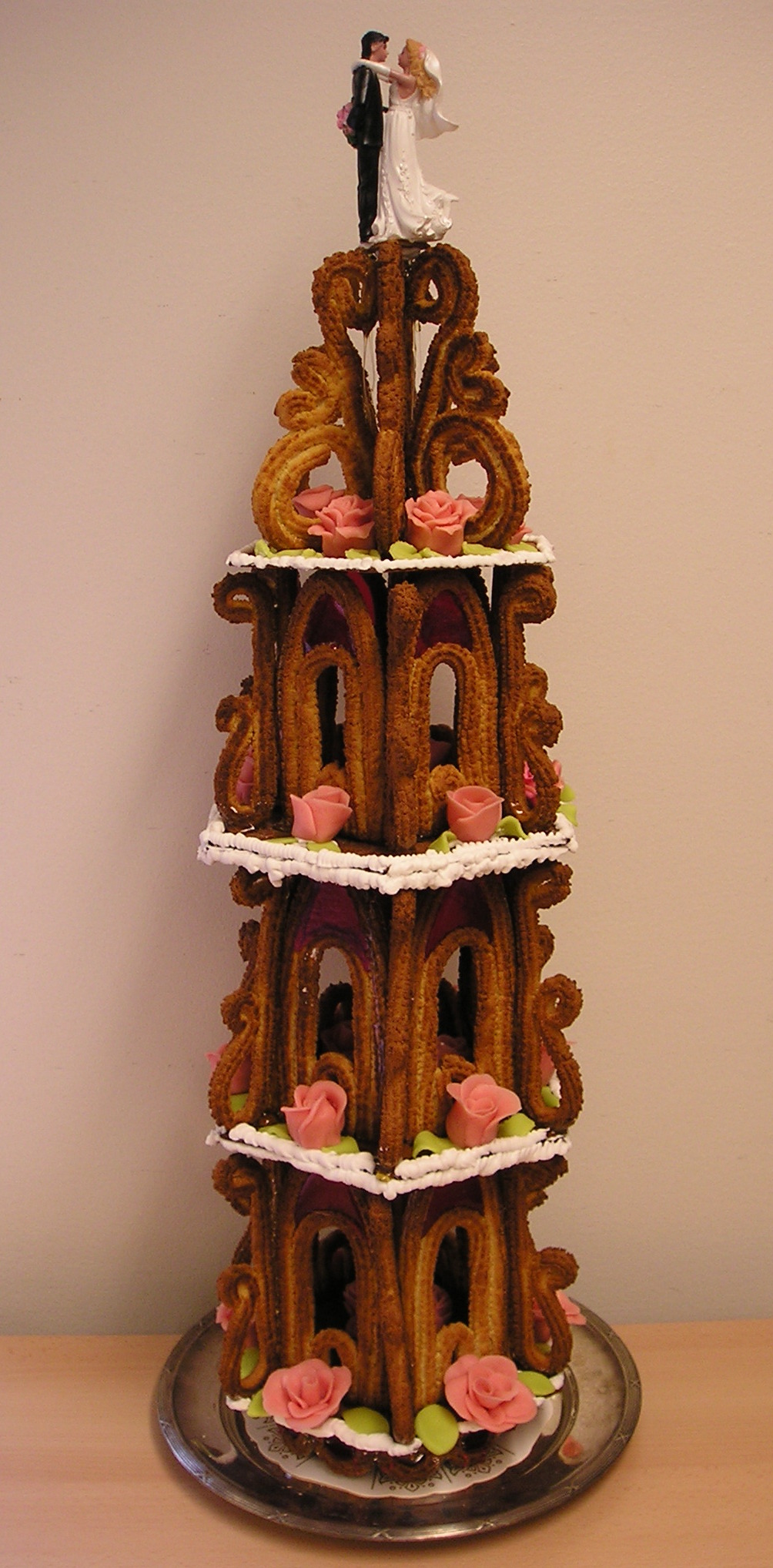 🇸🇪 SwedenKrokan
A multi-tiered almond pastry tower joined by caramel and decorated with marzipan roses, served at Swedish weddings.Feast custom · The wedding feast
 🇩🇪 Germany and 4 moreDower
A share of the husband's property set aside to secure a woman's life if he dies first.Gift custom · Engagement and betrothal
The same idea elsewhere
Interfaith, inter-community and same-sex weddings compared 🇲🇱 MaliWeddings in Mali
Multi-day Malian wedding customs blending Islamic, civil and traditional rites with bazin attire and henna.Feast custom · Engagement and betrothal
 🇰🇷 Seoul, South Korea and 2 moreBlessing ceremony축복결혼식
Mass weddings in which matched couples are blessed into God's lineageRite · Finding a match
🇮🇳 IndiaSambandam
A traditional marriage alliance among specific communities in Kerala, India.Betrothal · Finding a match
 🇰🇷 Seoul, South Korea and 3 moreBlessing ceremony
The large-scale marriage rite of the Unification Church where couples are matched and blessed by their leaders.Rite · The ceremony