Music, dance and processionEuropeSecular and civil
Wedding March (Mendelssohn)
Felix Mendelssohn's C major piece from 1842, used as a recessional at Western weddings.
This instrumental march by Felix Mendelssohn is a staple of Western wedding ceremonies. It serves as the recessional music played after the couple leaves the altar. The tune originates from incidental music for Shakespeare's A Midsummer Night's Dream.
When is Wedding March (Mendelssohn) kept?
Wedding March (Mendelssohn) is kept at the end of the ceremony.
Felix Mendelssohn composed this lively C major march in 1842. It comes from his music for Shakespeare's play. Couples often choose it to walk out of their wedding service. The bright melody signals the start of the celebration.
Origins and history
Mendelssohn wrote the piece in 1842 for a production of A Midsummer Night's Dream. It belongs to his Opus 61 suite. The first recorded use at a wedding happened in England on June 2, 1847. Dorothy Carew married Tom Daniel at St Peter's Church in Tiverton. Organist Samuel Reay performed the work. Its popularity grew significantly in 1858. Victoria, the Princess Royal, selected it for her wedding to Prince Frederick William of Prussia. Queen Victoria loved Mendelssohn's compositions.
Performance traditions
The march is typically played on a church pipe organ. Musicians often shorten the piece by removing certain episodes. It usually follows the Bridal Chorus or Prince of Denmark's March. Those pieces accompany the bride's entrance. Franz Liszt created a piano transcription between 1849 and 1850. Vladimir Horowitz later adapted Liszt's version into a virtuoso showpiece. He performed it as an encore at his concerts.
Russian connections
The Life-Guard Cossack Regiment adopted the march as its regimental tune. This unit served in the Russian Imperial Guard. Alexander II reportedly awarded the march to them. He noted the soldiers had a wedding-like demeanor. An organ in St Ann's Church, Tottenham, holds historical significance. Mendelssohn gave recitals of this march on that instrument during his visits to Britain.
How Wedding March (Mendelssohn) is kept
An organist plays the march after the ceremony concludes. The couple exits the venue while guests watch. The music provides a joyful conclusion to the formal proceedings.
When and where
It is played immediately after the vows are exchanged. The couple walks out of the ceremony space.
It is common in Western countries. The sources mention its use in England and Russia.
What Wedding March (Mendelssohn) means
The bright melody marks the transition from solemnity to celebration. It signals the official end of the religious or civil service.
Who takes part
- organist: plays the march on the church pipe organ
- the couple: walks out of the ceremony venue
Questions people ask about Wedding March (Mendelssohn)
When is Wedding March (Mendelssohn) kept?
Wedding March (Mendelssohn) is kept at the end of the ceremony.
What is the Wedding March?
It is a C major composition by Felix Mendelssohn written in 1842. It comes from his music for Shakespeare's A Midsummer Night's Dream.
Is it legal?
This is a musical composition. There are no legal restrictions on playing it at weddings.
See also
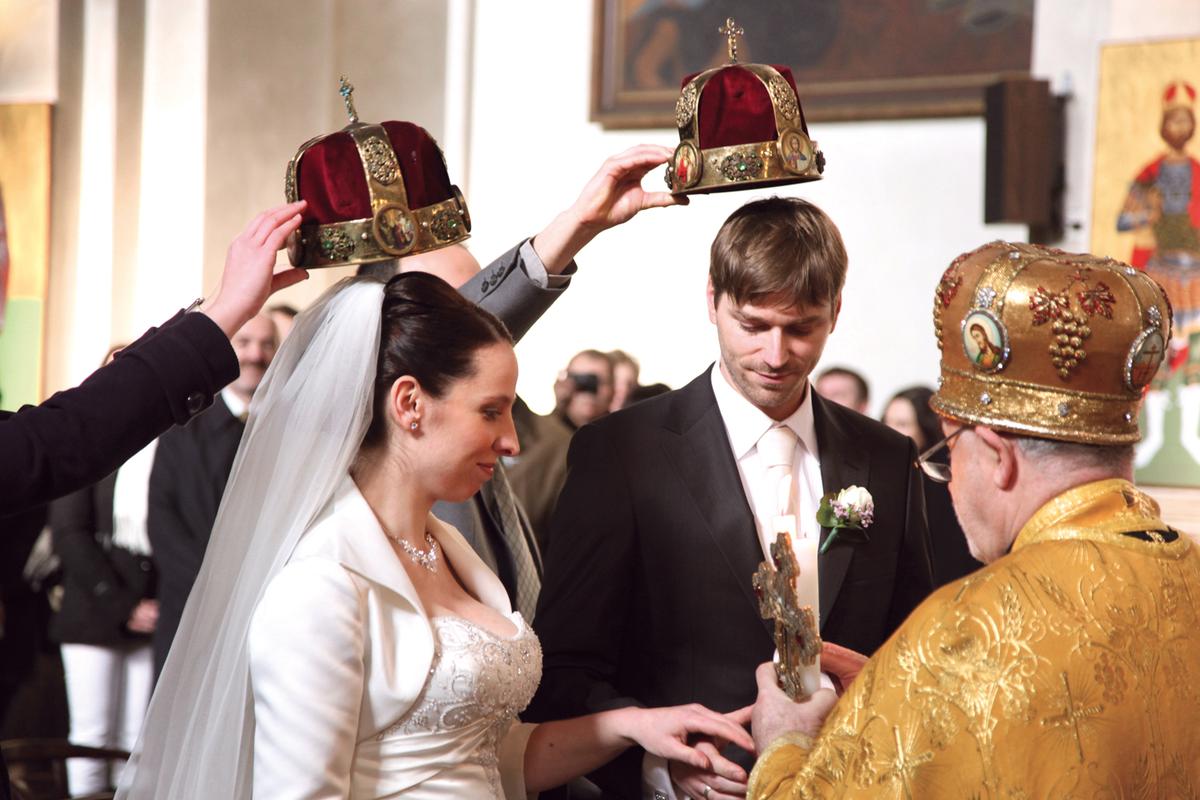 Eastern Orthodox marriageThe Byzantine Rite ceremony where a priest crowns the couple to seal their union in Christ.
 RushnykThe embroidered linen cloth that marks life stages and guides the couple through the wedding ceremony in East Slavic cul
 MantillaA lace or silk veil worn over the head and shoulders by women in Spain and Latin America
 Kazakh wedding ceremonyThe multi-stage Kazakh marriage process featuring the face-revealing feast and the Islamic religious contract.
Good reading and sources
The facts on this page come from the Wikipedia article "Wedding March (Mendelssohn)", written by its contributors and used under the CC BY-SA 4.0 licence, and from its Wikidata record (CC0). EveryShaadi rewrote the text in its own words, with AI assistance, and compares every page with the article to make sure no passage is copied. It may be reused under the same CC BY-SA 4.0 licence with a link back.
It may contain mistakes. Wedding customs differ from one family, village and community to the next, and the people who keep them know them best. If something is wrong, tell us. Last refreshed 2026-10-05.
More from the United Kingdom
All the traditions of the United Kingdom 🇩🇪 Germany and 2 moreBridal ChorusTreulich geführt
The Wagner opera march played for the bride's entrance at Western weddings.Performance · Procession and arrival
🇩🇪 Germany and 2 moreBridal ChorusTreulich geführt
The Wagner opera march played for the bride's entrance at Western weddings.Performance · Procession and arrival
 🇬🇧 United Kingdom and 4 moreCountry dance
A social partner dance from England where couples follow a caller through repeated figures in long lines or squares.Performance · Reception, dance and gifts
🇬🇧 United Kingdom and 4 moreCountry dance
A social partner dance from England where couples follow a caller through repeated figures in long lines or squares.Performance · Reception, dance and gifts
 🇺🇸 Austin, United States and 5 moreBachelorette party
A pre-wedding gathering for the bride-to-be and her female friends, known as a hen party in many Commonwealth nations.Performance · The weeks before
🇺🇸 Austin, United States and 5 moreBachelorette party
A pre-wedding gathering for the bride-to-be and her female friends, known as a hen party in many Commonwealth nations.Performance · The weeks before
 🇮🇱 Jerusalem, Israel and 3 moreJewish wedding
The ceremony and laws that bind a couple in Jewish marriage, from the canopy to the glass.Rite · Engagement and betrothal
🇮🇱 Jerusalem, Israel and 3 moreJewish wedding
The ceremony and laws that bind a couple in Jewish marriage, from the canopy to the glass.Rite · Engagement and betrothal
The same idea elsewhere
The wedding procession and the arrival compared 🇰🇭 Cambodia and 4 moreRomvongរាំវង់ (Khmer)
A circular folk dance across Southeast Asia where couples hold hands and step in time with drums.Performance · Reception, dance and gifts
🇰🇭 Cambodia and 4 moreRomvongរាំវង់ (Khmer)
A circular folk dance across Southeast Asia where couples hold hands and step in time with drums.Performance · Reception, dance and gifts
 🇲🇱 MaliWeddings in Mali
Multi-day Malian wedding traditions blending Islamic rites, civil law, and local customs with bazin attire.Rite · Engagement and betrothal
🇪🇬 Egypt and 3 moreZaffaزفّة
A lively musical procession that marks the start of wedding festivities in Arab culture.Performance · The weeks before
🇲🇱 MaliWeddings in Mali
Multi-day Malian wedding traditions blending Islamic rites, civil law, and local customs with bazin attire.Rite · Engagement and betrothal
🇪🇬 Egypt and 3 moreZaffaزفّة
A lively musical procession that marks the start of wedding festivities in Arab culture.Performance · The weeks before