Ceremony and sacred ritesSouth AsiaMuslim
Bengali Muslim wedding
In its own language: বাঙালি মুসলিম বিয়ে
A multi-day Bengali Muslim marriage blending Islamic rites with local folk traditions.

This is a marriage custom practiced by Bengali Muslims in Bangladesh and West Bengal, India. It combines Islamic legal contracts with pre-Islamic regional rituals like the turmeric ceremony and folk songs to celebrate the union of two families.
When is Bengali Muslim wedding kept?
Bengali Muslim wedding is kept on over multiple days surrounding the wedding date.
The Bengali Muslim wedding merges Islamic law with regional Bengali culture. Families celebrate through distinct stages that include folk music, turmeric applications, and formal contracts. These practices reflect centuries of cultural exchange between Persian, Arabian, and Turkic influences and local Hindu traditions in the Bengal region.
Historical roots
Muslim communities arrived in Bengal during the thirteenth century. They brought religious customs from Persia, Arabia, and Turkestan. Over generations, these groups blended with local society. This mixing created unique wedding styles. For example, the turmeric ritual originated in Hindu Vedic traditions. Bengali Muslims adopted this practice as Gaye Holud. The result is a ceremony that honors both Islamic faith and Bengali heritage.
Pre-wedding celebrations
Before the main event, families hold Gaye Holud. The groom's relatives visit the bride's home to apply turmeric paste. This act symbolizes purification and marks the start of their new life together. Women also sing Meyeli Git. These are traditional folk songs performed without instruments. The lyrics express joy, sadness, or longing. Sometimes percussion drums accompany the vocals. These songs add humor and warmth to the gathering.
The marriage contract
The core of the wedding is the Nikkah. The groom, his father, and the bride's father meet to sign the mahr contract. This document sets a financial gift for the bride. The couple sits separately with same-gender family members. A Qazi officiates the ceremony. He asks each partner if they accept the other. When they say qobul, they sign the papers. They then sit together and receive blessings from their families.
Farewell and reception
The next morning brings the Bidaai ceremony. This is the farewell where the bride leaves her home. She travels to the groom's house in the evening. Later, the Bou Bhat reception introduces the bride to the groom's community. Guests bring gifts and share a meal. The bride's family arrives in a procession called Kone Jatri. They carry items like sarees, dhotis, sweets, and cosmetics. After guests leave, the couple eats with the groom's family.
How Bengali Muslim wedding is kept
Families prepare over several days. First, they perform the turmeric ritual at separate homes. Then, women sing folk songs to mark the occasion. On the wedding day, the couple meets with a Qazi to sign the marriage contract. Family members give blessings. The bride then departs for the groom's house. Finally, a reception follows where the bride's family presents gifts and shares food with everyone present.
When and where
The wedding spans multiple days. It usually begins with pre-wedding rituals like the turmeric application. The main contract happens on the wedding day itself. The farewell occurs the following morning. The reception takes place later that evening or the next day.
This custom is most common in Bangladesh. It is also found among Muslim populations in West Bengal, India. The practices vary slightly between urban centers and rural villages. Village weddings often use bullock carts and palanquins for travel.
What Bengali Muslim wedding means
The turmeric paste represents purification and a fresh start. The folk songs convey deep emotions about leaving home and starting anew. The marriage contract ensures legal and religious recognition. Gifts given during the reception show respect and welcome the bride into the new family.
Who takes part
- The Qazi: Officiates the Nikkah and records the consent
- The bride's family: Hosts the turmeric ritual and brings gifts to the reception
- The groom's family: Visits the bride for turmeric and hosts the final feast
- Rural women: Sings Meyeli Git folk songs throughout the ceremonies
- The bride: Receives turmeric, signs the contract, and joins the groom's household
- The groom: Attends the Nikkah and welcomes the bride to his family
If you are a guest
Guests attend the reception to meet the new couple. They bring gifts such as clothing, sweets, and cosmetics. These items are part of the Phul-Sajjar Tatwa list. People enjoy a shared meal and watch the bridal party arrive. Everyone offers congratulations and blessings to the newlyweds.
Then and now
Modern weddings may shorten some rituals. Urban couples might skip certain village traditions. However, the core elements like the Nikkah and turmeric ceremony remain essential. Many families still value the blend of Islamic and Bengali customs.
On the wedding table
- Sweets: Shared with guests during the Bou Bhat reception
- Fruits: Part of the gift list brought by the bride's family
- Food: Served to all attendees during the post-wedding feast
Symbols: Turmeric The ring Garlands and flowers The colour red The colour white Gold and jewellery Sweets, sugar and honey Wine and the shared cup The wedding cake


Questions people ask about Bengali Muslim wedding
When is Bengali Muslim wedding kept?
Bengali Muslim wedding is kept on over multiple days surrounding the wedding date.
What is Gaye Holud?
It is a pre-wedding ritual where turmeric paste is applied to the bride and groom. This practice symbolizes purification and marks the beginning of their journey together. Both families participate in separate ceremonies.
How is the marriage legally recognized?
The marriage is formalized through the Nikkah. A Qazi oversees the signing of the mahr contract. Both partners must explicitly accept each other before witnesses and family members.
What is the Bou Bhat?
This is the post-wedding reception hosted by the groom's family. It introduces the bride to his relatives and neighbors. Guests bring gifts and share a meal to celebrate the union.
Why are folk songs important?
Meyeli Git songs express the emotions of the wedding day. They convey joy, sorrow, and longing. These songs are passed down through generations and add cultural depth to the celebration.
See also
 MayianThe turmeric paste ceremony held the day before Punjabi weddings in India and Pakistan.
 Odia Hindu weddingThe traditional Hindu marriage ceremony of the Odia people in Odisha, India.
 SvayamvaraThe ancient Hindu ceremony where a princess picks her husband from assembled suitors
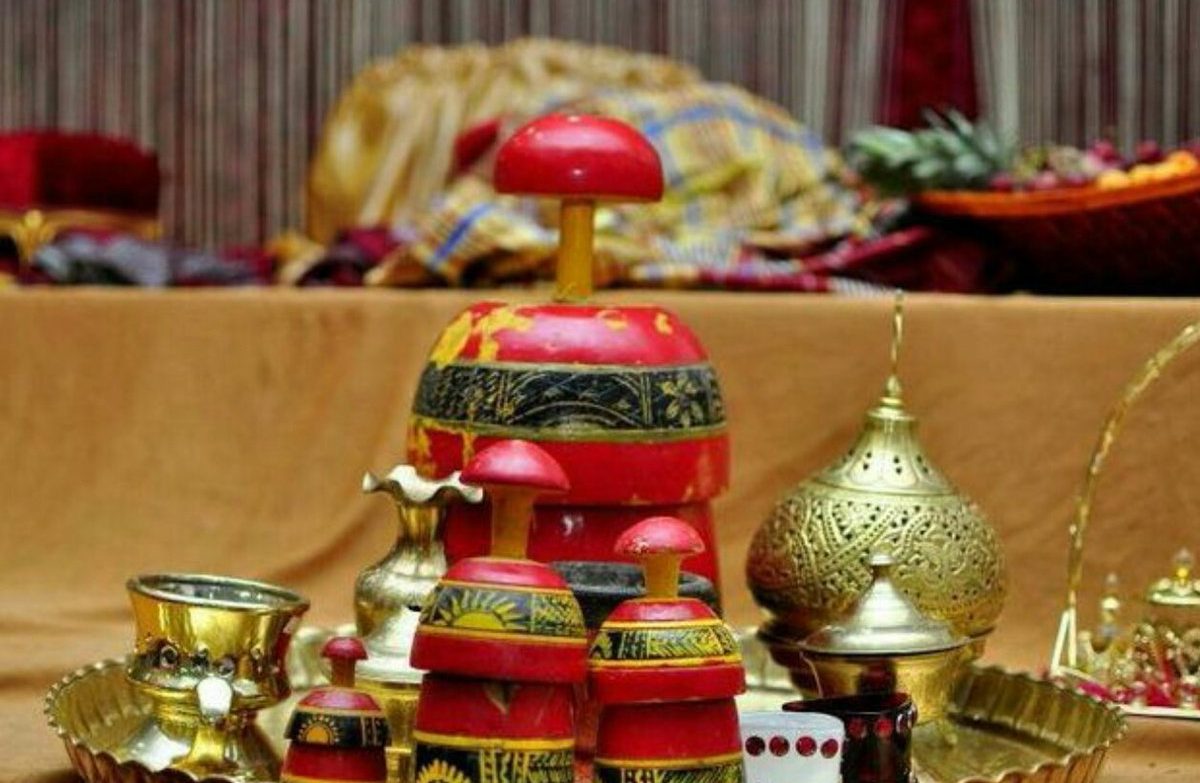 JirtigA Sudanese inauguration ritual where the groom is symbolically crowned as a king.
Good reading and sources
- Traditional Bengali Muslim Wedding SongsSahapedia, Article
- Traditional Bengali Muslim Wedding SongsSahapedia, Article
- Bengali Muslim wedding on WikipediaEncyclopedia
- More photos on Wikimedia CommonsPhotos and video
- Wikidata recordOpen data
The facts on this page come from the Wikipedia article "Bengali Muslim wedding", written by its contributors and used under the CC BY-SA 4.0 licence, and from its Wikidata record (CC0). EveryShaadi rewrote the text in its own words, with AI assistance, and compares every page with the article to make sure no passage is copied. It may be reused under the same CC BY-SA 4.0 licence with a link back.
It may contain mistakes. Wedding customs differ from one family, village and community to the next, and the people who keep them know them best. If something is wrong, tell us. Last refreshed 2026-10-05.
More from Bangladesh
All the traditions of Bangladesh 🇮🇳 India and 1 moreAlpanaআলপনা (Bengali)
Rice flour floor paintings that bless homes and mark wedding celebrations in Bengal.Adornment · The weeks before
🇧🇩 Bangladesh and 1 moreBou Bhatবউ ভাত
A feast hosted by the groom's family to welcome the bride into her new home.Feast custom · After the wedding
🇮🇳 India and 1 moreAlpanaআলপনা (Bengali)
Rice flour floor paintings that bless homes and mark wedding celebrations in Bengal.Adornment · The weeks before
🇧🇩 Bangladesh and 1 moreBou Bhatবউ ভাত
A feast hosted by the groom's family to welcome the bride into her new home.Feast custom · After the wedding
 🇮🇳 India and 1 moreAiburo Bhaatআইবুড়ো ভাত
The final bachelor feast for the bride and groom before their Bengali weddingFeast custom · The weeks before
🇮🇳 India and 1 moreAiburo Bhaatআইবুড়ো ভাত
The final bachelor feast for the bride and groom before their Bengali weddingFeast custom · The weeks before
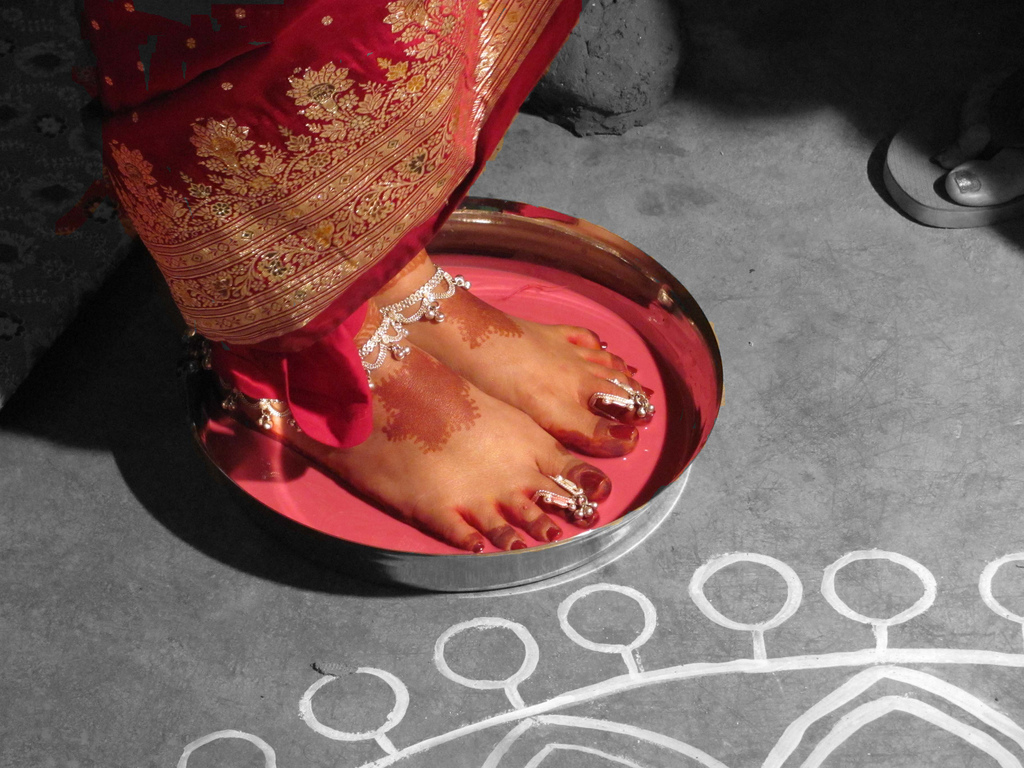 🇮🇳 India and 2 moreAltaআলতা (Bengali)
A red dye applied to hands and feet as an auspicious adornment in South Asian weddings and festivals.Adornment · The weeks before
🇮🇳 India and 2 moreAltaআলতা (Bengali)
A red dye applied to hands and feet as an auspicious adornment in South Asian weddings and festivals.Adornment · The weeks before
The same idea elsewhere
Vows, contracts and witnesses compared 🇦🇿 AzerbaijanAzerbaijani wedding traditionsAzərbaycanın toy adətləri
The multi-step family rituals of Azerbaijani weddings, from matchmaking to the henna night.Rite · Finding a match
🇦🇿 AzerbaijanAzerbaijani wedding traditionsAzərbaycanın toy adətləri
The multi-step family rituals of Azerbaijani weddings, from matchmaking to the henna night.Rite · Finding a match
 🇯🇵 Tokyo, JapanShinto wedding神前結婚 (Shinzen kekkon)
A Shinto purification ritual featuring sake sharing and kimono attire held at a shrine or venue.Rite · The ceremony
🇯🇵 Tokyo, JapanShinto wedding神前結婚 (Shinzen kekkon)
A Shinto purification ritual featuring sake sharing and kimono attire held at a shrine or venue.Rite · The ceremony
 🇮🇷 Tehran, Iran and 1 moreIranian weddingمراسم عروسی در ایران
A multi-stage ceremony rooted in Zoroastrianism and Islam that binds families through courtship, feasts, and sacred vowsRite · Finding a match
🇮🇷 Tehran, Iran and 1 moreIranian weddingمراسم عروسی در ایران
A multi-stage ceremony rooted in Zoroastrianism and Islam that binds families through courtship, feasts, and sacred vowsRite · Finding a match
 🇵🇱 Poland and 1 moreBadchenבּדחן (badkhn)
The Ashkenazi Jewish wedding entertainer and master of ceremonies who guides the couple through ritual stages with song Performance · Engagement and betrothal
🇵🇱 Poland and 1 moreBadchenבּדחן (badkhn)
The Ashkenazi Jewish wedding entertainer and master of ceremonies who guides the couple through ritual stages with song Performance · Engagement and betrothal