Wedding dress and clothingEast Asia
Deel
The traditional long robe worn by Mongol people for daily life and special occasions like weddings.

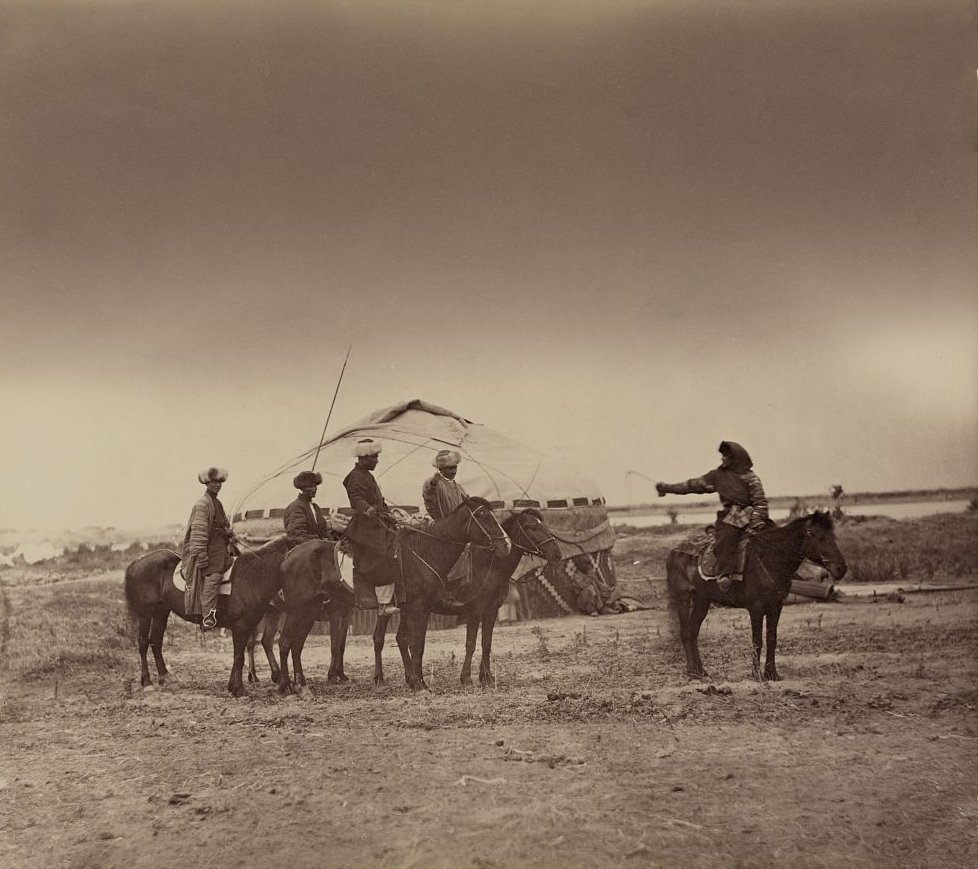
The deel is a traditional long robe worn by Mongols across Mongolia and other regions. It serves as everyday clothing for herders and formal attire for ceremonies, including weddings, where silk versions are preferred over wool or cotton.
When is Deel kept?
Deel is kept on festive occasions and during wedding ceremonies.
The deel is a traditional garment central to Mongol culture. This long robe provides warmth and modesty for daily life. For weddings, families select special silk versions to mark the importance of the union. The design allows freedom of movement while covering the body completely.
Design and construction
This garment resembles a heavy coat when hanging unused. The wearer pulls the sides together against their body rather than using center buttons. The left side covers the right side. Metal clasps secure the top section near the shoulder and neck. These fasteners keep the robe closed securely against wind and cold. The fabric fans out below the knees, creating a wide silhouette that protects the legs.
Materials and colors
Common daily deels use wool, cotton, or brocade. Wedding robes often feature silk outer layers to show status and celebration. Colors vary widely but blue, olive, and burgundy remain popular choices. The choice of material depends on the season and the wearer's social standing. Luxurious cashmere versions exist for those who can afford them.
Fit and pockets
A wide sash wraps around the waist to tighten the robe. This belt creates a large internal pocket between the overlapping flaps. Men sometimes carry cups or small boxes in this space. Women typically wear the fit closer to the body. Men prefer looser sleeves and deeper pockets. The sash itself may be made of leather or silk with ornate buckles.
How Deel is kept
The couple wears matching or complementary silk deels during the ceremony. A wide sash secures the robe at the waist. The left flap crosses over the right side and stays closed with metal clasps. This style ensures the wearer remains warm and covered throughout the event. Herders wear wool versions daily, while city dwellers reserve silk deels for festivals.
When and where
Worn during wedding ceremonies and major festivals. The specific date depends on the lunar calendar and family traditions. Silk versions are chosen specifically for the wedding day to honor the occasion.
Most common in Mongolia among herding communities. Urban residents wear them less frequently except for cultural events. Other Mongol groups in regions like Xinjiang also maintain this tradition.
What Deel means
The deel represents cultural identity and practicality. The overlapping flaps symbolize protection and modesty. The wide sash signifies strength and readiness. Wearing a silk deel for a wedding shows respect for tradition and marks the significance of the marriage bond within the community.
Who takes part
- The bride: Wears a fitted silk deel with a decorative sash
- The groom: Wears a looser silk deel with wider sleeves
- Elders: Often wear traditional deels to show respect for heritage
If you are a guest
Guests may wear modern clothing or traditional deels depending on the region. If wearing a deel, they should ensure the sash is tied securely. The garment is comfortable for sitting and moving during the reception.
Then and now
Urban Mongols rarely wear deels daily. Younger generations reserve them for special events. The style remains strong in rural areas where herding continues. Modern materials like synthetic blends occasionally appear alongside traditional fabrics.

Questions people ask about Deel
When is Deel kept?
Deel is kept on festive occasions and during wedding ceremonies.
What is a deel?
It is a traditional long robe worn by Mongol people. It functions as both everyday clothing and formal wear for weddings. The design includes overlapping flaps secured by clasps and a wide waist sash.
How does it stay closed?
The left side crosses over the right side. Metal clasps hold the top section near the neck and shoulders. A wide sash wraps around the waist to keep the lower part secure against the body.
See also
 TengkolokA folded songket headcloth worn by Malay and Indonesian grooms at weddings
 BeskapThe formal black jacket worn by Javanese men during weddings and official ceremonies.MadisarThe nine-yard sari drape worn by Tamil Brahmin women during weddings and religious rites.
 Baju KurungThe traditional blouse and skirt worn by Malay women for weddings and religious ceremonies
Good reading and sources
- Encyclopaedia BritannicaArticle
- Culture of the Mongol DeelUNESCO, Heritage listing
- Culture of the Mongol DeelUNESCO, Article
- Deel (clothing) on WikipediaEncyclopedia
- More photos on Wikimedia CommonsPhotos and video
- Wikidata recordOpen data
The facts on this page come from the Wikipedia article "Deel (clothing)", written by its contributors and used under the CC BY-SA 4.0 licence, and from its Wikidata record (CC0). EveryShaadi rewrote the text in its own words, with AI assistance, and compares every page with the article to make sure no passage is copied. It may be reused under the same CC BY-SA 4.0 licence with a link back.
It may contain mistakes. Wedding customs differ from one family, village and community to the next, and the people who keep them know them best. If something is wrong, tell us. Last refreshed 2026-10-05.
More from Mongolia
All the traditions of Mongolia 🇨🇳 China and 4 moreCloud collar云肩 (yúnjiān)
A detachable shoulder collar worn by Han Chinese brides to frame the face and symbolize cosmic order.Attire · The weeks before
🇨🇳 China and 4 moreCloud collar云肩 (yúnjiān)
A detachable shoulder collar worn by Han Chinese brides to frame the face and symbolize cosmic order.Attire · The weeks before
 🇰🇬 Kyrgyzstan and 2 moreAla kachuuала качуу
A Kyrgyz custom of taking a woman for marriage, ranging from consensual elopement to forced abduction.Betrothal · Finding a match
🇰🇬 Kyrgyzstan and 2 moreAla kachuuала качуу
A Kyrgyz custom of taking a woman for marriage, ranging from consensual elopement to forced abduction.Betrothal · Finding a match
 🇳🇵 Nepal and 2 moreKhata
A ceremonial scarf offered to show respect and welcome at weddings and other gatherings in Tibet and Nepal.Adornment · Reception, dance and gifts
🇳🇵 Nepal and 2 moreKhata
A ceremonial scarf offered to show respect and welcome at weddings and other gatherings in Tibet and Nepal.Adornment · Reception, dance and gifts
 🇨🇳 Beijing, China and 4 moreHeqin和親 (Héqīn)
A historical Chinese policy of uniting imperial families with neighboring rulers to secure peace.Betrothal · Engagement and betrothal
🇨🇳 Beijing, China and 4 moreHeqin和親 (Héqīn)
A historical Chinese policy of uniting imperial families with neighboring rulers to secure peace.Betrothal · Engagement and betrothal
The same idea elsewhere
The wedding dress and what the couple wear compared 🇳🇬 Lagos, Nigeria and 3 moreAso ebiAsọ-Ẹbí
Matching outfits worn by groups to show solidarity at Yoruba weddings and other ceremoniesAttire · The weeks before
🇳🇬 Lagos, Nigeria and 3 moreAso ebiAsọ-Ẹbí
Matching outfits worn by groups to show solidarity at Yoruba weddings and other ceremoniesAttire · The weeks before
 🇪🇹 Addis Ababa, Ethiopia and 1 moreZuria
The ankle-length dress with woven hem bands worn by Tigrinya and Amhara women for weddings and holidays.Attire · The weeks before
🇪🇹 Addis Ababa, Ethiopia and 1 moreZuria
The ankle-length dress with woven hem bands worn by Tigrinya and Amhara women for weddings and holidays.Attire · The weeks before
 🇲🇱 MaliWeddings in Mali
Multi-day Malian wedding traditions blending Islamic rites, civil law, and local customs with bazin attire.Rite · Engagement and betrothal
🇲🇱 MaliWeddings in Mali
Multi-day Malian wedding traditions blending Islamic rites, civil law, and local customs with bazin attire.Rite · Engagement and betrothal
 🇮🇳 IndiaShankha
White conch shell bangles worn by Bengali Hindu married women as a symbol of their husband's well-being.Adornment · Engagement and betrothal
🇮🇳 IndiaShankha
White conch shell bangles worn by Bengali Hindu married women as a symbol of their husband's well-being.Adornment · Engagement and betrothal