Wedding dress and clothingSoutheast AsiaHinduBuddhist
Traditional Vietnamese wedding
In its own language: Lễ cưới truyền thống Việt Nam
The multi-stage ceremony of betrothal, engagement and union that marks a marriage in Vietnam.

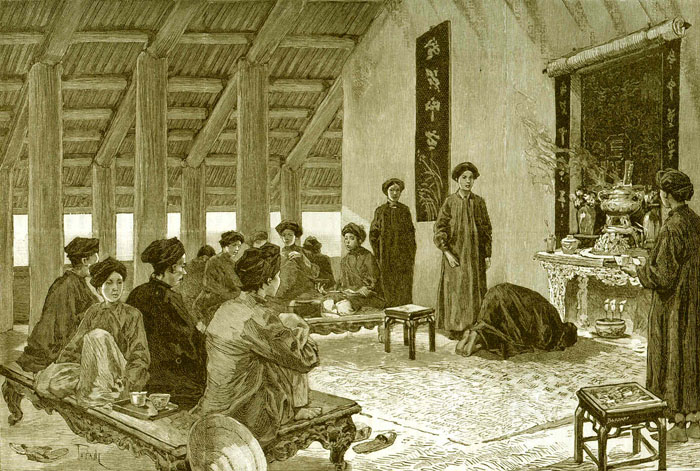
A traditional Vietnamese wedding is a series of rites influenced by Confucian and Buddhist values. It begins with the proposal, moves to an engagement feast, and concludes with the formal handover of the bride. The event brings two families together through specific gifts, attire and rituals.
When is Traditional Vietnamese wedding kept?
Traditional Vietnamese wedding is kept at various stages from proposal to wedding day.
The traditional Vietnamese wedding is a structured sequence of family gatherings and rites. It reflects deep cultural roots in Confucian and Buddhist traditions. The process moves from initial proposals to formal engagements and finally to the wedding ceremony itself. Each stage involves specific exchanges of gifts and symbolic acts that bind two families together in a lasting alliance.
Clothing and style
Wedding attire has evolved significantly over time. During the Nguyễn dynasty after 1744, couples began wearing elaborate áo tấc robes. Brides often wore layered gowns in pink, blue or black, while grooms chose darker tones. Modern couples may rent these custom-made outfits or purchase them. The designs feature intricate embroidery of dragons or phoenixes. Bridesmaids and groomsmen wear simpler matching áo dài. Guests typically dress in formal Western clothes or traditional áo dài without headpieces. The clothing remains a central visual element of the celebration.
Proposal and engagement
The process starts with lễ dạm ngõ, where the groom's family visits the bride's home. They bring betel leaves, areca nuts, wine and sweets to ask for permission to marry. This informal meeting allows families to discuss dowries and set dates based on horoscopes. Months later, the đám hỏi engagement party occurs. The groom's side delivers lacquer boxes filled with fruits, cakes, tobacco and a roasted pig. These odd-numbered sets symbolize luck. The bride presents tea to the groom's family, and ancestors are honored with incense. Gold jewelry is placed on the bride during this rite.
Ceremony and handover
The wedding day involves receiving the bride at her home before bringing her to the groom's house. Historically, the groom's family visited again to confirm the bride had not changed her mind. The night before, the bride's mother combs her hair, offering final advice on wifely duties. This moment is often emotional as it marks the end of their close bond. The ceremony serves as a reunion for extended family members who travel to witness the union. Both Vietnamese and overseas communities maintain these hybrid traditions alongside modern Western styles.
How Traditional Vietnamese wedding is kept
The groom's family initiates contact by visiting the bride's parents with symbolic gifts like betel and areca nuts. After agreeing on terms, they host an engagement party with lacquered gift boxes containing food and gold. On the wedding day, the groom arrives to receive the bride. The bride's mother performs a hair-combing ritual beforehand. The couple then travels to the groom's home for the main ceremony. Family elders introduce both sides, and incense is burned to honor ancestors. The event concludes with a reception for all guests.
When and where
The timeline spans months. It begins with a proposal date chosen by fortune tellers. An engagement party follows about six months later. The wedding itself happens after final preparations. Dates are selected based on the couple's horoscopes and spiritual guidance. The hair-combing ritual takes place the night before the main ceremony.
This custom originates in Vietnam. It is practiced by Vietnamese communities worldwide. The attire and rituals reflect historical influences from the Nguyễn dynasty. Urban and rural areas may vary slightly in formality. Overseas Vietnamese often blend these rites with local customs.
What Traditional Vietnamese wedding means
Gifts like betel and areca nuts represent agreement and respect. Odd numbers of gift boxes bring good fortune. Red paper signifies luck for the young couple. The embroidered lovebirds given by the bride symbolize fidelity. The hair-combing ritual marks the transition from daughter to wife. Incense connects the living couple with their ancestral lineage. The exchange of tea shows mutual respect between families.
Who takes part
- Groom's family: Visits the bride's home with gifts to propose and later deliver engagement offerings
- Bride's mother: Combs the bride's hair and offers final advice the night before
- Elders: Introduce family members and oversee the formal proceedings
- Unmarried men: Carry the lacquered gift boxes to the bride's house
- Unmarried women: Receive the gift boxes from the groom's entourage
- Fortune teller: Selects auspicious dates based on the couple's horoscopes
If you are a guest
Guests attend the engagement party and wedding reception. Women are expected to wear áo dài or formal dresses. Men typically wear suits or traditional attire. Guests receive refreshments served by the bride's family. They witness the exchange of gifts and the pouring of tea. Respectful behavior is maintained throughout the formal introductions.
Then and now
Arranged marriages have become obsolete in recent decades. Many couples now choose their partners freely. The engagement ceremony is less common but still used to announce unions. Some families keep the formal rites while others simplify them. Hybrid weddings combining Vietnamese and Western styles are popular. Couples often alter traditional gown designs to suit modern tastes.
On the wedding table
- Betel leaves and areca nuts: Symbolic gifts presented during the proposal to show agreement
- Roasted pig: A traditional offering delivered in the engagement gift boxes
- Tea: Served by the bride and groom to honor each other's families
- Wine: Provided by the groom's family during the initial proposal meeting
- Fruits and cakes: Part of the lacquered gift sets exchanged at the engagement
- Tobacco: Included in the traditional gift offerings for the engagement
Symbols: The ring Tea and coffee Wine and the shared cup The colour red Gold and jewellery The wedding cake


Questions people ask about Traditional Vietnamese wedding
When is Traditional Vietnamese wedding kept?
Traditional Vietnamese wedding is kept at various stages from proposal to wedding day.
What is the first step in a traditional Vietnamese wedding?
The process begins with lễ dạm ngõ, a proposal visit. The groom's family brings betel leaves, areca nuts and sweets to the bride's home. They ask for permission to marry and discuss future arrangements. This informal meeting sets the foundation for the entire wedding process.
What do the gift boxes symbolize?
The lacquered boxes contain odd numbers of items to bring luck. Red paper covers the boxes to signify good fortune. Items like betel, areca nuts and roasted pigs represent respect and abundance. The even number of individual gifts within each box balances the odd total count.
Is the hair-combing ritual still performed?
Yes, many families still observe this tradition. The bride's mother combs her hair the night before the wedding. She offers advice on being a good wife and daughter-in-law. The moment is often emotional as it marks the bride's departure from her natal home.
Are arranged marriages still common today?
Arranged marriages have largely become obsolete in recent decades. Most couples now choose their partners independently. However, families still play a role in approving matches. The engagement ceremony remains important for announcing the union to the community.
See also
 Phu Thê CakeA Vietnamese mung bean cake exchanged by the couple to wish for a happy marriage
 Marriage coin charmNumismatic amulets from East Asia that carry wedding blessings and fertility symbols.Bride buyingThe exchange of money or goods for a woman to become a wife.
 MantillaA lace or silk veil worn over the head and shoulders by women in Spain and Latin America
Good reading and sources
- Traditional Vietnamese wedding on WikipediaEncyclopedia
- More photos on Wikimedia CommonsPhotos and video
- Wikidata recordOpen data
The facts on this page come from the Wikipedia article "Traditional Vietnamese wedding", written by its contributors and used under the CC BY-SA 4.0 licence, and from its Wikidata record (CC0). EveryShaadi rewrote the text in its own words, with AI assistance, and compares every page with the article to make sure no passage is copied. It may be reused under the same CC BY-SA 4.0 licence with a link back.
It may contain mistakes. Wedding customs differ from one family, village and community to the next, and the people who keep them know them best. If something is wrong, tell us. Last refreshed 2026-10-05.
More from Vietnam
All the traditions of Vietnam
🇻🇳 VietnamPhu Thê CakeBánh phu thê
A Vietnamese mung bean cake exchanged by the couple to wish for a happy marriageFeast custom · The ceremony
🇨🇳 China and 3 moreMarriage coin charm夫妇和合花钱 (fū fù hé hé huā qián)
Numismatic amulets from East Asia that carry wedding blessings and fertility symbols.Adornment · Engagement and betrothal
 🇨🇳 China and 6 moreRed envelope红包 (hóngbāo)
A gift of money in a red paper sleeve exchanged at weddings and holidays to bring good luck.Gift custom · The wedding feast
🇨🇳 China and 6 moreRed envelope红包 (hóngbāo)
A gift of money in a red paper sleeve exchanged at weddings and holidays to bring good luck.Gift custom · The wedding feast
The same idea elsewhere
The wedding dress and what the couple wear compared 🇨🇳 China and 2 moreChinese pre-wedding customs三書六禮 (sàam syù luhk láih)
The traditional betrothal rituals of the Book of Rites that prepare a Chinese marriage.Betrothal · Finding a match
🇨🇳 China and 2 moreChinese pre-wedding customs三書六禮 (sàam syù luhk láih)
The traditional betrothal rituals of the Book of Rites that prepare a Chinese marriage.Betrothal · Finding a match
 🇳🇵 NepalSherpa marriage
The astrological matching and barley beer offering that binds a Sherpa couple.Betrothal · Finding a match
🇳🇵 NepalSherpa marriage
The astrological matching and barley beer offering that binds a Sherpa couple.Betrothal · Finding a match
 🇪🇬 Egypt and 4 moreWaist beads
Strands of glass or seed worn around the hips to mark womanhood and track body changes in West and North Africa.Adornment · Engagement and betrothal
🇪🇬 Egypt and 4 moreWaist beads
Strands of glass or seed worn around the hips to mark womanhood and track body changes in West and North Africa.Adornment · Engagement and betrothal
 🇮🇳 IndiaGaye holudগায়ে হলুদ
The turmeric ceremony that prepares the Bengali bride and groom for marriageRite · The weeks before
🇮🇳 IndiaGaye holudগায়ে হলুদ
The turmeric ceremony that prepares the Bengali bride and groom for marriageRite · The weeks before