Ceremony and sacred ritesMiddle EastOrthodox and Eastern ChristianCatholic
Mystery of Crowning
The crowning ritual in Eastern Christian weddings that marks the couple as king and queen.
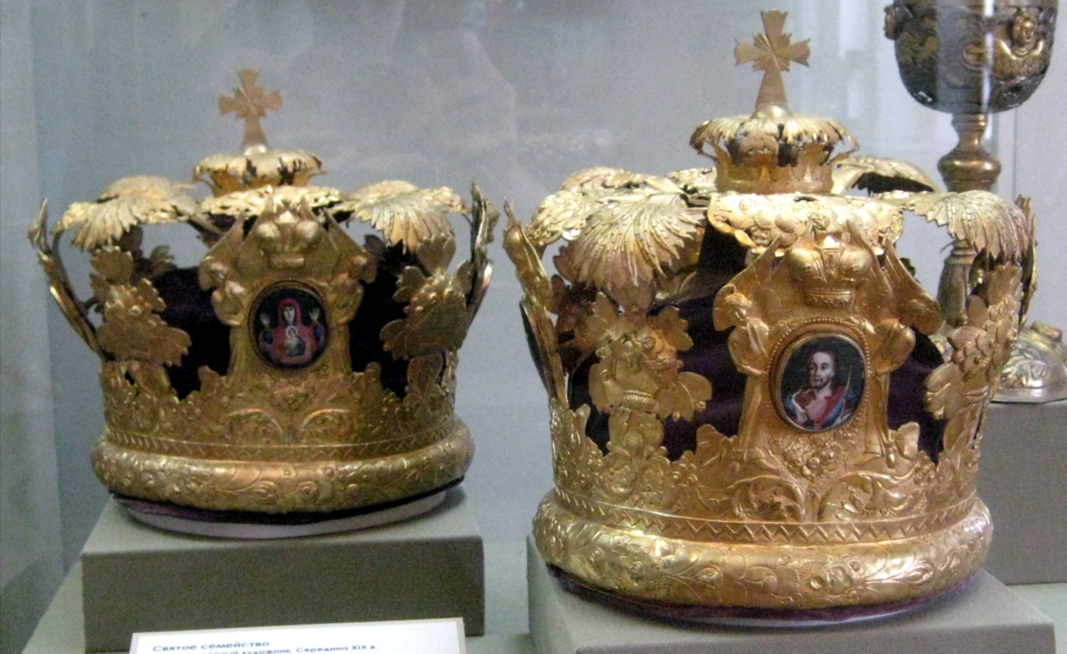
This rite is a central part of marriage ceremonies in Eastern Christianity. It appears in Byzantine, Coptic, West Syriac, and East Syriac traditions. The priest places crowns on both partners to signify their new roles within the family unit.
When is Mystery of Crowning kept?
Mystery of Crowning is kept during the main wedding ceremony.
The Mystery of Crowning serves as a pivotal moment in Eastern Christian marriages. It transforms the union into a sacred domestic church. Priests place crowns on the heads of both partners. This act declares them the ruler and queen of their new household. The ritual carries deep historical roots and varies across different liturgical families.
Historical origins
Early Christians debated the practice due to pagan links. Tertullian opposed it initially. The custom gained ground later through biblical associations. Paul the Apostle mentioned a Crown of Righteousness. John Chrysostom interpreted the crown as victory over unregulated desires. These theological shifts helped the tradition become accepted.
Byzantine traditions
In the Byzantine Rite, this follows the betrothal. The priest puts crowns on the groom first, then the bride. They drink from a shared glass of blessed wine. A single kiss follows. Breaking the glass symbolizes an unbreakable bond. This mirrors Jewish customs. The crowns represent authority in the new family church. Lent traditionally prohibits this rite.
Syriac variations
West Syriac rites include specific prayers and hymns. Ephrem the Syrian's works are often recited. In the Syriac Orthodox Church, the priest holds the crown over each partner. He moves it in a cross shape before placing it. Maronite churches call this the Rite of Legal Crowning. North American communities sometimes add formal pronouncements.
East Syriac customs
East Syriac practices separate crowning from the Holy Qurbana. Partners share a cup with water, martyr dust, and wine. This represents becoming one body. The Assyrian Church of the East keeps this alive. Chaldean Catholics also perform the kulala. Saint Thomas Christians historically celebrated this publicly after private betrothals.
How Mystery of Crowning is kept
A priest leads the ceremony. He places metal or floral crowns on the heads of both the bride and groom. In some rites, he waves the crown in a cross pattern first. The couple drinks from a common cup. They exchange a kiss. Some traditions break the cup afterward. Prayers and hymns accompany these actions throughout the service.
When and where
It occurs during the main wedding ceremony. It usually follows the betrothal stage. In the Byzantine tradition, it is forbidden during Lent. The timing aligns with the solemnization of the marriage vows.
This custom is found across Eastern Christianity. It is prominent in Syria and Iraq. Diaspora communities in the United States and Canada maintain these traditions. Different liturgical families observe distinct versions of the rite.
What Mystery of Crowning means
The crowns mark the couple as royalty in their new home. They represent authority and responsibility. The shared drink signifies unity and becoming one body. The broken cup symbolizes an indissoluble union. The ritual elevates the marriage to a sacred domestic church.
Who takes part
- The priest: Places crowns on the couple and leads prayers
- The bride: Receives a crown and participates in the shared drink
- The groom: Receives a crown and shares the blessing
If you are a guest
Guests witness the solemnity of the service. They observe the prayers and hymns. In some communities, they may see the breaking of the cup. Their presence validates the public nature of the union.
Then and now
Diaspora communities adapt the language for local congregations. Translations exist in English and other modern languages. Some North American rites include familiar legal phrases. The core ritual remains stable across different branches.
On the wedding table
- Blessed wine: Shared by the couple from a single glass
- Mixed cup: Contains water, wine, and martyr dust in East Syriac rites
Symbols: Wine and the shared cup The ring Crowns and wreaths

Questions people ask about Mystery of Crowning
When is Mystery of Crowning kept?
Mystery of Crowning is kept during the main wedding ceremony.
What does the crowning symbolize?
It marks the couple as king and queen of their new family. It represents authority within the domestic church and victory over worldly desires.
Is this practiced in all Christian denominations?
No. It is specific to Eastern Christianity, including Orthodox and Eastern Catholic churches. Western traditions generally do not use crowns.
See also
 Blessing ceremonyThe large-scale marriage rite of the Unification Church where couples are matched and blessed by their leaders.
 Blessing ceremony of the Unification ChurchA large-scale marriage rededication or new union ceremony that engrafts couples into a sinless lineage.
 Slave marriages in the United StatesThe unions formed by enslaved African Americans before and after the abolition of slavery in the US.
 Jewish weddingThe ceremony and laws that bind a couple in Jewish marriage, from the canopy to the glass.
Good reading and sources
- Mystery of Crowning on WikipediaEncyclopedia
- More photos on Wikimedia CommonsPhotos and video
- Wikidata recordOpen data
The facts on this page come from the Wikipedia article "Mystery of Crowning", written by its contributors and used under the CC BY-SA 4.0 licence, and from its Wikidata record (CC0). EveryShaadi rewrote the text in its own words, with AI assistance, and compares every page with the article to make sure no passage is copied. It may be reused under the same CC BY-SA 4.0 licence with a link back.
It may contain mistakes. Wedding customs differ from one family, village and community to the next, and the people who keep them know them best. If something is wrong, tell us. Last refreshed 2026-10-05.
More from Syria
All the traditions of Syria 🇪🇬 Egypt and 5 moreArab weddingزفاف or فرح or عرس
A series of family-centered rites and processions that mark marriage across the Arab world.Rite · Finding a match
🇪🇬 Egypt and 5 moreArab weddingزفاف or فرح or عرس
A series of family-centered rites and processions that mark marriage across the Arab world.Rite · Finding a match
 🇸🇾 Syria and 3 moreAssyrian wedding
Marriage ceremonies blending ancient Assyrian rites with modern cultural practices among the Assyrian people.Rite · Finding a match
🇸🇾 Syria and 3 moreAssyrian wedding
Marriage ceremonies blending ancient Assyrian rites with modern cultural practices among the Assyrian people.Rite · Finding a match
 🇩🇪 Germany and 5 moreLenten veilFastentuch
A large painted or embroidered canvas that covers the altar during Lent to create a period of visual penance.Rite · The weeks before
🇩🇪 Germany and 5 moreLenten veilFastentuch
A large painted or embroidered canvas that covers the altar during Lent to create a period of visual penance.Rite · The weeks before
 🇪🇬 Egypt and 5 moreMizmarمزمار (mizmār)
A loud double reed instrument played at weddings and festivals across Egypt and the Levant.Performance · Procession and arrival
🇪🇬 Egypt and 5 moreMizmarمزمار (mizmār)
A loud double reed instrument played at weddings and festivals across Egypt and the Levant.Performance · Procession and arrival
The same idea elsewhere
Vows, contracts and witnesses compared 🇮🇳 IndiaChaklong wedding
The traditional Ahom marriage system involving rice powder mandalas and ancestral rituals.Rite · Finding a match
🇮🇳 IndiaChaklong wedding
The traditional Ahom marriage system involving rice powder mandalas and ancestral rituals.Rite · Finding a match
 🇯🇵 Tokyo, JapanShinto wedding神前結婚 (Shinzen kekkon)
A Shinto purification ritual featuring sake sharing and kimono attire held at a shrine or venue.Rite · The ceremony
🇯🇵 Tokyo, JapanShinto wedding神前結婚 (Shinzen kekkon)
A Shinto purification ritual featuring sake sharing and kimono attire held at a shrine or venue.Rite · The ceremony
 🇱🇹 Lithuania and 1 moreLithuanian wedding songsvestuvinės dainos
The polyphonic songs and weeping rituals that mark a Lithuanian bride's transition to her new family.Performance · Engagement and betrothal
🇱🇹 Lithuania and 1 moreLithuanian wedding songsvestuvinės dainos
The polyphonic songs and weeping rituals that mark a Lithuanian bride's transition to her new family.Performance · Engagement and betrothal
 🇦🇿 AzerbaijanAzerbaijani wedding traditionsAzərbaycanın toy adətləri
The multi-step family rituals of Azerbaijani weddings, from matchmaking to the henna night.Rite · Finding a match
🇦🇿 AzerbaijanAzerbaijani wedding traditionsAzərbaycanın toy adətləri
The multi-step family rituals of Azerbaijani weddings, from matchmaking to the henna night.Rite · Finding a match