Vows, contracts and registrationSouth AsiaMuslim
Polygamy in Sri Lanka
The historical and current legal status of multiple marriages under Kandyan and Muslim law.
Sri Lanka has a history of both polygyny and polyandry. Today, only Muslim men may have up to four wives under the MMDA. Other communities must follow monogamous marriage laws.
Multiple marriages were once common across Sri Lanka. Customary traditions allowed brothers to share a wife. British reforms ended this for most people. Today, only Muslim men can legally marry more than one woman. This practice remains a subject of legal debate and social change.
Historical customs
Ancient traditions allowed complex family structures. The Kandyan system treated marriage as informal cohabitation. Royals and commoners practiced polygamy. A specific custom called eka-ge-kema involved brothers sharing one wife. They lived together and fathered children jointly. James Emerson Tennent noted this was once universal. Portuguese and Dutch influences reduced it in coastal areas. The practice persisted in some regions despite outside pressure.
British legal reforms
Local chiefs petitioned the British Governor in 1855. They requested legislation to abolish polygamy and polyandry. The governor repeated these requests in 1858. By 1859, the British outlawed polygamy and mutual consent divorce. Registered monogamous marriage became the only legal form. Scholars suggest landowning headmen pushed for this reform. They wanted to limit divorced or widowed women's claims on family lands. These claims were often exploited by the women's brothers.
Current Muslim law
The Muslim Marriage and Divorce Act permits polygyny today. A Muslim man may take up to four wives. This allowance exists within the framework of Muslim law. It applies specifically to the Muslim community in Sri Lanka. Other religious and ethnic groups are not permitted this practice. Calls for reforming this aspect of the MMDA have been made. The law distinguishes between different community practices.
When and where
This practice is specific to Sri Lanka. It was historically widespread but is now restricted. Polygyny is limited to the Muslim community. Other communities must adhere to monogamous laws. The practice is illegal for non-Muslims under the Penal Code.
Then and now
Reform calls target the Muslim Marriage and Divorce Act. The practice remains legal for Muslim men only. Non-Muslims face penalties for multiple marriages. The historical tradition of shared wives is extinct. Modern law enforces strict monogamy for most citizens.
Questions people ask about Polygamy in Sri Lanka
Is polygamy legal in Sri Lanka?
It depends on the community. Muslim men may have up to four wives under the MMDA. For all other communities, polygamy is illegal and punishable under the Penal Code.
What was eka-ge-kema?
Eka-ge-kema was a Kandyan custom meaning eating in one house. Brothers shared a single wife. They lived together and raised children jointly. This practice was common among royalty and commoners before British reforms.
When did polygamy become illegal?
The British outlawed polygamy in 1859. This followed petitions from Kandyan Chiefs in 1855 and 1858. Registered monogamous marriage became the only legal form after this date.
See also
 Poruwa ceremonyThe Sinhalese wedding ritual performed on a carved wooden platform with betel leaves and milk rice.
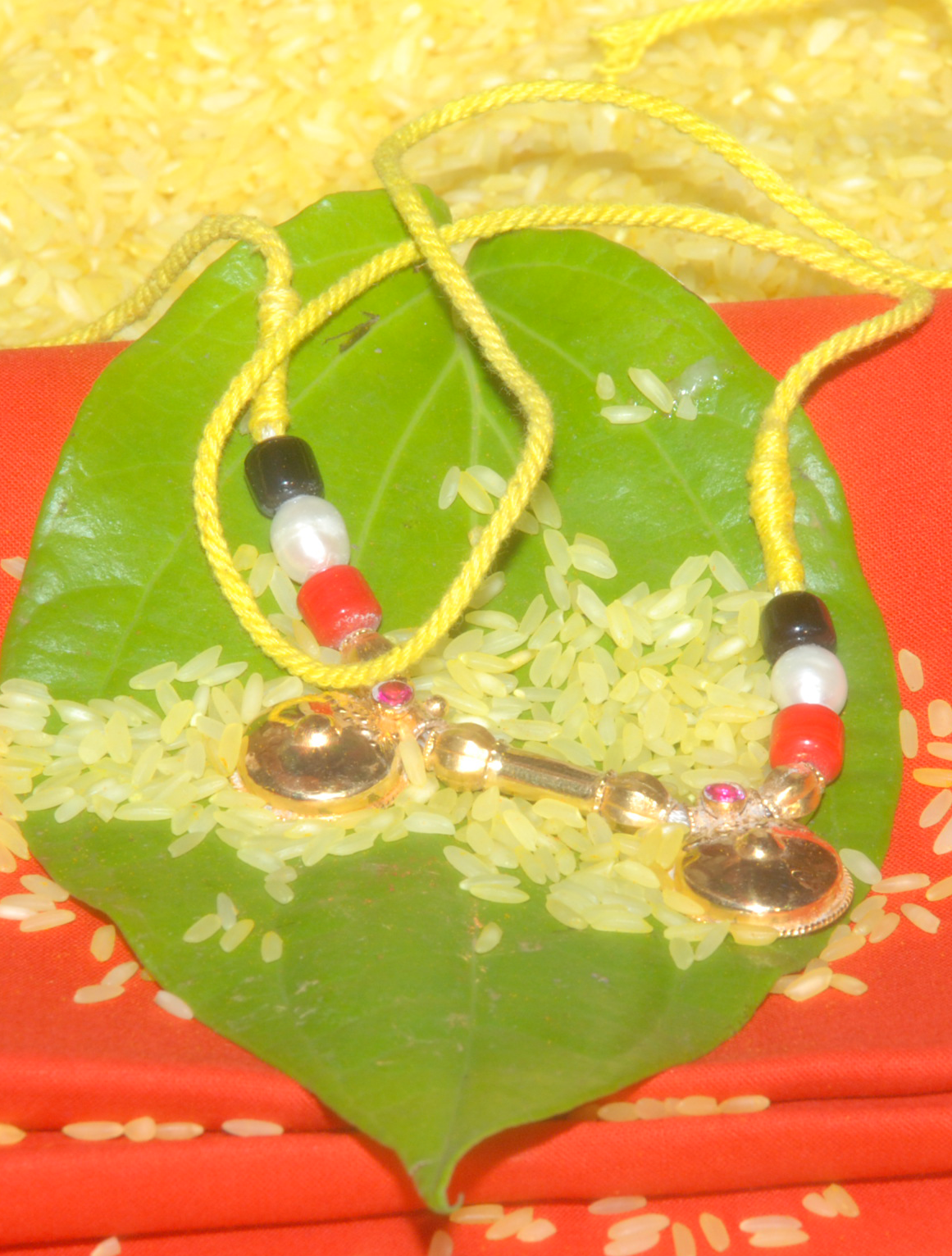 MangalsutraThe sacred necklace tied around the bride's neck to mark her marriage.
Good reading and sources
The facts on this page come from the Wikipedia article "Polygamy in Sri Lanka", written by its contributors and used under the CC BY-SA 4.0 licence, and from its Wikidata record (CC0). EveryShaadi rewrote the text in its own words, with AI assistance, and compares every page with the article to make sure no passage is copied. It may be reused under the same CC BY-SA 4.0 licence with a link back.
It may contain mistakes. Wedding customs differ from one family, village and community to the next, and the people who keep them know them best. If something is wrong, tell us. Last refreshed 2026-10-05.
More from Sri Lanka
All the traditions of Sri Lanka
🇱🇰 Sri LankaPoruwa ceremony
The Sinhalese wedding ritual performed on a carved wooden platform with betel leaves and milk rice.Rite · The ceremony
🇮🇳 India and 2 moreMangalsutraमङ्गलसूत्रम् (maṅgalasūtram)
The sacred necklace tied around the bride's neck to mark her marriage.Adornment · The ceremony
The same idea elsewhere
Interfaith, inter-community and same-sex weddings compared 🇰🇷 Seoul, South Korea and 3 moreBlessing ceremony
The large-scale marriage rite of the Unification Church where couples are matched and blessed by their leaders.Rite · The ceremony
🇰🇷 Seoul, South Korea and 3 moreBlessing ceremony
The large-scale marriage rite of the Unification Church where couples are matched and blessed by their leaders.Rite · The ceremony
 🇪🇬 Egypt and 4 moreWaist beads
Strands of glass or seed worn around the hips to mark womanhood and track body changes in West and North Africa.Adornment · Engagement and betrothal
🇪🇬 Egypt and 4 moreWaist beads
Strands of glass or seed worn around the hips to mark womanhood and track body changes in West and North Africa.Adornment · Engagement and betrothal
 🇹🇭 Bangkok, ThailandSame-sex marriage in Thailandสมรสเท่าเทียม (Somrot Thaothiam)
The legal recognition of same-sex unions that took effect in January 2025.Modern · The ceremony
🇨🇭 Zurich, SwitzerlandSame-sex marriage in Switzerland
The legal recognition of marriage for same-sex couples following a national referendum.Modern · Engagement and betrothal
🇹🇭 Bangkok, ThailandSame-sex marriage in Thailandสมรสเท่าเทียม (Somrot Thaothiam)
The legal recognition of same-sex unions that took effect in January 2025.Modern · The ceremony
🇨🇭 Zurich, SwitzerlandSame-sex marriage in Switzerland
The legal recognition of marriage for same-sex couples following a national referendum.Modern · Engagement and betrothal