Feasts, food and drinkSoutheast AsiaMuslimIndigenous and traditional
Slametan
A communal Javanese feast that brings neighbors together for peace and social unity.

The slametan is a traditional communal feast from Java, Indonesia. It serves as a core ritual for the Javanese, Sundanese, and Madurese people to celebrate life events or seek spiritual protection. The gathering emphasizes social equality and mutual well-being among participants.
When is Slametan kept?
Slametan is kept on evenings after prayer or on specific calendar days.
The slametan is a central communal feast in Java, Indonesia. It gathers neighbors to share food and prayers, aiming for a state of peace called slamet. This ritual strengthens community bonds and seeks spiritual protection during significant life moments or regular gatherings.
What it is
The slametan is a communal feast practiced by Javanese, Sundanese, and Madurese communities in Indonesia. Clifford Geertz identified it as the core ritual of Javanese religion, particularly within the abangan variant. The event symbolizes social unity and egalitarianism among those who attend. Hosts invite close male neighbors to share a meal and prayers. The goal is to achieve a peaceful state of equanimity known as slamet. This practice appears at various life stages and seasonal intervals throughout the year.
How it is kept
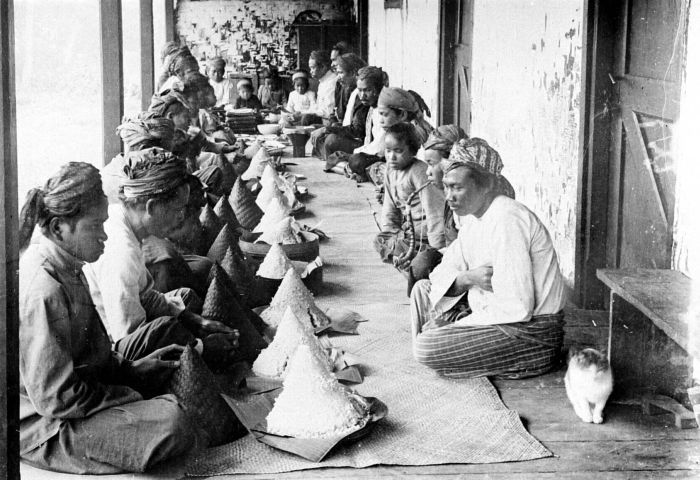
The ceremony usually takes place in the evening after night prayers. Guests sit on floor mats around food placed in the center while incense burns. A host delivers a formal speech thanking attendees and petitioning spirits for protection. Participants respond with solemn affirmations. Following the speech, a religious specialist leads an Arabic chant, often reciting fragments of the Quran. Guests then receive tea and banana-leaf dishes containing symbolic foods. They eat quickly without speaking before excusing themselves to finish their meals at home.
When it happens
Slametans mark major life events like births, circumcisions, marriages, and deaths. Specific rituals include tingkeban during pregnancy and kepanggihan for weddings. They also occur during Islamic calendar feasts such as Muludan and Maleman. Community feasts called bersih desa happen in the eleventh month to integrate village life. Irregular gatherings address personal needs like moving homes or healing from illness. Dates follow either the occurrence being celebrated or auspicious days in the Javanese calendar.
Symbolic meaning
The name derives from the Javanese word for peace, linked to the Arabic salam. Hosts intend this peaceful state for both themselves and their guests through the ritual's structure. The egalitarian arrangement of seating and sharing food reinforces social harmony. Symbolic foods carry specific meanings explained during the host's speech. The ritual seeks supernatural protection from spirits while fostering mutual respect among neighbors. It balances Islamic traditions with indigenous Javanese beliefs about spiritual forces.
How Slametan is kept
Men gather on floor mats around central food while incense fills the room. A host gives a formal speech seeking peace and protection. A religious leader chants prayers from the Quran. Guests receive tea and banana-leaf dishes with symbolic foods. They eat quickly in silence before leaving to finish their meals elsewhere. Women prepare the food, but only men participate in the ceremony itself.
When and where
It occurs during life events like births and weddings, or on Islamic calendar dates. The timing depends on the specific occasion or auspicious days in the Javanese calendar. Evening gatherings follow night prayers, while community feasts align with specific lunar months.
This custom is strongest in Java, Indonesia, among Javanese, Sundanese, and Madurese communities. It takes place in homes or village spaces. The ritual relies on proximity, inviting neighbors rather than distant relatives or friends.
What Slametan means
The feast aims for slamet, a state of peace and safety from harm. Sharing food represents social equality and mutual support. The ritual seeks spiritual protection from unseen forces while reinforcing community bonds. Symbolic foods convey specific wishes for well-being. The structure balances Islamic prayer with indigenous Javanese concepts of harmony.
Who takes part
- Host: Invites neighbors and delivers a formal speech seeking peace and protection
- Religious specialist: Leads Arabic chants and prayers using Quranic fragments
- Guests: Sit on mats, listen to speeches, and eat shared food in silence
- Women: Prepare the ceremonial food and manage household arrangements
If you are a guest
Male neighbors are invited based on proximity rather than friendship. They arrive shortly before the event begins and sit on floor mats. Guests listen to speeches and respond with affirmations. They receive tea and food portions, eating quickly without conversation before departing to finish their meals at home.
Then and now
Traditional invitations via messengers have shifted to emails and social media. Modern hosts still maintain the core structure of neighborly inclusion and shared meals. The ritual adapts to contemporary communication methods while preserving its emphasis on community unity and spiritual protection.
On the wedding table
- Tea: Served to each guest upon arrival
- Banana-leaf dishes: Contain symbolic foods arranged in the center of the room
Symbols: Tea and coffee Rice and grain

Questions people ask about Slametan
When is Slametan kept?
Slametan is kept on evenings after prayer or on specific calendar days.
What is a slametan?
A slametan is a communal feast from Java, Indonesia. It gathers neighbors to share food and prayers, aiming for peace and social unity. The ritual marks life events or seasonal occasions.
Who participates?
Close male neighbors are invited based on proximity. Women prepare the food, but only men participate in the ceremony itself. The gathering emphasizes community equality and mutual support.
See also
 KenduriA communal feast and prayer gathering held by Javanese and Malay communities to mark life events.
 SongketA hand-woven brocade cloth patterned with gold or silver threads for traditional weddings in Southeast Asia.
 Baju KurungThe traditional blouse and skirt worn by Malay women for weddings and religious ceremonies
 MandapaThe pillared pavilion that serves as the stage for Hindu wedding rituals and temple gatherings.
Good reading and sources
- Slametan on WikipediaEncyclopedia
- More photos on Wikimedia CommonsPhotos and video
- Wikidata recordOpen data
The facts on this page come from the Wikipedia article "Slametan", written by its contributors and used under the CC BY-SA 4.0 licence, and from its Wikidata record (CC0). EveryShaadi rewrote the text in its own words, with AI assistance, and compares every page with the article to make sure no passage is copied. It may be reused under the same CC BY-SA 4.0 licence with a link back.
It may contain mistakes. Wedding customs differ from one family, village and community to the next, and the people who keep them know them best. If something is wrong, tell us. Last refreshed 2026-10-05.
More from Indonesia
All the traditions of Indonesia
🇮🇩 Indonesia and 2 moreKenduri
A communal feast and prayer gathering held by Javanese and Malay communities to mark life events.Feast custom · The weeks before
🇮🇩 Palembang, Indonesia and 2 moreSongketᬲᭀᬂᬓᬾᬢ᭄
A hand-woven brocade cloth patterned with gold or silver threads for traditional weddings in Southeast Asia.Attire · Engagement and betrothal
🇲🇾 Malaysia and 4 moreBaju Kurungباجو كوروڠ
The traditional blouse and skirt worn by Malay women for weddings and religious ceremoniesAttire · The weeks before
🇮🇳 India and 2 moreMandapaमण्डप (maṇḍapa)
The pillared pavilion that serves as the stage for Hindu wedding rituals and temple gatherings.Setting · The ceremony
The same idea elsewhere
The wedding feast, the cake and the toast compared 🇬🇪 Georgia and 1 moreTamadaთამადა
The toastmaster who leads the Georgian supra and sets the rhythm of a wedding feast.Feast custom · The wedding feast
🇬🇪 Georgia and 1 moreTamadaთამადა
The toastmaster who leads the Georgian supra and sets the rhythm of a wedding feast.Feast custom · The wedding feast
 🇮🇳 IndiaChaklong wedding
The traditional Ahom marriage system involving rice powder mandalas and ancestral rituals.Rite · Finding a match
🇮🇳 IndiaChaklong wedding
The traditional Ahom marriage system involving rice powder mandalas and ancestral rituals.Rite · Finding a match
 🇧🇩 Bangladesh and 1 moreBengali Muslim weddingবাঙালি মুসলিম বিয়ে
A multi-day Bengali Muslim marriage blending Islamic rites with local folk traditions.Rite · The weeks before
🇧🇩 Bangladesh and 1 moreBengali Muslim weddingবাঙালি মুসলিম বিয়ে
A multi-day Bengali Muslim marriage blending Islamic rites with local folk traditions.Rite · The weeks before
 🇷🇺 RussiaRussian wedding traditionsРусская свадьба
A multi-day celebration blending Orthodox crowning, ransom games, and lively toasting in Russia.Rite · Engagement and betrothal
🇷🇺 RussiaRussian wedding traditionsРусская свадьба
A multi-day celebration blending Orthodox crowning, ransom games, and lively toasting in Russia.Rite · Engagement and betrothal