Feasts, food and drinkEuropeHinduJewish
Bread and salt
A traditional welcome offering of bread and salt to guests or newlyweds in Slavic, Baltic, and Balkan cultures.

This custom involves presenting a loaf of bread and a container of salt to visitors or newly married couples as a sign of hospitality and good fortune. It is widely practiced across Eastern Europe, the Balkans, and parts of the Middle East, often serving as the first gesture of welcome upon arrival.
When is Bread and salt kept?
Bread and salt is kept on upon the arrival of guests or the return of newlyweds from the ceremony.
The bread and salt tradition is a universal gesture of welcome found in many cultures, but it holds particular significance in Slavic, Baltic, and Balkan regions. This ritual involves offering a specific type of bread and salt to guests or newlyweds to symbolize hospitality, prosperity, and good health. The practice dates back centuries and remains a vital part of social etiquette in these areas.
What it is
Bread and salt represent the basic necessities of life and are offered to guests as a sign of respect and welcome. In many cultures, bread symbolizes happiness and sustenance, while salt represents long friendship and security. This pairing is not just about food but serves as a powerful cultural symbol of hospitality. The tradition is deeply rooted in local folklore and religious practices, making it a sacred act of greeting that honors the visitor.
How it is kept
In Russia and other East Slavic countries, a loaf of bread, often a decorated korovai, is placed on an embroidered cloth called a rushnyk. A salt cellar sits on top of the bread. Young women in national costumes typically present this to important guests. In Bulgaria, a flat, fancy bread called pogacha is used. Guests take a small piece, dip it in salt, and eat it. In Poland, parents greet newlyweds with this offering as they return from the church wedding, conferring good health and fortune.
Cultural variations
The custom extends beyond Slavic borders. In Albania, it is known as bukë, kripë e zemër (bread, salt, and heart), dating back to the Kanun of Lekë Dukagjini. In Romania and Moldova, it protects against weather demons. In Hungary, bringing bread and salt to a new house ensures well-being. In Turkey, eating bread and salt together creates a bond of alliance known as tuz-ekmek hakkı. Among Jewish diaspora communities, challah is dipped in salt after kiddush, linking the practice to religious observance.
Symbolism and meaning
The offering conveys wishes for prosperity, security, and strong friendship. Salt was historically expensive, so sharing it signified deep trust and valuable hospitality. In Russian culture, the word khlebosolny describes a hospitable person. In Greece, the phrase 'eating bread and salt' denotes a strong bond formed through shared hardships. The ritual reinforces social ties and marks the transition of a guest into a welcomed member of the household or community.
How Bread and salt is kept
A loaf of bread, often specially baked like the Bulgarian pogacha or Russian korovai, is placed on an embroidered cloth. A salt holder is set on top. Hosts, often women in traditional dress, present this to arriving guests or newlyweds. Guests take a piece of bread, dip it in salt, and eat it. In some regions, this is done when welcoming foreign dignitaries or at the start of a new home. The act is accompanied by verbal greetings wishing health and fortune.
When and where
It occurs during the initial greeting of guests or immediately after a wedding ceremony when the couple returns home. It is not tied to a specific calendar date but is performed whenever hospitality is formally extended to important visitors or new family members.
The custom is strongest in Russia, Bulgaria, Poland, and the Balkans. It is also common in Estonia, Latvia, Lithuania, Romania, Moldova, and among Jewish communities globally. Variations exist in Turkey, Iran, and parts of the Middle East where it signifies alliance.
What Bread and salt means
Bread represents daily sustenance and happiness, while salt stands for long-lasting friendship and security. Historically, salt was a valuable commodity, so offering it demonstrated high respect and generosity. The combination symbolizes the host's desire for the guest's well-being and the establishment of a lasting, prosperous relationship between the families or individuals involved.
Who takes part
- Hosts: Prepare and present the bread and salt to guests or newlyweds
- Guests: Accept the offering, dip bread in salt, and eat it to show gratitude
- Parents: Greet newlyweds with the offering upon their return from the wedding
- Women in costume: Present the ritual items on official occasions in Slavic countries
If you are a guest
Guests are expected to accept the bread and salt respectfully. They take a small piece of the bread, dip it into the salt, and eat it. This action acknowledges the host's hospitality and accepts the wishes for health and prosperity. Refusing the offering can be seen as rude or dismissive of the cultural tradition.
Then and now
The practice remains common in rural areas and during formal events. In urban settings, it is often reserved for weddings, official visits, or cultural celebrations. While less frequent in daily life, it persists as a powerful symbol of national identity and traditional hospitality, especially in Eastern Europe and the Balkans.
On the wedding table
- Korovai: A decorated loaf of bread used in Russian and East Slavic rituals
- Pogacha: A flat, fancy bread used in Bulgarian and Macedonian welcomes
- Challah: Bread dipped in salt in Jewish traditions after kiddush
- Salt: Offered alongside bread to symbolize friendship and security


Questions people ask about Bread and salt
When is Bread and salt kept?
Bread and salt is kept on upon the arrival of guests or the return of newlyweds from the ceremony.
What does bread and salt symbolize?
It symbolizes hospitality, prosperity, and long-lasting friendship. Bread represents sustenance and happiness, while salt signifies security and valuable trust between people.
Is this custom only in Slavic countries?
No. While prominent in Slavic nations, it is also practiced in Baltic, Balkan, Middle Eastern, and Jewish diaspora communities, each with local variations.
How should a guest respond?
Guests should accept the offering gratefully, take a piece of bread, dip it in salt, and eat it. This shows respect for the host's hospitality and tradition.
See also
 RushnykThe embroidered linen cloth that marks life stages and guides the couple through the wedding ceremony in East Slavic cul
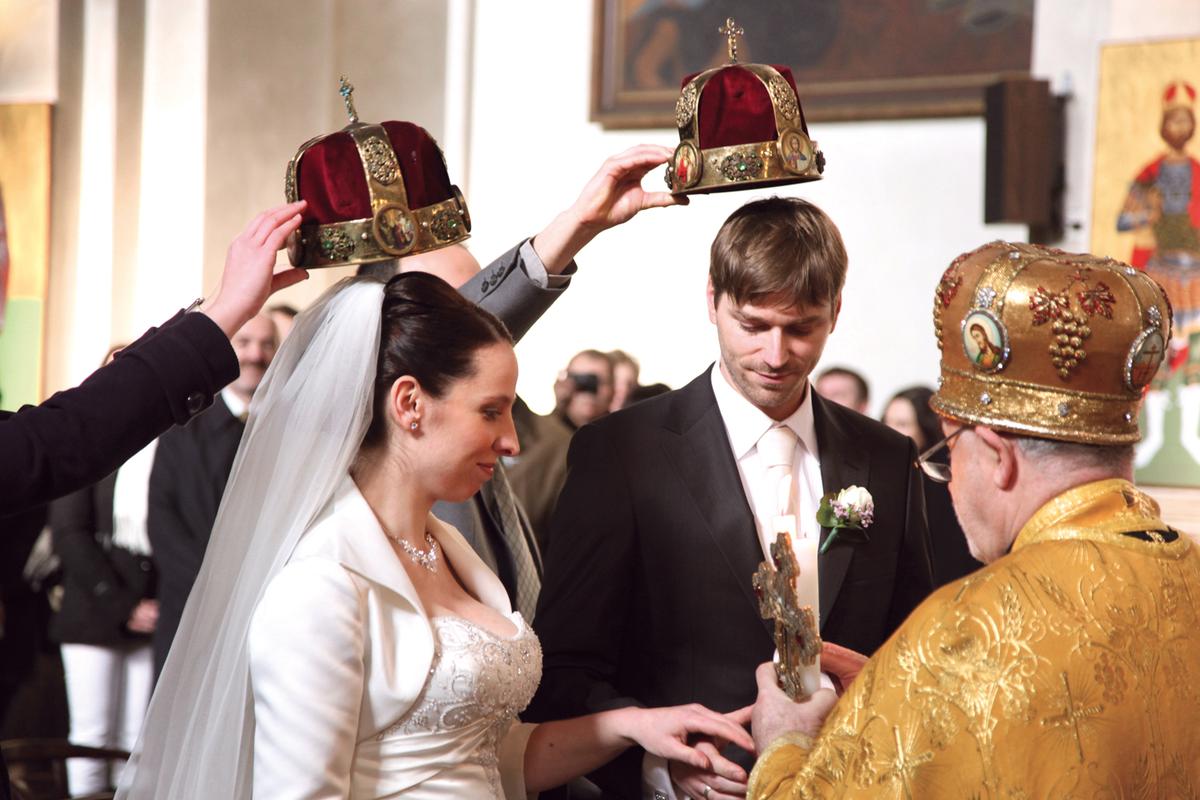 Eastern Orthodox marriageThe Byzantine Rite ceremony where a priest crowns the couple to seal their union in Christ.
 MantillaA lace or silk veil worn over the head and shoulders by women in Spain and Latin America
 Kazakh wedding ceremonyThe multi-stage Kazakh marriage process featuring the face-revealing feast and the Islamic religious contract.
Good reading and sources
- Bread and salt on WikipediaEncyclopedia
- More photos on Wikimedia CommonsPhotos and video
- Wikidata recordOpen data
The facts on this page come from the Wikipedia article "Bread and salt", written by its contributors and used under the CC BY-SA 4.0 licence, and from its Wikidata record (CC0). EveryShaadi rewrote the text in its own words, with AI assistance, and compares every page with the article to make sure no passage is copied. It may be reused under the same CC BY-SA 4.0 licence with a link back.
It may contain mistakes. Wedding customs differ from one family, village and community to the next, and the people who keep them know them best. If something is wrong, tell us. Last refreshed 2026-10-05.
More from Russia
All the traditions of Russia 🇷🇺 RussiaLoving cup
A large shared drinking vessel with two handles used in Christian rites and weddingsFeast custom · The wedding feast
🇷🇺 RussiaLoving cup
A large shared drinking vessel with two handles used in Christian rites and weddingsFeast custom · The wedding feast
 🇺🇦 Ukraine and 4 moreKorovaiкоровай (Ukrainian), каравай (Russian), кравай (Bulgarian)
A large round braided bread shared at weddings to bless the couple and unite the community.Feast custom · The ceremony
🇺🇦 Ukraine and 4 moreKorovaiкоровай (Ukrainian), каравай (Russian), кравай (Bulgarian)
A large round braided bread shared at weddings to bless the couple and unite the community.Feast custom · The ceremony
 🇵🇱 Poland and 6 moreKolachколач (kolach), калач (kalach), kołacz, colac, kalács
A braided or ring-shaped bread that marks weddings and major holidays across Eastern Europe.Feast custom · Engagement and betrothal
🇪🇸 Spain and 4 moreMantilla
A lace or silk veil worn over the head and shoulders by women in Spain and Latin AmericaAttire · The weeks before
🇵🇱 Poland and 6 moreKolachколач (kolach), калач (kalach), kołacz, colac, kalács
A braided or ring-shaped bread that marks weddings and major holidays across Eastern Europe.Feast custom · Engagement and betrothal
🇪🇸 Spain and 4 moreMantilla
A lace or silk veil worn over the head and shoulders by women in Spain and Latin AmericaAttire · The weeks before
The same idea elsewhere
The wedding feast, the cake and the toast compared 🇬🇪 Georgia and 1 moreTamadaთამადა
The toastmaster who leads the Georgian supra and sets the rhythm of a wedding feast.Feast custom · The wedding feast
🇬🇪 Georgia and 1 moreTamadaთამადა
The toastmaster who leads the Georgian supra and sets the rhythm of a wedding feast.Feast custom · The wedding feast
 🇮🇩 Indonesia and 2 moreKenduri
A communal feast and prayer gathering held by Javanese and Malay communities to mark life events.Feast custom · The weeks before
🇮🇩 Indonesia and 2 moreKenduri
A communal feast and prayer gathering held by Javanese and Malay communities to mark life events.Feast custom · The weeks before
 🇮🇳 IndiaChaklong wedding
The traditional Ahom marriage system involving rice powder mandalas and ancestral rituals.Rite · Finding a match
🇮🇳 IndiaChaklong wedding
The traditional Ahom marriage system involving rice powder mandalas and ancestral rituals.Rite · Finding a match
 🇯🇵 Tokyo, JapanShinto wedding神前結婚 (Shinzen kekkon)
A Shinto purification ritual featuring sake sharing and kimono attire held at a shrine or venue.Rite · The ceremony
🇯🇵 Tokyo, JapanShinto wedding神前結婚 (Shinzen kekkon)
A Shinto purification ritual featuring sake sharing and kimono attire held at a shrine or venue.Rite · The ceremony