Music, dance and processionEurope
Bećarac
A humorous folk song sung at weddings and village parties in Eastern Croatia
Bećarac is a humorous folk song form from rural Slavonia in Croatia. It spreads to southern Hungary and Vojvodina in Serbia. Men and women sing it at weddings and village gatherings.
When is Bećarac kept?
Bećarac is kept at the peak of village parties or weddings.
Bećarac is a lively folk song tradition from Eastern Croatia. People sing it at weddings and village festivals. The verses are teasing and funny. Men and women share the stage equally. The music drives the celebration forward with joy and laughter.
What bećarac is
This tradition uses a strict poetic structure called trochaic decasyllable. Singers perform couplets that always follow the same melody. A choir leader sings the first verse as a serious statement. The group repeats it. Then comes a second verse that twists the meaning humorously. Everyone laughs when the choir repeats this part. The lyrics often use local puns and references. Outsiders find them hard to translate. The songs capture local culture through wordplay.
How it is performed
Musicians play a tamburitza orchestra for the singing. Sometimes an accordion or samica appears instead. A choir can also carry the tune alone. The performance happens late in the evening. Guests have drunk wine and warmed up. The crowd gathers around the singers. A series of songs can last all night. Performers often improvise new verses on the spot. The best ones spread to other villages later.
History and origins
The custom began after the Croatian Military Frontier ended. This border region belonged to the Austro-Hungarian Empire. Scholars believe the style emerged in the late nineteenth century. An ethnographer named Friedrich Salomon Krauss studied the form. He collected nearly two thousand songs. His work preserved the verses for future generations. The name comes from a word meaning bachelor or reveler.
Modern recognition
Croatia submitted the practice for UNESCO protection in 2009. The attempt failed in 2010. Officials prepared English translations for better understanding. Success came in 2011. The tradition joined the Representative List of Intangible Cultural Heritage. In 2017, plans emerged for a museum in Pleternica. The European Union funded most of the project. The goal was to showcase the heritage in a modern setting.
How Bećarac is kept
Choir leaders and groups perform the songs. Musicians accompany them with instruments like the tamburitza. Men and women sing together at weddings and kermesses. The verses are improvised or reused from past events. The audience drinks wine and laughs along. The performance marks the high point of the gathering.
When and where
It occurs during village parties and weddings. The singing starts after guests have relaxed with wine. It happens late in the evening. The tradition does not follow a specific calendar date.
Slavonia in Croatia is the main home. The custom reached southern Hungary and Vojvodina in Serbia. Village squares and party halls host the performances.
What Bećarac means
The songs celebrate community bonds and shared humor. They mock life lightly without causing offense. The bachelors and revelers enjoy the freedom of song. Women participate fully in the circle dances. The tradition strengthens social ties through laughter.
Who takes part
- Choir leader: Sings the opening serious verse
- Choir: Repeats verses and provides harmony
- Musicians: Play the tamburitza or accordion
- Guests: Drink wine and laugh at the jokes
If you are a guest
Guests drink wine and listen to the verses. They join the laughter when the punchlines land. Some may dance in kolo circles while women sing. The atmosphere is relaxed and celebratory.
Then and now
The tradition remains active in Eastern Croatia. A museum in Pleternica aims to preserve it. UNESCO status helps raise awareness. Younger generations continue to learn the verses.
On the wedding table
Symbols: Wine and the shared cup
Questions people ask about Bećarac
When is Bećarac kept?
Bećarac is kept at the peak of village parties or weddings.
What is bećarac?
It is a humorous folk song from Croatia. People sing it at weddings and parties. The verses are teasing and funny. Men and women perform together.
Who performs it?
Men and women sing in equal footing. Choirs lead the performance. Musicians play instruments like the tamburitza.
Is it protected?
Yes. UNESCO listed it in 2011. Croatia submitted it for intangible heritage status.
See also
 CsárdásA Hungarian folk dance that begins slowly and ends with a fast spin.
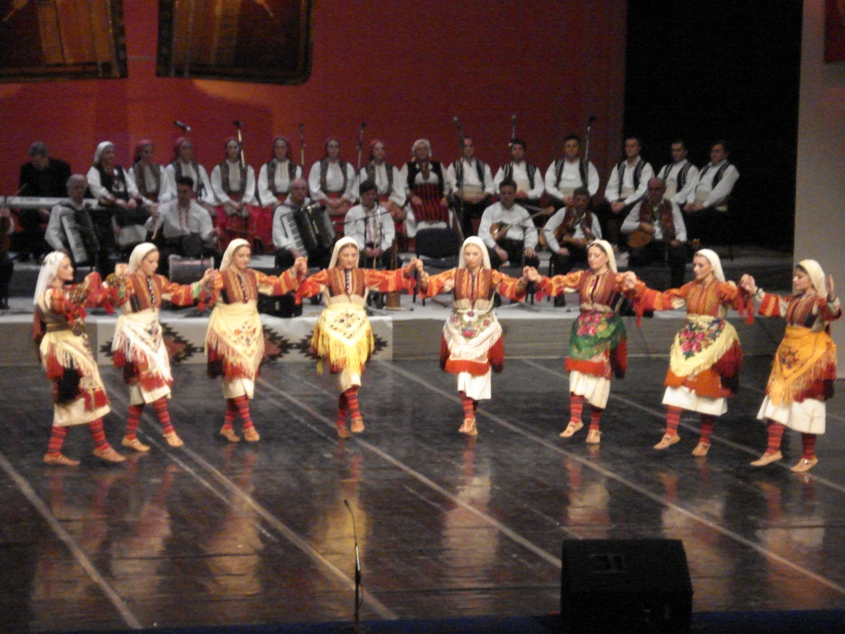 HoraA circle dance held at weddings across Southeast Europe and among Jewish communities worldwide.
 KoloA South Slavic circle dance performed at weddings and social gatherings across the Balkans.
 ČočekA Balkan wedding dance with a distinctive nine-beat rhythm, kept alive by Romani musicians and village celebrations.
Good reading and sources
- Bećarac singing and playing from Eastern CroatiaUNESCO, Heritage listing
- Bećarac singing and playing from Eastern CroatiaUNESCO, Article
The facts on this page come from the Wikipedia article "Bećarac", written by its contributors and used under the CC BY-SA 4.0 licence, and from its Wikidata record (CC0). EveryShaadi rewrote the text in its own words, with AI assistance, and compares every page with the article to make sure no passage is copied. It may be reused under the same CC BY-SA 4.0 licence with a link back.
It may contain mistakes. Wedding customs differ from one family, village and community to the next, and the people who keep them know them best. If something is wrong, tell us. Last refreshed 2026-10-06.
More from Croatia
All the traditions of Croatia
🇭🇺 Hungary and 5 moreCsárdás
A Hungarian folk dance that begins slowly and ends with a fast spin.Performance · Reception, dance and gifts
🇷🇸 Serbia and 2 moreKoloКоло
A South Slavic circle dance performed at weddings and social gatherings across the Balkans.Performance · Reception, dance and gifts
🇷🇴 Romania and 7 moreHorahora (Romanian), horo (Bulgarian), oro (Macedonian), horah (Hebrew)
A circle dance held at weddings across Southeast Europe and among Jewish communities worldwide.Performance · Reception, dance and gifts
 🇭🇷 CroatiaNijemo kolo
A silent Croatian folk dance where couples move in a circle without music.Performance · The ceremony
🇭🇷 CroatiaNijemo kolo
A silent Croatian folk dance where couples move in a circle without music.Performance · The ceremony
The same idea elsewhere
Wedding music and the dance floor compared 🇳🇪 In-Gall, Niger and 2 moreGuérewol
A week-long courtship dance where Wodaabe men display their beauty to win the attention of marriageable women.Rite · The weeks before
🇳🇪 In-Gall, Niger and 2 moreGuérewol
A week-long courtship dance where Wodaabe men display their beauty to win the attention of marriageable women.Rite · The weeks before
 🇪🇬 Egypt and 5 moreMizmarمزمار (mizmār)
A loud double reed instrument played at weddings and festivals across Egypt and the Levant.Performance · Procession and arrival
🇪🇬 Egypt and 5 moreMizmarمزمار (mizmār)
A loud double reed instrument played at weddings and festivals across Egypt and the Levant.Performance · Procession and arrival
 🇵🇸 Ramallah, Palestine and 4 moreDabkeدبكة
A Levantine line dance performed at weddings to celebrate union and community.Performance · Reception, dance and gifts
🇵🇸 Ramallah, Palestine and 4 moreDabkeدبكة
A Levantine line dance performed at weddings to celebrate union and community.Performance · Reception, dance and gifts
 🇮🇳 Chandigarh, IndiaBhangra
A vigorous Punjabi folk dance performed to the beat of a dhol drum during harvest celebrations.Performance · Reception, dance and gifts
🇮🇳 Chandigarh, IndiaBhangra
A vigorous Punjabi folk dance performed to the beat of a dhol drum during harvest celebrations.Performance · Reception, dance and gifts