Ceremony and sacred ritesEuropeCatholic
Žudije
In its own language: Žudije (čuvari Kristova groba)
Catholic guardians who stand watch over a replica tomb of Christ in Dalmatia until Easter Vigil.
Žudije are Catholic tradition keepers in Dalmatia, Croatia, who guard a replica tomb of Christ. The group consists of twelve men led by a commander named Juda. They begin their vigil on Holy Thursday and end it at the Easter Vigil when bells ring for the resurrection.
When is Žudije kept?
Žudije is kept from Holy Thursday to Easter Vigil.
In Dalmatia, Croatia, Catholic communities observe a solemn vigil known as Žudije. Twelve men, dressed in Roman-style uniforms, take turns standing guard over a replica tomb of Christ. This practice honors the biblical account of the guards at the sepulchre and culminates in a shared moment of faith during the Easter celebrations.
What the tradition is
The Žudije serve as guardians of the tomb of Christ, a role rooted in the Gospel narratives. The name likely derives from a Greco-Roman term meaning Jew. A typical group includes twelve members plus a thirteenth leader called Juda. Participants wear Roman military attire, though some parishes allow sailor outfits or local traditional costumes. Young men who have received all sacraments often join, serving as moral examples in their towns.
History and origins
The custom first appeared in Metković in the early 1800s. Ante Gluščević brought the practice from Loreto, Italy, spreading it through the Neretva basin. The oldest recorded association formed in 1857 at the Parish of Saint Elias in Metković. Over time, individual parishes developed unique variations. Groups in Tisno and Vrlika maintain traditions lasting more than a century, with the latter including Orthodox Christian participation alongside Catholics.
How the vigil unfolds
The ritual begins on Holy Thursday when the guardians approach the altar. They remain there in shifts until midnight on Holy Saturday. During the Easter Vigil mass, the group falls to the ground upon hearing the bells that announce the resurrection of Christ. In Vodice, children also participate by guarding the tomb on Good Friday before joining a community breakfast organized by the local tourist board.
Community gatherings
Since 2001, groups from across Dalmatia meet to celebrate their shared heritage. Initially called the Meeting of Žudije from Dalmatia, the event expanded and became the Festival Žudija. While Vodice hosts the festival every six years due to its status as the origin point, other parishes host the gathering annually. These meetings allow participants to learn about different parish customs and strengthen regional bonds.
How Žudije is kept
Twelve men form the core group, led by a commander named Juda. They dress in Roman uniforms or local traditional clothing. Starting on Holy Thursday, they stand guard over a replica tomb in the church. They rotate shifts throughout the night. At the Easter Vigil, they prostrate themselves when resurrection bells ring. Children in Vodice also join the vigil on Good Friday.
When and where
The vigil starts on Holy Thursday and ends at the Easter Vigil on Holy Saturday night. It marks the period between Christ's burial and resurrection.
The tradition is strongest in Dalmatia, Croatia. Key locations include Metković, Tisno, Vrlika, and Vodice along the coast and inland.
What Žudije means
The guardians represent the soldiers who watched over Jesus' tomb. Their vigil symbolizes devotion and remembrance of the Passion. Falling to the ground at the bells signifies awe at the resurrection. The practice reinforces community identity and religious continuity.
Who takes part
- The twelve guardians: Stand watch over the tomb in shifts
- Juda: Leads the group as the thirteenth member
- Young men: Serve as moral examples in their town
- Children: Participate in the Good Friday vigil in Vodice
If you are a guest
Guests attend the Easter Vigil mass to witness the conclusion of the vigil. They hear the bells announcing the resurrection and see the guardians fall to the ground. In Vodice, visitors may join a traditional Eastern breakfast after the children's performance.
Then and now
The tradition has grown into a regional festival attracting groups from across Dalmatia. It serves as a cultural brand for towns like Vodice. The annual rotation of hosting duties helps preserve diverse parish customs while maintaining the core vigil practice.
On the wedding table
- Traditional Eastern breakfast: Served to children and guests in Vodice after the Good Friday vigil
Symbols: The ring The colour white
Questions people ask about Žudije
When is Žudije kept?
Žudije is kept from Holy Thursday to Easter Vigil.
Who participates in the Žudije?
Twelve men form the main group, led by a commander named Juda. Participants are usually young men who have received all sacraments. In some places like Vodice, children also join the vigil on Good Friday.
Where is this tradition practiced?
It is primarily found in Dalmatia, Croatia. Notable locations include Metković, where it started, as well as Tisno, Vrlika, and Vodice. Each parish may have slight variations in how they perform the ritual.
Is it only for Catholics?
While predominantly a Catholic tradition, some groups like those in Vrlika include Orthodox Christians. The practice remains centered on Christian themes of death and resurrection.
See also
 CsárdásA Hungarian folk dance that begins slowly and ends with a fast spin.
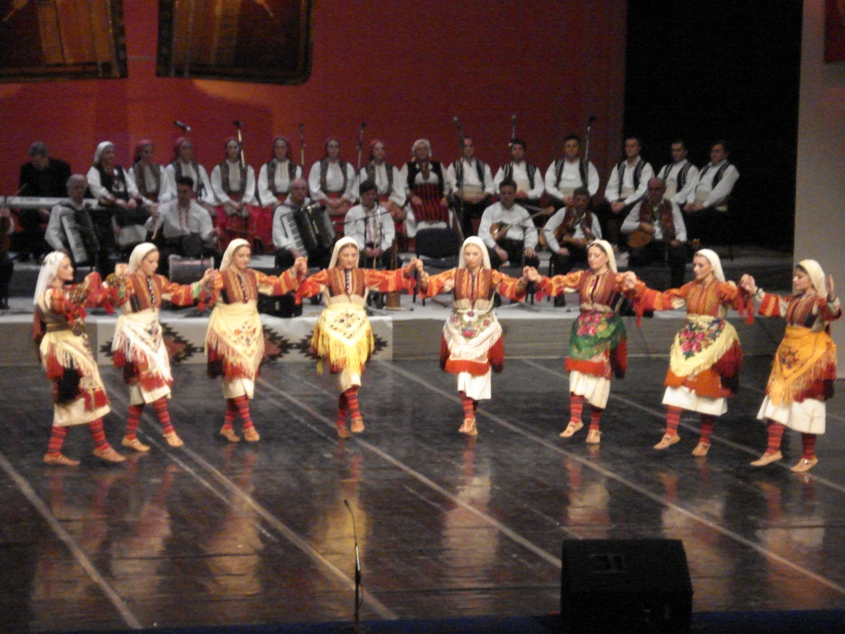 HoraA circle dance held at weddings across Southeast Europe and among Jewish communities worldwide.
 KoloA South Slavic circle dance performed at weddings and social gatherings across the Balkans.UmemuloThe Zulu coming of age ceremony that marks a woman as ready for marriage
Good reading and sources
The facts on this page come from the Wikipedia article "Žudije", written by its contributors and used under the CC BY-SA 4.0 licence, and from its Wikidata record (CC0). EveryShaadi rewrote the text in its own words, with AI assistance, and compares every page with the article to make sure no passage is copied. It may be reused under the same CC BY-SA 4.0 licence with a link back.
It may contain mistakes. Wedding customs differ from one family, village and community to the next, and the people who keep them know them best. If something is wrong, tell us. Last refreshed 2026-10-06.
More from Croatia
All the traditions of Croatia
🇭🇺 Hungary and 5 moreCsárdás
A Hungarian folk dance that begins slowly and ends with a fast spin.Performance · Reception, dance and gifts
🇷🇸 Serbia and 2 moreKoloКоло
A South Slavic circle dance performed at weddings and social gatherings across the Balkans.Performance · Reception, dance and gifts
🇷🇴 Romania and 7 moreHorahora (Romanian), horo (Bulgarian), oro (Macedonian), horah (Hebrew)
A circle dance held at weddings across Southeast Europe and among Jewish communities worldwide.Performance · Reception, dance and gifts
 🇭🇷 CroatiaZa križen
A night-long Maundy Thursday procession on Hvar island that honors the Weeping of the Lady.Blessing · The weeks before
🇭🇷 CroatiaZa križen
A night-long Maundy Thursday procession on Hvar island that honors the Weeping of the Lady.Blessing · The weeks before
The same idea elsewhere
The wedding procession and the arrival compared 🇮🇳 India and 1 moreLaavaanਲਾਵਾਂ ਫੇਰੇ (Lavan)
The four sacred hymns sung during the Anand Karaj that guide a Sikh couple through spiritual stages of married life.Rite · The ceremony
🇮🇳 India and 1 moreLaavaanਲਾਵਾਂ ਫੇਰੇ (Lavan)
The four sacred hymns sung during the Anand Karaj that guide a Sikh couple through spiritual stages of married life.Rite · The ceremony
 🇮🇷 Iran and 1 moreNoghlنقل (Persian) / نقل (Dari)
Sugar-coated almonds served at Iranian and Afghan weddings as a sweet treat and showered confetti.Feast custom · The wedding feast
🇮🇷 Iran and 1 moreNoghlنقل (Persian) / نقل (Dari)
Sugar-coated almonds served at Iranian and Afghan weddings as a sweet treat and showered confetti.Feast custom · The wedding feast
 🇲🇽 Oaxaca, Mexico and 1 moreHuipilhuīpīlli
The traditional tunic worn by indigenous women in Mexico and Central America for weddings and daily life.Attire · The weeks before
🇲🇽 Oaxaca, Mexico and 1 moreHuipilhuīpīlli
The traditional tunic worn by indigenous women in Mexico and Central America for weddings and daily life.Attire · The weeks before
 🇪🇹 Addis Ababa, Ethiopia and 1 moreZuria
The ankle-length dress with woven hem bands worn by Tigrinya and Amhara women for weddings and holidays.Attire · The weeks before
🇪🇹 Addis Ababa, Ethiopia and 1 moreZuria
The ankle-length dress with woven hem bands worn by Tigrinya and Amhara women for weddings and holidays.Attire · The weeks before