Wedding traditions with the colour red
Red is the colour of weddings in much of Asia.
Red is the colour of weddings in much of Asia. It stands for luck, joy, fertility, life and protection, and in China, India, Vietnam and Korea it is the colour of the bride. In the West it is often avoided, which shows how much meaning a colour can carry.
Red in Asia
Chinese brides wear red qipao or qungua, the wedding hall is hung with red double-happiness characters, and guests give hongbao, red envelopes. Indian brides wear red lehengas or silk saris, and the sindoor in the parting of the hair is red. Vietnamese brides wear a red ao dai, and Korean brides wear red dots, yeonji gonji, on the cheeks. In Japan the uchikake may be red, and the bridal umbrella is also red.
Red elsewhere
Red also appears in Armenia, Georgia and Turkey, where the bride may be wrapped in a red veil or have a red ribbon tied at her waist, called the kirmizi kusak in Turkish custom. In the Balkans red and white cloth were used in traditional dress, and in Central Asia red wedding robes and headdresses were common. In Europe white took over in the nineteenth century.
Written by the EveryShaadi desk with AI assistance. Background on The colour red (symbol). Customs differ from place to place and family to family. If this is your tradition and we have it wrong, tell us.
 🇮🇳 India and 5 moreWedding veil
A cloth covering the head or face worn by brides and grooms to mark marriage.Attire · The ceremony
🇮🇳 India and 5 moreWedding veil
A cloth covering the head or face worn by brides and grooms to mark marriage.Attire · The ceremony
 🇮🇳 Madurai, IndiaGoluBommai kolu (Tamil), Bommala Koluvu (Telugu), Gombe Habba (Kannada)
A tiered display of dolls and figurines arranged in South Indian homes during the Navaratri festival.Feast custom · The weeks before
🇮🇳 Madurai, IndiaGoluBommai kolu (Tamil), Bommala Koluvu (Telugu), Gombe Habba (Kannada)
A tiered display of dolls and figurines arranged in South Indian homes during the Navaratri festival.Feast custom · The weeks before
 🇰🇿 Kazakhstan and 2 moreKimeshekкимешек (Kazakh/Karakalpak), элечек (Kyrgyz)
The traditional white headgear worn by married women with children in Central AsiaAttire · After the wedding
🇰🇿 Kazakhstan and 2 moreKimeshekкимешек (Kazakh/Karakalpak), элечек (Kyrgyz)
The traditional white headgear worn by married women with children in Central AsiaAttire · After the wedding
 🇩🇪 Germany and 5 moreLenten veilFastentuch
A large painted or embroidered canvas that covers the altar during Lent to create a period of visual penance.Rite · The weeks before
🇮🇩 Palembang, IndonesiaSeting clothes and Cual cloth
The red velvet top and intricate ikat skirt worn by Bangka Belitung brides and grooms.Attire · The ceremony
🇩🇪 Germany and 5 moreLenten veilFastentuch
A large painted or embroidered canvas that covers the altar during Lent to create a period of visual penance.Rite · The weeks before
🇮🇩 Palembang, IndonesiaSeting clothes and Cual cloth
The red velvet top and intricate ikat skirt worn by Bangka Belitung brides and grooms.Attire · The ceremony
 🇳🇬 Iseyin, Nigeria and 2 moreYoruba wedding attire
Traditional garments worn by Yoruba couples and guests to mark marriage celebrations.Attire · The ceremony
🇳🇬 Iseyin, Nigeria and 2 moreYoruba wedding attire
Traditional garments worn by Yoruba couples and guests to mark marriage celebrations.Attire · The ceremony
 🇳🇬 Nigeria and 1 moreOkpu Aguokpu agụ
A traditional knitted cap worn by Igbo men at weddings and ceremonies to signal status and heritage.Attire · The ceremony
🇳🇬 Nigeria and 1 moreOkpu Aguokpu agụ
A traditional knitted cap worn by Igbo men at weddings and ceremonies to signal status and heritage.Attire · The ceremony
 🇩🇪 GermanyBollenhut
A straw hat with woolen pompoms worn by women in specific Black Forest villages as part of their traditional dress.Attire · The weeks before
🇩🇪 GermanyBollenhut
A straw hat with woolen pompoms worn by women in specific Black Forest villages as part of their traditional dress.Attire · The weeks before
 🇨🇳 China and 4 moreCloud collar云肩 (yúnjiān)
A detachable shoulder collar worn by Han Chinese brides to frame the face and symbolize cosmic order.Attire · The weeks before
🇨🇳 China and 4 moreCloud collar云肩 (yúnjiān)
A detachable shoulder collar worn by Han Chinese brides to frame the face and symbolize cosmic order.Attire · The weeks before
 🇹🇳 Tunis, TunisiaTunisian jebbaجبة
A loose traditional tunic worn by Tunisian men and women for weddings and festivals.Attire · Procession and arrival
🇰🇷 South KoreaChaesang채상 (Chaesang)
Woven bamboo boxes used to store dowry items in traditional Korean weddingsGift custom · Engagement and betrothal
🇮🇳 IndiaLohepfhe
A black shawl with red and green bands worn by Angami and Chakhesang Naga men at weddings.Attire · The ceremony
🇹🇳 Tunis, TunisiaTunisian jebbaجبة
A loose traditional tunic worn by Tunisian men and women for weddings and festivals.Attire · Procession and arrival
🇰🇷 South KoreaChaesang채상 (Chaesang)
Woven bamboo boxes used to store dowry items in traditional Korean weddingsGift custom · Engagement and betrothal
🇮🇳 IndiaLohepfhe
A black shawl with red and green bands worn by Angami and Chakhesang Naga men at weddings.Attire · The ceremony
 🇦🇿 Azerbaijan and 1 moreKelaghayiKəlağayı
A traditional silk headscarf exchanged as a marriage proposal and worn at henna parties in Azerbaijan and Armenia.Attire · Engagement and betrothal
🇦🇿 Azerbaijan and 1 moreKelaghayiKəlağayı
A traditional silk headscarf exchanged as a marriage proposal and worn at henna parties in Azerbaijan and Armenia.Attire · Engagement and betrothal
 🇰🇪 Kenya and 1 moreAdumuEnkipaata or Aigus
The high-jumping warrior dance performed by the Maasai at weddings and rites of passage.Performance · The ceremony
🇰🇪 Kenya and 1 moreAdumuEnkipaata or Aigus
The high-jumping warrior dance performed by the Maasai at weddings and rites of passage.Performance · The ceremony
 🇩🇿 Tlemcen, AlgeriaChedda of Tlemcenشدة تلمسانية (Shadda Tlimsānī)
The velvet and gold kaftan worn by brides in Tlemcen, Algeria, for their wedding ceremony.Attire · The ceremony
🇩🇿 Tlemcen, AlgeriaChedda of Tlemcenشدة تلمسانية (Shadda Tlimsānī)
The velvet and gold kaftan worn by brides in Tlemcen, Algeria, for their wedding ceremony.Attire · The ceremony
 🇮🇳 Jaipur, IndiaGhoomarघूमर
A twirling folk dance performed by women in Rajasthan to welcome a bride or celebrate auspicious occasions.Performance · The ceremony
🇮🇳 Jaipur, IndiaGhoomarघूमर
A twirling folk dance performed by women in Rajasthan to welcome a bride or celebrate auspicious occasions.Performance · The ceremony
 🇵🇱 Poland and 3 moreEaster palmPolish: palma wielkanocna; Lithuanian: verba
A decorated willow or juniper bundle blessed on Palm Sunday to protect homes and crops.Blessing · The weeks before
🇵🇱 Poland and 3 moreEaster palmPolish: palma wielkanocna; Lithuanian: verba
A decorated willow or juniper bundle blessed on Palm Sunday to protect homes and crops.Blessing · The weeks before
 🇨🇳 ChinaPhoenix crown凤冠 (Fèngguān)
A traditional Chinese bridal headdress adorned with pearls, gemstones and kingfisher feathers.Attire · The ceremony
🇨🇳 ChinaPhoenix crown凤冠 (Fèngguān)
A traditional Chinese bridal headdress adorned with pearls, gemstones and kingfisher feathers.Attire · The ceremony
 🇮🇩 IndonesiaKawung batikBatik Kawung
A traditional Indonesian textile pattern inspired by the kawung fruit and lotus flower.Attire · The ceremony
🇮🇩 IndonesiaKawung batikBatik Kawung
A traditional Indonesian textile pattern inspired by the kawung fruit and lotus flower.Attire · The ceremony
 🇮🇳 Firozabad, India and 1 moreBangle
A rigid circular bracelet worn by women in South Asia and beyond, often marking marital status or festive occasions.Adornment · The ceremony
🇮🇳 Firozabad, India and 1 moreBangle
A rigid circular bracelet worn by women in South Asia and beyond, often marking marital status or festive occasions.Adornment · The ceremony
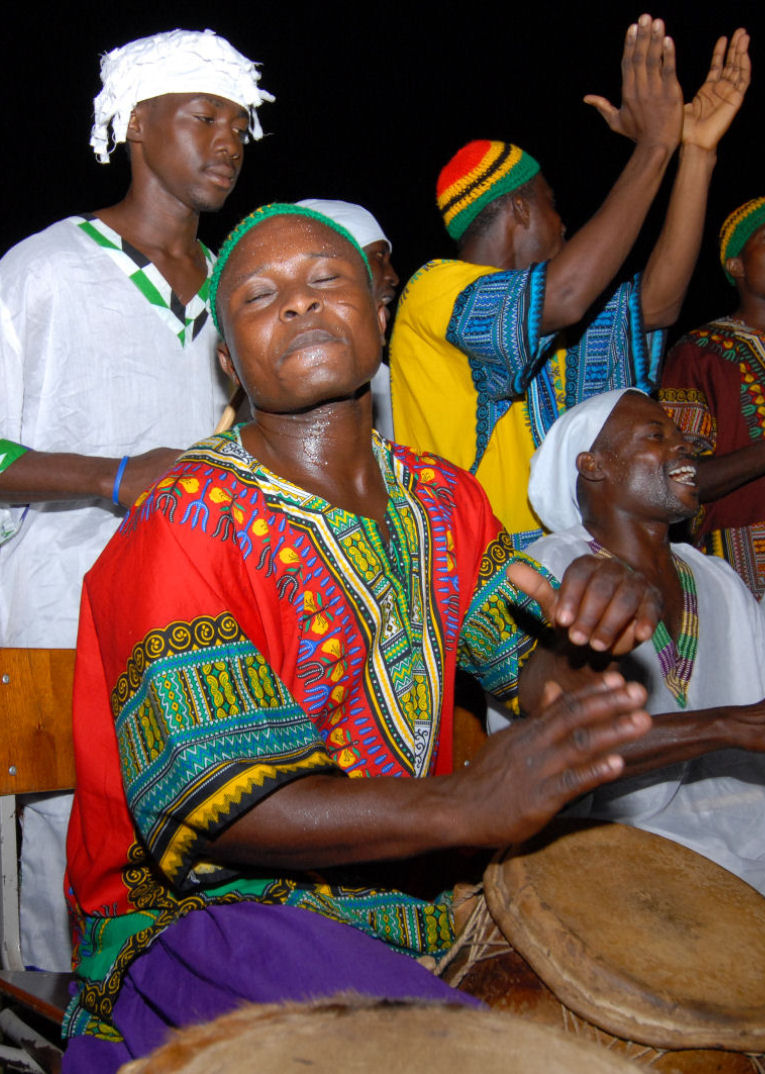 🇳🇬 Nigeria and 5 moreDashiki suit
The tailored tunic and trousers worn by grooms in West African and diaspora weddingsAttire · The ceremony
🇳🇬 Nigeria and 5 moreDashiki suit
The tailored tunic and trousers worn by grooms in West African and diaspora weddingsAttire · The ceremony
 🇻🇳 Huế, VietnamÁo nhật bình
A rectangular-collared court robe worn by Nguyễn dynasty women for weddings and ceremonies.Attire · The ceremony
🇻🇳 Huế, VietnamÁo nhật bình
A rectangular-collared court robe worn by Nguyễn dynasty women for weddings and ceremonies.Attire · The ceremony
Photo credits on this page
The small pictures above come from Wikimedia Commons under free licences. Some are cropped to fit.
- Okpu Agu: Justice kelechi achinefu, CC0, source
- Kelaghayi: Urmen19, CC BY-SA 4.0, source
- Dashiki suit: Emilio Labrador, CC BY 2.0, source
- Tunisian jebba: Touzrimounir, CC BY-SA 4.0, source
- Adumu: K15photos, CC BY-SA 4.0, source
- Kimeshek: https://www.flickr.com/photos/kjfnjy/, CC BY 2.0, source
- Phoenix crown: Unknown author, Public domain, source
- Easter palm: Evaldas Liutkus, CC BY 2.0, source
- Bangle: schwiki, CC BY-SA 4.0, source
- Bollenhut: Unknown author, Public domain, source
- Yoruba wedding attire: Wolf D., Public domain, source
- Cloud collar: Unknown author, CC0, source
- Kawung batik: Alteaven, CC BY-SA 3.0, source
- Chedda of Tlemcen: Dezedien, CC BY-SA 4.0, source
- Golu: Ksiva21, CC BY-SA 4.0, source
- Áo nhật bình: Unknown author, CC0, source
- Wedding veil: David Ring, CC0, source
- Lenten veil: Plutowiki, CC0, source
- Ghoomar: Aali Jain, CC BY-SA 4.0, source