Henna, jewellery and body artSouth AsiaHinduSecular and civil
Bangle
A rigid circular bracelet worn by women in South Asia and beyond, often marking marital status or festive occasions.

A bangle is a stiff, circular ornament typically made of glass, metal, wood, or plastic. Women in India and parts of Southeast Asia wear them as daily adornment or for weddings. A specific red and white set called chooda marks the union of Punjabi brides.
When is Bangle kept?
Bangle is kept on daily or during wedding ceremonies.
This rigid circular jewelry piece serves as a primary adornment for women across South Asia. Crafted from diverse materials like glass, gold, or lac, it signals cultural identity and marital status. The tradition spans millennia, with archaeological finds dating back to ancient civilizations in the region.
Historical origins
Archaeological digs across the Indian subcontinent have uncovered bangles made from copper, bronze, agate, and shell. One notable find comes from Mohenjo-daro in modern Pakistan, where a statue of a dancing woman displays these ornaments on her left arm, dating to roughly 2600 BC. Other early examples include copper pieces from Mahurjhari and decorated items from the Mauryan Empire era between 322 and 185 BC. Gold samples from Taxila also highlight the long-standing use of precious metals in these wrist decorations.
Materials and design
Unlike flexible chains, these ornaments form a solid circle. They are crafted from glass, wood, plastic, or metals like silver and platinum. Glass remains popular for traditional events, though plastic versions are gaining ground for everyday wear. Some designs feature intricate stone settings or gold leaf inlays. In Bengal, a unique style fuses a thin gold strip onto a bronze base, offering a costly look at a lower price point. Lac bangles, made from insect resin, represent one of the oldest and most fragile varieties.
Regional production
Manufacturing hubs concentrate in specific cities known for their craft. Firozabad in Uttar Pradesh stands as the largest center for glass bangle production in India. Hyderabad hosts the famous Laad Bazaar market, which supplies these items globally. Across the border in Pakistan, glass bangles are primarily manufactured in Hyderabad, Sindh. Meanwhile, Tharparkar, Badin, Umerkot, and Sanghar focus on producing plastic arm bands.
Cultural significance
These ornaments hold deep meaning within Hindu and Sikh communities. Punjabi brides traditionally wear chooda, a set of red and white bangles with stonework, on their wedding day. Married Bengali and Oriya women often wear white shell bangles to signify their status. Tradition dictates that a woman should not purchase her own wedding bangles. The sound of jingling gold sets adds to the festive atmosphere, while dancers use the clashing of bangles to create rhythm.
How Bangle is kept
Women wear these stiff rings on one or both wrists. On wedding days, Punjabi brides don specific red and white sets. Married women in Bengal may choose white shell varieties. The choice of material depends on occasion and budget, with glass favored for rituals and plastic for casual use. Men sometimes wear a single metal version known as kada.
When and where
Worn daily or specifically during wedding ceremonies. The date is set by the wedding schedule or personal preference for daily adornment.
Most common in India, particularly in Firozabad and Hyderabad. Also found in Pakistan and among diaspora communities in Southeast Asia and Africa.
What Bangle means
They mark marital status and cultural belonging. Red and white sets symbolize the bride's new role. White shell bangles indicate a married woman in certain regions. The jingling sound is considered auspicious and adds musicality to movement.
Who takes part
- The bride: Wears a special set of red and white bangles on her wedding day
- Married women: Wears white shell bangles to signal their marital status
- Artisans: Crafts bangles from glass, lac, or metal in specialized hubs
If you are a guest
Guests do not have specific requirements. Observers may note the variety of materials and colors worn by women, ranging from simple plastic to elaborate gold-studded pieces.
Then and now
Plastic bangles are increasingly replacing glass ones for daily wear due to cost and durability. Imitation jewelry gains popularity as gold prices rise. Traditional glass bangles remain essential for formal ceremonies and festivals.
On the wedding table
Symbols: Gold and jewellery The colour red The colour white Breaking glass and plates


Questions people ask about Bangle
When is Bangle kept?
Bangle is kept on daily or during wedding ceremonies.
What is a bangle?
It is a rigid, circular bracelet worn around the wrist. Unlike flexible chains, it does not bend. Materials range from glass and plastic to gold and wood.
Where are they made?
Major production centers include Firozabad in India for glass bangles and Hyderabad for both glass and market distribution. Pakistan produces glass bangles in Hyderabad, Sindh.
See also
 Toe ringA silver band worn on the second toe to mark a woman as married in India.
 ShankhaWhite conch shell bangles worn by Bengali Hindu married women as a symbol of their husband's well-being.
 ParandaA silk thread hair ornament worn by Punjabi women during weddings and festivals.
 DejhoorA hexagonal ear ornament worn by Kashmiri Pandit women to mark their marriage.
Good reading and sources
- Bangle on WikipediaEncyclopedia
- More photos on Wikimedia CommonsPhotos and video
- Wikidata recordOpen data
The facts on this page come from the Wikipedia article "Bangle", written by its contributors and used under the CC BY-SA 4.0 licence, and from its Wikidata record (CC0). EveryShaadi rewrote the text in its own words, with AI assistance, and compares every page with the article to make sure no passage is copied. It may be reused under the same CC BY-SA 4.0 licence with a link back.
It may contain mistakes. Wedding customs differ from one family, village and community to the next, and the people who keep them know them best. If something is wrong, tell us. Last refreshed 2026-10-07.
More from India
All the traditions of India
🇮🇳 India and 1 moreToe ring
A silver band worn on the second toe to mark a woman as married in India.Adornment · The ceremony
🇮🇳 IndiaShankha
White conch shell bangles worn by Bengali Hindu married women as a symbol of their husband's well-being.Adornment · Engagement and betrothal
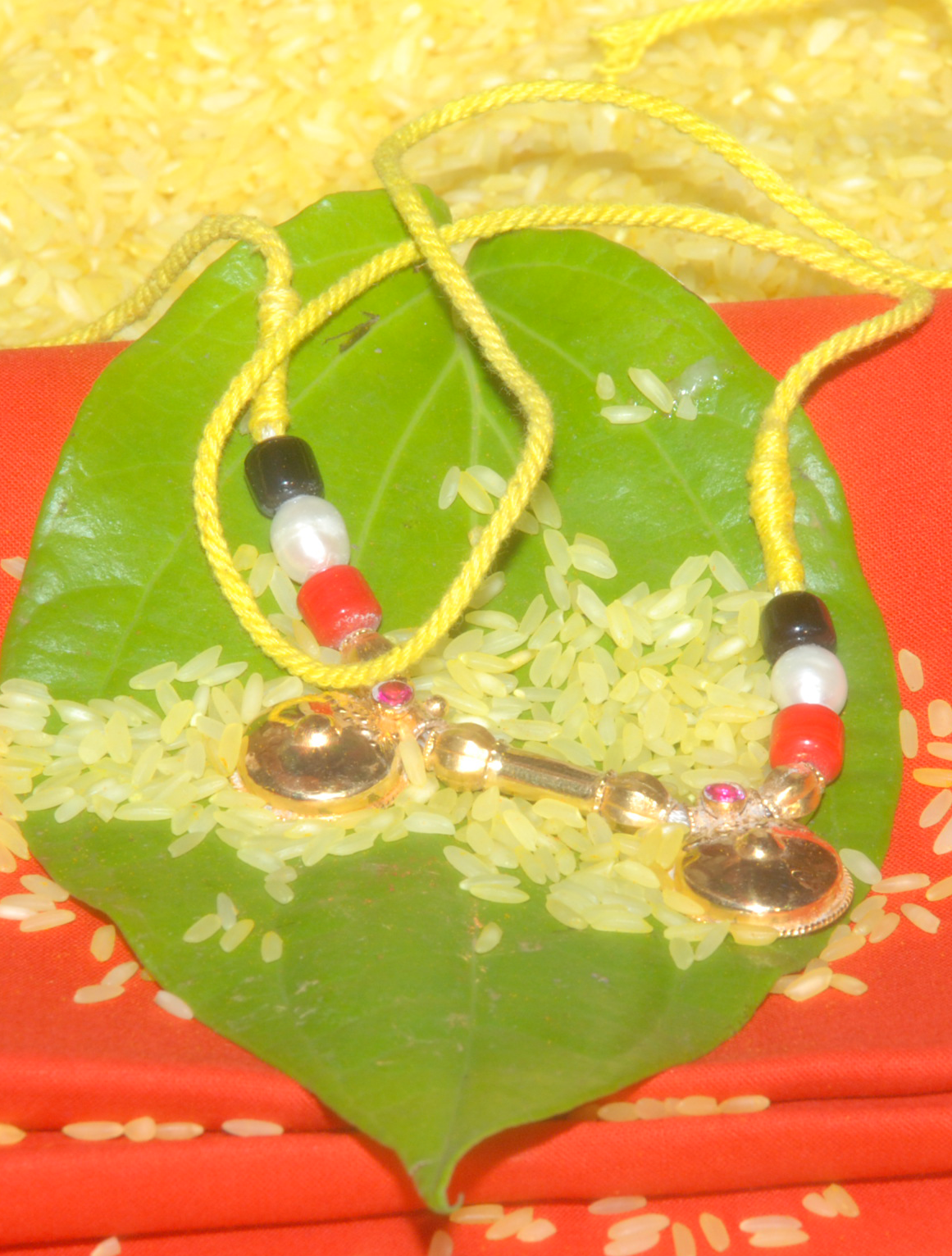 🇮🇳 India and 2 moreMangalsutraमङ्गलसूत्रम् (maṅgalasūtram)
The sacred necklace tied around the bride's neck to mark her marriage.Adornment · The ceremony
🇮🇳 India and 2 moreMangalsutraमङ्गलसूत्रम् (maṅgalasūtram)
The sacred necklace tied around the bride's neck to mark her marriage.Adornment · The ceremony
 🇮🇳 Delhi, India and 4 moreSindoorसिंदूर (Hindi)
The vermilion powder a Hindu husband applies to his wife's hair parting to mark her marriage.Adornment · Engagement and betrothal
🇮🇳 Delhi, India and 4 moreSindoorसिंदूर (Hindi)
The vermilion powder a Hindu husband applies to his wife's hair parting to mark her marriage.Adornment · Engagement and betrothal
The same idea elsewhere
The wedding dress and what the couple wear compared 🇰🇷 South Korea and 1 moreJokduri족두리
A traditional Korean coronet worn by women during weddings and other special occasions.Attire · The ceremony
🇰🇷 South Korea and 1 moreJokduri족두리
A traditional Korean coronet worn by women during weddings and other special occasions.Attire · The ceremony
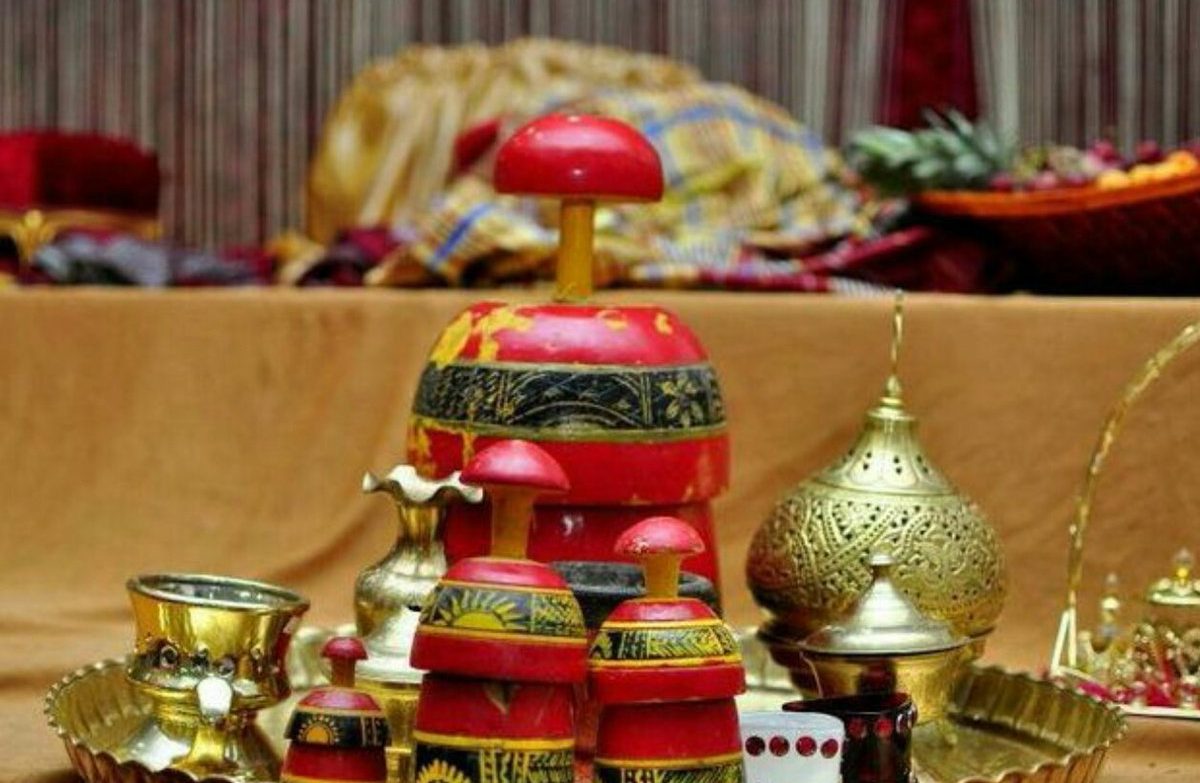 🇸🇩 SudanJirtigالجَرْتِقْ
A Sudanese rite where the groom is symbolically crowned as king before the wedding procession.Rite · The weeks before
🇸🇩 SudanJirtigالجَرْتِقْ
A Sudanese rite where the groom is symbolically crowned as king before the wedding procession.Rite · The weeks before
 🇯🇵 Tokyo, JapanShinto wedding神前結婚 (Shinzen kekkon)
A Shinto purification ritual featuring sake sharing and kimono attire held at a shrine or venue.Rite · The ceremony
🇯🇵 Tokyo, JapanShinto wedding神前結婚 (Shinzen kekkon)
A Shinto purification ritual featuring sake sharing and kimono attire held at a shrine or venue.Rite · The ceremony