Feasts, food and drinkEuropeSecular and civilIndigenous and traditional
Korovai
In its own language: коровай (Ukrainian), каравай (Russian), кравай (Bulgarian)
A large round braided bread shared at weddings to bless the couple and unite the community.

The korovai is a traditional wedding bread kept in Ukraine, Russia, Belarus, Bulgaria, and parts of Poland. It serves as a central symbol of hospitality and marital union during the ceremony feast.
When is Korovai kept?
Korovai is kept during the wedding ceremony and feast.
The korovai is a large round braided bread that marks the heart of East Slavic and Bulgarian weddings. Baked from wheat flour and decorated with symbolic dough figures, it represents fertility, love, and community unity. The sharing of this bread binds the couple to their families and guests.
Origins and decoration
This bread traces its roots to ancient pagan beliefs about the magical power of grain. Women bake the loaf using wheat flour and shape it into a large circle. They decorate it with salt dough figurines like birds, suns, moons, and pine cones. A wreath of periwinkle surrounds the arrangement to symbolize love and purity. The style varies by region, but red, gold, and silver colors are common. Before baking, the bread receives blessings.
Preparation and songs
The bride's family traditionally prepares the korovai at home. Female relatives called korovainytsi lead the baking process. They usually work in odd numbers, often seven women. As they shape the dough, they sing traditional songs to guide their hands. These songs carry the weight of custom and ensure the bread is made correctly. The preparation itself is a communal act of support for the new marriage.
Ceremony and division
The couple receives the korovai as a blessing before the main rites begin. During the feast, the top half representing the moon goes to the newlyweds. Slices follow for the bride's parents, who may receive specific dough ornaments like shoes or an owl. The bottom section, known as pidoshva, is shared with guests and musicians. This distribution ensures good luck and prosperity for everyone present.
How Korovai is kept
Women from the bride's side bake the bread while singing traditional songs. The finished loaf is blessed and presented to the couple. The groom and bride take the top half, symbolizing the moon. Parents receive specific slices or dough ornaments. The lower part is broken and shared among all wedding guests and the musical band to spread good fortune.
When and where
It appears during the wedding ceremony and continues through the reception feast. The date depends on the local wedding schedule, but the bread must be baked fresh for the occasion.
The custom is strongest in Ukraine, Russia, and Belarus. It is also found in Bulgaria and eastern Poland. Diaspora communities maintain the tradition abroad.
What Korovai means
The bread embodies fertility and the magical properties of grain. Birds represent the couple and their extended family. The periwinkle wreath stands for purity and enduring love. Sharing the loaf unites the community and blesses the future of the household.
Who takes part
- The korovainytsi: Women who bake the bread while singing guiding songs
- The couple: Receive the top half of the bread as a blessing
- The parents: Receive specific slices or dough ornaments like shoes
- The guests: Share the bottom section of the bread for luck
If you are a guest
Guests participate in the final sharing of the bread. They receive pieces from the bottom section called pidoshva. Eating this part brings good luck and prosperity. Guests may also enjoy the bread with salt or alongside other wedding drinks.
Then and now
The tradition remains active in Eastern Europe and diaspora communities. Some modern couples simplify the decoration or bake smaller versions. The core ritual of sharing the bread persists as a key moment of unity.
On the wedding table
- Korovai: The main wedding bread shared to bless the couple and guests
- Salt dough ornaments: Figurines used to decorate the bread and assign roles to family members


Questions people ask about Korovai
When is Korovai kept?
Korovai is kept during the wedding ceremony and feast.
What is a korovai?
It is a large round braided wedding bread from Eastern Europe and Bulgaria. It is decorated with dough symbols and shared during the ceremony to bless the marriage.
Who bakes the korovai?
Female relatives of the bride, known as korovainytsi, bake the bread. They typically work in groups of seven and sing traditional songs during the process.
How is the bread divided?
The top half goes to the couple. Slices follow for the parents. The bottom section is shared with all guests and musicians to spread good luck.
See also
 Loving cupA large shared drinking vessel with two handles used in Christian rites and weddings
 Bread and saltA traditional welcome offering of bread and salt to guests or newlyweds in Slavic, Baltic, and Balkan cultures.
 Wedding breakfastThe post-ceremony feast served to the couple and their guests in British English usage.
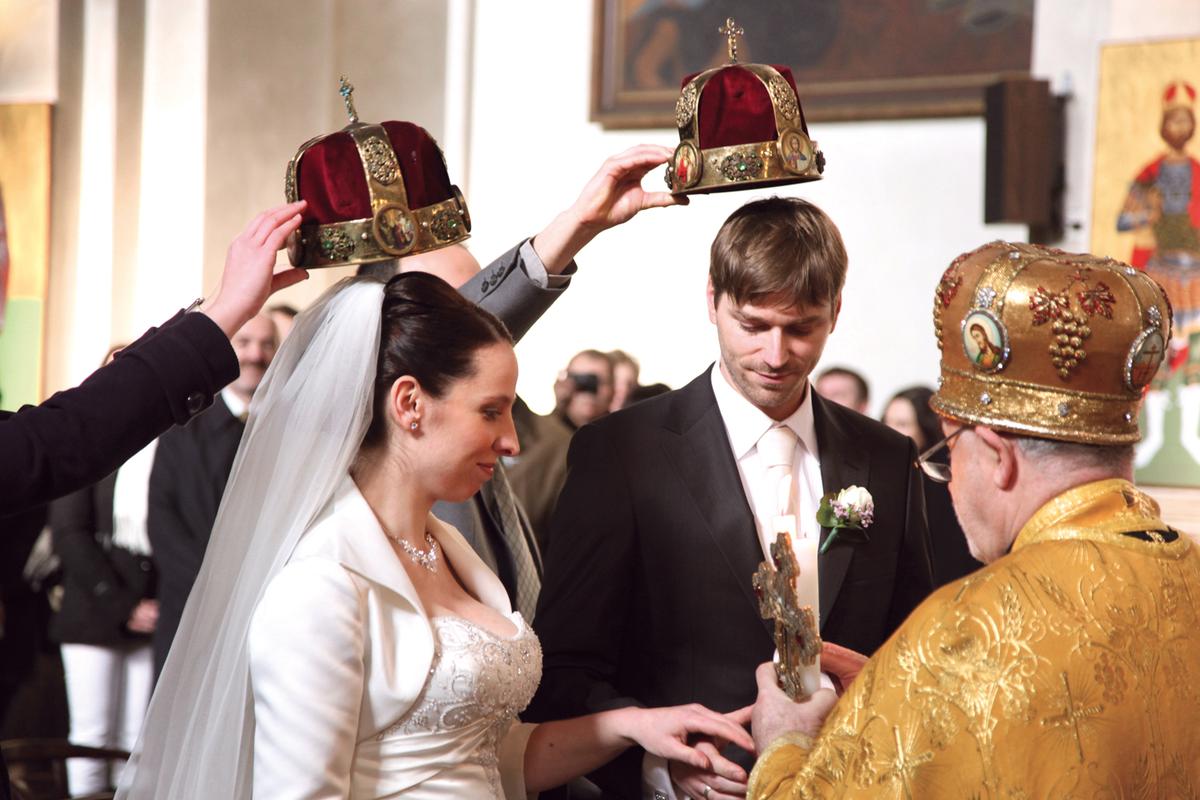 Eastern Orthodox marriageThe Byzantine Rite ceremony where a priest crowns the couple to seal their union in Christ.
Good reading and sources
- Korovai on WikipediaEncyclopedia
- More photos on Wikimedia CommonsPhotos and video
- Wikidata recordOpen data
The facts on this page come from the Wikipedia article "Korovai", written by its contributors and used under the CC BY-SA 4.0 licence, and from its Wikidata record (CC0). EveryShaadi rewrote the text in its own words, with AI assistance, and compares every page with the article to make sure no passage is copied. It may be reused under the same CC BY-SA 4.0 licence with a link back.
It may contain mistakes. Wedding customs differ from one family, village and community to the next, and the people who keep them know them best. If something is wrong, tell us. Last refreshed 2026-10-05.
More from Ukraine
All the traditions of Ukraine 🇵🇱 Poland and 6 moreKolachколач (kolach), калач (kalach), kołacz, colac, kalács
A braided or ring-shaped bread that marks weddings and major holidays across Eastern Europe.Feast custom · Engagement and betrothal
🇵🇱 Poland and 6 moreKolachколач (kolach), калач (kalach), kołacz, colac, kalács
A braided or ring-shaped bread that marks weddings and major holidays across Eastern Europe.Feast custom · Engagement and betrothal
 🇺🇦 Ukraine and 2 moreRushnykрушник (Ukrainian), ручнік (Belarusian), ручник/рушник (Russian)
The embroidered linen cloth that marks life stages and guides the couple through the wedding ceremony in East Slavic culAdornment · The weeks before
🇺🇦 UkraineSong about the RushnykПісня про рушник (Pisnia pro rushnyk)
A Ukrainian song that celebrates the embroidered cloth used in weddings and family life.Performance · The ceremony
🇺🇦 Ukraine and 2 moreRushnykрушник (Ukrainian), ручнік (Belarusian), ручник/рушник (Russian)
The embroidered linen cloth that marks life stages and guides the couple through the wedding ceremony in East Slavic culAdornment · The weeks before
🇺🇦 UkraineSong about the RushnykПісня про рушник (Pisnia pro rushnyk)
A Ukrainian song that celebrates the embroidered cloth used in weddings and family life.Performance · The ceremony
 🇺🇦 UkraineTraditional Ukrainian weddingТрадиційне українське весілля
A multi-day sequence of folk rites, bread baking and church vows that marks the transition from maidenhood to married liRite · Finding a match
🇺🇦 UkraineTraditional Ukrainian weddingТрадиційне українське весілля
A multi-day sequence of folk rites, bread baking and church vows that marks the transition from maidenhood to married liRite · Finding a match
The same idea elsewhere
Vows, contracts and witnesses compared 🇬🇪 Georgia and 1 moreTamadaთამადა
The toastmaster who leads the Georgian supra and sets the rhythm of a wedding feast.Feast custom · The wedding feast
🇬🇪 Georgia and 1 moreTamadaთამადა
The toastmaster who leads the Georgian supra and sets the rhythm of a wedding feast.Feast custom · The wedding feast
 🇮🇳 IndiaChaklong wedding
The traditional Ahom marriage system involving rice powder mandalas and ancestral rituals.Rite · Finding a match
🇮🇳 IndiaChaklong wedding
The traditional Ahom marriage system involving rice powder mandalas and ancestral rituals.Rite · Finding a match
 🇯🇵 Tokyo, JapanShinto wedding神前結婚 (Shinzen kekkon)
A Shinto purification ritual featuring sake sharing and kimono attire held at a shrine or venue.Rite · The ceremony
🇯🇵 Tokyo, JapanShinto wedding神前結婚 (Shinzen kekkon)
A Shinto purification ritual featuring sake sharing and kimono attire held at a shrine or venue.Rite · The ceremony
 🇦🇿 AzerbaijanAzerbaijani wedding traditionsAzərbaycanın toy adətləri
The multi-step family rituals of Azerbaijani weddings, from matchmaking to the henna night.Rite · Finding a match
🇦🇿 AzerbaijanAzerbaijani wedding traditionsAzərbaycanın toy adətləri
The multi-step family rituals of Azerbaijani weddings, from matchmaking to the henna night.Rite · Finding a match