Ceremony and sacred ritesSouth AsiaHindu
Odia Hindu wedding
In its own language: Bahaghara (ଓଡ଼ିଆ ବାହାଘର)
The traditional Hindu marriage ceremony of the Odia people in Odisha, India.

Bahaghara is the complete wedding ritual performed by Odia Hindus in the Indian state of Odisha. The ceremonies take place at the homes of both families and involve specific rites from engagement to post-wedding visits. These customs emphasize family bonds, religious devotion, and the transition of the bride into her new home.
When is Odia Hindu wedding kept?
Odia Hindu wedding is kept on over several days leading up to and following the main ceremony.
The Bahaghara represents the traditional Hindu wedding ceremony practiced by the Odia community in Odisha, India. This multi-day event encompasses a series of sacred rituals that bind two individuals and their families. It begins with formal engagements and concludes with post-wedding visits, reflecting deep cultural values of respect, prosperity, and familial duty.
Engagement and invitations
The process starts with Nirbandha or Lagna Dharaa, an engagement held at the bride's home or a temple. Fathers make vows while offering sanctified food to Jagannath. Following this commitment, families exchange gifts and set the date. Invitations are sent using betel nuts. The first card goes to the family deity, usually Lord Jagannath. The second goes to the maternal uncle, delivered in person. The third invites the son-in-law of the family, a role respected due to mythological lessons about honoring relatives.
Pre-ceremony preparations
One day before the wedding, the Mangana ceremony occurs. Unmarried women apply turmeric paste to the bride during a ceremonial bath. The groom receives similar treatment from his sister-in-law. The Jairagada Anukula ceremony involves stoking the fire and grinding pulses for food. The Dian Mangua Puja takes place at a local temple, where a barber offers bangles, toe rings, and vermilion to the goddess for blessings. The couple invokes ancestors through the Nandimukha ritual.
The main ceremony
The groom arrives in a procession called Barajatri. He is welcomed with tilak and foot washing. The bride wears a yellow saree with red borders. The Kanyadana ritual involves the father giving the bride's hand to the groom. They then perform Saptapadi, taking seven rounds around the sacred fire. During Hata Ganthi Phita, a mango leaf garland ties their hands together. Puffed rice is offered to the fire, and the bride spills rice upon entering. The groom applies sindura to her hair parting.
Post-wedding traditions
After the ceremony, the Kauḍi kheḷa game is played with cowrie shells to bring harmony. The bride's mother feeds the groom curd and spiced eggplant. Women sing rhythmic weeping songs known as Kandana. The Gruhaprabesa tradition welcomes the couple to the groom's home. On the fourth day, Chauṭhi marks the night of consummation with roasted coconut and saffron milk. The eighth day features Asṭa Mangaḷā, where the couple visits the bride's home for traditional Odia cuisine.
How Odia Hindu wedding is kept
Families gather at designated homes for a sequence of rituals. The engagement involves vow-making and gift exchange. Pre-wedding days feature turmeric baths and temple prayers. The main ceremony includes a grand procession, fire worship, and the tying of knots. Post-wedding activities include games, feeding rituals, and symbolic songs. The couple performs specific acts like spilling rice and applying vermilion. Visits to both families mark the conclusion of the event.
When and where
The wedding spans multiple days. Engagement happens after vows. Pre-ceremony rites occur one day prior. The main event follows. Post-wedding rituals extend over four to eight days. Dates are set during the engagement phase.
Ceremonies are held in Odisha, India. Events take place at the bride's home (Duara) and the groom's home (Tola kanias). Temple visits are also integral. The custom is specific to the Odia Hindu community.
What Odia Hindu wedding means
Rituals symbolize unity, prosperity, and familial duty. The fire serves as a witness. Rice represents abundance. Turmeric signifies purity. The knot binding hands indicates eternal connection. Honoring the son-in-law reflects respect for marital bonds. Consummation validates the marriage. Visits strengthen family ties across generations.
Who takes part
- Bride's father: Gives the bride away in Kanyadana
- Groom: Arrives in procession and performs Saptapadi
- Maternal uncle: Receives the second invitation card
- Barber's wife: Offers bridal items to the goddess
- Bride's brother: Carries groom on shoulder and gives puffed rice
- Bride's mother: Feeds the groom curd and eggplant
If you are a guest
Guests receive invitations via betel nuts. They attend the procession and ceremony. Family members participate in specific roles like delivering cards or performing rituals. Guests witness the fire rites and post-wedding feasts. Their presence validates the union and supports the families.
Then and now
Modern practices see variations in attire, with pink and orange outfits becoming common alongside traditional yellow. Digital invitations may supplement physical cards. Some rituals remain strictly traditional, while others adapt to contemporary lifestyles. The core structure of engagement, ceremony, and post-wedding visits persists.
On the wedding table
- Prasada: Sanctified food offered to Jagannath during engagement
- Curd-Pakhala: Fed to the groom by the bride's mother
- Baigana poda: Spiced eggplant mash served with curd
- Roasted coconut: Eaten during the Chauṭhi consummation ritual
- Kesara dudha: Saffron milk offered to the groom on the fourth night
Symbols: Fire and the sacred flame Rice and grain Turmeric The ring Garlands and flowers The colour red The colour white Gold and jewellery Water and washing


Questions people ask about Odia Hindu wedding
When is Odia Hindu wedding kept?
Odia Hindu wedding is kept on over several days leading up to and following the main ceremony.
What is the name of the Odia Hindu wedding?
It is called Bahaghara, which translates to the traditional Odia wedding ceremony. It encompasses all rituals from engagement to post-wedding visits.
What is the significance of the son-in-law invitation?
Inviting the son-in-law honors him deeply. It stems from mythology where neglecting him caused tragedy. This ritual ensures respect for marital bonds.
How is the marriage validated?
Consummation on the fourth night, called Chauṭhi, validates the marriage. Rituals like eating roasted coconut and drinking saffron milk accompany this step.
See also
 MayianThe turmeric paste ceremony held the day before Punjabi weddings in India and Pakistan.
 SvayamvaraThe ancient Hindu ceremony where a princess picks her husband from assembled suitors
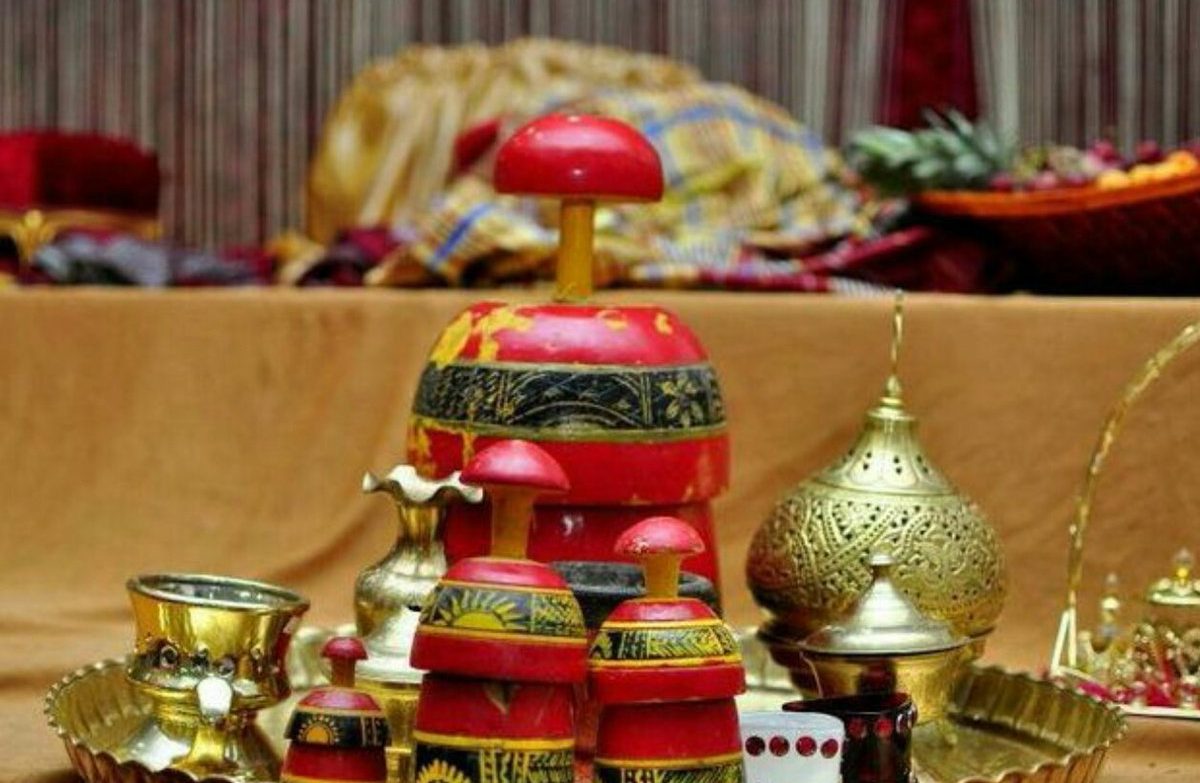 JirtigA Sudanese inauguration ritual where the groom is symbolically crowned as a king.
 IhiThe Newar rite in which a girl is married to Vishnu, shown by a golden figure
Good reading and sources
- Odia Hindu wedding on WikipediaEncyclopedia
- More photos on Wikimedia CommonsPhotos and video
- Wikidata recordOpen data
The facts on this page come from the Wikipedia article "Odia Hindu wedding", written by its contributors and used under the CC BY-SA 4.0 licence, and from its Wikidata record (CC0). EveryShaadi rewrote the text in its own words, with AI assistance, and compares every page with the article to make sure no passage is copied. It may be reused under the same CC BY-SA 4.0 licence with a link back.
It may contain mistakes. Wedding customs differ from one family, village and community to the next, and the people who keep them know them best. If something is wrong, tell us. Last refreshed 2026-10-05.
More from India
All the traditions of India 🇮🇳 IndiaTulasi Vivahतुलसी विवाह (Tulasī Vivāha)
A symbolic Hindu wedding uniting the holy basil plant with a stone representing Vishnu.Rite · The weeks before
🇮🇳 IndiaTulasi Vivahतुलसी विवाह (Tulasī Vivāha)
A symbolic Hindu wedding uniting the holy basil plant with a stone representing Vishnu.Rite · The weeks before
 🇮🇳 India and 1 moreLaavaanਲਾਵਾਂ ਫੇਰੇ (Lavan)
The four sacred hymns sung during the Anand Karaj that guide a Sikh couple through spiritual stages of married life.Rite · The ceremony
🇮🇳 India and 1 moreMayian
The turmeric paste ceremony held the day before Punjabi weddings in India and Pakistan.Rite · The weeks before
🇮🇳 India and 1 moreLaavaanਲਾਵਾਂ ਫੇਰੇ (Lavan)
The four sacred hymns sung during the Anand Karaj that guide a Sikh couple through spiritual stages of married life.Rite · The ceremony
🇮🇳 India and 1 moreMayian
The turmeric paste ceremony held the day before Punjabi weddings in India and Pakistan.Rite · The weeks before
The same idea elsewhere
Rings, knots and tokens of promise compared 🇯🇵 Tokyo, JapanShinto wedding神前結婚 (Shinzen kekkon)
A Shinto purification ritual featuring sake sharing and kimono attire held at a shrine or venue.Rite · The ceremony
🇯🇵 Tokyo, JapanShinto wedding神前結婚 (Shinzen kekkon)
A Shinto purification ritual featuring sake sharing and kimono attire held at a shrine or venue.Rite · The ceremony
 🇷🇺 RussiaRussian wedding traditionsРусская свадьба
A multi-day celebration blending Orthodox crowning, ransom games, and lively toasting in Russia.Rite · Engagement and betrothal
🇷🇺 RussiaRussian wedding traditionsРусская свадьба
A multi-day celebration blending Orthodox crowning, ransom games, and lively toasting in Russia.Rite · Engagement and betrothal
 🇮🇷 Tehran, Iran and 1 moreIranian weddingمراسم عروسی در ایران
A multi-stage ceremony rooted in Zoroastrianism and Islam that binds families through courtship, feasts, and sacred vowsRite · Finding a match
🇮🇷 Tehran, Iran and 1 moreIranian weddingمراسم عروسی در ایران
A multi-stage ceremony rooted in Zoroastrianism and Islam that binds families through courtship, feasts, and sacred vowsRite · Finding a match
 🇺🇦 UkraineTraditional Ukrainian weddingТрадиційне українське весілля
A multi-day sequence of folk rites, bread baking and church vows that marks the transition from maidenhood to married liRite · Finding a match
🇺🇦 UkraineTraditional Ukrainian weddingТрадиційне українське весілля
A multi-day sequence of folk rites, bread baking and church vows that marks the transition from maidenhood to married liRite · Finding a match