Ceremony and sacred ritesEuropeOrthodox and Eastern Christian
Traditional Ukrainian wedding
In its own language: Традиційне українське весілля
A multi-day sequence of folk rites, bread baking and church vows that marks the transition from maidenhood to married li

The traditional Ukrainian wedding is a complex, multi-day celebration rooted in folk customs and Eastern Orthodox faith. It spans matchmaking, pre-wedding rituals like baking ceremonial bread, the church ceremony, and post-wedding feasts. The rite transforms the bride's status through specific dress changes and communal blessings.
When is Traditional Ukrainian wedding kept?
Traditional Ukrainian wedding is kept on over several days, typically starting with matchmaking and ending after the third or fourth day.
This tradition weaves ancient folk beliefs with Orthodox Christian practices to celebrate marriage. It involves a structured series of events including formal negotiations, ritual bread baking, a church service, and extensive feasting. The process highlights the union of two families and the bride's transition into married life through symbolic acts and community participation.
Negotiations and betrothal
The process begins with matchmaking, where mediators visit the bride's home. If the family agrees, an engagement follows where gifts are exchanged and a contract, known as zmovyny, is signed. This document outlines dowry items, bride price, and gifts. Historically, this agreement was recorded in government books to ensure legal standing and financial guarantees for both parties.
Ritual preparations
Before the main event, women bake korovai, a large ceremonial bread decorated with dough symbols of the sun, moon, and birds. A ritual tree called hiltse is also prepared and placed near icons. Bridesmaids weave periwinkle wreaths, which serve as ancient solar cult symbols. These items are essential for blessing the couple and ensuring fertility and prosperity.
The wedding procession
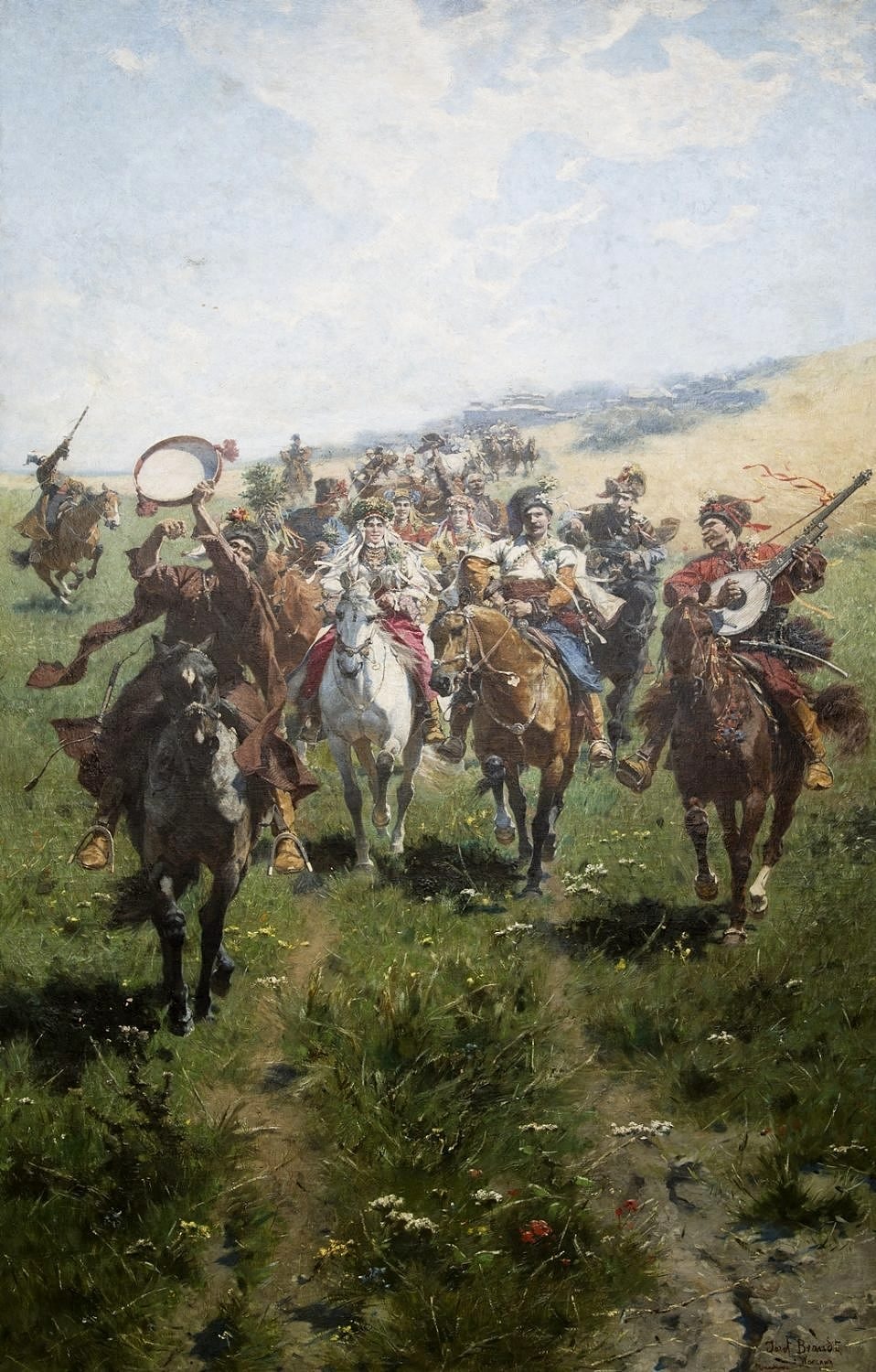
The groom travels with groomsmen, often on horseback, to the bride's house. They face a ransom negotiation at the gate before entering. Inside, the bride undergoes a transformation: her braid is unbraided, and she wears a married woman's headdress. Gifts are distributed, and the couple shares a meal before moving to the church for the religious ceremony.
Feasts and aftermath
Following the church service, extensive feasting occurs over several days. Guests dance, sing, and participate in rituals like the distribution of korovai. In some regions, the bride distributes parts of the ritual tree to guests. The final days involve the bride moving fully into her new household, marking the completion of the transition from single life to marriage.
How Traditional Ukrainian wedding is kept
Mediators initiate contact between families. If accepted, a formal engagement signs a contract detailing financial exchanges. Women bake ritual bread and prepare wreaths. The groom arrives with groomsmen, pays a ransom at the gate, and witnesses the bride's head covering ritual. The couple attends an Orthodox church service. Days of feasting, dancing, and gift distribution follow, culminating in the bride's full integration into the groom's family.
When and where
It unfolds over multiple days, starting with matchmaking and engagement, followed by preparation days, the wedding day itself, and post-wedding feasts lasting up to four days or more depending on the region.
Primarily practiced in Ukraine, with variations noted in regions like Lemko. Elements have spread to diaspora communities such as Canada.
What Traditional Ukrainian wedding means
The ritual bread and wreaths symbolize fertility, solar power, and divine blessing. The bride's change in hairstyle and headdress marks her transition from maiden to wife. The embroidered towels represent the couple's unity. Financial contracts ensure economic stability for the new family unit.
Who takes part
- Starosty: Act as mediators during matchmaking and negotiations
- Bride's mother: Meets the groom with water and oats and helps cover the bride
- Groomsmen: Accompany the groom, negotiate at the gate, and provide music
- Svashky: Sing during the ceremony and help dress the bride
- Priest: Performs the Orthodox church ceremony
If you are a guest
Guests attend feasts, dance, and sing ritual songs. They may receive parts of the ritual bread or tree as blessings. During the procession, they might stop the groom to negotiate small payments or treats, participating in the festive ransom custom.
Then and now
Modern practices have simplified many elements. While the core structure remains, some rural traditions are less common in urban areas. The legal aspect of zmovyny has shifted from government records to private agreements, though the cultural emphasis on family union persists.
On the wedding table
- Korovai: Ceremonial bread baked by married women, decorated with dough symbols and shared as a blessing
- Shyshky: Wedding cookies baked alongside the main bread
- Dyven: Thick ring-shaped wedding bread
- Lezhen: Ritual bread specific to Ukrainian weddings
Symbols: Bread The ring The colour red Water and washing Candles and lamps Horse and carriage



Questions people ask about Traditional Ukrainian wedding
When is Traditional Ukrainian wedding kept?
Traditional Ukrainian wedding is kept on over several days, typically starting with matchmaking and ending after the third or fourth day.
What is the most important food item?
Korovai is the central ceremonial bread. It is baked by respected married women and decorated with symbols like birds and suns. It is given to the couple as a blessing for prosperity and fertility.
How does the bride's appearance change?
During the wedding, the bride's braid is unbraided, and she is covered with a married woman's headdress called a serpanok or namitka. This ritual signifies her transition from a maiden to a married woman.
What is the role of the zmovyny?
Zmovyny is a formal engagement contract. It outlines dowry, bride price, and gifts. Historically, it was recorded in government books to legally bind the families and ensure financial commitments were met.
Why do groomsmen pay a ransom?
The groom's party faces a symbolic ransom at the bride's gate. This ritual negotiation allows the groom entry and demonstrates his commitment. It is a playful but significant part of the procession.
See also
 RushnykThe embroidered linen cloth that marks life stages and guides the couple through the wedding ceremony in East Slavic culSong about the RushnykA Ukrainian song that celebrates the embroidered cloth used in weddings and family life.
 KorovaiA large round braided bread shared at weddings to bless the couple and unite the community.
 Marriage in KoreaA look at how Korean weddings blend ancient Confucian rites with modern legal practices.
Good reading and sources
- Traditional Ukrainian wedding on WikipediaEncyclopedia
- More photos on Wikimedia CommonsPhotos and video
- Wikidata recordOpen data
The facts on this page come from the Wikipedia article "Traditional Ukrainian wedding", written by its contributors and used under the CC BY-SA 4.0 licence, and from its Wikidata record (CC0). EveryShaadi rewrote the text in its own words, with AI assistance, and compares every page with the article to make sure no passage is copied. It may be reused under the same CC BY-SA 4.0 licence with a link back.
It may contain mistakes. Wedding customs differ from one family, village and community to the next, and the people who keep them know them best. If something is wrong, tell us. Last refreshed 2026-10-05.
More from Ukraine
All the traditions of Ukraine
🇺🇦 Ukraine and 2 moreRushnykрушник (Ukrainian), ручнік (Belarusian), ручник/рушник (Russian)
The embroidered linen cloth that marks life stages and guides the couple through the wedding ceremony in East Slavic culAdornment · The weeks before
🇺🇦 Ukraine and 4 moreKorovaiкоровай (Ukrainian), каравай (Russian), кравай (Bulgarian)
A large round braided bread shared at weddings to bless the couple and unite the community.Feast custom · The ceremony
 🇵🇱 Poland and 6 moreKolachколач (kolach), калач (kalach), kołacz, colac, kalács
A braided or ring-shaped bread that marks weddings and major holidays across Eastern Europe.Feast custom · Engagement and betrothal
🇵🇱 Poland and 6 moreKolachколач (kolach), калач (kalach), kołacz, colac, kalács
A braided or ring-shaped bread that marks weddings and major holidays across Eastern Europe.Feast custom · Engagement and betrothal
The same idea elsewhere
Arranged marriage, matchmaking and choosing a partner compared 🇮🇷 Tehran, Iran and 1 moreIranian weddingمراسم عروسی در ایران
A multi-stage ceremony rooted in Zoroastrianism and Islam that binds families through courtship, feasts, and sacred vowsRite · Finding a match
🇮🇷 Tehran, Iran and 1 moreIranian weddingمراسم عروسی در ایران
A multi-stage ceremony rooted in Zoroastrianism and Islam that binds families through courtship, feasts, and sacred vowsRite · Finding a match
 🇮🇳 IndiaOdia Hindu weddingBahaghara (ଓଡ଼ିଆ ବାହାଘର)
The traditional Hindu marriage ceremony of the Odia people in Odisha, India.Rite · Engagement and betrothal
🇮🇳 IndiaOdia Hindu weddingBahaghara (ଓଡ଼ିଆ ବାହାଘର)
The traditional Hindu marriage ceremony of the Odia people in Odisha, India.Rite · Engagement and betrothal
 🇯🇵 Tokyo, JapanShinto wedding神前結婚 (Shinzen kekkon)
A Shinto purification ritual featuring sake sharing and kimono attire held at a shrine or venue.Rite · The ceremony
🇯🇵 Tokyo, JapanShinto wedding神前結婚 (Shinzen kekkon)
A Shinto purification ritual featuring sake sharing and kimono attire held at a shrine or venue.Rite · The ceremony