Music, dance and processionEurope
Perinița
A Romanian circle dance where a pillow marks the last partner dance for unmarried youth before a wedding.
Perinița is a traditional folk dance from Romania, especially in the Muntenia region. It takes place on the eve of a wedding, when unmarried young people form a circle to celebrate the bride's upcoming marriage. The ritual uses a pillow or handkerchief to select partners, marking the final time these youths will dance together as singles.
When is Perinița kept?
Perinița is kept on the evening before the wedding ceremony.
Perinița is a Romanian wedding folk dance performed on the eve of a marriage. Unmarried young people gather in a circle to mark their last social dance as singles. A pillow or handkerchief moves through the group, allowing participants to choose partners and share a kiss on the cheek before the bride departs for her new life.
How the dance works
The ritual begins with unmarried men and women forming a large circle. One participant stands inside holding a pillow or handkerchief. He selects a partner by placing the object around her neck. They share a kiss on the cheek. The man then joins the circle, and the woman takes his place inside with the item. This continues until everyone has danced. The sequence ends when the bride’s turn comes, signifying the close of her single days.
Origins and name
The custom originates in the Muntenia region of Romania. Its name derives from the Romanian word for pillow, pernă, which comes from the South Slavic term perina. Sometimes a handkerchief replaces the pillow, leading to the alternative spelling Pernița. The object serves as a token of selection and respect during the partner exchange. It remains a living tradition among Romanian communities today.
Cultural presence
The dance reflects the communal nature of Romanian weddings. It allows friends to celebrate the bride before she leaves her family. The music often features brass bands, adding energy to the celebration. In modern times, the tune has appeared in video game soundtracks, introducing it to global audiences. Despite this exposure, the core ritual stays focused on local community bonds and the transition into married life.
How Perinița is kept
Unmarried young people form a circle while one person holds a pillow inside. That person chooses a partner by draping the pillow over them. They kiss on the cheek, then swap places. The new holder repeats the process. The dance continues until all have participated. It happens the night before the wedding. The bride’s participation marks the end of the circle. The ritual celebrates friendship and the shift from single life to marriage.
When and where
It occurs on the evening before the wedding day. The timing marks the final social gathering for unmarried friends. No specific calendar date is required. Families schedule it based on the wedding timeline. The event belongs to the pre-wedding festivities.
The practice is strongest in the Muntenia region of Romania. It also appears in Moldova. Local communities keep the tradition alive during rural and urban weddings alike. The setting is usually an open space or hall where guests can form a large circle.
What Perinița means
The pillow symbolizes the transition from singlehood to marriage. Each kiss represents a farewell to youth. The circle ensures everyone shares in the joy. The rotating holder shows how roles change within the community. The ritual honors the bride’s past friendships while welcoming her future.
Who takes part
- The unmarried men: Initiate partner selection using the pillow
- The unmarried women: Accept partners and join the circle
- The pillow holder: Moves through the circle choosing dancers
- The bride: Participates to mark her last single dance
If you are a guest
Guests watch the circle form and cheer as partners are chosen. They may clap along to the brass band music. Men and women who are not part of the unmarried group observe respectfully. Some may join later if invited. The atmosphere remains warm and celebratory throughout the ritual.
Then and now
The dance remains active in Romanian weddings. Younger generations sometimes adapt the steps to modern music. Video games have introduced the tune globally, but locals still perform the full ritual. The tradition persists as a meaningful link between past and present wedding customs.
On the wedding table
Symbols: Henna The ring The veil Crowns and wreaths Garlands and flowers The colour red The colour white Gold and jewellery Water and washing
Questions people ask about Perinița
When is Perinița kept?
Perinița is kept on the evening before the wedding ceremony.
What is Perinița?
Perinița is a Romanian folk dance performed on the eve of a wedding. Unmarried young people form a circle and use a pillow to select partners. The ritual marks the last time they will dance together as singles before the bride marries.
Where is it practiced?
The dance originates in the Muntenia region of Romania. It is also found in Moldova. Local communities maintain the tradition during both rural and urban weddings across these areas.
Why is a pillow used?
The pillow, or pernă, serves as a token for selecting partners. A man places it around a woman’s neck to invite her to dance. The name Pernița comes directly from this object. It symbolizes respect and the transition to marriage.
See also
 CălușariA traditional Romanian spring dance and male society known for acrobatic leaps and ritual healing.
 KlezmerThe instrumental wedding music of Ashkenazi Jews, blending Eastern European and Jewish ritual melodies.
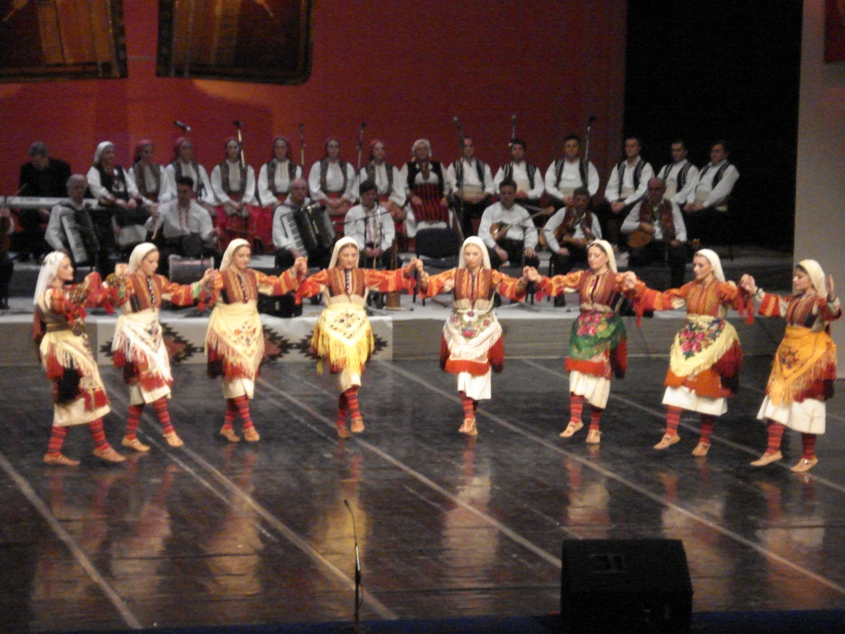 HoraA circle dance held at weddings across Southeast Europe and among Jewish communities worldwide.
 ČočekA Balkan wedding dance with a distinctive nine-beat rhythm, kept alive by Romani musicians and village celebrations.
Good reading and sources
The facts on this page come from the Wikipedia article "Perinița", written by its contributors and used under the CC BY-SA 4.0 licence, and from its Wikidata record (CC0). EveryShaadi rewrote the text in its own words, with AI assistance, and compares every page with the article to make sure no passage is copied. It may be reused under the same CC BY-SA 4.0 licence with a link back.
It may contain mistakes. Wedding customs differ from one family, village and community to the next, and the people who keep them know them best. If something is wrong, tell us. Last refreshed 2026-10-06.
More from Romania
All the traditions of Romania
🇷🇴 Romania and 7 moreHorahora (Romanian), horo (Bulgarian), oro (Macedonian), horah (Hebrew)
A circle dance held at weddings across Southeast Europe and among Jewish communities worldwide.Performance · Reception, dance and gifts
🇷🇴 Romania and 4 moreCălușariCălușarii
A traditional Romanian spring dance and male society known for acrobatic leaps and ritual healing.Performance · The weeks before
🇷🇴 Romania and 5 moreKlezmerקלעזמער
The instrumental wedding music of Ashkenazi Jews, blending Eastern European and Jewish ritual melodies.Performance · Engagement and betrothal
🇷🇸 Serbia and 5 moreČočekčočек (Serbian/Macedonian), кючек (Bulgarian), çyçek/qyqek (Albanian), sistemul (Romanian), Tsifteteli (Greek)
A Balkan wedding dance with a distinctive nine-beat rhythm, kept alive by Romani musicians and village celebrations.Performance · The wedding feast
The same idea elsewhere
Wedding music and the dance floor compared 🇲🇲 MyanmarMarriage in Myanmar
A blend of Buddhist rites, astrological timing, and family negotiations that defines union across Myanmar's diverse ethnRite · Finding a match
🇲🇲 MyanmarMarriage in Myanmar
A blend of Buddhist rites, astrological timing, and family negotiations that defines union across Myanmar's diverse ethnRite · Finding a match
 🇳🇪 In-Gall, Niger and 2 moreGuérewol
A week-long courtship dance where Wodaabe men display their beauty to win the attention of marriageable women.Rite · The weeks before
🇮🇱 Jerusalem, IsraelTu B'Avט״ו באב
A minor Jewish holiday in Israel that serves as a popular day for weddings and matchmaking.Betrothal · The weeks before
🇳🇪 In-Gall, Niger and 2 moreGuérewol
A week-long courtship dance where Wodaabe men display their beauty to win the attention of marriageable women.Rite · The weeks before
🇮🇱 Jerusalem, IsraelTu B'Avט״ו באב
A minor Jewish holiday in Israel that serves as a popular day for weddings and matchmaking.Betrothal · The weeks before