Procession and arrival
The groom's baraat, the bridal escort, the blocked gate and the arrival at the venue.
The procession is the journey. The groom rides to the bride's house, the bride is escorted to the ceremony, or the whole village walks together. It is loud, public and festive, and often includes a mock challenge at the door.
The groom arrives
The Indian baraat brings the groom, often on a decorated mare, with dancers and a band, to the bride's family, who greet him at the milni. In Nigeria and Ghana the groom's family makes a formal entry. In Pakistan the barat arrives from the groom's side. In Mongolia and Kazakhstan the groom travels with his family to the bride's home, and in Greece the groom's party arrives with music and the bride's family offers a toast.
The bride is escorted
In Western weddings the bride travels in a car or carriage to the church and then walks the aisle, often with her father. In Egypt and Lebanon a zaffe leads the couple. In Morocco the bride is carried in the amariya on a platform. In parts of China the bride was historically carried in a red sedan chair and is now brought in a decorated car, and in Japan she may walk in a procession of priests and family to the shrine, under a red umbrella.
The blocked gate
At many weddings the door is blocked until a payment or a task is completed: the groom's friends in China and Korea, in India the sisters of the bride, and in Scotland children who tie a ribbon across the church gate for a coin. The point is play and welcome, and a way for the two sides to test one another.
Written by the EveryShaadi desk with AI assistance. Background on Procession and arrival (stage of the wedding). Customs differ from place to place and family to family. If this is your tradition and we have it wrong, tell us.
 🇪🇸 Spain and 4 moreMantilla
A lace or silk veil worn over the head and shoulders by women in Spain and Latin AmericaAttire · The weeks before
🇪🇸 Spain and 4 moreMantilla
A lace or silk veil worn over the head and shoulders by women in Spain and Latin AmericaAttire · The weeks before
 🇳🇬 Nigeria and 2 moreGeleGèlè
The towering Yoruba head tie that crowns the bride and marks her status on the wedding day.Attire · The weeks before
🇳🇬 Nigeria and 2 moreGeleGèlè
The towering Yoruba head tie that crowns the bride and marks her status on the wedding day.Attire · The weeks before
 🇮🇹 Rome, ItalyWeddings in ancient Rome
The religious ceremonies and attire that marked a union in the city of Rome before the rise of Christianity.Rite · The weeks before
🇮🇹 Rome, ItalyWeddings in ancient Rome
The religious ceremonies and attire that marked a union in the city of Rome before the rise of Christianity.Rite · The weeks before
 🇳🇬 NigeriaLefe
The presentation of gifts from the groom to the bride in Hausa weddings.Gift custom · The weeks before
🇲🇦 Morocco and 1 moreBerberisca dresskeswa-el-kbira (الكسوة الكبيرة)
The gold-embroidered wedding gown of Moroccan Jews, rooted in Spanish royal style.Attire · The weeks before
🇳🇬 NigeriaLefe
The presentation of gifts from the groom to the bride in Hausa weddings.Gift custom · The weeks before
🇲🇦 Morocco and 1 moreBerberisca dresskeswa-el-kbira (الكسوة الكبيرة)
The gold-embroidered wedding gown of Moroccan Jews, rooted in Spanish royal style.Attire · The weeks before
 🇨🇳 ChinaHonggaitou紅蓋頭
The red bridal veil worn by Han Chinese brides to cover their faces before the wedding night.Attire · Procession and arrival
🇨🇳 ChinaHonggaitou紅蓋頭
The red bridal veil worn by Han Chinese brides to cover their faces before the wedding night.Attire · Procession and arrival
 🇮🇳 IndiaOdia Hindu weddingBahaghara (ଓଡ଼ିଆ ବାହାଘର)
The traditional Hindu marriage ceremony of the Odia people in Odisha, India.Rite · Engagement and betrothal
🇮🇳 IndiaOdia Hindu weddingBahaghara (ଓଡ଼ିଆ ବାହାଘର)
The traditional Hindu marriage ceremony of the Odia people in Odisha, India.Rite · Engagement and betrothal
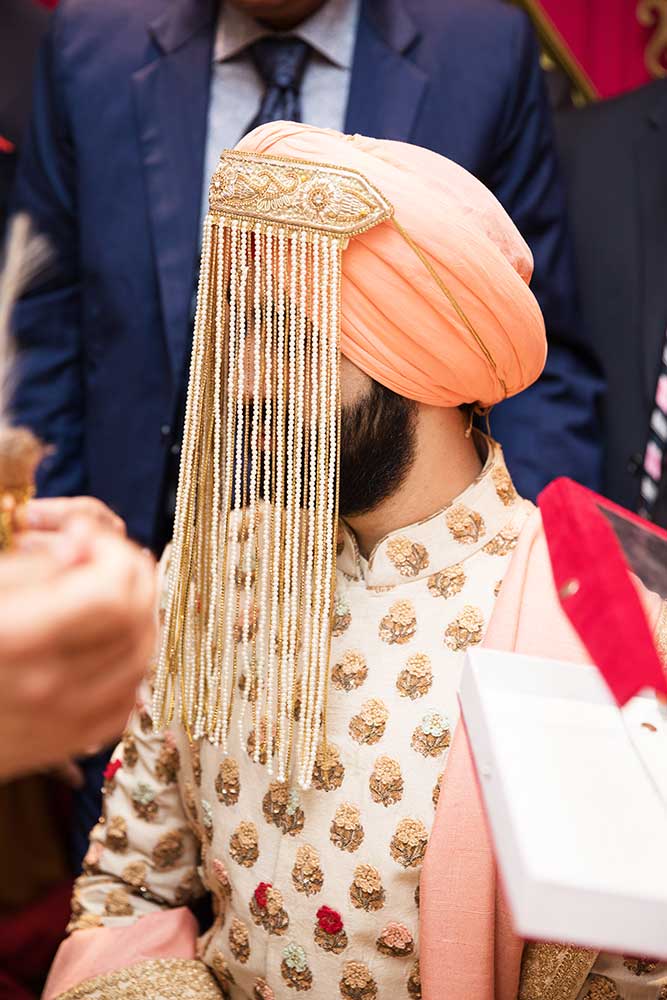 🇮🇳 IndiaSehraसेहरा (Hindi)
A floral or beaded veil tied to the groom's turban before he departs for the wedding ceremony.Attire · The weeks before
🇮🇳 IndiaSehraसेहरा (Hindi)
A floral or beaded veil tied to the groom's turban before he departs for the wedding ceremony.Attire · The weeks before
 🇬🇧 United Kingdom and 2 moreWhite wedding
A formal Western ceremony marked by a white bridal gown and traditional Christian rituals.Attire · Engagement and betrothal
🇬🇧 United Kingdom and 2 moreWhite wedding
A formal Western ceremony marked by a white bridal gown and traditional Christian rituals.Attire · Engagement and betrothal
 🇺🇦 UkraineTraditional Ukrainian weddingТрадиційне українське весілля
A multi-day sequence of folk rites, bread baking and church vows that marks the transition from maidenhood to married liRite · Finding a match
🇺🇦 UkraineTraditional Ukrainian weddingТрадиційне українське весілля
A multi-day sequence of folk rites, bread baking and church vows that marks the transition from maidenhood to married liRite · Finding a match
 🇬🇧 United Kingdom and 5 moreWedding superstitions
Traditional beliefs about luck and omens that shape wedding rituals across culturesAttire · The weeks before
🇬🇧 United Kingdom and 5 moreWedding superstitions
Traditional beliefs about luck and omens that shape wedding rituals across culturesAttire · The weeks before
 🇮🇳 India and 5 moreWedding veil
A cloth covering the head or face worn by brides and grooms to mark marriage.Attire · The ceremony
🇮🇳 India and 5 moreWedding veil
A cloth covering the head or face worn by brides and grooms to mark marriage.Attire · The ceremony
 🇷🇴 Ieud, RomaniaNunta mortului
A symbolic Romanian rite that dresses an unmarried dead person as a bride or groom to complete their life cycle.Rite · The weeks before
🇷🇴 Ieud, RomaniaNunta mortului
A symbolic Romanian rite that dresses an unmarried dead person as a bride or groom to complete their life cycle.Rite · The weeks before
 🇹🇳 Tunis, TunisiaTunisian jebbaجبة
A loose traditional tunic worn by Tunisian men and women for weddings and festivals.Attire · Procession and arrival
🇹🇳 Tunis, TunisiaTunisian jebbaجبة
A loose traditional tunic worn by Tunisian men and women for weddings and festivals.Attire · Procession and arrival
 🇵🇱 Poland and 3 moreEaster palmPolish: palma wielkanocna; Lithuanian: verba
A decorated willow or juniper bundle blessed on Palm Sunday to protect homes and crops.Blessing · The weeks before
🇵🇱 Poland and 3 moreEaster palmPolish: palma wielkanocna; Lithuanian: verba
A decorated willow or juniper bundle blessed on Palm Sunday to protect homes and crops.Blessing · The weeks before
Photo credits on this page
The small pictures above come from Wikimedia Commons under free licences. Some are cropped to fit.
- Mantilla: Museu Valencià d'Etnologia, CC BY-SA 2.0, source
- Tunisian jebba: Touzrimounir, CC BY-SA 4.0, source
- Interfaith marriage in Christianity: Andreas Praefcke, CC BY 3.0, source
- Lefe: Useendk, CC BY-SA 4.0, source
- Easter palm: Evaldas Liutkus, CC BY 2.0, source
- Honggaitou: kanegen, CC BY 2.0, source
- Odia Hindu wedding: Aditya Mahar, CC BY-SA 3.0, source
- Gele: Royalesignature, CC BY-SA 4.0, source
- Weddings in ancient Rome: Meister der Aldobrandinischen Hochzeit, Public domain, source
- Wedding veil: David Ring, CC0, source
- Traditional Ukrainian wedding: Пимоненко, Николай Корнильевич, Public domain, source
- Wedding superstitions: Anonymous Unknown author, Public domain, source
- Nunta mortului: Iosif Berman, CC BY-SA 4.0, source
- Sehra: SynthContibutor, CC BY-SA 4.0, source