🇷🇸 Wedding traditions of Serbia
12 traditions from Serbia, best known first, across 2 cities and towns.
Serbian weddings are deeply rooted in Orthodox Christian traditions, featuring elaborate multi-day ceremonies that emphasize family unity and community celebration. Distinctive customs include the symbolic exchange of bread and wine, the crowning of the couple, and vibrant folk music that continues late into the night.
In Serbia, marriage is a sacred covenant celebrated with deep religious reverence and lively communal joy. The ceremony typically takes place in an Orthodox church, where the couple exchanges rings and is crowned as king and queen of their new household. These events are not just private vows but public declarations witnessed by extended family and neighbors. The celebrations often last for days, blending solemn ritual with spirited dancing and shared meals. This overview explores how Serbians honor their unions through tradition, faith, and hospitality.
A typical wedding
The core ceremony occurs within the Serbian Orthodox Church. The priest blesses the couple with bread and wine, symbolizing their shared life. They then exchange rings three times, representing the Holy Trinity. The highlight is the Crowning, where ornate crowns are placed on their heads. This signifies their authority over their own home. Afterward, they share a common cup of wine to show mutual support. The service concludes with the removal of the crowns and a procession around the altar. Following the rite, families host a reception filled with traditional food and live folk music. Dancing is central to the celebration, with guests joining the newlyweds on the dance floor.
Law and registration
Civil registration is mandatory for all marriages in Serbia. Couples must register at a local municipal office before or after the religious ceremony. The legal age for marriage is eighteen for both men and women. There are no specific legal restrictions based on religion for civil unions. However, interfaith marriages require special permission from religious authorities if a church ceremony is desired. Same-sex marriage is not legally recognized in Serbia. Civil partnerships are also not available. Dowry practices are not legally mandated and are increasingly rare in urban areas. Child marriage is illegal and strictly prohibited under national law. Families may still offer gifts to the couple, but these are voluntary and not part of any legal requirement.
Wedding season
Weddings are held throughout the year, but certain periods see higher activity. Spring and summer months are popular due to favorable weather for outdoor receptions. Autumn is also common, especially after the harvest season. Winter weddings occur but are less frequent due to travel difficulties. Religious calendars influence timing, as couples avoid marrying during major fasting periods observed by the Orthodox Church. Specific dates like Christmas and Easter are generally avoided for nuptials. Many families prefer weekends to allow relatives to attend from distant towns. Local festivals can sometimes compete for venue availability, so planning ahead is essential for securing locations.
Gifts and money
Guests typically give monetary gifts rather than physical items. Cash is presented in envelopes during the reception or given directly to the couple. The amount varies based on the guest's relationship to the family and personal financial means. Some guests may bring small household items or decorative pieces. Parents of the bride and groom often contribute significantly to the costs. In rural areas, livestock or agricultural products might be gifted historically, though this is now uncommon. The couple usually thanks guests verbally or with small return favors like sweets. It is customary to record contributions discreetly to acknowledge generosity later.
As a guest
Guests are expected to dress formally or in elegant traditional attire. Men often wear suits, while women choose dresses or formal gowns. Traditional folk costumes are worn by some, especially in rural regions or by performers. Guests should arrive promptly for both the church service and the reception. Bringing a gift envelope is standard practice. During the reception, participation in dancing is encouraged and seen as respectful. Toasting is common, with guests raising glasses to wish the couple health and happiness. Leaving early is considered impolite unless there is a compelling reason. Guests should respect the religious nature of the ceremony by maintaining decorum inside the church.
The facts in this overview come from the Wikipedia article "Culture of Serbia", written by its contributors and used under the CC BY-SA 4.0 licence. EveryShaadi rewrote the text in its own words, with AI assistance, and compares every page with the article to make sure no passage is copied. It may be reused under the same CC BY-SA 4.0 licence with a link back.
A wedding in Serbia, stage by stage
The customs written up so far, in the order a wedding unfolds.
Cities, towns and villages of Serbia
 🇵🇱 Poland and 6 moreKolachколач (kolach), калач (kalach), kołacz, colac, kalács
A braided or ring-shaped bread that marks weddings and major holidays across Eastern Europe.Feast custom · Engagement and betrothal
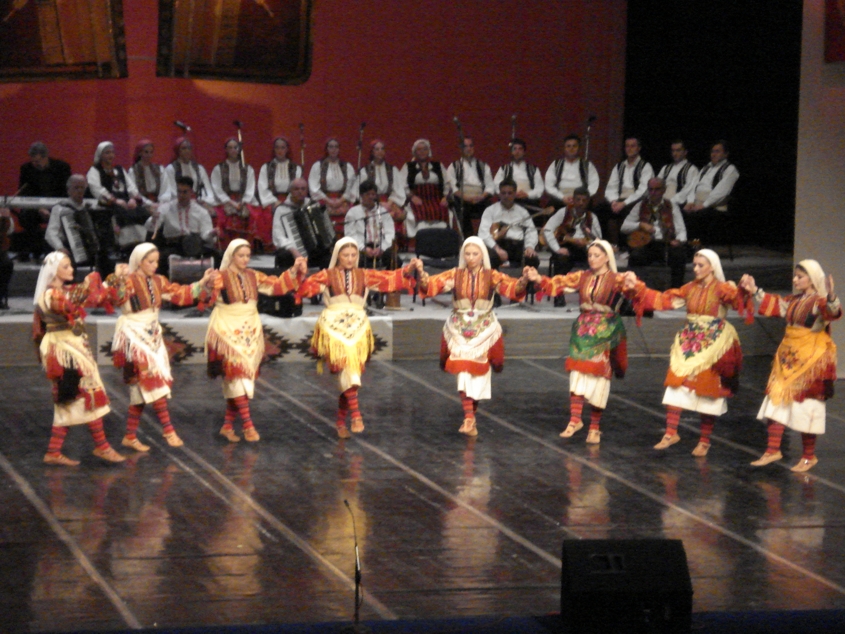 🇷🇴 Romania and 7 moreHorahora (Romanian), horo (Bulgarian), oro (Macedonian), horah (Hebrew)
A circle dance held at weddings across Southeast Europe and among Jewish communities worldwide.Performance · Reception, dance and gifts
 🇷🇸 Serbia and 2 moreKoloКоло
A South Slavic circle dance performed at weddings and social gatherings across the Balkans.Performance · The ceremony
 🇷🇺 Moscow, Russia and 5 moreBread and salt
A traditional welcome offering of bread and salt given to guests or newlyweds in Slavic, Baltic, and Balkan cultures.Feast custom · The ceremony
 🇩🇪 Haslach, Germany and 5 moreBridal crownBrautkrone
A headdress worn by brides in Central and Northern Europe to mark purity and family status.Attire · The ceremony
🇬🇷 Greece and 2 moreAdelphopoiesis
A historical Eastern Christian ceremony uniting two people of the same sex in a recognized spiritual bond.Betrothal · Engagement and betrothal
 🇺🇦 Ukraine and 8 moreVechornytsiвечорниці
A Ukrainian courtship gathering where young people meet, dance and practice matchmaking rituals before the wedding seasoBetrothal · The weeks before
🇭🇷 Croatia and 2 moreBećarac
A humorous folk song sung at weddings and village parties in Eastern CroatiaPerformance · The wedding feast
 🇷🇺 Russia and 5 moreRadonitsaРа́доница (Russian), Прóводи (Ukrainian), Ра́даўніца (Belarusian)
The Orthodox memorial day that lifts fasting restrictions and officially opens the wedding season.Feast custom · The weeks before
 🇷🇸 Serbia and 5 moreČočekčočек (Serbian/Macedonian), кючек (Bulgarian), çyçek/qyqek (Albanian), sistemul (Romanian), Tsifteteli (Greek)
A Balkan wedding dance with a distinctive nine-beat rhythm, kept alive by Romani musicians and village celebrations.Performance · The wedding feast
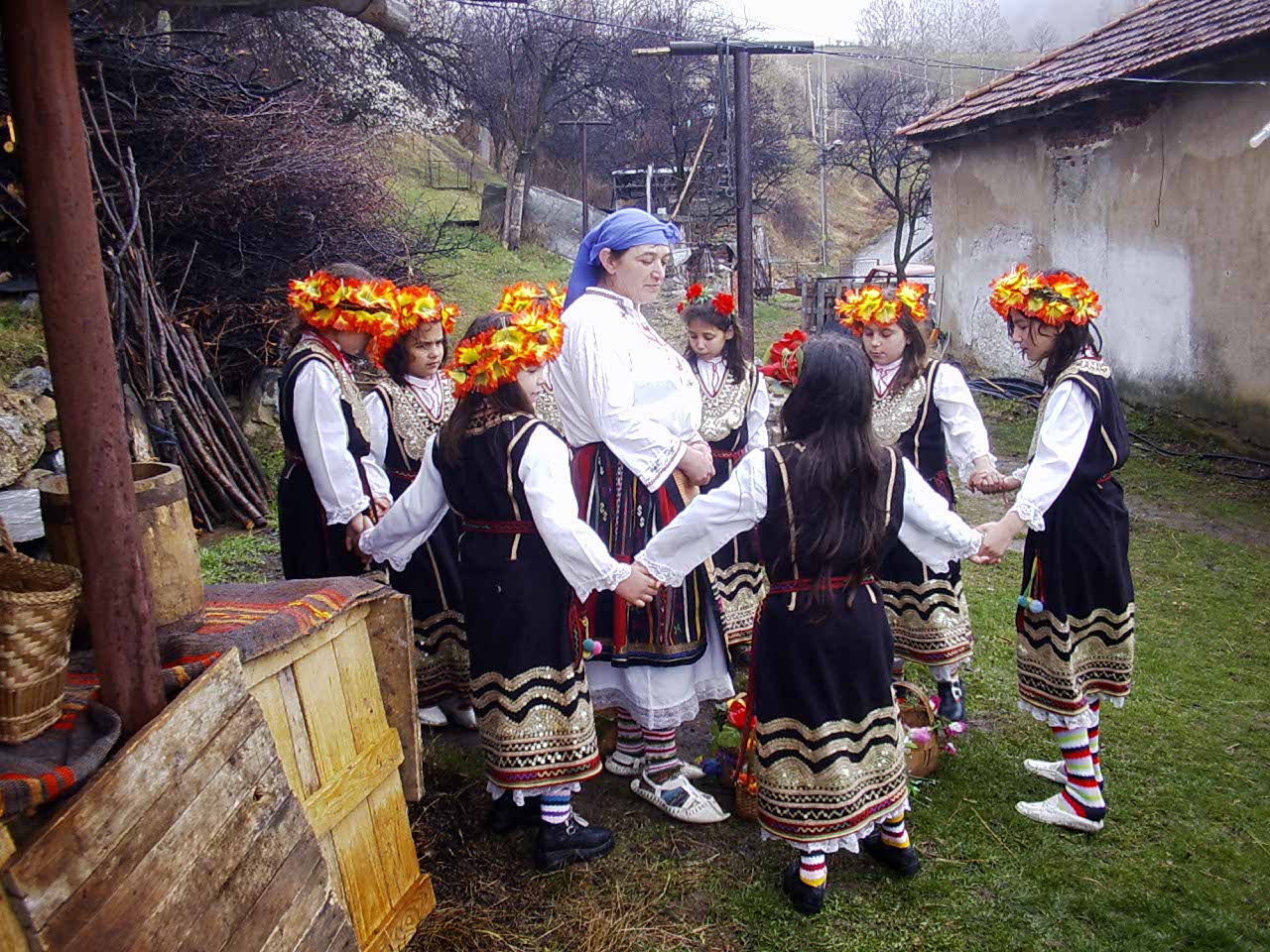 🇷🇸 Serbia and 3 moreLazariceлазарице (Serbian), лазаруване (Bulgarian)
A South Slavic procession of young unmarried women who bless homes before Palm SundayBlessing · The weeks before
🇽🇰 Kosovo and 2 morePodruga
A second wife brought into the home to bear children when the first marriage is childless.Family role · Engagement and betrothal
Photo credits on this page
The small pictures above come from Wikimedia Commons under free licences. Some are cropped to fit.
- Bread and salt: Olli Niemitalo, CC0, source
- Kolo: Sasa.mazinjanin, Public domain, source
- Hora: Chajeshukarie ( talk ), Public domain, source
- Kolach: Лобачев Владимир, CC BY-SA 3.0, source
- Bridal crown: Daderot, CC0, source
- Lazarice: Svetlina bov at Bulgarian Wikipedia, Public domain, source
- Radonitsa: Perohanych, CC BY-SA 3.0, source
- Vechornytsi: Гейслер, Кристиан Готфрид Генрих, Public domain, source
- Čoček: Модернист, CC BY-SA 4.0, source