Vows, contracts and registrationNorth AfricaMuslim
Misyar marriage
In its own language: زواج المسيار (zawāj al-misyār)
A Sunni Islamic contract where the wife waives cohabitation and financial support in exchange for a legal union.
Misyar is a type of marriage contract permitted by many Sunni Muslim scholars. In this arrangement, the wife voluntarily renounces standard marital rights such as shared housing and financial maintenance. The practice is most common in Egypt, Saudi Arabia, and Iran among men who cannot afford traditional weddings or seek discreet relationships.
When is Misyar marriage kept?
Misyar marriage is kept at the time of marriage contract signing.
Misyar marriage is a specific Islamic contract that alters standard marital obligations. It allows a couple to marry legally while the wife gives up her right to live with her husband or receive financial support. This form of union addresses economic constraints and social pressures in several Middle Eastern countries.
Contract terms and rights
The core feature of a misyar marriage is the waiver of specific rights. The wife agrees not to demand cohabitation or financial maintenance, known as nafaqa. She also often accepts irregular visits from her husband rather than a permanent household presence. In return, the husband retains his role but avoids the full financial burden of a traditional family home. The contract must still include a dowry and witnesses to be valid under Sharia law.
Origins and etymology
Scholars trace the concept to historical precedents where husbands were away on travel or military campaigns. The term misyar derives from colloquial Arabic meaning to stop by briefly. Early Islamic texts describe similar arrangements where a man would visit his wife during the day without staying overnight. These historical accounts suggest the practice was originally intended for temporary separations rather than permanent living apart.
Social context and usage
The practice has gained attention in Egypt and Saudi Arabia due to rising marriage costs. Many participants are men who cannot afford orthodox weddings or women who are divorced or widowed. Some critics argue it serves as a loophole for extramarital affairs or prostitution. Others view it as a legitimate solution for older singles or those facing economic hardship who still wish to maintain religious compliance regarding sexual relations.
How Misyar marriage is kept
The couple signs a marriage contract that includes a clause waiving cohabitation and financial support. Two witnesses must be present. The husband pays a agreed-upon dowry. The wife typically remains in her family home or separate residence. The husband visits at irregular intervals. The union can last until death or end in divorce. If the wife wishes, she can later retract her waiver of rights.
When and where
It occurs at the initial marriage contract stage. There is no fixed season or calendar date. The timing depends entirely on the agreement between the two parties and their families.
The custom is primarily found in Egypt, Saudi Arabia, and Iran. It is most discussed in urban centers where economic pressures on marriage are high. The practice spreads through religious fatwas and social networks.
What Misyar marriage means
For supporters, it symbolizes a flexible interpretation of Islamic law that accommodates modern economic realities. It represents a compromise between religious prohibition of premarital sex and the inability to afford a full marriage. Critics see it as a symbol of gender inequality and the commodification of women.
Who takes part
- The bride: Waives rights to housing and financial support in the contract
- The groom: Pays the dowry and visits the bride at irregular intervals
- Two witnesses: Observe and validate the marriage contract signing
- Islamic scholars: Issue fatwas permitting or criticizing the specific contract terms
Then and now
The practice faces significant social stigma despite being legally permissible. Some clerics prefer verbal agreements over written contracts to avoid formalizing the waiver of rights. Debates continue regarding its impact on women's status and whether it encourages exploitation.
Questions people ask about Misyar marriage
When is Misyar marriage kept?
Misyar marriage is kept at the time of marriage contract signing.
What is a misyar marriage?
It is a Sunni Islamic marriage contract where the wife voluntarily waives her rights to cohabitation and financial maintenance. The husband visits her irregularly instead of providing a shared home.
Is it legal in Islamic law?
Many Sunni scholars consider it permissible because it meets basic contract requirements. However, some organizations oppose it, arguing it undermines marital stability and women's rights.
Why do people choose this arrangement?
Some men cannot afford traditional weddings. Others use it for discreet relationships. Women may choose it if they are older, divorced, or seeking a religiously sanctioned union without full financial dependency.
See also
 NikahThe Islamic marriage contract that establishes a binding union between two people.Kafa'ahThe Islamic legal principle of social and religious equivalence between spouses in marriage.Nikah halalaA second marriage required for a woman to remarry her first husband after triple talaq.Nikah mut'ahA private contract for a fixed-term marriage practiced in Twelver Shia Islam.
Good reading and sources
The facts on this page come from the Wikipedia article "Misyar marriage", written by its contributors and used under the CC BY-SA 4.0 licence, and from its Wikidata record (CC0). EveryShaadi rewrote the text in its own words, with AI assistance, and compares every page with the article to make sure no passage is copied. It may be reused under the same CC BY-SA 4.0 licence with a link back.
It may contain mistakes. Wedding customs differ from one family, village and community to the next, and the people who keep them know them best. If something is wrong, tell us. Last refreshed 2026-10-05.
More from Egypt
All the traditions of Egypt 🇮🇱 Israel and 2 moreKetubahכְּתוּבָּה
The Jewish marriage contract that outlines the groom's financial and personal obligations to the bride.Vow · Engagement and betrothal
🇮🇱 Israel and 2 moreKetubahכְּתוּבָּה
The Jewish marriage contract that outlines the groom's financial and personal obligations to the bride.Vow · Engagement and betrothal
 🇵🇰 Pakistan and 5 moreCousin marriage
A union between people who share a grandparent or recent ancestor, practiced in many regions and communities.Vow · Finding a match
🇵🇰 Pakistan and 5 moreCousin marriage
A union between people who share a grandparent or recent ancestor, practiced in many regions and communities.Vow · Finding a match
 🇪🇬 Egypt and 4 moreWaist beads
Strands of glass or seed worn around the hips to mark womanhood and track body changes in West and North Africa.Adornment · Engagement and betrothal
🇪🇬 Egypt and 4 moreWaist beads
Strands of glass or seed worn around the hips to mark womanhood and track body changes in West and North Africa.Adornment · Engagement and betrothal
The same idea elsewhere
Arranged marriage, matchmaking and choosing a partner compared
🇮🇷 Iran and 1 moreNikahnikāḥ (Arabic: نِكَاح)
The Islamic marriage contract that establishes a binding union between two people.Vow · Engagement and betrothal
🇮🇳 India and 3 moreNikah halalaنکاح حلالہ
A second marriage required for a woman to remarry her first husband after triple talaq.Vow · After the wedding
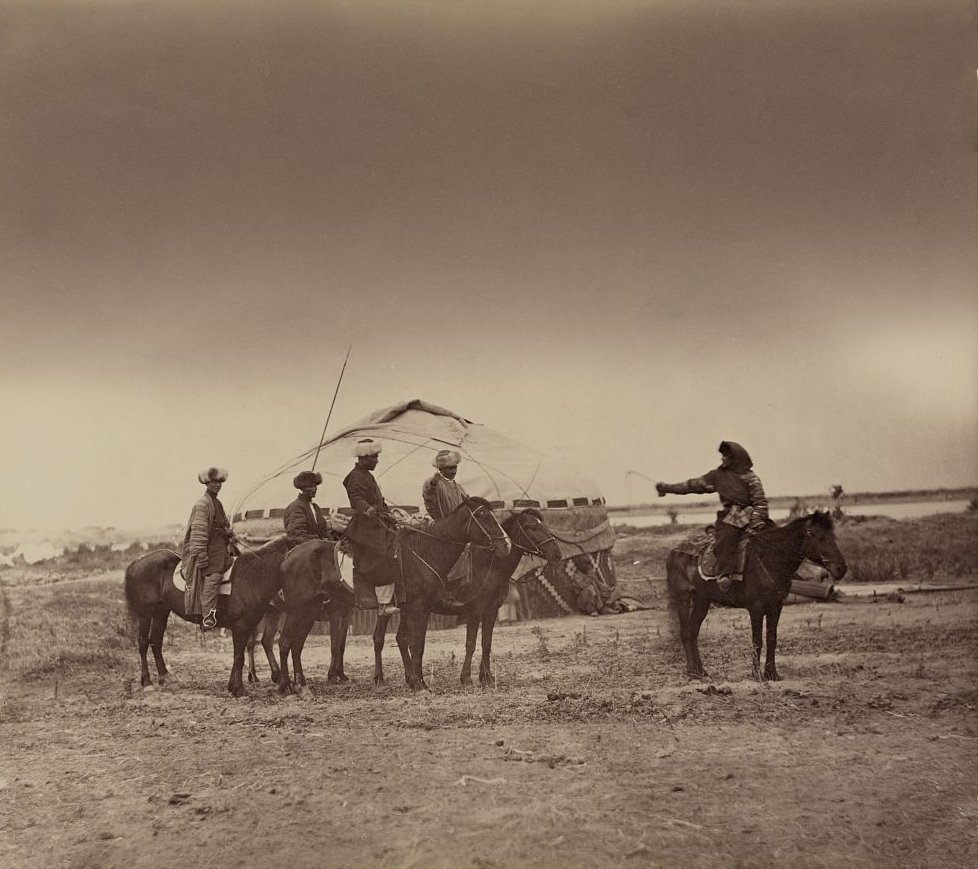 🇰🇬 Kyrgyzstan and 2 moreAla kachuuала качуу
A Kyrgyz custom of taking a woman for marriage, ranging from consensual elopement to forced abduction.Betrothal · Finding a match
🇰🇬 Kyrgyzstan and 2 moreAla kachuuала качуу
A Kyrgyz custom of taking a woman for marriage, ranging from consensual elopement to forced abduction.Betrothal · Finding a match
 🇮🇳 IndiaBride buying in India
The forced purchase of women from impoverished regions for arranged marriages in Northern India.Gift custom · Engagement and betrothal
🇮🇳 IndiaBride buying in India
The forced purchase of women from impoverished regions for arranged marriages in Northern India.Gift custom · Engagement and betrothal