Secular and civil wedding traditions
A secular or civil wedding is one conducted by the state or a celebrant rather than a religious body.
A secular or civil wedding is one conducted by the state or a celebrant rather than a religious body. It can be a five minute visit to a registry office or a long and personal ceremony in a garden, and it is now the most common form in many countries.
What the law requires
Most countries require a declaration of consent, witnesses and a record. In France and Germany a civil wedding at the mairie or the Standesamt is the only legally binding act, and a religious one may come after. In England and Wales a civil ceremony may be held in any licensed venue. In the United States the officiant may be a judge, a clerk or an ordained friend. In Scandinavia, Humanists and the state church both conduct marriages.
Humanist and celebrant weddings
Humanist and independent celebrant ceremonies have grown fast. They may be written entirely by the couple, with readings, music, a unity ritual such as sand or tree planting, and no religious content. In Scotland, Humanist weddings were legalised in 2005 and have since become very popular, and in Ireland they were recognised in 2012.
Why it matters
Civil marriage opens a wedding to people who are excluded or unwelcome in religious ones: interfaith couples, same-sex couples, divorcees and the unbelieving. It also protects spouses by giving legal rights, which a purely religious wedding may not do. Many couples choose a civil wedding for law and add a cultural one for family.
Written by the EveryShaadi desk with AI assistance. Background on Secular and civil (faith). Customs differ from place to place and family to family. If this is your tradition and we have it wrong, tell us.
 🇰🇿 Kazakhstan and 1 moreKazakh wedding ceremonyҮйлену тойы
The multi-stage Kazakh marriage process featuring the face-revealing feast and the Islamic contract signing.Rite · Engagement and betrothal
 🇰🇷 Seoul, South Korea and 1 moreMarriage in KoreaKorean marriage (결혼)
A look at how Korean weddings blend ancient Confucian rites with modern legal practices.Rite · Finding a match
 🇲🇱 MaliWeddings in Mali
Multi-day Malian wedding customs blending Islamic, civil and traditional rites with bazin attire and henna.Feast custom · Engagement and betrothal
 🇬🇧 United KingdomHandfastingpòsadh-bliadhna
A historical vow of marriage by joining hands, now revived in modern pagan ceremonies.Rite · Engagement and betrothal
 🇨🇳 ChinaTraditional Chinese marriage婚姻 (hūnyīn)
A union between two families governed by Confucian rites and the exchange of gifts.Rite · Finding a match
🇸🇪 Stockholm, SwedenSame-sex marriage in Sweden
The legal union for same-sex couples that began on 1 May 2009 after the Riksdag passed a gender-neutral law.Modern · Engagement and betrothal
 🇺🇸 United States and 5 moreEngagement ring
A ring given to mark a promise to marry, usually worn on the left hand in Western cultures.Adornment · Engagement and betrothal
 🇬🇧 United Kingdom and 5 moreGroomsman
Male attendants who support the groom and assist guests during a wedding ceremony.Family role · Engagement and betrothal
🇮🇳 India and 4 moreAuspicious wedding dates
The selection of lucky times for a ceremony based on astrology, numerology, and tradition.Betrothal · Engagement and betrothal
 🇻🇳 VietnamTraditional Vietnamese weddingLễ cưới truyền thống Việt Nam
The multi-stage ceremony of betrothal, engagement and union that marks a marriage in Vietnam.Attire · Finding a match
 🇺🇸 United States and 5 moreBridesmaid
A female attendant who supports the bride during a Western wedding ceremony.Family role · Engagement and betrothal
🇺🇸 Hawaii, United StatesCommon-law marriage in the United States
A legal union formed by mutual consent and public presentation without a license or ceremony.Vow · Engagement and betrothal
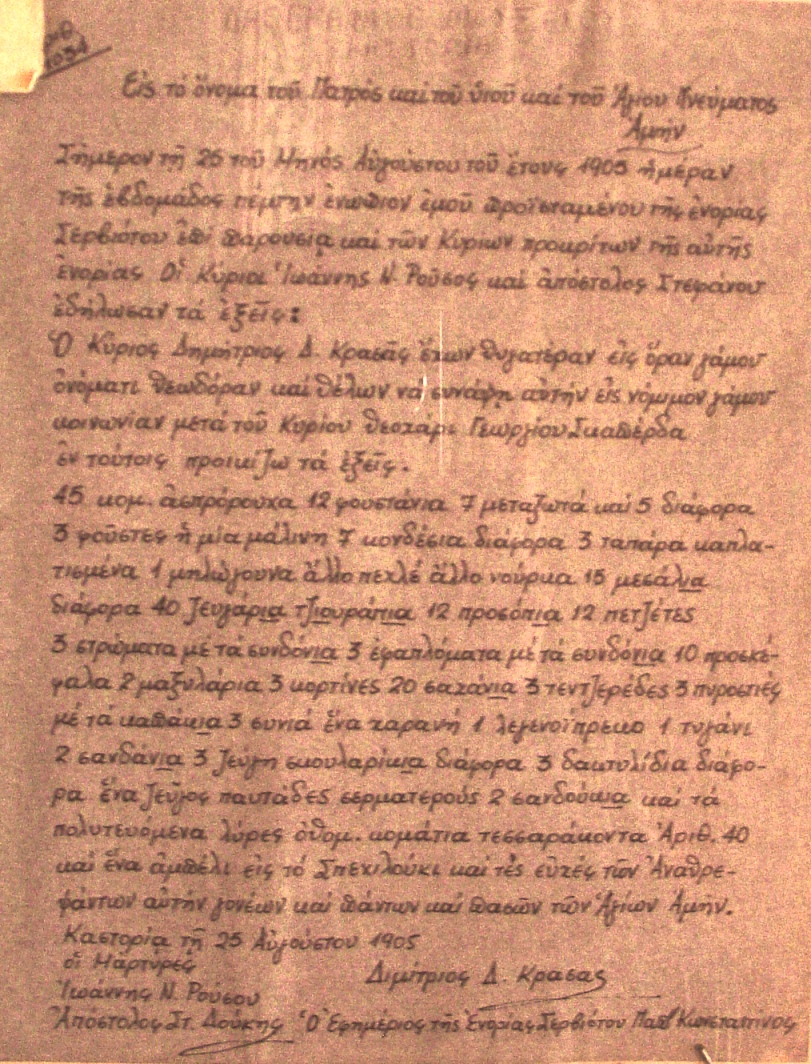 🇩🇪 Germany and 4 moreDower
A share of the husband's property set aside to secure a woman's life if he dies first.Gift custom · Engagement and betrothal
 🇺🇦 Ukraine and 4 moreKorovaiкоровай (Ukrainian), каравай (Russian), кравай (Bulgarian)
A large round braided bread shared at weddings in Eastern Europe to bless the couple and unite guests.Feast custom · Engagement and betrothal
 🇵🇱 Poland and 6 moreKolachколач (kolach), калач (kalach), kołacz, colac, kalács
A braided or ring-shaped bread that marks weddings and major holidays across Eastern Europe.Feast custom · Engagement and betrothal
 🇧🇪 Kapellen, BelgiumSame-sex marriage in Belgium
The legal recognition of same-sex unions in Belgium, established in 2003.Modern · Engagement and betrothal
 🇮🇳 IndiaChild marriage in India
A contested practice where minors marry, defined by law as unions involving a bride under 18.Modern · Engagement and betrothal
 🇨🇳 China and 3 moreMarriage coin charm夫妇和合花钱 (fū fù hé hé huā qián)
Numismatic charms from East Asia that use marriage symbols or erotic imagery to wish couples fertility and harmony.Adornment · Engagement and betrothal
 🇦🇿 Nakhchivan, AzerbaijanAzerbaijani wedding traditionsAzərbaycanın toy adətləri
A multi-stage family ceremony in Azerbaijan featuring matchmaking, dowry exchange, and henna rituals.Rite · Finding a match
🇫🇷 FranceCivil solidarity pactPacte civil de solidarité (PACS)
A French civil contract that gives couples legal rights without the full commitment of marriageVow · Engagement and betrothal
🇵🇹 Lisbon, PortugalSame-sex marriage in PortugalCasamento entre pessoas do mesmo sexo
The legal recognition of marriage between two people of the same sex in Portugal.Modern · Engagement and betrothal
 🇬🇧 United Kingdom and 5 moreRing fingerdigitus annularis
The fourth digit of the hand where wedding and engagement rings are traditionally worn.Attire · The ceremony
 🇳🇱 Amsterdam, Netherlands and 5 moreSame-sex marriage
The legal union of two people of the same sex or gender, recognized in dozens of countries.Modern · Engagement and betrothal
 🇮🇪 Dublin, IrelandSame-sex marriage in the Republic of Ireland
The legal recognition of same-sex marriage following a national referendum in 2015Modern · Engagement and betrothal
 🇺🇸 Las Vegas, United StatesLas Vegas weddings
Quick civil or religious ceremonies held in Las Vegas due to easy licensing and diverse venues.Setting · Engagement and betrothal
🇸🇮 SloveniaSame-sex marriage in SloveniaZakonska zveza istospolnih partnerjev
The legal recognition of same-sex unions that evolved from limited partnerships to full marriage rights.Modern · Engagement and betrothal
🇦🇩 AndorraSame-sex marriage in AndorraMatrimoni entre persones del mateix sexe
The legal recognition of same-sex unions in the Pyrenean principality since 2023.Vow · Engagement and betrothal
 🇪🇪 Tallinn, EstoniaSame-sex marriage in Estonia
The legal recognition of same-sex unions in the Baltic state, following registered partnerships.Modern · Engagement and betrothal
🇬🇧 London, United Kingdom and 1 moreCivil partnership in the United Kingdom
A legal union for same-sex and opposite-sex couples in the UK, offering rights equal to marriage.Vow · Engagement and betrothal
🇺🇬 Uganda and 3 morePolygamy in Uganda
The legal practice of a man having multiple wives simultaneously in Uganda and neighboring nations.Family role · Engagement and betrothal
🇨🇦 CanadaCivil union in Quebec
A legal partnership in Quebec that grants same rights to opposite and same-sex couples as marriage.Vow · Engagement and betrothal
 🇫🇷 France and 4 moreMore danicodansk skik
A Medieval Scandinavian marriage custom allowing polygyny and secular unions outside church control.Betrothal · Engagement and betrothal
🇱🇻 Riga, LatviaCivil partnership in Latviacivilā partnerība
The legal framework for same-sex couples in Latvia that grants most marital rights without adoption or inheritance.Modern · Engagement and betrothal
🇧🇴 Santa Cruz de la Sierra, BoliviaRecognition of same-sex unions in Bolivia
The legal recognition of civil unions and marriages for same-sex couples in Bolivia.Modern · Engagement and betrothal
 🇬🇷 Athens, GreeceSame-sex marriage in GreeceΟμοφυλοφιλικός γάμος (Omofylofilikos gamos)
The legal recognition of marriage between two people of the same sex, effective since February 2024.Vow · Engagement and betrothal
 🇨🇿 Prague, CzechiaRegistered partnership in the Czech Republicregistrované partnerství
The legal framework for same-sex couples in Czechia that grants marriage-like rights without the title of marriage.Modern · Engagement and betrothal
 🇳🇿 Wellington, New ZealandCivil union in New Zealand
A legal partnership for same-sex and opposite-sex couples established by statute in New Zealand.Vow · Engagement and betrothal
🇿🇦 South AfricaCivil partnership in South Africa
A legal union in South Africa that grants same-sex and opposite-sex couples the same rights as marriage.Vow · Engagement and betrothal
Photo credits on this page
The small pictures above come from Wikimedia Commons under free licences. Some are cropped to fit.
- Same-sex marriage in Greece: Mzimu, CC BY-SA 3.0, source
- Handfasting: Sander van der Wel, CC BY-SA 2.0, source
- Bread and salt: Olli Niemitalo, CC0, source
- More danico: Edward Burne-Jones, Public domain, source
- Marriage in Korea: Jérôme Banal ( Eden2004 ), CC BY-SA 3.0, source
- Engagement ring: Photo by Derek Ramsey ( Ram-Man ), CC BY-SA 2.5, source
- Groomsman: Jenny Mealing, CC BY 2.0, source
- Same-sex marriage: Stefano Bolognini, CC BY-SA 3.0, source
- Weddings in Mali: HawaG, CC BY-SA 4.0, source
- Bridesmaid: Photographer not credited; relative or work for hire of relative., CC BY-SA 4.0, source
- Dower: Pvasiliadis, CC BY-SA 3.0, source
- Kolach: Лобачев Владимир, CC BY-SA 3.0, source
- Same-sex marriage in Estonia: Märt Põder, CC BY-SA 4.0, source
- Civil union in New Zealand: Helen Robinson, CC BY-SA 2.5, source
- Kazakh wedding ceremony: jerome taylor, CC BY 2.0, source
- Azerbaijani wedding traditions: Azim Azimzadeh, Public domain, source
- Traditional Vietnamese wedding: Gabrielle M. Vassal, Public domain, source
- Marriage coin charm: Scott Semans, CC BY 3.0, source
- Child marriage in India: Baijayant, CC BY-SA 4.0, source
- Same-sex marriage in Belgium: flamenc, CC BY-SA 3.0, source
- Traditional Chinese marriage: Unknown author, Public domain, source
- Same-sex marriage in the Republic of Ireland: Kaihsu Tai, CC BY-SA 3.0, source
- Registered partnership in the Czech Republic: Martin Strachoň, CC BY-SA 3.0, source
- Las Vegas weddings: Henrickson ( talk ) ( Uploads ), CC BY-SA 3.0, source
- Ring finger: RAPMOODDE, CC BY-SA 4.0, source