Wedding traditions with garlands and flowers
A garland is a ring of flowers, and in the exchange of garlands a couple say yes without a word.
A garland is a ring of flowers, and in the exchange of garlands a couple say yes without a word. Garlands welcome, bless and decorate, and in many warm countries a wedding is hard to imagine without them.
The exchange
In the Hindu jaimala or varmala, bride and groom exchange garlands of marigold, rose or jasmine. In Buddhist and Hindu Sri Lanka, Thailand and Indonesia, jasmine is made into garlands, and in Hawaii the lei is draped on the couple. In the Philippines, a flower garland is offered by sponsors. In Fiji and Samoa, leis and garlands are also exchanged.
Flowers and meaning
Marigolds are auspicious in India, jasmine is a symbol of purity, and roses are for love. Ancient Greek and Roman couples wore wreaths of myrtle. Bouquets and buttonholes in the West carry a similar idea, and the bouquet toss is a last echo, in which the woman who catches it is said to be next to marry. Increasingly, flowers are local, seasonal and dried.
Written by the EveryShaadi desk with AI assistance. Background on Garlands and flowers (symbol). Customs differ from place to place and family to family. If this is your tradition and we have it wrong, tell us.
 🇮🇹 Rome, ItalyAncient Roman wedding
A veiled Roman bride, omens checked, was led from her family home to her groom's house.Rite · The weeks before
 🇮🇳 IndiaTulasi Vivahतुलसी विवाह (Sanskrit)
The symbolic wedding of the holy basil plant to Vishnu that marks the start of the Hindu marriage season.Rite · The weeks before
 🇮🇳 India and 1 moreLaavaanਲਾਵਾਂ (Lavan)
The four sacred hymns of the Anand Karaj that guide a Sikh couple through spiritual stages of married life.Rite · The ceremony
 🇩🇪 Hamburg, Germany and 3 moreWimpelווימפל
A linen sash made from a baby boy's circumcision cloth that binds the Torah scroll.Adornment · The weeks before
 🇮🇳 India and 1 moreMayian
A pre-wedding cleansing ritual in Punjabi culture where turmeric paste is applied to the couple.Blessing · The weeks before
🇮🇳 IndiaBrahmanippattu
A devotional song and dance performed by Nambeesan women to bless a marriage with the grace of Goddess Kali and Durga.Performance · The weeks before
 🇺🇸 United StatesNavajo wedding ceremony
A Navajo marriage ritual centred on harmony, family union, and nature inside a Hogan.Rite · The eve
 🇮🇳 IndiaAyyavazhi wedding
The sacred rite of Ayyavazhi that treats marriage as a spiritual sacrament and family life as the highest austerity.Rite · Procession and arrival
 🇮🇳 IndiaWedding mandapaVivaha Mandapa (विवाह मण्डप)
The temporary Hindu and Jain wedding pavilion where the main rites are performed under a sacred canopy.Setting · The ceremony
 🇬🇷 Greece and 1 moreAnastenariaΑναστενάρια (Greek), Нестинарство (Bulgarian)
A barefoot firewalking ritual performed by Orthodox Christian communities in Greece and Bulgaria.Rite · The weeks before
 🇮🇳 Madurai, IndiaGoluBommai kolu (Tamil), Bommala Koluvu (Telugu), Gombe Habba (Kannada)
A tiered display of dolls and figurines arranged in South Indian homes during the Navaratri festival.Feast custom · The weeks before
 🇮🇳 Delhi, India and 2 moreKarva Chauthकरकचतुर्थी (Karakachaturthī)
A Hindu festival where married women fast from sunrise to moonrise for their husband's health and life.Betrothal · The weeks before
 🇵🇱 Poland and 3 moreEaster palmPolish: palma wielkanocna; Lithuanian: verba
A decorated willow or juniper bundle blessed on Palm Sunday to protect homes and crops.Blessing · The weeks before
🇲🇷 MauritaniaT'heydinnالتهيدين (al-T'haydīn)
A Mauritanian Moorish epic performance of poetry and music kept by griot families.Performance · Reception, dance and gifts
 🇧🇷 Salvador, BrazilPuxada de Rede
A Brazilian dance that reenacts the tragic retrieval of a fisherman's body from the sea.Performance · The weeks before
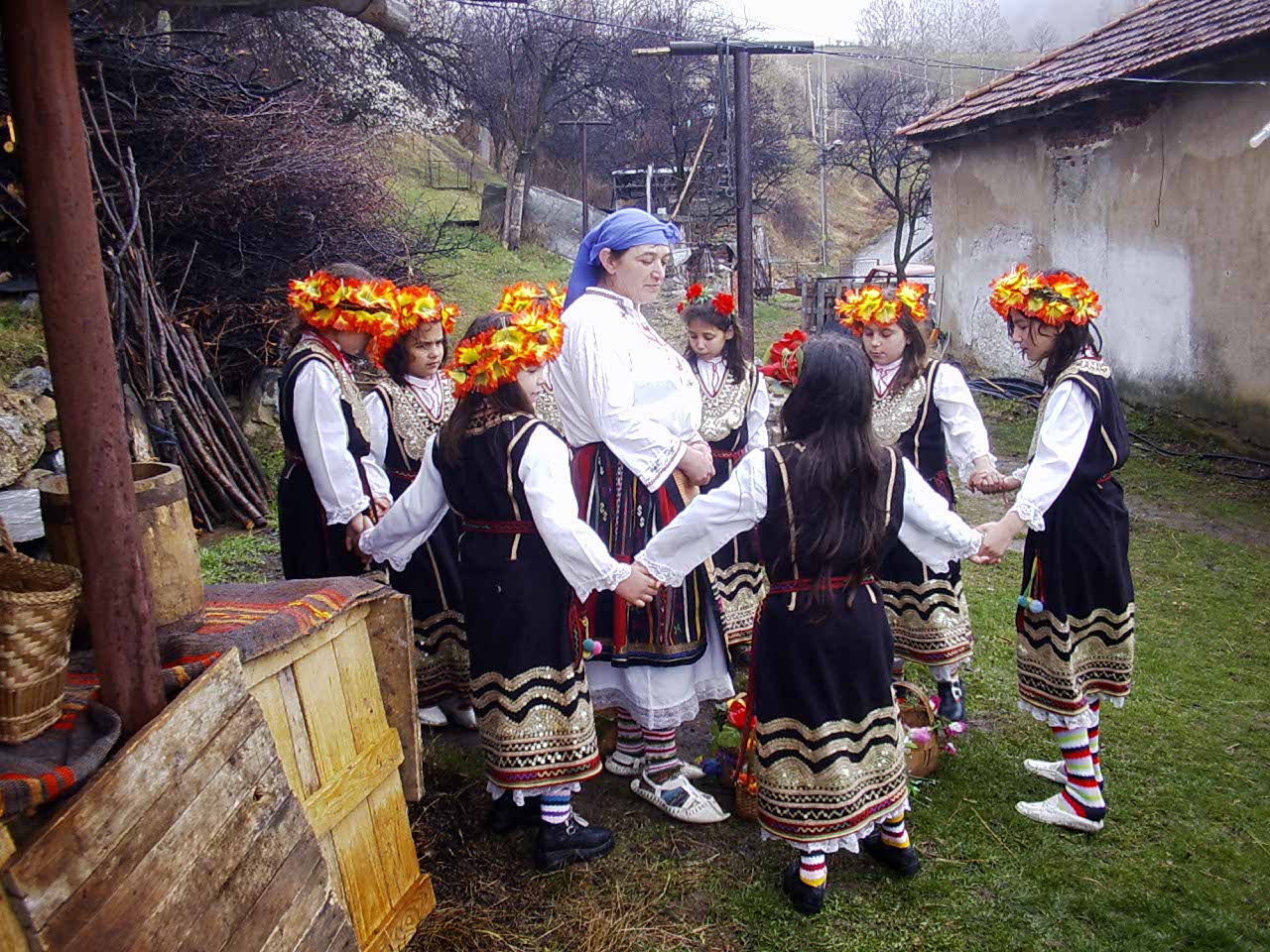 🇷🇸 Serbia and 3 moreLazariceлазарице (Serbian), лазаруване (Bulgarian)
A South Slavic procession of young unmarried women who bless homes before Palm SundayBlessing · The weeks before
 🇨🇳 China and 4 moreCloud collar云肩 (yúnjiān)
A detachable shoulder collar worn by Han Chinese brides to frame the face and symbolize cosmic order.Attire · The weeks before
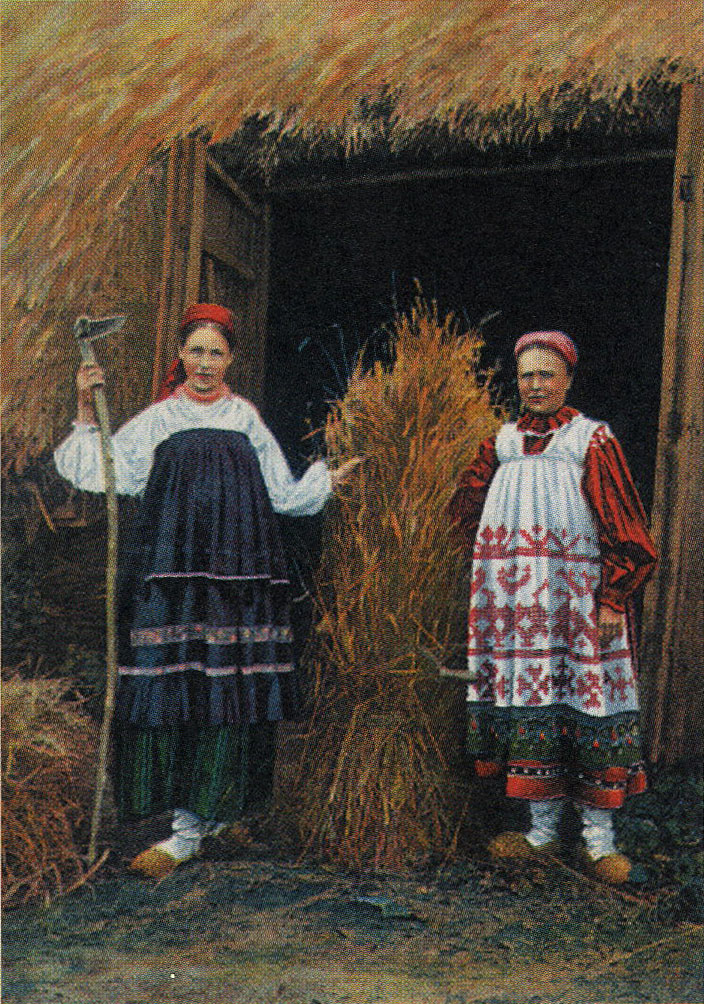 🇵🇱 Poland and 5 moreDożynki
A Slavic harvest festival where farmers bring the last sheaf of grain to the village in a ceremonial wreath.Feast custom · After the wedding
Photo credits on this page
The small pictures above come from Wikimedia Commons under free licences. Some are cropped to fit.
- Dożynki: Unknown author, Public domain, source
- Tulasi Vivah: Unknown author, CC BY 3.0, source
- Laavaan: Ashish 100, CC BY 2.0, source
- Wimpel: Wikipedia Loves Art participant " The_Grotto ", CC BY-SA 2.5, source
- Mayian: Rakzika, CC BY-SA 4.0, source
- Ayyavazhi wedding: Vaikunda Raja, CC BY-SA 3.0, source
- Ancient Roman wedding: Meister der Aldobrandinischen Hochzeit, Public domain, source
- Puxada de Rede: SebáNeto, CC BY-SA 4.0, source
- Wedding mandapa: Unknown author, CC BY-SA 3.0, source
- Lazarice: Svetlina bov at Bulgarian Wikipedia, Public domain, source
- Anastenaria: Artkostov, CC BY-SA 4.0, source
- Navajo wedding ceremony: Neeta Lind, CC BY 2.0, source
- Karva Chauth: Iamwiki001, CC BY-SA 4.0, source
- Golu: Ksiva21, CC BY-SA 4.0, source
- Cloud collar: Unknown author, CC0, source
- Easter palm: Evaldas Liutkus, CC BY 2.0, source