Family roles and who does whatEuropeHinduCatholic
Podruga
A second wife brought into the home to bear children when the first marriage is childless.
Podruga is a Balkan custom where a husband marries a second woman if his first wife cannot have children. The practice was known among Albanian and Serbian communities in Kosovo and Metohija until the mid-twentieth century. It allowed the family to continue its lineage while keeping the first wife within the household structure.
When is Podruga kept?
Podruga is kept on until the end of the twentieth century.
Podruga describes a second wife in a polygynous arrangement found in parts of the Balkans. This custom emerged when a first wife could not produce offspring. A second woman would marry the husband to provide heirs for the family. The practice persisted in Kosovo and Metohija until the late twentieth century.
What podruga means
The term podruga translates to second in order. It identifies a wife who enters a marriage after the first union has failed to produce children. Historically, this occurred in regions with Albanian and Serbian populations. The arrangement was not about replacing the first wife but ensuring the continuation of the family line. Both women lived under one roof, maintaining separate rooms and responsibilities. The first wife remained a member of the household, though her marital status changed socially.
How the custom worked
The first wife often insisted on the second marriage due to economic pressures or social expectations. She retained protection within the house despite the dissolution of intimacy with her husband. The second wife bore children who were raised by both women. Customary law in some areas of Kosovo permitted this arrangement. The first wife acted as an assistant rather than a spouse to the husband. This coexistence focused on raising offspring together without romantic ties between the two women.
Origins and history
The practice existed since time immemorial in certain cultures. Writers compared it to biblical stories where barren wives brought in secondary partners. In Kosovo and Metohija, the custom lasted until the 1980s. It was never fully legalized in the Christian world but survived through customary law. The last recorded instance involved Petkana Filipović in Serbia. She married Vujica and helped raise his children with his first wife Roksanda.
How Podruga is kept
A husband whose first wife cannot have children takes a second wife. The first wife consents, often for economic reasons. The second wife moves into the shared home. Both women live separately but cooperate in raising the new children. The first wife loses her role as a sexual partner but keeps her place in the family unit. The arrangement ends when the second wife bears children.
When and where
It occurred during the marriage phase, specifically when infertility was identified. The practice continued until the 1980s in some areas.
Most common in Kosovo and Metohija. Also present in Serbia and among Albanian communities.
What Podruga means
It symbolized the prioritization of family continuity over individual marital exclusivity. The first wife's consent represented love and duty to the husband's lineage. The arrangement ensured social protection for the barren wife while securing heirs for the family.
Who takes part
- The first wife: Consents to the second marriage and remains in the household as an assistant.
- The husband: Marries the second wife to produce children for the family.
- The second wife: Bears children and lives with the first wife under customary law.
Then and now
The custom has largely disappeared. The last known cases date back to the 1980s. Modern legal and social structures no longer support such arrangements.
Questions people ask about Podruga
When is Podruga kept?
Podruga is kept on until the end of the twentieth century.
What is podruga?
Podruga is a term for a second wife in a Balkan custom. It occurs when a first wife cannot have children. The second wife joins the household to bear heirs.
Where did this custom happen?
It was practiced in Kosovo, Metohija, and Serbia. It affected Albanian and Serbian communities until the late twentieth century.
Is podruga still practiced today?
No. The custom ended in the 1980s. It is no longer part of modern wedding or marriage traditions in these regions.
Was the first wife forced?
Often, the first wife consented due to economic necessity. She stayed in the house for protection but lost her marital intimacy with her husband.
See also
 KolachA braided or ring-shaped bread that marks weddings and major holidays across Eastern Europe.
 RadonitsaThe Orthodox memorial day that lifts fasting restrictions and officially opens the wedding season.
 Bread and saltA traditional welcome offering of bread and salt to guests or newlyweds in Slavic, Baltic, and Balkan cultures.
Good reading and sources
The facts on this page come from the Wikipedia article "Podruga", written by its contributors and used under the CC BY-SA 4.0 licence, and from its Wikidata record (CC0). EveryShaadi rewrote the text in its own words, with AI assistance, and compares every page with the article to make sure no passage is copied. It may be reused under the same CC BY-SA 4.0 licence with a link back.
It may contain mistakes. Wedding customs differ from one family, village and community to the next, and the people who keep them know them best. If something is wrong, tell us. Last refreshed 2026-10-06.
More from Kosovo
All the traditions of Kosovo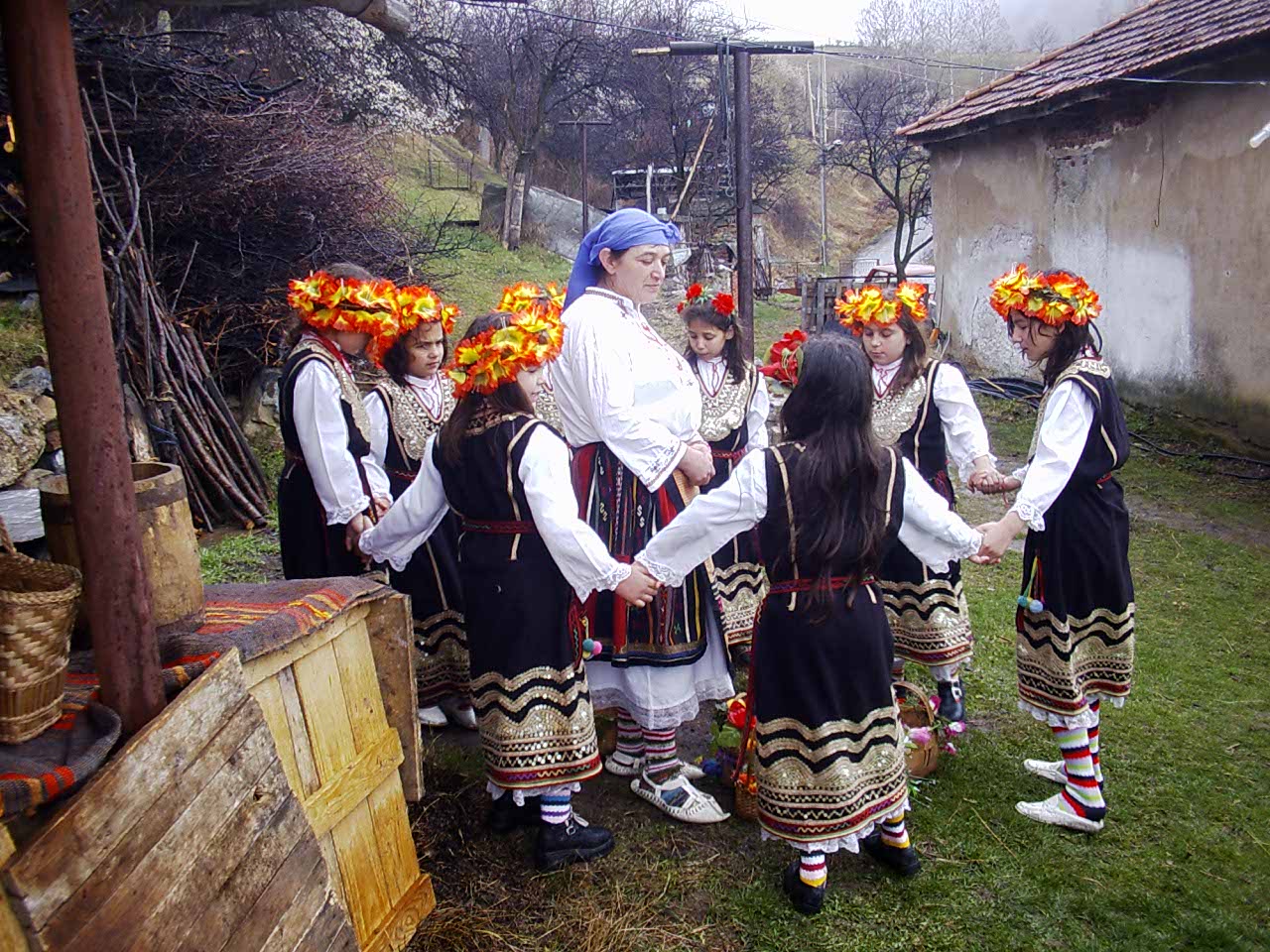 🇷🇸 Serbia and 3 moreLazariceлазарице (Serbian), лазаруване (Bulgarian)
A South Slavic procession of young unmarried women who bless homes before Palm SundayBlessing · The weeks before
🇷🇸 Serbia and 3 moreLazariceлазарице (Serbian), лазаруване (Bulgarian)
A South Slavic procession of young unmarried women who bless homes before Palm SundayBlessing · The weeks before
 🇷🇸 Serbia and 5 moreČočekčočек (Serbian/Macedonian), кючек (Bulgarian), çyçek/qyqek (Albanian), sistemul (Romanian), Tsifteteli (Greek)
A Balkan wedding dance with a distinctive nine-beat rhythm, kept alive by Romani musicians and village celebrations.Performance · The wedding feast
🇷🇸 Serbia and 5 moreČočekčočек (Serbian/Macedonian), кючек (Bulgarian), çyçek/qyqek (Albanian), sistemul (Romanian), Tsifteteli (Greek)
A Balkan wedding dance with a distinctive nine-beat rhythm, kept alive by Romani musicians and village celebrations.Performance · The wedding feast
The same idea elsewhere
Interfaith, inter-community and same-sex weddings compared 🇪🇬 Egypt and 4 moreWaist beads
Strands of glass or seed worn around the hips to mark womanhood and track body changes in West and North Africa.Adornment · Engagement and betrothal
🇪🇬 Egypt and 4 moreWaist beads
Strands of glass or seed worn around the hips to mark womanhood and track body changes in West and North Africa.Adornment · Engagement and betrothal
 🇰🇷 Seoul, South Korea and 3 moreBlessing ceremony
The large-scale marriage rite of the Unification Church where couples are matched and blessed by their leaders.Rite · The ceremony
🇮🇳 IndiaSambandam
The traditional matrilineal marriage alliance of Kerala's Nairs and Nambudiris.Betrothal · Finding a match
🇰🇷 Seoul, South Korea and 3 moreBlessing ceremony
The large-scale marriage rite of the Unification Church where couples are matched and blessed by their leaders.Rite · The ceremony
🇮🇳 IndiaSambandam
The traditional matrilineal marriage alliance of Kerala's Nairs and Nambudiris.Betrothal · Finding a match
 🇹🇼 Taipei, TaiwanSame-sex marriage in Taiwan
The legal recognition of same-sex unions in Taiwan, the first in Asia.Modern · Engagement and betrothal
🇹🇼 Taipei, TaiwanSame-sex marriage in Taiwan
The legal recognition of same-sex unions in Taiwan, the first in Asia.Modern · Engagement and betrothal