🇮🇳 India
The sangeet is a night of music and dance by both families, and the baraat is led by a dhol drummer and dancing relatives. In Punjab, the bhangra and giddha are danced at weddings by men and women.
Sangeet, being writtenMusic and dancing run through weddings everywhere: the drummers at the head of the procession, the song of the women at the henna night, the first dance of the couple, the line dance of the guests.
Presented by ClearTrust Free for couples, families, guests and the curious.
Music and dancing run through weddings everywhere: the drummers at the head of the procession, the song of the women at the henna night, the first dance of the couple, the line dance of the guests. A wedding band is often a family's biggest hire, and the dance floor is where generations meet. The details range from the Greek circle dance to the Indian bhangra, from the Polish polonaise to the first dance in a hotel ballroom.
Dance is the way a community joins in. Linking arms or holding handkerchiefs makes a chain around the couple, and the old and young dance side by side. Many wedding dances have a meaning: the Greek kalamatianos and the Armenian kochari show unity, the Jewish hora lifts the couple on chairs, and the Polish polonaise opens the ball with a walk for all. Some dances are for women alone, as in the henna night, and some are for men, as in the Georgian and Caucasian warrior dances.
Drums and pipes lead the procession in South Asia, the dhol and shehnai in particular. Brass bands play in the Balkans, accordion and violin in Eastern Europe, mariachi in Mexico, the oud and tabla in the Arab world, kora and drums in West Africa and the gamelan in Java. Songs include blessing songs, teasing songs for the in-laws and farewell songs for the bride, who is leaving her home. The bride's friends sing ones that make everyone cry, and the best man's song might do the same.
The first dance as a married couple, usually a slow song chosen by the pair, is now a feature of many weddings in the West and beyond. In some customs the couple dance with parents next, then the whole party joins in. The money dance, in which guests pin cash to the bride's dress or pay to dance with her, is found in the Philippines, Poland, the American Midwest and many places in between. The last song of the night often marks the departure of the couple.
Professional choreographers prepare entrances and routines, DJs replace live bands in many places, and viral videos spread dance trends. At the same time many families insist on the old dance and live drummers, which are valued as part of the heritage. Quiet or dry weddings keep to singing, drumming and clapping. Respect for local rules, such as separate dancing or no music, is a part of hosting.
The sangeet is a night of music and dance by both families, and the baraat is led by a dhol drummer and dancing relatives. In Punjab, the bhangra and giddha are danced at weddings by men and women.
Sangeet, being writtenThe dholki is a night of singing and drumming with women of the family, held for several evenings before the wedding. Wedding songs, such as the folk songs for the bride's farewell, are sung with a hand drum.
Dholki, being writtenIn Javanese weddings the gamelan orchestra plays and the couple may be accompanied by classical dancers. Other regions have their own, such as the Minang dances and the Batak gondang.
Gamelan, being writtenA Thai wedding procession, the khan maak, includes the groom's party dancing and drumming through the street to the bride's house, where gates are held by friends of the bride. A band or a traditional music group plays.
Culture of Thailand, being writtenLion dances and firecrackers bless many weddings in southern China and in Chinese communities abroad, and the suona horn and drums lead processions in northern villages. Modern ceremonies add a stage and music.
Suona, being writtenThe Georgian wedding includes polyphonic singing, such as the Mravalzhamier, a song of long life, and men dance the Khorumi and Kartuli. The tamada leads the music with toasts.
Read: Kartuli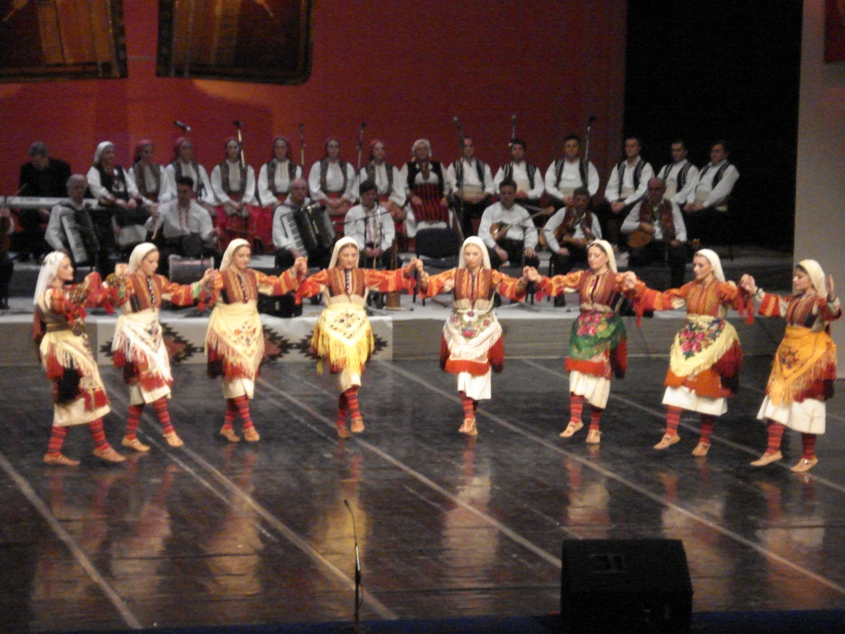 HoraThe circle dance of Jewish and Balkan weddings.
 DabkeThe Levantine line dance.KalamatianosThe Greek circle dance.
 KochariThe Armenian line dance.
 BhangraThe Punjabi folk dance.
 PolonaiseThe Polish ceremonial dance.
Also part of it, and being written: Sangeet (The Indian night of music before the wedding.), First dance (The couple's first dance.).
The first dance as a married couple, a custom of Western weddings that has spread worldwide. The couple choose the song.
In some communities yes, as a matter of faith or custom, and in others the dances are mixed. Guests can ask the hosts.
Guests pin or throw money at the dancing couple. It is a way of helping the couple and is practised in several countries.
Not usually. Dancers at wedding circles and lines will teach newcomers, and joining in is a form of respect.
Written by the EveryShaadi desk with AI assistance. Customs differ from place to place and family to family. If this is your tradition and we have it wrong, tell us.
The traditions written up so far, best known first.
 🇨🇱 Santiago, Chile and 3 moreCueca
A courtship dance from Chile and the Andes where couples trace circles with handkerchiefs to reenact a rooster and hen.Performance · The eve
🇨🇱 Santiago, Chile and 3 moreCueca
A courtship dance from Chile and the Andes where couples trace circles with handkerchiefs to reenact a rooster and hen.Performance · The eve
 🇮🇳 IndiaOppanaഒപ്പന
A circle dance and song tradition of the Mappila Muslim community in Kerala weddingsPerformance · Engagement and betrothal
🇮🇳 IndiaOppanaഒപ്പന
A circle dance and song tradition of the Mappila Muslim community in Kerala weddingsPerformance · Engagement and betrothal
 🇮🇷 Tehran, Iran and 1 moreIranian weddingمراسم عروسی در ایران
A multi-stage ceremony rooted in Zoroastrianism and Islam that binds families through courtship, feasts, and sacred vowsRite · Finding a match
🇮🇷 Tehran, Iran and 1 moreIranian weddingمراسم عروسی در ایران
A multi-stage ceremony rooted in Zoroastrianism and Islam that binds families through courtship, feasts, and sacred vowsRite · Finding a match
 🇺🇦 UkraineTraditional Ukrainian weddingТрадиційне українське весілля
A multi-day sequence of folk rites, bread baking and church vows that marks the transition from maidenhood to married liRite · Finding a match
🇮🇳 IndiaTelugu Hindu weddingతెలుగు వివాహ వేడుక
A multi-day Telugu Hindu marriage marked by seven vows around fire and family rituals.Rite · Finding a match
🇺🇦 UkraineTraditional Ukrainian weddingТрадиційне українське весілля
A multi-day sequence of folk rites, bread baking and church vows that marks the transition from maidenhood to married liRite · Finding a match
🇮🇳 IndiaTelugu Hindu weddingతెలుగు వివాహ వేడుక
A multi-day Telugu Hindu marriage marked by seven vows around fire and family rituals.Rite · Finding a match
 🇪🇬 Egypt and 5 moreArab weddingزفاف or فرح or عرس
A series of family-centered rites and processions that mark marriage across the Arab world.Rite · Finding a match
🇪🇬 Egypt and 5 moreArab weddingزفاف or فرح or عرس
A series of family-centered rites and processions that mark marriage across the Arab world.Rite · Finding a match
 🇮🇳 IndiaOdia Hindu weddingBahaghara (ଓଡ଼ିଆ ବାହାଘର)
The traditional Hindu marriage ceremony of the Odia people in Odisha, India.Rite · Engagement and betrothal
🇮🇳 IndiaOdia Hindu weddingBahaghara (ଓଡ଼ିଆ ବାହାଘର)
The traditional Hindu marriage ceremony of the Odia people in Odisha, India.Rite · Engagement and betrothal
 🇺🇦 Ukraine and 7 moreVechornytsiвечорниці
A Ukrainian courtship gathering where young people meet, dance and practice matchmaking rituals before the wedding seasoBetrothal · The weeks before
🇺🇦 Ukraine and 7 moreVechornytsiвечорниці
A Ukrainian courtship gathering where young people meet, dance and practice matchmaking rituals before the wedding seasoBetrothal · The weeks before
The small pictures above come from Wikimedia Commons under free licences. Some are cropped to fit.
Every week: one wedding tradition from somewhere new, the wedding days coming up around the world, and one idea explained.