The ceremony
The vows, the rites, the blessing and the moment the marriage is made.
The ceremony is the moment the marriage is made, in religion, in law or in both. It may last five minutes or five hours. It may be held at a temple, a mosque, a church, a registry office, a garden or at home. What it has in common everywhere is that someone witnesses and the couple agree.
What is required
In Islam the core is the offer, the acceptance and two witnesses, with the mahr agreed. In Judaism the ring is given before witnesses under the chuppah and the ketubah is signed. In Hinduism the saptapadi before the fire completes the marriage under the Hindu Marriage Act in India. In Catholic and Protestant weddings the exchange of vows is the key, with a priest or minister present. In civil weddings the declaration before a registrar is what counts.
Many ways to do it
Orthodox Christians crown the couple and share the common cup. Sikhs circle the Guru Granth Sahib four times in the lavan. Bahá'í couples each say a single verse before two witnesses. Chinese families once bowed to Heaven and Earth, to the parents and to each other. Many Indigenous weddings include a blanket, a pipe or a dance, depending on the nation. Quakers sit in silence until the couple stand and speak.
Making it your own
Couples now ask friends to officiate, write vows, include readings from different traditions, and choose music. Some ceremonies are bilingual, and many couples use a mix of two religions. The law still requires a few set words in many countries, and it is worth checking.
Written by the EveryShaadi desk with AI assistance. Background on The ceremony (stage of the wedding). Customs differ from place to place and family to family. If this is your tradition and we have it wrong, tell us.
 🇮🇳 Bhuj, India and 1 moreBandhani
The intricate tie-dye textile tradition of Gujarat and Rajasthan worn by brides and married women.Attire · Engagement and betrothal
 🇪🇬 Egypt and 3 moreWaist beads
Beads worn round the waist or hips, from coming-of-age rites to the Igbo bride's attireAdornment · The weeks before
 🇬🇧 United Kingdom and 1 moreGimmal ring
A split band of two or three hoops that join to form a single wedding ring.Adornment · Engagement and betrothal
 🇮🇳 IndiaShankha
White conch-shell bangles that mark a Bengali Hindu woman as marriedAdornment · The ceremony
 🇮🇳 India and 1 moreAlpanaআলপনা
Rice flour floor paintings that mark weddings and festivals in BengalAdornment · The weeks before
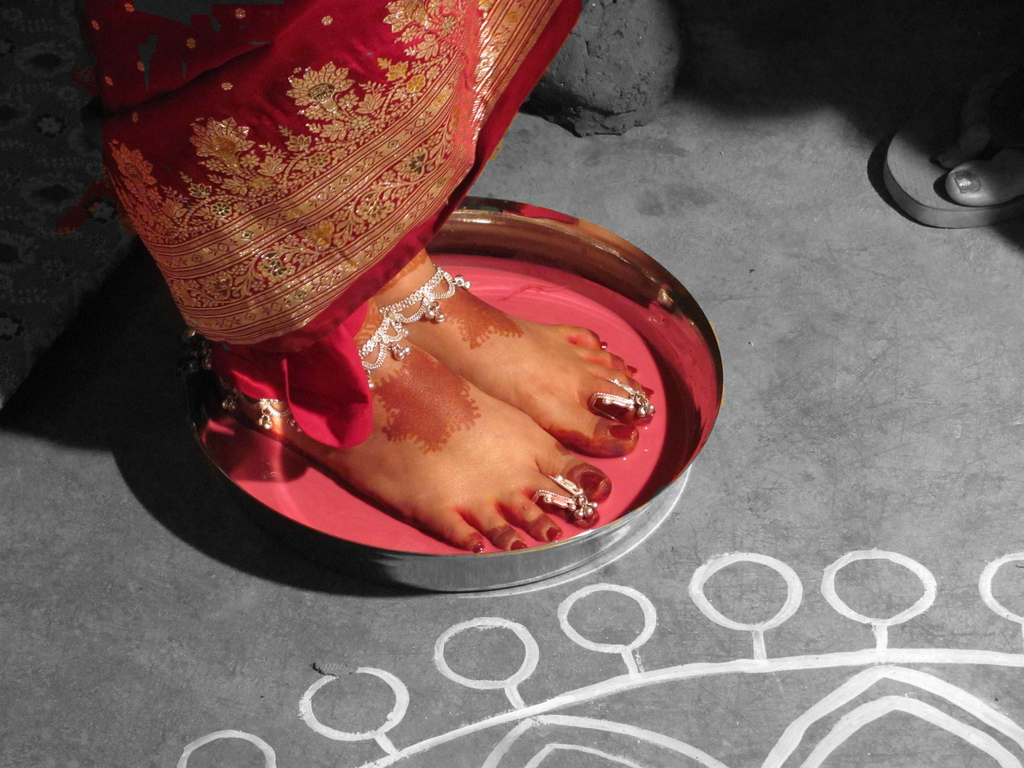 🇮🇳 India and 2 moreAltaআলতা (Bengali), 𑂄𑂪𑂞𑂰 (Bhojpuri)
A red dye applied to hands and feet by women in South Asia for weddings and festivals.Adornment · The weeks before
 🇨🇳 China and 3 moreDouble Happiness双喜 (shuāngxǐ)
The red calligraphy symbol made of two joy characters that marks Chinese wedding celebrations.Adornment · The weeks before
 🇮🇹 ItalyFede ring
A clasped-hands ring symbolising faith and union in betrothal and marriageAdornment · Engagement and betrothal
 🇨🇳 China and 2 moreChinese pre-wedding customs三書六禮 (sàam syù luhk láih)
The six traditional rites from the Book of Rites that guide betrothal, gift exchange, and date selection in Chinese weddBetrothal · Finding a match
 🇻🇳 VietnamPhu Thê CakeBánh phu thê
A Vietnamese mung bean cake exchanged by the couple to wish for a happy marriageFeast custom · The ceremony
 🇬🇧 United Kingdom and 3 moreBridal bouquet
The handheld flower arrangement carried by the bride during her wedding ceremony.Attire · The ceremony
 🇨🇳 China and 3 moreMarriage coin charm夫妇和合花钱 (fū fù hé hé huā qián)
Numismatic charms from East Asia that use marriage symbols or erotic imagery to wish couples fertility and harmony.Adornment · Engagement and betrothal
 🇬🇧 Edinburgh, United KingdomLuckenbooth brooch
A Scottish heart-shaped silver token of love and protection worn at weddings.Adornment · Engagement and betrothal
 🇮🇳 Hyderabad, IndiaKhara dupattaکھڑا دوپٹہ
The elaborate traditional wedding ensemble worn by Hyderabadi Muslim brides.Attire · The ceremony
 🇬🇷 Greece and 4 moreWedding ring
A metal finger ring that signals its wearer is married.Adornment · Engagement and betrothal
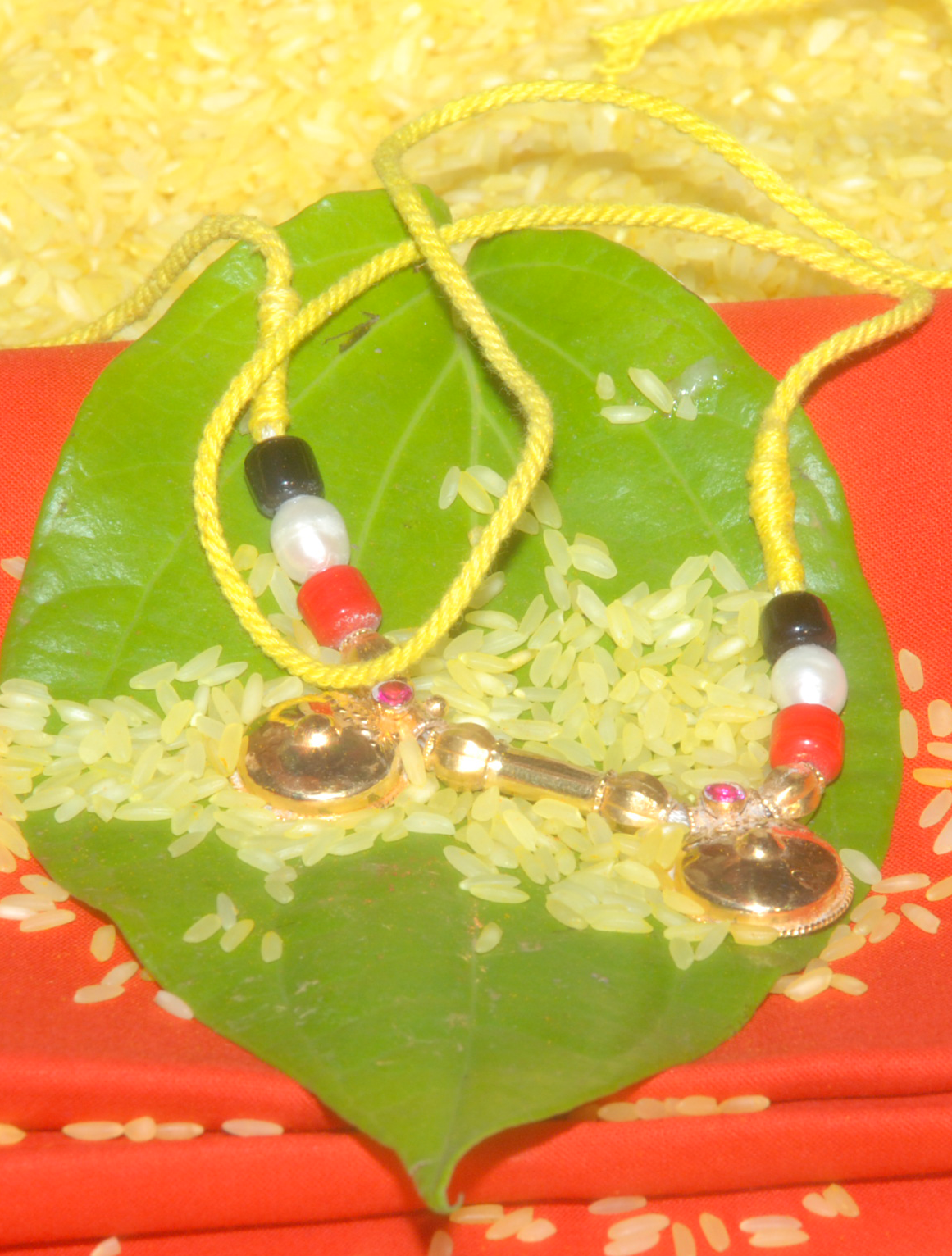 🇮🇳 India and 2 moreMangalsutraमङ्गलसूत्रम् (maṅgalasūtram)
The sacred necklace tied around the bride's neck to mark her marriage.Adornment · The ceremony
 🇮🇳 Delhi, India and 4 moreSindoorसिंदूर (Hindi)
The vermilion powder a Hindu husband applies to his wife's hair parting to mark her marriage.Adornment · Engagement and betrothal
 🇨🇳 China and 1 moreTuanshan團扇 (tuánshàn)
A rigid silk fan held by the bride to hide her face before revealing it to the groom.Adornment · The ceremony
 🇮🇩 IndonesiaKawung batikBatik Kawung
A traditional Indonesian textile pattern inspired by the kawung fruit and lotus flower.Attire · The ceremony
🇮🇷 Bojnord, Iran and 1 moreTurkmen embroidery
Intricate silk embroidery on wedding and daily wear that marks territorial identity and family skill.Attire · The weeks before
 🇳🇬 Iseyin, Nigeria and 2 moreYoruba wedding attire
Traditional garments worn by Yoruba couples and guests to mark marriage celebrations.Attire · The ceremony
🇮🇩 Palembang, IndonesiaSeting clothes and Cual cloth
The red velvet top and intricate ikat skirt worn by Bangka Belitung brides and grooms.Attire · The ceremony
 🇮🇳 Firozabad, India and 1 moreBangle
A rigid circular bracelet worn by women in South Asia and beyond, often marking marital status or festive occasions.Adornment · The ceremony
 🇮🇳 India and 2 moreNose jewelNath
A nose piercing ornament that signals marital status and social standing in South Asia and beyond.Adornment · The weeks before
Photo credits on this page
The small pictures above come from Wikimedia Commons under free licences. Some are cropped to fit.
- Tuanshan: 猫猫的日记本, CC BY-SA 3.0, source
- Nose jewel: Etan Doronne @ www.myindiaexperience.com, CC BY-SA 3.0, source
- Sindoor: Masum-al-hasan, CC BY-SA 3.0, source
- Double Happiness: kanegen, CC BY 2.0, source
- Bangle: schwiki, CC BY-SA 4.0, source
- Fede ring: Anonymous ( Europe ) Unknown author, Public domain, source
- Gimmal ring: Geni, CC BY-SA 4.0, source
- Yoruba wedding attire: Wolf D., Public domain, source
- Bandhani: RubyGoes, CC BY 2.0, source
- Chinese pre-wedding customs: Pande Putu Hadi Wiguna, Public domain, source
- Vadhu Pravesha: Shounak Ray, CC BY-SA 2.0, source
- Shankha: Salil Kumar Mukherjee, CC BY-SA 4.0, source
- Phu Thê Cake: JeanFousrou52, CC BY-SA 4.0, source
- Bridal bouquet: James Vick's Sons (Rochester, N.Y.); Henry G. Gilbert Nursery and Seed, No restrictions, source
- Waist beads: Amuzujoe, CC BY-SA 4.0, source
- Marriage coin charm: Scott Semans, CC BY 3.0, source
- Luckenbooth brooch: Walker14806, CC BY-SA 4.0, source
- Khara dupatta: Kinshuk Sunil, CC BY 2.0, source
- Kawung batik: Alteaven, CC BY-SA 3.0, source
- Wedding ring: CLW at English Wikipedia, Public domain, source
- Mangalsutra: Ackroydman, CC BY-SA 3.0, source
- Alpana: Tripan123, CC BY-SA 4.0, source