Music, dance and procession
The band, the drum, the first dance, the baraat and the dance that ends the night.
A wedding without music is rare. The band at the gate, the drum on the road, the first dance, the choir in the church and the dance that goes on past midnight are all part of how a community says that this is a joyful day. Music also tells guests what to do: stand, walk, clap, throw money or join the circle.
Procession and call
North Indian weddings are led by the baraat band with dhol drummers and a brass ensemble, and the groom may arrive on a mare. In Ghana and Nigeria, drummers and singers precede the groom's family. In Greece the daouli and zurna lead the groom's party, and in Turkey the davul and zurna play through the streets. In Egypt and the Levant a zaffe, a theatrical entrance of drummers, dancers and sometimes a sword bearer, brings the couple into the hall.
Dances with meaning
The Jewish hora lifts the couple on chairs. The Greek kalamatianos and the Georgian kartuli are circle dances where family join hands. In Poland the oczepiny, the capping of the bride, is followed by dancing and games. In the Philippines the money dance, and in Poland and the Polish diaspora the dollar dance, bring cash to the couple. In Scotland the ceilidh is danced by all ages, and in Ireland the reel and the jig do the same.
What is changing
Playlists have replaced many live bands, though live music is still prized. Couples choose a first-dance song, and some arrange choreographed routines that go viral. Devout communities sometimes restrict music or use only voices and drums, and these choices are respected as part of the tradition.
Written by the EveryShaadi desk with AI assistance. Background on Music, dance and procession (kind of custom). Customs differ from place to place and family to family. If this is your tradition and we have it wrong, tell us.
 🇭🇺 Hungary and 5 moreCsárdás
A Hungarian folk dance that shifts from a slow walk to a fast spin, named after the roadside taverns where it began.Performance · Reception, dance and gifts
🇬🇷 Greece and 1 moreKalamatianosΚαλαματιανός
A chain dance of seven beats that marks Greek weddings and festivals with linked hands and steady steps.Performance · Reception, dance and gifts
🇵🇱 PolandSto lat
A Polish song sung to wish the couple long life and good health during the wedding feast.Performance · The wedding feast
🇬🇷 GreeceTsamikoΤσάμικος
A traditional Greek folk dance performed at weddings and festivals, known for its slow tempo and acrobatic leaps.Performance · The wedding feast
 🇦🇹 Vienna, Austria and 2 moreViennese waltzWiener Walzer
The fast rotary ballroom dance that originated in Austria and defines the traditional waltz.Performance · Reception, dance and gifts
 🇲🇰 Galičnik, North MacedoniaGaličnik Wedding FestivalГаличка свадба (Galička svadba)
An annual festival in North Macedonia where a selected couple performs a traditional Galička style wedding.Feast custom · The ceremony
 🇨🇭 Switzerland and 5 moreChicken DanceDer Ententanz
A novelty polka song and accompanying hand movements performed at weddings and festivals.Performance · Reception, dance and gifts
🇬🇷 GreecePentozaliΠεντοζάλης
The vigorous Cretan war dance performed in a rotating line with acrobatic leadership.Performance · The wedding feast
🇮🇹 ItalyFescennine versesFescennina carmina
Improvised, mocking songs of ancient Italy, sung at weddings by masked performersPerformance
 🇪🇸 Seville, SpainSevillanas
A folk dance from Seville performed by couples at weddings and festivals.Performance · Reception, dance and gifts
🇺🇦 UkraineSong about the RushnykПісня про рушник (Pisnia pro rushnyk)
A Ukrainian song that celebrates the embroidered cloth used in weddings and family life.Performance · The ceremony
 🇵🇱 Krakow, Poland and 4 morePolonaisePolonez, chodzony
A Polish partner dance in triple metre that opens weddings and formal celebrations with measured steps.Performance · Reception, dance and gifts
 🇬🇷 Greece and 1 moreEpithalamium
A poem or song composed to celebrate a bride and groom on their wedding day.Performance · Procession and arrival
 🇩🇪 Germany and 2 moreBridal ChorusTreulich geführt
The Wagner opera march played for the bride's entrance at Western weddings.Performance · Procession and arrival
 🇷🇸 Serbia and 2 moreKoloКоло
A South Slavic circle dance performed at weddings and social gatherings across the Balkans.Performance · The ceremony
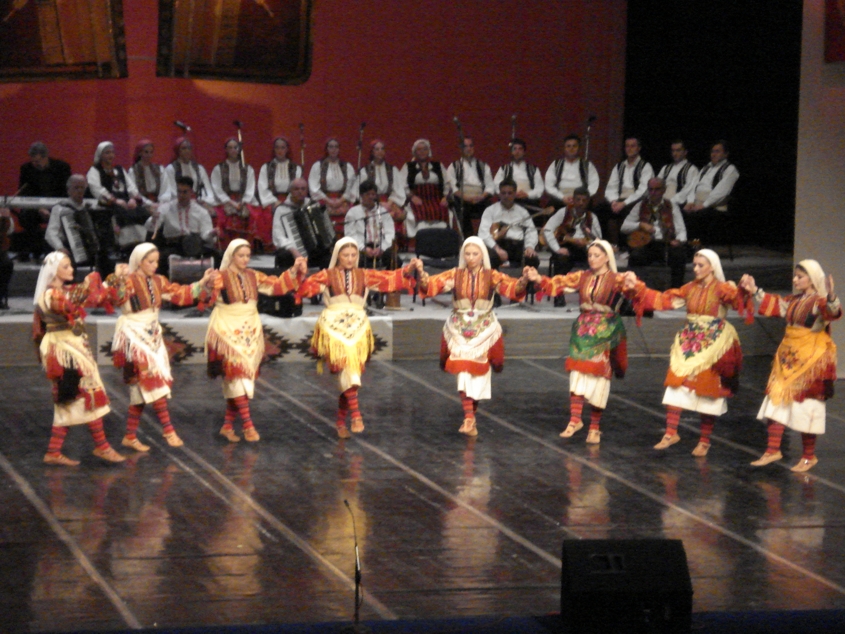 🇷🇴 Romania and 7 moreHorahora (Romanian), horo (Bulgarian), oro (Macedonian), horah (Hebrew)
A circle dance held at weddings across Southeast Europe and among Jewish communities worldwide.Performance · Reception, dance and gifts
 🇱🇹 Lithuania and 1 moreLithuanian wedding songsvestuvių dainos
The polyphonic chants and weeping verses that mark a Lithuanian bride's journey from her family to her new homePerformance · Engagement and betrothal
 🇧🇬 Bulgaria and 1 moreBulgarian wedding musicсватбарска музика
Loud, fast-paced instrumental music played at Bulgarian weddings that blends folk, Romani, and Turkish styles.Performance · The ceremony
🇮🇸 IcelandIcelandic weddings
A blend of saga-era feasting and modern church or outdoor rites in Iceland.Feast custom · The ceremony
🇬🇧 United Kingdom and 1 moreWedding March (Mendelssohn)
Felix Mendelssohn's C major piece from 1842, used as a recessional at Western weddings.Performance · After the wedding
🇬🇷 GreeceLipothymiarikosΛιποθυμιάρικος or Χορός της νύφης
A Greek wedding dance where men mimic a fainting bride in the early morning hours.Performance · Reception, dance and gifts
🇸🇰 SlovakiaMamko Moja
A Slovak Roma wedding song about a bride's longing for marriagePerformance · The weeks before
 🇩🇪 GermanyGroßvatertanz
A traditional Saxon dance played at the end of wedding celebrations to mark the finale.Performance · Reception, dance and gifts
🇵🇱 Poland and 5 moreMoney dance
A reception ritual where guests give cash to the couple while dancing or showering them with notes.Feast custom · Reception, dance and gifts
 🇵🇱 Poland and 1 moreBadchenבּדחן (badkhn)
The Ashkenazi Jewish wedding entertainer and master of ceremonies who guides the couple through ritual stages with song Performance · Engagement and betrothal
 🇬🇧 United Kingdom and 4 moreCountry dance
A social partner dance from England where couples follow a caller through repeated figures in long lines or squares.Performance · Reception, dance and gifts
 🇩🇪 GermanyWedding Quodlibet
A lighthearted musical piece by J.S. Bach performed at weddings in early 18th-century Germany.Performance · Engagement and betrothal
 🇺🇦 Kolomyia, Ukraine and 2 moreKolomyikaколомийка
A fast Ukrainian folk dance with rhymed verses, celebrated at weddings in western Ukraine and Canada.Performance · Reception, dance and gifts
 🇷🇴 Romania and 4 moreCălușariCălușarii
A traditional Romanian spring dance and male society known for acrobatic leaps and ritual healing.Performance · The weeks before
 🇬🇷 Greece and 1 moreAnastenariaΑναστενάρια (Greek), Нестинарство (Bulgarian)
A barefoot firewalking ritual performed by Orthodox Christian communities in Greece and Bulgaria.Rite · The weeks before
 🇺🇦 Ukraine and 8 moreVechornytsiвечорниці
A Ukrainian courtship gathering where young people meet, dance and practice matchmaking rituals before the wedding seasoBetrothal · The weeks before
🇳🇴 NorwayEsbat
A monthly Wiccan gathering held around the moon phases for ritual and communityBlessing · The ceremony
 🇬🇷 Kythnos, GreeceBalosΜπάλος της Κύθνου
A vigorous paired folk dance from the Greek island of Kythnos featuring continuous back-to-back turns.Performance · The wedding feast
 🇺🇦 UkraineMnohaya litaМногая літа
A Ukrainian song sung at weddings to wish the couple many years of life.Performance
 🇩🇪 GermanyLandshut WeddingLandshuter Hochzeit
A four-year historical pageant in Bavaria re-enacting the 1475 royal marriage of George and Hedwig.Setting · Engagement and betrothal
🇩🇪 Germany and 1 moreZwiefacher
A Bavarian couple dance that shifts between three and two beats per measure.Performance · Reception, dance and gifts
🇬🇧 Newquay, United KingdomTroyl
A Cornish barn dance or social gathering featuring music, song, and communal dancing.Performance · Reception, dance and gifts
🇬🇷 Greece and 2 moreTsifteteliτσιφτετέλι (Greek), Çiftetelli (Turkish)
A belly dance rhythm from Anatolia and the Balkans performed primarily by womenPerformance
 🇭🇷 CroatiaZa križen
A night-long Maundy Thursday procession on Hvar island that honors the Weeping of the Lady.Blessing · The weeks before
 🇵🇱 Poland and 3 moreEaster palmPolish: palma wielkanocna; Lithuanian: verba
A decorated willow or juniper bundle blessed on Palm Sunday to protect homes and crops.Blessing · The weeks before
🇷🇴 RomaniaDragobete
A Romanian spring festival where young people exchange flowers and seek romantic bonds.Betrothal · The weeks before
 🇬🇧 United KingdomWassailing
Singing and drinking to bless trees or homes during the Christmas seasonFeast custom · The weeks before
 🇬🇷 Crete, Greece and 1 moreSyrtosΣυρτός
A traditional Greek line dance where partners hold hands and follow a leader through slow and quick steps.Performance · Reception, dance and gifts
🇮🇹 Siena, ItalyMarch of the PalioMarcia del Palio
The brass anthem played during the historical parade before Siena's horse race.Performance · Procession and arrival
 🇬🇧 United KingdomNantgarw DancesDawnsfeydd Nantgarw
A Welsh folk dance style from south Wales featuring handkerchiefs and sticks.Performance
 🇵🇱 Poland and 3 moreŚmigus-Dyngus
The Easter Monday water splashing and willow whipping tradition of Central EuropeRite · The weeks before
🇭🇺 Budapest, Hungary and 5 moreTáncház
A Hungarian folk dance gathering that keeps traditional music and steps alive in homes and community halls.Performance
 🇧🇪 Belgium and 1 moreProcessional giants and dragonsGéants et dragons processionnels
Large costumed figures carried in street festivals across Belgium and France.Setting · Procession and arrival
Photo credits on this page
The small pictures above come from Wikimedia Commons under free licences. Some are cropped to fit.
- Śmigus-Dyngus: Nationwide Specialty Co., Arlington, Texas -- In Buffalo, N.Y., Stanle, CC BY 3.0, source
- Mnohaya lita: Unknown author, Public domain, source
- Bridal Chorus: Pierre Petit, Public domain, source
- Viennese waltz: Sigismund von Dobschütz, CC BY-SA 3.0, source
- Wassailing: Joss Smithson, CC BY-SA 2.0, source
- Wedding Quodlibet: Aschroet, CC0, source
- Landshut Wedding: Oktobersonne, CC BY-SA 4.0, source
- Sevillanas: Anual, CC BY-SA 4.0, source
- Kolo: Sasa.mazinjanin, Public domain, source
- Epithalamium: Lorenzo Lotto, Public domain, source
- Nantgarw Dances: Tabulabells, CC0, source
- Hora: Chajeshukarie ( talk ), Public domain, source
- Lithuanian wedding songs: Gailė Paštukaitė, CC BY-SA 3.0, source
- Bulgarian wedding music: Allen Ruttenberg, CC BY 2.0, source
- Polonaise: Korneli Szlegel, Public domain, source
- Kolomyika: Teodor Axentowicz, Public domain, source
- Großvatertanz: traditional, Public domain, source
- Chicken Dance: Joe Mabel, CC BY-SA 3.0, source
- Anastenaria: Artkostov, CC BY-SA 4.0, source
- Za križen: E.mil.mil, CC BY-SA 3.0, source
- Balos: DNK GR, CC BY-SA 4.0, source
- Galičnik Wedding Festival: IvanaKrstik, CC BY-SA 3.0, source
- Badchen: Unknown author, Public domain, source
- Syrtos: Muriel Pécastaing-Boissière pour Cédric Boissière, CC BY-SA 3.0, source
- Processional giants and dragons: No machine-readable author provided. Carolus assumed (based on copyrig, CC BY 2.5, source
- Csárdás: Unknown author, Public domain, source
- Vechornytsi: Гейслер, Кристиан Готфрид Генрих, Public domain, source
- Country dance: Engraving by William Hogarth, CC BY 4.0, source
- Călușari: El bes, CC BY 3.0, source
- Easter palm: Evaldas Liutkus, CC BY 2.0, source