Hindu wedding traditions
A Hindu wedding, or vivaha, is one of the samskaras, the life rites, and is usually held before a sacred fire.
A Hindu wedding, or vivaha, is one of the samskaras, the life rites, and is usually held before a sacred fire. It can last an hour or several days, and it differs widely by region, language and caste. What follows is an outline, and families will tell you their own version.
The sacred fire and the seven steps
The fire, Agni, is the witness. The central acts are the saptapadi, seven steps taken together around the fire with a vow for each, and in many communities the pani grahana, the clasping of hands. Under the Hindu Marriage Act of 1955 in India, the saptapadi completes a marriage where it is the custom of the parties. Other rites include the garland exchange of jaimala, the tying of the mangalsutra in the south, the sindoor in the north and east, and the laja homa, in which rice is offered into the fire.
Kanyadaan and its debates
In kanyadaan the bride's father places her hand in the groom's, a rite often translated as the gift of the daughter. Some Hindus see it as the highest act of generosity. Others, including reformers since the Arya Samaj and many modern couples, object that a woman is not a gift, and skip it or change it so that both families give each other. Priests are divided, and the debate is open.
Regional variety
A Tamil Brahmin wedding includes the kashi yatra, the oonjal swing and the tying of the thali. A Bengali wedding has the shubho drishti, when the couple first look at each other under a betel leaf, and the sankha and sindoor. A Gujarati wedding has the jaimala and the mangal pheras. A Malayali Hindu wedding is brief, with a thali tied in front of a lamp. A Marathi wedding has the antarpat and the mangalashtak chanted. Nepal, Bali and Fiji each keep their own forms, and Balinese Hindu weddings have a distinct ritual structure.
Written by the EveryShaadi desk with AI assistance. Background on Hindu (faith). Customs differ from place to place and family to family. If this is your tradition and we have it wrong, tell us.
 🇮🇳 India and 1 moreToe ring
A silver band worn on the second toe to mark a woman as married in India.Adornment · The ceremony
🇮🇳 India and 1 moreToe ring
A silver band worn on the second toe to mark a woman as married in India.Adornment · The ceremony
 🇱🇦 Laos and 1 moreBaciບາສີ (Lao); บายศรี (Thai)
The wrist-tying ceremony that calls the soul back to restore balance and good luck.Blessing · The ceremony
🇮🇳 IndiaOonjal
A decorated swing where the Tamil bride and groom sit to receive family blessings.Blessing · The ceremony
🇮🇳 IndiaMadisarமடிசார் (Madisar)
The nine-yard sari drape worn by Tamil Brahmin women during weddings and religious rites.Attire · The ceremony
🇮🇳 Kochi, IndiaKasavuകസാവ്
The white cotton and gold border attire worn by Malayalis for weddings and festivals.Attire · The weeks before
🇮🇳 Jodhpur, India and 1 moreAchkanअचकन (Hindi), اچکن (Urdu)
A long, side-fastening jacket worn by grooms and men at formal Indian weddings.Attire · The ceremony
🇱🇦 Laos and 1 moreBaciບາສີ (Lao); บายศรี (Thai)
The wrist-tying ceremony that calls the soul back to restore balance and good luck.Blessing · The ceremony
🇮🇳 IndiaOonjal
A decorated swing where the Tamil bride and groom sit to receive family blessings.Blessing · The ceremony
🇮🇳 IndiaMadisarமடிசார் (Madisar)
The nine-yard sari drape worn by Tamil Brahmin women during weddings and religious rites.Attire · The ceremony
🇮🇳 Kochi, IndiaKasavuകസാവ്
The white cotton and gold border attire worn by Malayalis for weddings and festivals.Attire · The weeks before
🇮🇳 Jodhpur, India and 1 moreAchkanअचकन (Hindi), اچکن (Urdu)
A long, side-fastening jacket worn by grooms and men at formal Indian weddings.Attire · The ceremony
 🇳🇬 NigeriaIgbo traditional marriageIgba Nkwu
The multi-stage Igbo marriage process that formalizes a union through family negotiations and the wine-carrying ceremonyRite · Finding a match
🇳🇬 NigeriaIgbo traditional marriageIgba Nkwu
The multi-stage Igbo marriage process that formalizes a union through family negotiations and the wine-carrying ceremonyRite · Finding a match
 🇬🇷 Greece and 5 moreWedding ring
A metal circle worn on the finger to show that a person is married.Attire · Engagement and betrothal
🇬🇷 Greece and 5 moreWedding ring
A metal circle worn on the finger to show that a person is married.Attire · Engagement and betrothal
 🇮🇳 India and 1 moreToporটোপর
The fragile white conical crown worn by the Bengali Hindu groom for luck.Attire · The weeks before
🇮🇳 India and 1 moreToporটোপর
The fragile white conical crown worn by the Bengali Hindu groom for luck.Attire · The weeks before
 🇮🇳 IndiaMeitei weddingLuhongba (ꯂꯨꯍꯣꯡꯕ)
The traditional union of the Meitei people, marked by clan exogamy and specific courtship rituals.Rite · Finding a match
🇮🇳 IndiaMeitei weddingLuhongba (ꯂꯨꯍꯣꯡꯕ)
The traditional union of the Meitei people, marked by clan exogamy and specific courtship rituals.Rite · Finding a match
 🇻🇳 VietnamTraditional Vietnamese weddingLễ cưới truyền thống Việt Nam
The multi-stage ceremony of betrothal, engagement and union that marks a marriage in Vietnam.Attire · Finding a match
🇻🇳 VietnamTraditional Vietnamese weddingLễ cưới truyền thống Việt Nam
The multi-stage ceremony of betrothal, engagement and union that marks a marriage in Vietnam.Attire · Finding a match
 🇮🇳 IndiaWedding mandapaVivaha Mandapa (विवाह मण्डप)
The temporary pavilion where Hindu and Jain couples exchange vows around a sacred fire.Setting · The ceremony
🇮🇳 India and 1 moreChuraचूरा (Hindi)
The red and white bangles that mark a bride's new status in Indian Hindu weddingsAttire · The weeks before
🇮🇳 IndiaWedding mandapaVivaha Mandapa (विवाह मण्डप)
The temporary pavilion where Hindu and Jain couples exchange vows around a sacred fire.Setting · The ceremony
🇮🇳 India and 1 moreChuraचूरा (Hindi)
The red and white bangles that mark a bride's new status in Indian Hindu weddingsAttire · The weeks before
 🇮🇳 India and 2 moreLehenga
A long skirt worn as the base of a bridal outfit across the Indian subcontinent.Attire · The ceremony
🇮🇳 IndiaVadhuya
The cotton and wool bridal dress worn by brides in ancient India during the Vedic period.Attire · The ceremony
🇮🇳 India and 2 moreLehenga
A long skirt worn as the base of a bridal outfit across the Indian subcontinent.Attire · The ceremony
🇮🇳 IndiaVadhuya
The cotton and wool bridal dress worn by brides in ancient India during the Vedic period.Attire · The ceremony
 🇮🇳 IndiaIndian wedding clothes
Traditional garments worn by Indian couples and guests across multiple days of celebrationAttire · The weeks before
🇮🇳 IndiaIndian wedding clothes
Traditional garments worn by Indian couples and guests across multiple days of celebrationAttire · The weeks before
 🇮🇳 IndiaOdia Hindu weddingBahaghara (ଓଡ଼ିଆ ବାହାଘର)
The traditional Hindu marriage ceremony of the Odia people in Odisha, India.Rite · Engagement and betrothal
🇮🇳 IndiaOdia Hindu weddingBahaghara (ଓଡ଼ିଆ ବାହାଘର)
The traditional Hindu marriage ceremony of the Odia people in Odisha, India.Rite · Engagement and betrothal
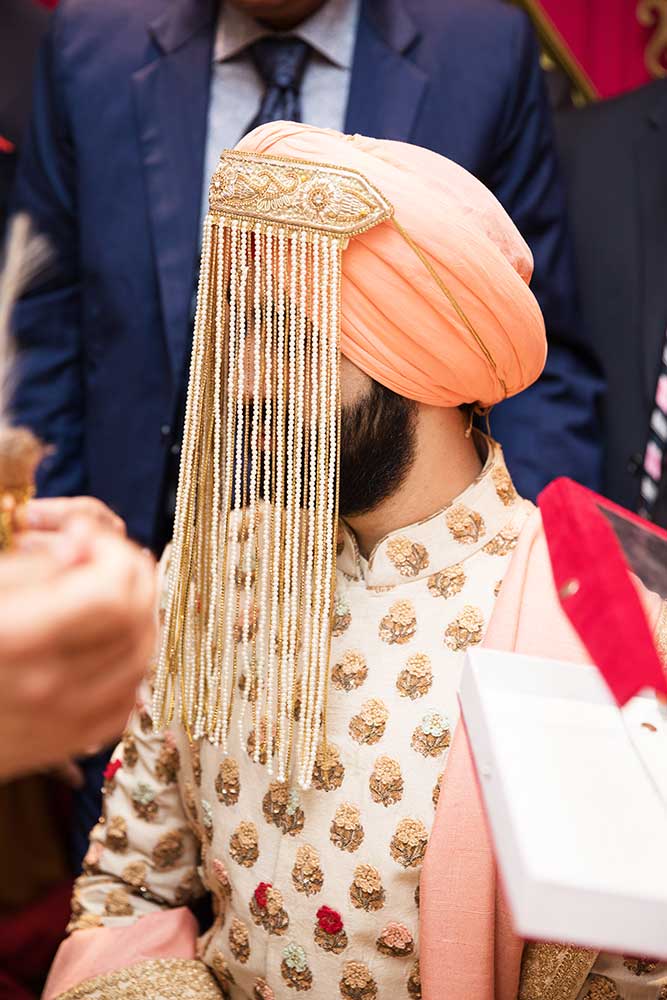 🇮🇳 IndiaSehraसेहरा (Hindi)
A floral or beaded veil tied to the groom's turban before he departs for the wedding ceremony.Attire · The weeks before
🇮🇳 IndiaSehraसेहरा (Hindi)
A floral or beaded veil tied to the groom's turban before he departs for the wedding ceremony.Attire · The weeks before
 🇮🇳 IndiaIndian wedding invitationsNimantraṇa patra (निमन्त्रण पत्र)
Decorated cards sent to announce a marriage and invite guests to the celebration.Betrothal · The weeks before
🇮🇳 IndiaIndian wedding invitationsNimantraṇa patra (निमन्त्रण पत्र)
Decorated cards sent to announce a marriage and invite guests to the celebration.Betrothal · The weeks before
 🇬🇧 United Kingdom and 5 moreWedding superstitions
Traditional beliefs about luck and omens that shape wedding rituals across culturesAttire · The weeks before
🇬🇧 United Kingdom and 5 moreWedding superstitions
Traditional beliefs about luck and omens that shape wedding rituals across culturesAttire · The weeks before
 🇮🇳 India and 5 moreWedding veil
A cloth covering the head or face worn by brides and grooms to mark marriage.Attire · The ceremony
🇮🇳 India and 5 moreWedding veil
A cloth covering the head or face worn by brides and grooms to mark marriage.Attire · The ceremony
 🇮🇳 Madurai, IndiaGoluBommai kolu (Tamil), Bommala Koluvu (Telugu), Gombe Habba (Kannada)
A tiered display of dolls and figurines arranged in South Indian homes during the Navaratri festival.Feast custom · The weeks before
🇮🇳 Madurai, IndiaGoluBommai kolu (Tamil), Bommala Koluvu (Telugu), Gombe Habba (Kannada)
A tiered display of dolls and figurines arranged in South Indian homes during the Navaratri festival.Feast custom · The weeks before
Photo credits on this page
The small pictures above come from Wikimedia Commons under free licences. Some are cropped to fit.
- Indian wedding invitations: Onef9day, CC BY 3.0, source
- Lehenga: Iwaqarhashmi, CC BY-SA 4.0, source
- Indian wedding clothes: Lee Jordan, CC BY-SA 2.0, source
- Baci: Dalbera, CC BY 2.0, source
- Odia Hindu wedding: Aditya Mahar, CC BY-SA 3.0, source
- Igbo traditional marriage: Olugold, CC BY-SA 4.0, source
- Golu: Ksiva21, CC BY-SA 4.0, source
- Toe ring: Wikiss, CC BY-SA 3.0, source
- Wedding ring: CLW at English Wikipedia, Public domain, source
- Topor: Sumit Paul-Choudhury, CC BY 2.0, source
- Meitei wedding: Dabu Leichombam, CC BY-SA 4.0, source
- Wedding veil: David Ring, CC0, source
- Traditional Vietnamese wedding: Gabrielle M. Vassal, Public domain, source
- Wedding superstitions: Anonymous Unknown author, Public domain, source
- Sehra: SynthContibutor, CC BY-SA 4.0, source
- Wedding mandapa: Unknown author, CC BY-SA 3.0, source