The ceremony
The vows, the rites, the blessing and the moment the marriage is made.
The ceremony is the moment the marriage is made, in religion, in law or in both. It may last five minutes or five hours. It may be held at a temple, a mosque, a church, a registry office, a garden or at home. What it has in common everywhere is that someone witnesses and the couple agree.
What is required
In Islam the core is the offer, the acceptance and two witnesses, with the mahr agreed. In Judaism the ring is given before witnesses under the chuppah and the ketubah is signed. In Hinduism the saptapadi before the fire completes the marriage under the Hindu Marriage Act in India. In Catholic and Protestant weddings the exchange of vows is the key, with a priest or minister present. In civil weddings the declaration before a registrar is what counts.
Many ways to do it
Orthodox Christians crown the couple and share the common cup. Sikhs circle the Guru Granth Sahib four times in the lavan. Bahá'í couples each say a single verse before two witnesses. Chinese families once bowed to Heaven and Earth, to the parents and to each other. Many Indigenous weddings include a blanket, a pipe or a dance, depending on the nation. Quakers sit in silence until the couple stand and speak.
Making it your own
Couples now ask friends to officiate, write vows, include readings from different traditions, and choose music. Some ceremonies are bilingual, and many couples use a mix of two religions. The law still requires a few set words in many countries, and it is worth checking.
Written by the EveryShaadi desk with AI assistance. Background on The ceremony (stage of the wedding). Customs differ from place to place and family to family. If this is your tradition and we have it wrong, tell us.
 🇩🇪 Haslach, Germany and 5 moreBridal crownBrautkrone
A headdress worn by brides in Central and Northern Europe to mark purity and family status.Attire · The ceremony
🇮🇳 IndiaVadhuya
The cotton and wool bridal dress worn by brides in ancient Vedic India.Attire · The ceremony
 🇮🇱 Israel and 3 moreChuppahחֻפָּה (ḥuppā)
The four-poster canopy that marks the Jewish wedding ceremony and symbolizes the couple's new home.Setting · The ceremony
 🇯🇵 Tokyo, JapanShinto weddingShinzen kekkon (神前結婚)
A Shinto purification ritual where couples exchange sake and offer prayers to the spirits.Rite · The ceremony
 🇳🇬 NigeriaIgbo traditional marriageIgba Nkwu
The multi-stage Igbo wedding ceremony that formalizes union through family negotiation and the wine-carrying rite.Rite · Finding a match
 🇺🇦 Kyiv, Ukraine and 2 moreOchipokочіпок
The embroidered cap that covers a Ukrainian bride's hair to mark her new status as a married womanAttire · The ceremony
 🇺🇸 United StatesNavajo wedding ceremony
A Navajo marriage ritual centred on harmony, family union, and nature inside a Hogan.Rite · The eve
 🇬🇧 United Kingdom and 3 moreCare cloth
A linen or silk sheet held over the couple during a Christian blessing to symbolize their shared yoke.Rite · The ceremony
 🇹🇴 Tonga and 2 moreTaʻovala
The woven pandanus mat worn around the waist for formal occasions and weddings in Tonga.Attire · The weeks before
 🇬🇧 United Kingdom and 3 moreWedding dress
The formal attire worn by the bride during her wedding ceremony.Attire · The ceremony
 🇬🇧 United KingdomPage boy
A young male attendant who carries the bride's train or wedding rings during the ceremony.Family role · Procession and arrival
 🇮🇳 Hyderabad, IndiaKhara dupattaکھڑا دوپٹہ
The elaborate traditional wedding ensemble worn by Hyderabadi Muslim brides.Attire · The ceremony
 🇳🇬 NigeriaYoruba traditional weddingIgbeyawo
The multi-day Yoruba celebration of marriage featuring traditional attire, gift lists, and lively dancing.Feast custom · Engagement and betrothal
 🇬🇧 United Kingdom and 5 moreWedding superstitions
Traditional beliefs about luck and omens that shape wedding rituals across culturesAttire · The weeks before
 🇮🇳 IndiaOdia Hindu weddingBahaghara (ଓଡ଼ିଆ ବାହାଘର)
The traditional Hindu marriage ceremony of the Odia people in India.Rite · Engagement and betrothal
 🇨🇳 Guangdong, China and 2 moreQungua裙褂
A two-piece embroidered jacket and skirt worn by Cantonese brides for their wedding ceremony.Attire · The ceremony
 🇮🇳 IndiaMeitei marriageLuhongba (ꯂꯨꯍꯣꯡꯕ)
The sacred union of hearts and souls in Meitei culture, marked by clan exogamy and traditional courtship.Rite · Finding a match
 🇮🇳 India and 1 moreToporটোপর
The fragile white conical crown worn by the Bengali Hindu groom for luck.Attire · The weeks before
 🇮🇳 India and 2 moreLehenga
An ankle-length skirt from the Indian subcontinent, often worn as part of a gagra choli for weddings.Attire · The ceremony
 🇮🇱 Israel and 2 moreKetubahכְּתוּבָּה
The Jewish marriage contract that outlines the groom's financial and personal duties to his bride.Vow · Engagement and betrothal
 🇬🇧 United KingdomBoutonnière
A single flower or small arrangement pinned to the lapel of a groom's suit at a wedding.Attire · The ceremony
 🇮🇳 India and 5 moreWedding veil
A cloth covering the head or face worn by brides and grooms to mark marriage.Attire · The ceremony
 🇬🇧 United Kingdom and 5 moreRing fingerdigitus annularis
The fourth digit of the hand where wedding and engagement rings are traditionally worn.Attire · The ceremony
 🇯🇵 JapanTsunokakushi角隠し
A white silk headdress worn by Shinto brides to cover the hairline and symbolize modesty.Attire · The ceremony
🇮🇳 IndiaLehenga-style sari
A pre-draped Indian wedding garment that combines the look of a lehenga with the drape of a sari.Attire · The ceremony
 🇮🇳 Delhi, India and 2 moreKarva Chauthकरकचतुर्थी (Karakachaturthī)
A Hindu festival where married women fast from sunrise to moonrise for their husband's health and life.Betrothal · The weeks before
 🇨🇳 China and 1 moreDaxiushan大袖衫
A traditional Chinese upper garment with wide sleeves worn by royal women for ceremonies.Attire · The ceremony
 🇳🇬 Nigeria and 1 moreOkpu Aguokpu agụ
A traditional knitted cap worn by Igbo men at weddings and ceremonies to signal status and heritage.Attire · The ceremony
 🇮🇷 Isfahan, IranDebit trousersShalvār Debit (شلوار دبیت)
The wide black cotton trousers worn by Bakhtiari men as a badge of tribal identity.Attire · The ceremony
 🇨🇳 China and 4 moreCloud collar云肩 (yúnjiān)
A detachable shoulder collar worn by Han Chinese brides to frame the face and symbolize cosmic order.Attire · The weeks before
 🇷🇴 Ieud, RomaniaNunta mortului
A symbolic Romanian rite that dresses an unmarried dead person as a bride or groom to complete their life cycle.Rite · The weeks before
🇮🇩 Palembang, IndonesiaSeting clothes and Cual cloth
The red velvet top and intricate ikat skirt worn by Bangka Belitung brides and grooms.Attire · The ceremony
 🇩🇪 GermanyBollenhut
A straw hat with woolen pompoms worn by women in specific Black Forest villages as part of their traditional dress.Attire · The weeks before
 🇳🇬 Iseyin, Nigeria and 2 moreYoruba wedding attire
Traditional garments worn by Yoruba couples and guests to mark marriage celebrations.Attire · The ceremony
 🇺🇦 UkraineWax wedding head wreathвосковий вінок
A paraffin and paper bridal crown worn in parts of Ukraine until the late twentieth century.Attire · The ceremony
 🇮🇳 Jaipur, IndiaGhoomarघूमर
A twirling folk dance performed by women in Rajasthan to welcome a bride or celebrate auspicious occasions.Performance · The ceremony
 🇮🇩 IndonesiaKawung batikBatik Kawung
A traditional Indonesian textile pattern inspired by the kawung fruit and lotus flower.Attire · The ceremony
 🇩🇿 Tlemcen, AlgeriaChedda of Tlemcenشدة تلمسانية (Shadda Tlimsānī)
The velvet and gold kaftan worn by brides in Tlemcen, Algeria, for their wedding ceremony.Attire · The ceremony
 🇩🇪 Germany and 5 moreLenten veilFastentuch
A large painted or embroidered canvas that covers the altar during Lent to create a period of visual penance.Rite · The weeks before
 🇨🇳 ChinaPhoenix crown凤冠 (Fèngguān)
A traditional Chinese bridal headdress adorned with pearls, gemstones and kingfisher feathers.Attire · The ceremony
 🇹🇳 Tunis, TunisiaTunisian jebbaجبة
A loose traditional tunic worn by Tunisian men and women for weddings and festivals.Attire · Procession and arrival
🇮🇷 Bojnord, Iran and 1 moreTurkmen embroidery
Intricate silk embroidery on wedding and daily wear that marks territorial identity and family skill.Attire · The weeks before
 🇨🇳 China and 1 moreXiapei霞帔
The embroidered scarf or waistcoat that marks a woman's status in Chinese and Korean weddingsAttire · Engagement and betrothal
🇮🇳 IndiaLohepfhe
A black shawl with red and green bands worn by Angami and Chakhesang Naga men at weddings.Attire · The ceremony
 🇰🇪 Kenya and 1 moreAdumuEnkipaata or Aigus
The high-jumping warrior dance performed by the Maasai at weddings and rites of passage.Performance · The ceremony
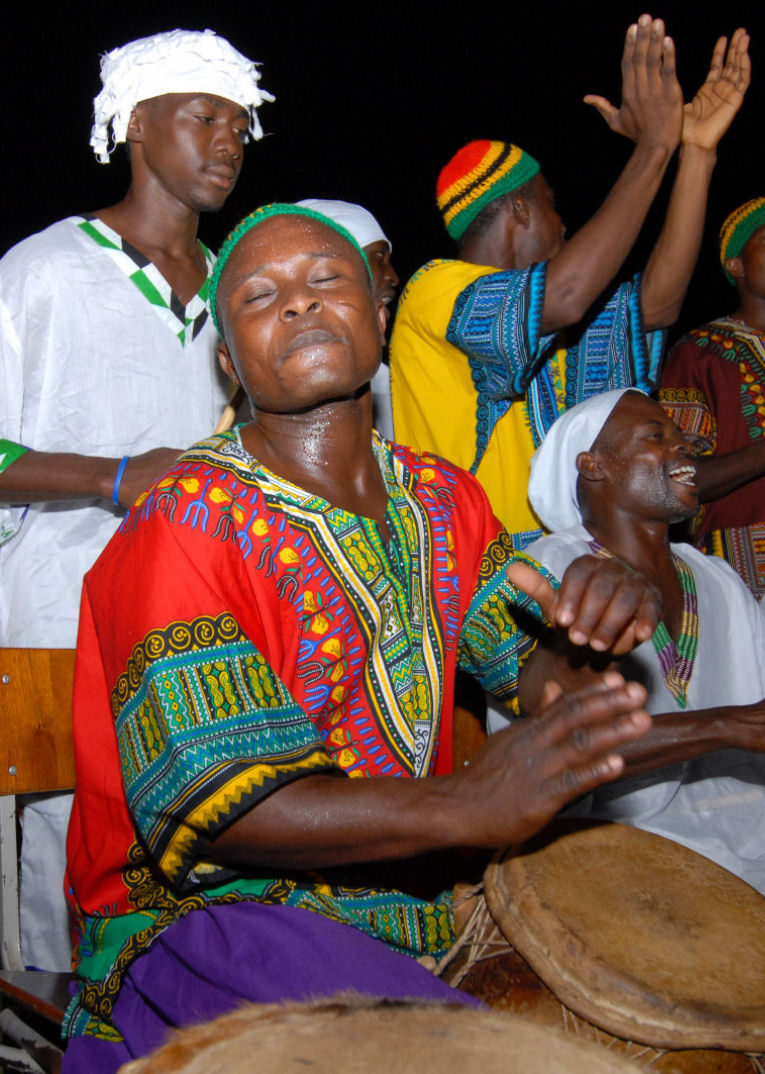 🇳🇬 Nigeria and 5 moreDashiki suit
The tailored tunic and trousers worn by grooms in West African and diaspora weddingsAttire · The ceremony
 🇮🇳 Amritsar, India and 1 moreJutti
The embroidered leather slip-on shoe worn by Punjabi brides and grooms at weddingsAttire · The ceremony
 🇮🇳 Firozabad, India and 1 moreBangle
A rigid circular bracelet worn by women in South Asia and beyond, often marking marital status or festive occasions.Adornment · The ceremony
Photo credits on this page
The small pictures above come from Wikimedia Commons under free licences. Some are cropped to fit.
- Adumu: K15photos, CC BY-SA 4.0, source
- Debit trousers: Niloofar Rakhshan, CC BY 4.0, source
- Bangle: schwiki, CC BY-SA 4.0, source
- Chedda of Tlemcen: Dezedien, CC BY-SA 4.0, source
- Wax wedding head wreath: Sofo, GFDL, source
- Dashiki suit: Emilio Labrador, CC BY 2.0, source
- Okpu Agu: Justice kelechi achinefu, CC0, source
- Boutonnière: David Ring, CC0, source
- Yoruba wedding attire: Wolf D., Public domain, source
- Bollenhut: Unknown author, Public domain, source
- Nunta mortului: Iosif Berman, CC BY-SA 4.0, source
- Daxiushan: Zhou Fang, Public domain, source
- Wedding veil: David Ring, CC0, source
- Bridal crown: Daderot, CC0, source
- Ghoomar: Aali Jain, CC BY-SA 4.0, source
- Chuppah: me, Public domain, source
- Shinto wedding: Jakub Hałun, CC BY-SA 4.0, source
- Phoenix crown: Unknown author, Public domain, source
- Tunisian jebba: Touzrimounir, CC BY-SA 4.0, source
- Tsunokakushi: Flickr user Photocapy, CC BY-SA 2.0, source
- Igbo traditional marriage: Olugold, CC BY-SA 4.0, source
- Ochipok: Unknown author, CC0, source
- Navajo wedding ceremony: Neeta Lind, CC BY 2.0, source
- Karva Chauth: Iamwiki001, CC BY-SA 4.0, source
- Care cloth: Unknown author, Public domain, source
- Taʻovala: James Foster, CC BY-SA 2.5, source
- Xiapei: Unknown author, Public domain, source
- Wedding dress: Statens historiska museer, CC BY 2.5, source
- Page boy: Joe Cheng, CC BY 2.0, source
- Khara dupatta: Kinshuk Sunil, CC BY 2.0, source
- Yoruba traditional wedding: Fhadekhemmy, CC BY-SA 4.0, source
- Kawung batik: Alteaven, CC BY-SA 3.0, source
- Lenten veil: Plutowiki, CC0, source
- Cloud collar: Unknown author, CC0, source
- Wedding superstitions: Anonymous Unknown author, Public domain, source
- Odia Hindu wedding: Aditya Mahar, CC BY-SA 3.0, source
- Qungua: Fduyjfroea Homz, CC BY-SA 4.0, source
- Meitei marriage: Dabu Leichombam, CC BY-SA 4.0, source
- Topor: Sumit Paul-Choudhury, CC BY 2.0, source
- Lehenga: Iwaqarhashmi, CC BY-SA 4.0, source
- Ketubah: Unknown author, Public domain, source
- Ring finger: RAPMOODDE, CC BY-SA 4.0, source
- Jutti: Daderot, CC0, source