The ceremony
The vows, the rites, the blessing and the moment the marriage is made.
The ceremony is the moment the marriage is made, in religion, in law or in both. It may last five minutes or five hours. It may be held at a temple, a mosque, a church, a registry office, a garden or at home. What it has in common everywhere is that someone witnesses and the couple agree.
What is required
In Islam the core is the offer, the acceptance and two witnesses, with the mahr agreed. In Judaism the ring is given before witnesses under the chuppah and the ketubah is signed. In Hinduism the saptapadi before the fire completes the marriage under the Hindu Marriage Act in India. In Catholic and Protestant weddings the exchange of vows is the key, with a priest or minister present. In civil weddings the declaration before a registrar is what counts.
Many ways to do it
Orthodox Christians crown the couple and share the common cup. Sikhs circle the Guru Granth Sahib four times in the lavan. Bahá'í couples each say a single verse before two witnesses. Chinese families once bowed to Heaven and Earth, to the parents and to each other. Many Indigenous weddings include a blanket, a pipe or a dance, depending on the nation. Quakers sit in silence until the couple stand and speak.
Making it your own
Couples now ask friends to officiate, write vows, include readings from different traditions, and choose music. Some ceremonies are bilingual, and many couples use a mix of two religions. The law still requires a few set words in many countries, and it is worth checking.
Written by the EveryShaadi desk with AI assistance. Background on The ceremony (stage of the wedding). Customs differ from place to place and family to family. If this is your tradition and we have it wrong, tell us.
 🇮🇳 IndiaShankha
White conch-shell bangles that mark a Bengali Hindu woman as marriedAdornment · The ceremony
🇮🇳 Lucknow, India and 1 moreAchkanअचकन (Hindi), اچکن (Urdu)
A knee-length jacket worn by grooms and men on formal occasions in the Indian subcontinent.Attire · Engagement and betrothal
 🇮🇳 IndiaShamianaশামিয়ানা (Bengali), شامیانہ (Urdu)
A ceremonial tent with removable walls used for South Asian weddings and feastsSetting · The ceremony
🇮🇳 IndiaOonjal
The decorated swing where the Tamil bride and groom sit to receive blessings during their wedding.Rite · The ceremony
🇮🇳 IndiaMadisarமடிசார் (Madisar)
The nine-yard sari drape worn by Tamil Brahmin women for weddings and religious ritesAttire · The ceremony
 🇮🇳 India and 1 moreMaithil Vivahमैथिल विवाह
The arranged Hindu wedding of Maithils in the Mithila region, guided by strict kinship rules and unique folk rituals.Rite · Finding a match
 🇮🇳 India and 1 moreLaavaanਲਾਵਾਂ (Lavan)
The four sacred hymns of the Anand Karaj that guide a Sikh couple through spiritual stages of married life.Rite · The ceremony
 🇮🇳 Bhuj, India and 1 moreBandhani
The intricate tie-dye textile tradition of Gujarat and Rajasthan worn by brides and married women.Attire · Engagement and betrothal
 🇮🇳 India and 1 moreAlpanaআলপনা
Rice flour floor paintings that mark weddings and festivals in BengalAdornment · The weeks before
🇮🇳 Kuthampully, IndiaKasavuകസാവ്
The handwoven cotton and silk garments with gold borders worn in Kerala weddings.Attire · The weeks before
 🇮🇳 India and 1 moreToe ring
A silver ring worn on the second toe to mark a Hindu woman as married.Attire · The ceremony
 🇮🇳 India and 2 moreMandapaमण्डप (maṇḍapa)
The pillared pavilion that hosts Hindu and Jain wedding ceremonies in India and Nepal.Setting · The ceremony
 🇮🇳 Delhi, India and 1 moreBaraat
The groom's wedding procession through the streets to the bride's home or venuePerformance · Procession and arrival
 🇮🇳 IndiaChaklong
The traditional Ahom marriage system from Assam involving clan rules and specific ritual exchanges.Rite · Finding a match
🇦🇫 AfghanistanAhesta Beroآهسته برو
The song played to welcome the bride and groom into the wedding hall in AfghanistanPerformance · Procession and arrival
 🇱🇰 Sri LankaPoruwa ceremony
The Sinhalese wedding ritual performed on a carved wooden platform with betel leaves and milk rice.Rite · The ceremony
 🇧🇩 Bangladesh and 1 moreBengali Muslim weddingবাঙালি মুসলিম বিয়ে
A multi-day marriage ceremony practiced by Bengali Muslims in Bangladesh and West Bengal, blending Islamic rites with loRite · Engagement and betrothal
 🇮🇳 IndiaAyyavazhi wedding
The sacred rite of Ayyavazhi that treats marriage as a spiritual sacrament and family life as the highest austerity.Rite · Procession and arrival
 🇮🇳 IndiaIndian wedding clothes
Traditional garments worn by Indian couples and guests across multiple days of celebrationAttire · The weeks before
 🇮🇳 IndiaWedding mandapaVivaha Mandapa (विवाह मण्डप)
The temporary Hindu and Jain wedding pavilion where the main rites are performed under a sacred canopy.Setting · The ceremony
 🇮🇳 Bengaluru, India and 3 moreDowry system in Indiaदहेज (Hindi), ज़ीज़ (Urdu)
The transfer of cash and goods from the bride's family to the groom's family as a condition of marriage.Gift custom · Engagement and betrothal
 🇮🇳 IndiaLagna Geetલગ્નગીત
Traditional Gujarati wedding songs sung to bless the couple and share joy during ceremonies.Performance · The ceremony
🇮🇳 IndiaZoroastrian wedding
A Zoroastrian marriage ceremony featuring hand-fastening, rice sprinkling, and shared meals.Rite · Engagement and betrothal
 🇱🇰 Kandy, Sri LankaOsariyaඔසරිය
The traditional sari worn by Sinhalese women in Sri Lanka for weddings and formal occasions.Attire · The ceremony
🇮🇳 India and 1 moreInter-caste marriage
A union between people from different caste groups in India and NepalVow · Engagement and betrothal
🇮🇳 India and 1 moreAnand Karajਅਨੰਦ ਕਾਰਜ
The Sikh wedding rite where the couple circles the Guru Granth Sahib to four hymns of union.Rite · Procession and arrival
 🇮🇳 Kanchipuram, India and 1 moreWedding sari
The traditional draped garment worn by brides in South Asia for their marriage ceremony.Attire · The ceremony
🇮🇳 IndiaVadhuya
The cotton and wool bridal dress worn by brides in ancient Vedic India.Attire · The ceremony
 🇮🇳 India and 2 moreHindu weddingvivaha (विवाह)
The traditional marriage ceremony for Hindus, centered on sacred fire and seven vows.Rite · Engagement and betrothal
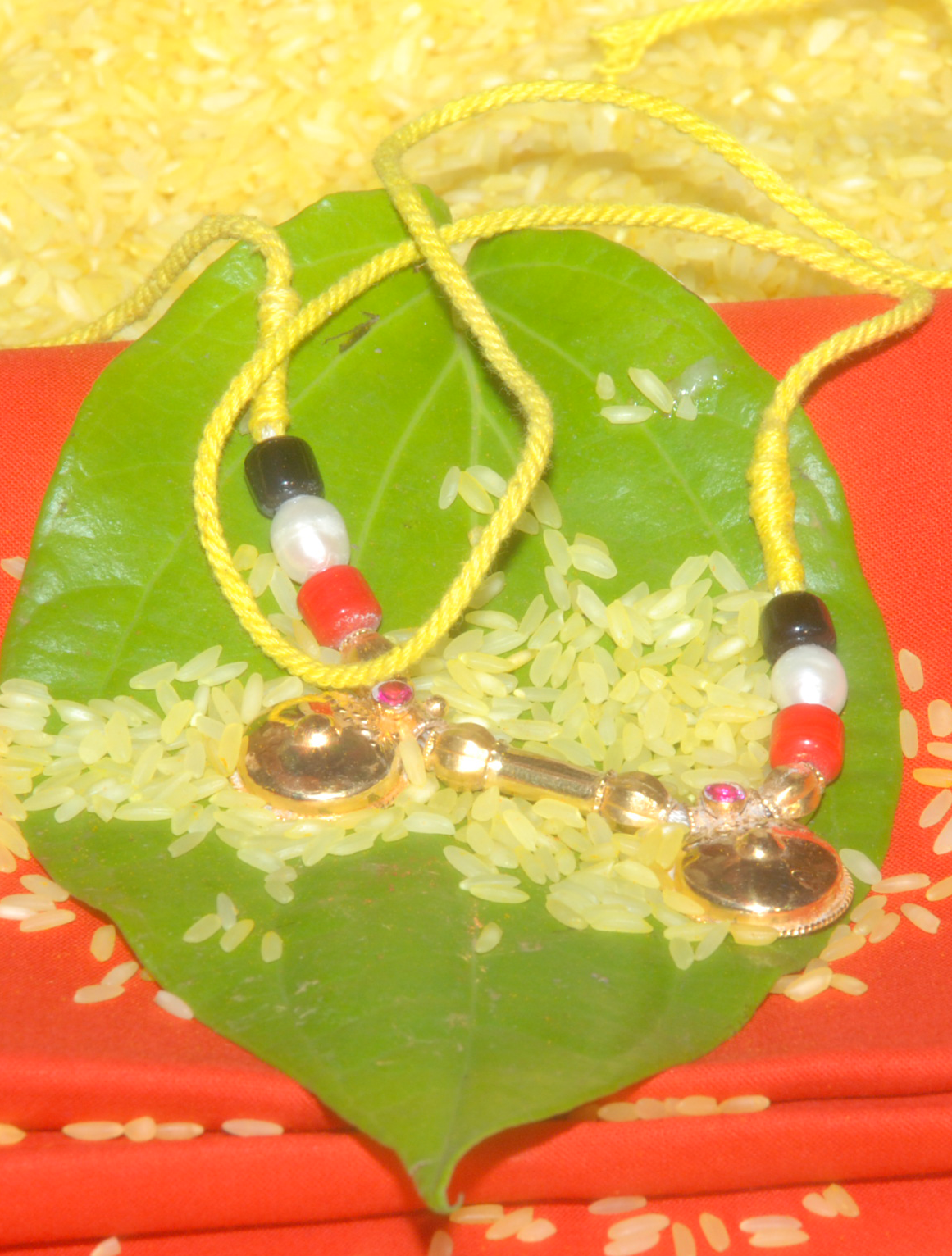 🇮🇳 India and 2 moreMangalsutraमङ्गलसूत्रम् (maṅgalasūtram)
The sacred necklace tied around the bride's neck to mark her marriage.Adornment · The ceremony
 🇮🇳 IndiaChild marriage in India
A contested practice where minors marry, defined by law as unions involving a bride under 18.Modern · Engagement and betrothal
 🇮🇳 Hyderabad, IndiaKhara dupattaکھڑا دوپٹہ
The elaborate traditional wedding ensemble worn by Hyderabadi Muslim brides.Attire · The ceremony
 🇮🇳 India and 5 moreDowry
A payment of wealth from the bride's family to the groom or his household at marriage.Gift custom · Engagement and betrothal
🇮🇳 IndiaHindi wedding songs
Film and folk music that accompanies the stages of a North Indian Hindu wedding.Performance · Engagement and betrothal
 🇮🇳 India and 2 moreLehenga
An ankle-length skirt from the Indian subcontinent, often worn as part of a gagra choli for weddings.Attire · The ceremony
 🇮🇳 India and 1 moreToporটোপর
The fragile white conical crown worn by the Bengali Hindu groom for luck.Attire · The weeks before
 🇮🇳 IndiaMeitei marriageLuhongba (ꯂꯨꯍꯣꯡꯕ)
The sacred union of hearts and souls in Meitei culture, marked by clan exogamy and traditional courtship.Rite · Finding a match
 🇮🇳 IndiaOdia Hindu weddingBahaghara (ଓଡ଼ିଆ ବାହାଘର)
The traditional Hindu marriage ceremony of the Odia people in India.Rite · Engagement and betrothal
 🇮🇳 IndiaVaramalaवरमाला (Varamālā)
The flower garland exchange where Hindu brides and grooms accept each other as partners.Rite · The ceremony
🇮🇳 IndiaTamilar marriage
A Tamil wedding tradition that combines ancient ethical codes with communal feasting and games to unite families.Feast custom · The weeks before
🇮🇳 IndiaTelugu Hindu weddingతెలుగు వివాహ వేడుక
The traditional marriage rite of the Telugu people in India, centered on seven sacred vows around a fire.Rite · Engagement and betrothal
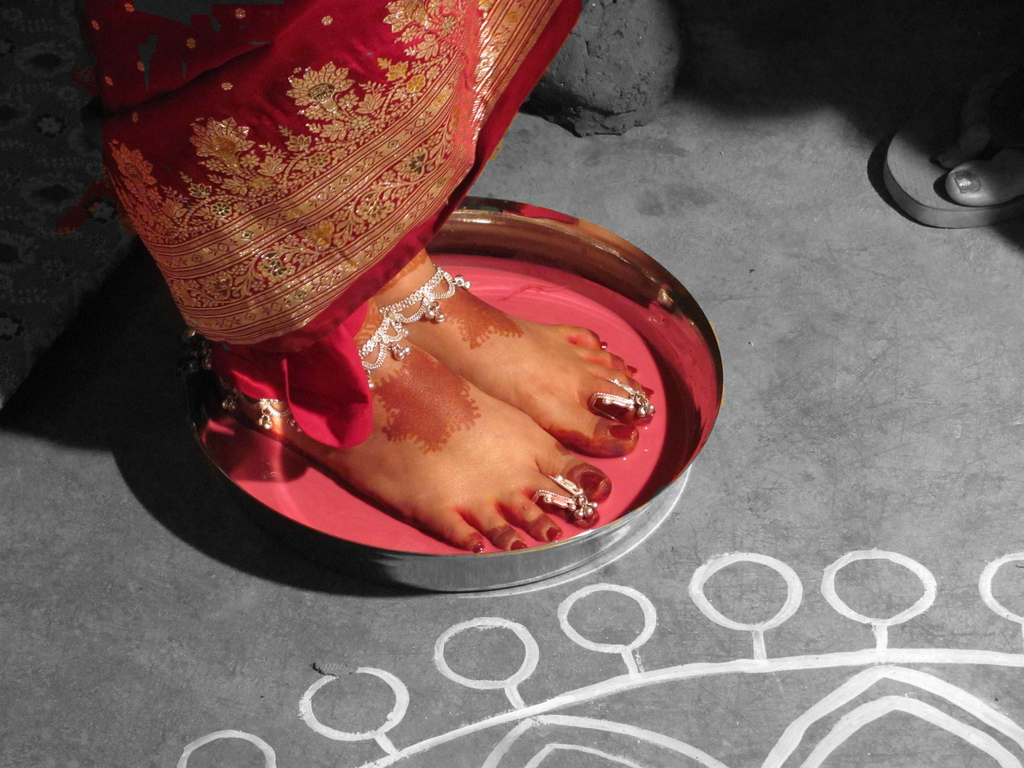 🇮🇳 India and 2 moreAltaআলতা (Bengali), 𑂄𑂪𑂞𑂰 (Bhojpuri)
A red dye applied to hands and feet by women in South Asia for weddings and festivals.Adornment · The weeks before
🇮🇳 India and 1 moreChuraचूड़ा (Hindi)
The red and white bangle set worn by brides in North India to mark her new status as a married woman.Attire · The weeks before
🇮🇳 IndiaLehenga-style sari
A pre-draped Indian wedding garment that combines the look of a lehenga with the drape of a sari.Attire · The ceremony
 🇮🇳 IndiaSaptapadiसप्तपदी (Saptapadī)
The seven steps or rounds around the sacred fire that complete a Hindu marriage.Rite · The ceremony
 🇮🇳 Delhi, India and 4 moreSindoorसिंदूर (Hindi)
The vermilion powder a Hindu husband applies to his wife's hair parting to mark her marriage.Adornment · Engagement and betrothal
🇮🇳 India and 1 moreMangala AshtakaMaṅgala Aṣṭaka
A Hindu blessing sung at Marathi weddings and recited in Sinhalese Buddhist ceremoniesBlessing · The ceremony
Photo credits on this page
The small pictures above come from Wikimedia Commons under free licences. Some are cropped to fit.
- Saptapadi: Bhumish143, CC BY-SA 4.0, source
- Osariya: Mr Anuradha Ratnaweera (අනුරාධ රත්නවීර මහතා), CC BY-SA 2.0, source
- Sindoor: Masum-al-hasan, CC BY-SA 3.0, source
- Mandapa: Rajendran Ganesan, CC BY 2.0, source
- Baraat: https://www.flickr.com/photos/pnglife/, CC BY-SA 2.0, source
- Toe ring: Wikiss, CC BY-SA 3.0, source
- Maithil Vivah: Sntshkumar750, CC BY-SA 4.0, source
- Laavaan: Ashish 100, CC BY 2.0, source
- Bandhani: RubyGoes, CC BY 2.0, source
- Chaklong: Chiring chandan, CC BY-SA 4.0, source
- Vadhu Pravesha: Shounak Ray, CC BY-SA 2.0, source
- Poruwa ceremony: A Derivative Work by MediaJet ,, CC BY 2.0, source
- Bengali Muslim wedding: NahidSultan, CC BY-SA 4.0, source
- Ayyavazhi wedding: Vaikunda Raja, CC BY-SA 3.0, source
- Shankha: Salil Kumar Mukherjee, CC BY-SA 4.0, source
- Indian wedding clothes: Lee Jordan, CC BY-SA 2.0, source
- Wedding mandapa: Unknown author, CC BY-SA 3.0, source
- Dowry system in India: Unknown author, Public domain, source
- Lagna Geet: Sevageet, CC BY-SA 4.0, source
- Wedding sari: Tarquin Binary, CC BY-SA 2.5, source
- Hindu wedding: Dinesh Cyanam, CC BY-SA 2.0, source
- Child marriage in India: Baijayant, CC BY-SA 4.0, source
- Dowry: Vassili Vladimirovich Pukiryov, Public domain, source
- Khara dupatta: Kinshuk Sunil, CC BY 2.0, source
- Mangalsutra: Ackroydman, CC BY-SA 3.0, source
- Shamiana: Badri Seshadri, CC BY 2.0, source
- Alpana: Tripan123, CC BY-SA 4.0, source
- Varamala: Sumita Roy Dutta, CC BY-SA 4.0, source
- Odia Hindu wedding: Aditya Mahar, CC BY-SA 3.0, source
- Meitei marriage: Dabu Leichombam, CC BY-SA 4.0, source
- Topor: Sumit Paul-Choudhury, CC BY 2.0, source
- Lehenga: Iwaqarhashmi, CC BY-SA 4.0, source