Wedding dress and clothing
What the couple and the guests wear, and why: the white dress, the red sari, the kimono, the kente.
What the couple and their guests wear is the most visible part of a wedding. Dress carries meaning in its colour, cloth, cut and the person who makes or lends it. There is no single wedding outfit. There is a red sari, a white gown, a kimono, a hanbok, a kente cloth and a suit, each rooted in a place and often in a family.
Colour and cloth
White became the fashion for Western brides after Queen Victoria wore it in 1840, though it was not the universal choice before. In India red is the traditional colour of the bride, in a silk sari, lehenga or the Banarasi weave, and in China red is used for luck, in the qipao or the two-piece qungua. In Japan the shiromuku is white and the uchikake over it may be red or gold. In Ghana and Nigeria families may choose coordinated kente or aso ebi cloth. In Morocco the bride may change outfits several times in the amariya chair.
The groom and the guests
Grooms wear sherwanis in North India, barong tagalog in the Philippines, the kilt in Scotland, the morning coat in formal English weddings, and the dishdasha or bisht in the Gulf. Guests follow rules too: no white at a Western wedding, no black at many Asian ones, a head covering at a Sikh gurdwara or a Greek church, and bright colour at a Nigerian celebration where matching cloth shows the family you belong to.
What is changing
Brides wear colours other than white, rent or borrow dresses, restyle a mother's outfit, or wear trousers. Same-sex couples choose from every tradition. Fast fashion and sustainability concerns have pushed more people to rent or alter existing garments. Handloom weavers and embroiderers have also benefited from a renewed interest in heritage fabric.
Written by the EveryShaadi desk with AI assistance. Background on Wedding dress and clothing (kind of custom). Customs differ from place to place and family to family. If this is your tradition and we have it wrong, tell us.
 🇮🇳 Bhuj, India and 1 moreBandhani
A traditional Indian tie-dye method that creates intricate dot patterns by binding small sections of cloth before dyeingAttire · Engagement and betrothal
🇮🇳 IndiaOonjal
A decorated swing where the Tamil bride and groom sit to receive family blessings.Blessing · The ceremony
🇮🇳 Bhuj, India and 1 moreBandhani
A traditional Indian tie-dye method that creates intricate dot patterns by binding small sections of cloth before dyeingAttire · Engagement and betrothal
🇮🇳 IndiaOonjal
A decorated swing where the Tamil bride and groom sit to receive family blessings.Blessing · The ceremony
 🇮🇳 India and 1 moreToe ring
A silver band worn on the second toe to mark a woman as married in India.Adornment · The ceremony
🇮🇳 India and 1 moreToe ring
A silver band worn on the second toe to mark a woman as married in India.Adornment · The ceremony
 🇮🇳 Kanchipuram, IndiaKanchipuram silk sari
The heavy silk bridal garment woven in Kanchipuram with contrasting borders and gold zari.Attire · The ceremony
🇮🇳 Kochi, IndiaKasavuകസാവ്
The white cotton and gold border attire worn by Malayalis for weddings and festivals.Attire · The weeks before
🇮🇳 IndiaMadisarமடிசார் (Madisar)
The nine-yard sari drape worn by Tamil Brahmin women during weddings and religious rites.Attire · The ceremony
🇮🇳 Kanchipuram, IndiaKanchipuram silk sari
The heavy silk bridal garment woven in Kanchipuram with contrasting borders and gold zari.Attire · The ceremony
🇮🇳 Kochi, IndiaKasavuകസാവ്
The white cotton and gold border attire worn by Malayalis for weddings and festivals.Attire · The weeks before
🇮🇳 IndiaMadisarமடிசார் (Madisar)
The nine-yard sari drape worn by Tamil Brahmin women during weddings and religious rites.Attire · The ceremony
 🇮🇳 India and 1 moreMayian
A pre-wedding cleansing ritual in Punjabi culture where turmeric paste is applied to the couple.Blessing · The weeks before
🇮🇳 IndiaSakharpuda
The Maharashtrian engagement rite where sugar and coconuts seal a verbal promise between families.Betrothal · Engagement and betrothal
🇮🇳 India and 1 moreMayian
A pre-wedding cleansing ritual in Punjabi culture where turmeric paste is applied to the couple.Blessing · The weeks before
🇮🇳 IndiaSakharpuda
The Maharashtrian engagement rite where sugar and coconuts seal a verbal promise between families.Betrothal · Engagement and betrothal
 🇱🇰 Kandy, Sri LankaOsariyaඔසරිය
The traditional sari style worn by Sinhalese women in Sri Lanka for weddings and formal events.Attire · The ceremony
🇱🇰 Kandy, Sri LankaOsariyaඔසරිය
The traditional sari style worn by Sinhalese women in Sri Lanka for weddings and formal events.Attire · The ceremony
 🇮🇳 IndiaIndian wedding invitationsNimantraṇa patra (निमन्त्रण पत्र)
Decorated cards sent to announce a marriage and invite guests to the celebration.Betrothal · The weeks before
🇮🇳 IndiaIndian wedding invitationsNimantraṇa patra (निमन्त्रण पत्र)
Decorated cards sent to announce a marriage and invite guests to the celebration.Betrothal · The weeks before
 🇮🇳 India and 2 moreLehenga
A long skirt worn as the base of a bridal outfit across the Indian subcontinent.Attire · The ceremony
🇮🇳 IndiaVadhuya
The cotton and wool bridal dress worn by brides in ancient India during the Vedic period.Attire · The ceremony
🇮🇳 India and 2 moreLehenga
A long skirt worn as the base of a bridal outfit across the Indian subcontinent.Attire · The ceremony
🇮🇳 IndiaVadhuya
The cotton and wool bridal dress worn by brides in ancient India during the Vedic period.Attire · The ceremony
 🇮🇳 Kanchipuram, India and 1 moreWedding sari
The traditional draped garment worn by brides in South Asia for their marriage ceremony.Attire · The ceremony
🇮🇳 India and 1 moreLeirum Pheeꯂꯩꯔꯨꯝ ꯐꯤ
A traditional Meitei shawl given as a wedding gift from parents to daughtersAttire · Engagement and betrothal
🇮🇳 Kanchipuram, India and 1 moreWedding sari
The traditional draped garment worn by brides in South Asia for their marriage ceremony.Attire · The ceremony
🇮🇳 India and 1 moreLeirum Pheeꯂꯩꯔꯨꯝ ꯐꯤ
A traditional Meitei shawl given as a wedding gift from parents to daughtersAttire · Engagement and betrothal
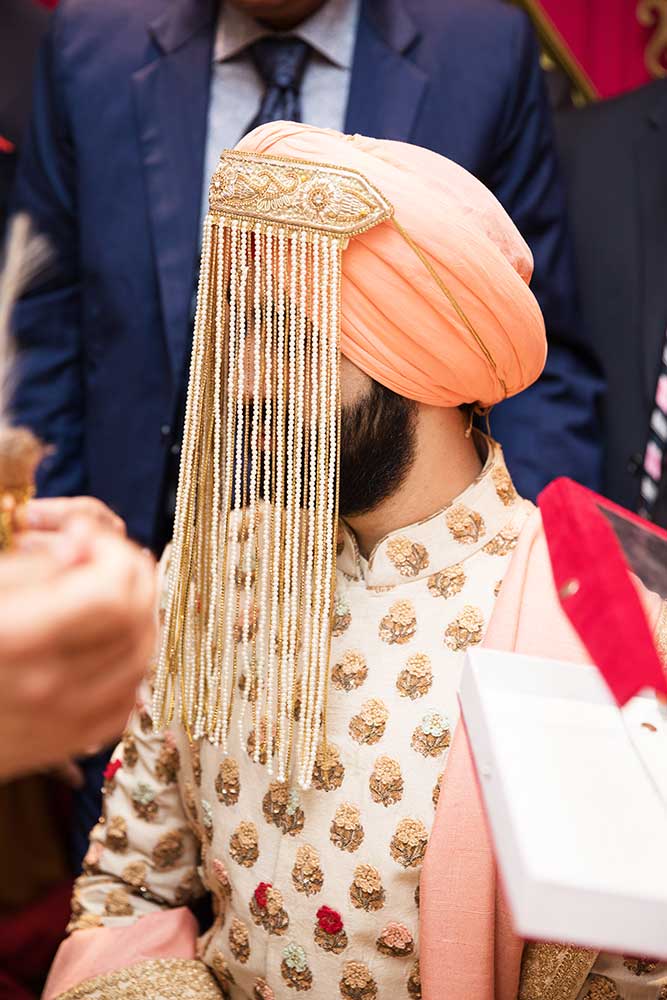 🇮🇳 IndiaSehraसेहरा (Hindi)
A floral or beaded veil tied to the groom's turban before he departs for the wedding ceremony.Attire · The weeks before
🇮🇳 IndiaSehraसेहरा (Hindi)
A floral or beaded veil tied to the groom's turban before he departs for the wedding ceremony.Attire · The weeks before
 🇮🇳 IndiaIndian wedding clothes
Traditional garments worn by Indian couples and guests across multiple days of celebrationAttire · The weeks before
🇮🇳 IndiaIndian wedding clothes
Traditional garments worn by Indian couples and guests across multiple days of celebrationAttire · The weeks before
 🇮🇳 IndiaOdia Hindu weddingBahaghara (ଓଡ଼ିଆ ବାହାଘର)
The traditional Hindu marriage ceremony of the Odia people in Odisha, India.Rite · Engagement and betrothal
🇧🇩 Bangladesh and 1 moreBou Bhatবউ ভাত
A feast hosted by the groom's family to welcome the bride into her new home.Feast custom · After the wedding
🇮🇳 IndiaOdia Hindu weddingBahaghara (ଓଡ଼ିଆ ବାହାଘର)
The traditional Hindu marriage ceremony of the Odia people in Odisha, India.Rite · Engagement and betrothal
🇧🇩 Bangladesh and 1 moreBou Bhatবউ ভাত
A feast hosted by the groom's family to welcome the bride into her new home.Feast custom · After the wedding
 🇮🇳 India and 1 moreToporটোপর
The fragile white conical crown worn by the Bengali Hindu groom for luck.Attire · The weeks before
🇮🇳 India and 1 moreToporটোপর
The fragile white conical crown worn by the Bengali Hindu groom for luck.Attire · The weeks before
 🇮🇳 IndiaMeitei weddingLuhongba (ꯂꯨꯍꯣꯡꯕ)
The traditional union of the Meitei people, marked by clan exogamy and specific courtship rituals.Rite · Finding a match
🇮🇳 IndiaMeitei weddingLuhongba (ꯂꯨꯍꯣꯡꯕ)
The traditional union of the Meitei people, marked by clan exogamy and specific courtship rituals.Rite · Finding a match
 🇮🇳 Hyderabad, IndiaKhara dupattaKhada dupatta (Urdu: کھڑا دوپٹہ)
The upright stole worn by Hyderabadi Muslim brides as part of their traditional wedding ensemble.Attire · The ceremony
🇮🇳 Hyderabad, IndiaKhara dupattaKhada dupatta (Urdu: کھڑا دوپٹہ)
The upright stole worn by Hyderabadi Muslim brides as part of their traditional wedding ensemble.Attire · The ceremony
 🇮🇳 IndiaWedding mandapaVivaha Mandapa (विवाह मण्डप)
The temporary pavilion where Hindu and Jain couples exchange vows around a sacred fire.Setting · The ceremony
🇮🇳 India and 1 moreChuraचूरा (Hindi)
The red and white bangles that mark a bride's new status in Indian Hindu weddingsAttire · The weeks before
🇮🇳 IndiaWedding mandapaVivaha Mandapa (विवाह मण्डप)
The temporary pavilion where Hindu and Jain couples exchange vows around a sacred fire.Setting · The ceremony
🇮🇳 India and 1 moreChuraचूरा (Hindi)
The red and white bangles that mark a bride's new status in Indian Hindu weddingsAttire · The weeks before
 🇮🇳 India and 5 moreWedding veil
A cloth covering the head or face worn by brides and grooms to mark marriage.Attire · The ceremony
🇮🇳 IndiaLehenga-style sari
A pre-draped Indian wedding garment that combines the look of a lehenga with the drape of a sari.Attire · The ceremony
🇮🇳 India and 5 moreWedding veil
A cloth covering the head or face worn by brides and grooms to mark marriage.Attire · The ceremony
🇮🇳 IndiaLehenga-style sari
A pre-draped Indian wedding garment that combines the look of a lehenga with the drape of a sari.Attire · The ceremony
 🇮🇳 Madurai, IndiaGoluBommai kolu (Tamil), Bommala Koluvu (Telugu), Gombe Habba (Kannada)
A tiered display of dolls and figurines arranged in South Indian homes during the Navaratri festival.Feast custom · The weeks before
🇮🇳 Madurai, IndiaGoluBommai kolu (Tamil), Bommala Koluvu (Telugu), Gombe Habba (Kannada)
A tiered display of dolls and figurines arranged in South Indian homes during the Navaratri festival.Feast custom · The weeks before
 🇮🇳 Delhi, India and 2 moreKarva Chauthकरकचतुर्थी (Karakachaturthī)
A Hindu festival where married women fast from sunrise to moonrise for their husband's health and life.Betrothal · The weeks before
🇮🇳 IndiaLohepfhe
A black shawl with red and green bands worn by Angami and Chakhesang Naga men at weddings.Attire · The ceremony
🇮🇳 Delhi, India and 2 moreKarva Chauthकरकचतुर्थी (Karakachaturthī)
A Hindu festival where married women fast from sunrise to moonrise for their husband's health and life.Betrothal · The weeks before
🇮🇳 IndiaLohepfhe
A black shawl with red and green bands worn by Angami and Chakhesang Naga men at weddings.Attire · The ceremony
 🇮🇳 Jaipur, IndiaGhoomarघूमर
A twirling folk dance performed by women in Rajasthan to welcome a bride or celebrate auspicious occasions.Performance · The ceremony
🇵🇰 Peshawar, PakistanPeshawari chappal
A traditional leather sandal with crossed straps, worn by men at Pakistani weddings.Attire
🇮🇳 Jaipur, IndiaGhoomarघूमर
A twirling folk dance performed by women in Rajasthan to welcome a bride or celebrate auspicious occasions.Performance · The ceremony
🇵🇰 Peshawar, PakistanPeshawari chappal
A traditional leather sandal with crossed straps, worn by men at Pakistani weddings.Attire
 🇮🇳 Firozabad, India and 1 moreBangle
A rigid circular bracelet worn by women in South Asia and beyond, often marking marital status or festive occasions.Adornment · The ceremony
🇮🇳 Firozabad, India and 1 moreBangle
A rigid circular bracelet worn by women in South Asia and beyond, often marking marital status or festive occasions.Adornment · The ceremony
 🇮🇳 Amritsar, India and 1 moreJutti
The embroidered leather slip-on shoe worn by Punjabi brides and grooms at weddingsAttire · The ceremony
🇮🇳 Amritsar, India and 1 moreJutti
The embroidered leather slip-on shoe worn by Punjabi brides and grooms at weddingsAttire · The ceremony
Photo credits on this page
The small pictures above come from Wikimedia Commons under free licences. Some are cropped to fit.
- Osariya: Mr Anuradha Ratnaweera (අනුරාධ රත්නවීර මහතා), CC BY-SA 2.0, source
- Indian wedding invitations: Onef9day, CC BY 3.0, source
- Karva Chauth: Iamwiki001, CC BY-SA 4.0, source
- Toe ring: Wikiss, CC BY-SA 3.0, source
- Lehenga: Iwaqarhashmi, CC BY-SA 4.0, source
- Jutti: Daderot, CC0, source
- Wedding sari: Tarquin Binary, CC BY-SA 2.5, source
- Bangle: schwiki, CC BY-SA 4.0, source
- Sehra: SynthContibutor, CC BY-SA 4.0, source
- Kanchipuram silk sari: McKay Savage, CC BY 2.0, source
- Indian wedding clothes: Lee Jordan, CC BY-SA 2.0, source
- Bandhani: RubyGoes, CC BY 2.0, source
- Odia Hindu wedding: Aditya Mahar, CC BY-SA 3.0, source
- Mayian: Rakzika, CC BY-SA 4.0, source
- Golu: Ksiva21, CC BY-SA 4.0, source
- Topor: Sumit Paul-Choudhury, CC BY 2.0, source
- Meitei wedding: Dabu Leichombam, CC BY-SA 4.0, source
- Wedding veil: David Ring, CC0, source
- Khara dupatta: Kinshuk Sunil, CC BY 2.0, source
- Ghoomar: Aali Jain, CC BY-SA 4.0, source
- Wedding mandapa: Unknown author, CC BY-SA 3.0, source