🇮🇳 India
A Hindu bride often wears red, maroon or gold in silk, such as a Banarasi or Kanjivaram sari, or a lehenga. Bengali brides wear red and white, and Kerala brides often wear a cream and gold kasavu sari.
Read: Wedding sariWhat a couple wears to marry is one of the clearest signs of where, and with whom, they belong.
Presented by ClearTrust Free for couples, families, guests and the curious.
What a couple wears to marry is one of the clearest signs of where, and with whom, they belong. Red is the colour of luck across much of Asia, white is the Western choice since the nineteenth century, and the Ghanaian kente, the Scottish kilt and the Korean hanbok each carry a story. Garments are often inherited, borrowed or made by relatives, and may be the most expensive clothes a person ever wears.
Red stands for luck, joy and fertility in India, China, Vietnam and much of the Middle East, so brides wear red saris, lehengas, qipao and cheongsam, and guests avoid wearing it as outsiders to the family. White became the usual bridal colour in Britain and America after Queen Victoria married in a white gown in 1840, and has spread worldwide through film and magazines. In Japan a bride may begin in white, shiromuku, then change into a red or patterned kimono. Many cultures use several colours across the days: green and yellow for the henna and turmeric nights, gold for the ceremony.
Grooms wear the sherwani and turban in North India, the dhoti and angavastram in the South, the barong Tagalog in the Philippines, the kilt in Scotland, the hanbok in Korea and the morning suit or dark suit in much of Europe. The couple's parents, attendants and guests often wear matching colours or fabrics. Family members may wrap the couple in a shawl, tie their garments together, or give them a cloth as a blessing, so clothing is part of the rite and not only the decoration.
Many wedding garments are textile heritage: the Kanjivaram and Banarasi saris of India, the piña cloth of the Philippines, the Hungarian Kalocsa embroidery, the Norwegian bunad with silver brooches, the Palestinian thobe stitched by the bride's female relatives. Family gowns and jewellery are altered for the next bride. Renting, borrowing and wearing a dress more than once are common in some places, and the resale and rental of gowns is growing.
Couples now mix: a white dress for the vows and a red outfit for the tea ceremony, or a sari with a veil. Dress codes include tailored suits for women and gowns for grooms. Sustainability and cost are pushing a rise in rented and second-hand outfits, and designers such as those who work in handloom revive local weaves. Because the clothes carry meaning for those who wear them, the choice is best left to the couple and their families.
A Hindu bride often wears red, maroon or gold in silk, such as a Banarasi or Kanjivaram sari, or a lehenga. Bengali brides wear red and white, and Kerala brides often wear a cream and gold kasavu sari.
Read: Wedding sariThe Kandyan bride wears the osariya, a sari draped in a particular layered style, with ornate jewellery, and the groom wears a Kandyan costume with a long cloth and a decorated jacket. The bride and groom dress as if in the old royal court.
Read: OsariyaThe groom wears a barong Tagalog, a sheer embroidered shirt in pineapple or abaca fibre, over a white undershirt. The bride may wear a white gown or a terno with butterfly sleeves, with matching cloth cords, the yugal, drawn around the couple.
Barong Tagalog, being writtenRed is the colour of the Han bride, who traditionally wore a phoenix crown and an embroidered robe, and later a qipao. Many couples today wear Western white for the ceremony and red for the tea.
Qipao, being writtenThe couple wear hanbok for the pyebaek, the formal greeting to the groom's parents, the bride in red and yellow with a hwarot (ceremonial robe) and the groom in a blue or dark robe with a hat. A Western gown and suit for the main ceremony are now more usual.
Hanbok, being writtenThe shiromuku is a pure white kimono worn with a white headdress, the tsunokakushi or wataboshi. After the ceremony the bride changes to an uchikake, a heavily embroidered robe, often red, and then a Western gown at the reception.
Shiromuku, being written Wedding dressThe overview of bridal clothing.
 Kente clothGhana's ceremonial woven cloth.
 LehengaThe long skirt of the South Asian bride.
Also part of it, and being written: Shiromuku (The Japanese white bridal kimono.), Hanbok (Korean traditional dress, worn at weddings.), Barong Tagalog (The Filipino groom's shirt.), Qipao (The Chinese one-piece dress.), Bunad (Norwegian regional costume.).
White became the fashion after Queen Victoria wore it in 1840, and magazines and shops spread it. Earlier brides wore their best dress in any colour.
Across much of Asia, red stands for luck, joy and long life, so it is used for gowns, envelopes and decorations. It is also the colour of the bride's hands in many henna traditions.
It can be, and many couples now rent, borrow, buy second-hand or have an keepsake altered. Costs differ widely by country and by family choice.
Customs vary. In many Western weddings guests avoid white, and in many Asian ones guests avoid red if they are not family. Checking with the hosts is the safest course.
Written by the EveryShaadi desk with AI assistance. Customs differ from place to place and family to family. If this is your tradition and we have it wrong, tell us.
The traditions written up so far, best known first.
 🇳🇬 Lagos, Nigeria and 3 moreAso ebiAsọ-Ẹbí
Matching outfits worn by groups to show solidarity at Yoruba weddings and other ceremoniesAttire · The weeks before
🇳🇬 Lagos, Nigeria and 3 moreAso ebiAsọ-Ẹbí
Matching outfits worn by groups to show solidarity at Yoruba weddings and other ceremoniesAttire · The weeks before
 🇼🇸 Samoa and 3 moreʻIe tōga
Prestige woven mats exchanged at Samoan weddings to honor family ties and chiefly status.Attire · The ceremony
🇼🇸 Samoa and 3 moreʻIe tōga
Prestige woven mats exchanged at Samoan weddings to honor family ties and chiefly status.Attire · The ceremony
 🇮🇩 IndonesiaUlosᯥᯞᯘᯬ᯲
The hand-woven textile that binds Batak couples in marriage and symbolizes warmth.Attire · The ceremony
🇮🇩 IndonesiaUlosᯥᯞᯘᯬ᯲
The hand-woven textile that binds Batak couples in marriage and symbolizes warmth.Attire · The ceremony
 🇲🇽 Oaxaca, Mexico and 1 moreHuipilhuīpīlli
The traditional tunic worn by indigenous women in Mexico and Central America for weddings and daily life.Attire · The weeks before
🇲🇽 Oaxaca, Mexico and 1 moreHuipilhuīpīlli
The traditional tunic worn by indigenous women in Mexico and Central America for weddings and daily life.Attire · The weeks before
 🇲🇾 Malaysia and 4 moreBaju Kurungباجو كوروڠ
The traditional blouse and skirt worn by Malay women for weddings and religious ceremoniesAttire · The weeks before
🇲🇾 Malaysia and 4 moreBaju Kurungباجو كوروڠ
The traditional blouse and skirt worn by Malay women for weddings and religious ceremoniesAttire · The weeks before
 🇳🇬 Iseyin, Nigeria and 2 moreAso okeAṣọ òkè
Hand-woven cloth worn by the Yoruba for weddings and formal gatheringsAttire · The ceremony
🇳🇬 Iseyin, Nigeria and 2 moreAso okeAṣọ òkè
Hand-woven cloth worn by the Yoruba for weddings and formal gatheringsAttire · The ceremony
 🇨🇳 China and 1 moreTraditional Chinese wedding dress
The wedding attire worn by Han Chinese couples, from the fengguan xiapei to the qunguaAttire · The ceremony
🇨🇳 China and 1 moreTraditional Chinese wedding dress
The wedding attire worn by Han Chinese couples, from the fengguan xiapei to the qunguaAttire · The ceremony
 🇺🇬 UgandaGomesi
The floor-length traditional dress worn by women in Buganda and Busoga for weddings and formal events.Attire · Engagement and betrothal
🇮🇳 India and 1 moreLeirum Pheeꯂꯩꯔꯨꯝ ꯐꯤ
A traditional Meitei shawl given as a wedding gift from parents to daughtersAttire · Engagement and betrothal
🇺🇬 UgandaGomesi
The floor-length traditional dress worn by women in Buganda and Busoga for weddings and formal events.Attire · Engagement and betrothal
🇮🇳 India and 1 moreLeirum Pheeꯂꯩꯔꯨꯝ ꯐꯤ
A traditional Meitei shawl given as a wedding gift from parents to daughtersAttire · Engagement and betrothal
 🇺🇸 United States and 5 moreBridesmaid
A female attendant who supports the bride during a Western wedding ceremony.Family role · Engagement and betrothal
🇺🇸 United States and 5 moreBridesmaid
A female attendant who supports the bride during a Western wedding ceremony.Family role · Engagement and betrothal
 🇲🇦 Tangier, MoroccoNegafanggafa (Tamazight); ziyyāna (Arabic)
The traditional Moroccan bridal dresser who manages the bride's appearance and wedding rituals.Attire · The weeks before
🇲🇦 Tangier, MoroccoNegafanggafa (Tamazight); ziyyāna (Arabic)
The traditional Moroccan bridal dresser who manages the bride's appearance and wedding rituals.Attire · The weeks before
 🇮🇩 IndonesiaMinangkabau marriage
A matrilineal wedding tradition from West Sumatra where the groom moves into the bride's family home.Family role · Engagement and betrothal
🇮🇩 IndonesiaMinangkabau marriage
A matrilineal wedding tradition from West Sumatra where the groom moves into the bride's family home.Family role · Engagement and betrothal
 🇨🇳 Guangdong, China and 2 moreQungua裙褂
A two-piece embroidered jacket and skirt worn by Cantonese brides for their wedding ceremony.Attire · The ceremony
🇨🇳 Guangdong, China and 2 moreQungua裙褂
A two-piece embroidered jacket and skirt worn by Cantonese brides for their wedding ceremony.Attire · The ceremony
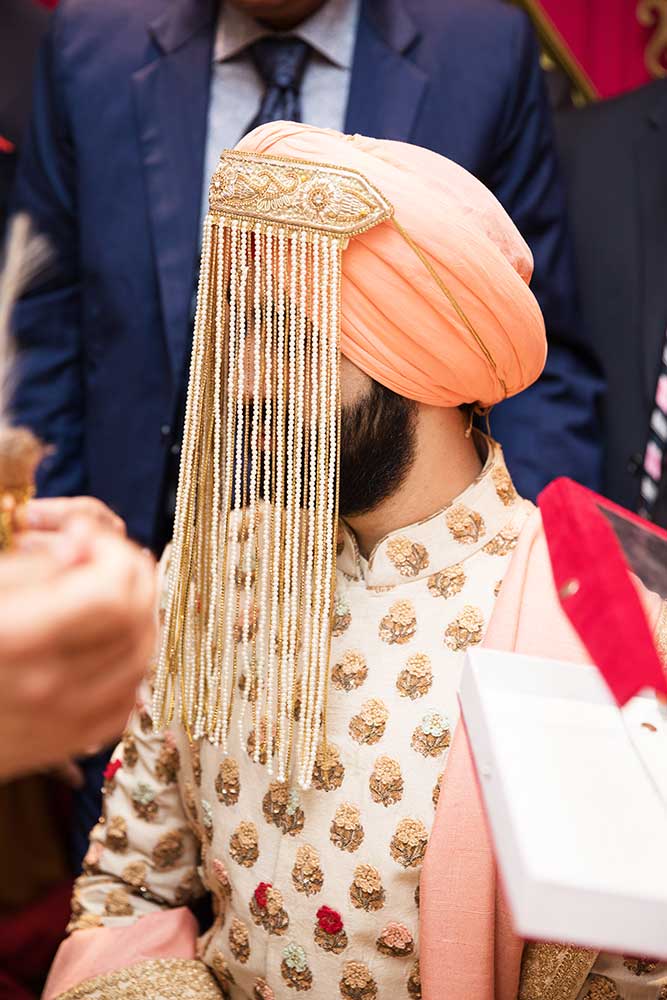 🇮🇳 IndiaSehraसेहरा (Hindi)
A floral or beaded veil tied to the groom's turban before he departs for the wedding ceremony.Attire · The weeks before
🇮🇳 India and 1 moreChuraचूरा (Hindi)
The red and white bangles that mark a bride's new status in Indian Hindu weddingsAttire · The weeks before
🇮🇳 IndiaSakharpuda
The Maharashtrian engagement rite where sugar and coconuts seal a verbal promise between families.Betrothal · Engagement and betrothal
🇮🇳 IndiaSehraसेहरा (Hindi)
A floral or beaded veil tied to the groom's turban before he departs for the wedding ceremony.Attire · The weeks before
🇮🇳 India and 1 moreChuraचूरा (Hindi)
The red and white bangles that mark a bride's new status in Indian Hindu weddingsAttire · The weeks before
🇮🇳 IndiaSakharpuda
The Maharashtrian engagement rite where sugar and coconuts seal a verbal promise between families.Betrothal · Engagement and betrothal
 🇹🇴 Tonga and 2 moreTaʻovala
The woven pandanus mat worn around the waist for formal occasions and weddings in Tonga.Attire · The weeks before
🇹🇴 Tonga and 2 moreTaʻovala
The woven pandanus mat worn around the waist for formal occasions and weddings in Tonga.Attire · The weeks before
 🇳🇬 NigeriaLefe
The presentation of gifts from the groom to the bride in Hausa weddings.Gift custom · The weeks before
🇳🇬 NigeriaLefe
The presentation of gifts from the groom to the bride in Hausa weddings.Gift custom · The weeks before
The small pictures above come from Wikimedia Commons under free licences. Some are cropped to fit.
Every week: one wedding tradition from somewhere new, the wedding days coming up around the world, and one idea explained.