Wedding traditions with the colour red
Red is the colour of weddings in much of Asia.
Red is the colour of weddings in much of Asia. It stands for luck, joy, fertility, life and protection, and in China, India, Vietnam and Korea it is the colour of the bride. In the West it is often avoided, which shows how much meaning a colour can carry.
Red in Asia
Chinese brides wear red qipao or qungua, the wedding hall is hung with red double-happiness characters, and guests give hongbao, red envelopes. Indian brides wear red lehengas or silk saris, and the sindoor in the parting of the hair is red. Vietnamese brides wear a red ao dai, and Korean brides wear red dots, yeonji gonji, on the cheeks. In Japan the uchikake may be red, and the bridal umbrella is also red.
Red elsewhere
Red also appears in Armenia, Georgia and Turkey, where the bride may be wrapped in a red veil or have a red ribbon tied at her waist, called the kirmizi kusak in Turkish custom. In the Balkans red and white cloth were used in traditional dress, and in Central Asia red wedding robes and headdresses were common. In Europe white took over in the nineteenth century.
Written by the EveryShaadi desk with AI assistance. Background on The colour red (symbol). Customs differ from place to place and family to family. If this is your tradition and we have it wrong, tell us.
 🇱🇦 Laos and 1 moreBaciບາສີ (Lao) / บายศรี (Thai)
The Lao wrist-tying rite that calls a person's souls home and blesses a marriageBlessing · The ceremony
🇮🇳 IndiaMadisarமடிசார் (Madisar)
The nine-yard sari drape worn by Tamil Brahmin women for weddings and religious ritesAttire · The ceremony
 🇮🇳 India and 1 moreMaithil Vivahमैथिल विवाह
The arranged Hindu wedding of Maithils in the Mithila region, guided by strict kinship rules and unique folk rituals.Rite · Finding a match
 🇮🇩 IndonesiaUlosᯥᯞᯘᯬ᯲
The hand-woven Batak textile that binds couples and signifies familial warmth in North Sumatra.Attire · The ceremony
 🇮🇳 Bhuj, India and 1 moreBandhani
The intricate tie-dye textile tradition of Gujarat and Rajasthan worn by brides and married women.Attire · Engagement and betrothal
 🇲🇽 Oaxaca, Mexico and 1 moreHuipilhuīpīlli
The traditional tunic worn by indigenous women in Mexico and Central America for weddings and daily life.Attire · The weeks before
 🇮🇳 IndiaShankha
White conch-shell bangles that mark a Bengali Hindu woman as marriedAdornment · The ceremony
🇺🇦 UkraineSong about the RushnykПісня про рушник (Pisnia pro rushnyk)
A Ukrainian song that celebrates the embroidered cloth used in weddings and family life.Performance · The ceremony
🇨🇳 China and 1 moreGhost marriage冥婚 (mínghūn)
A union arranged by families for deceased individuals to ensure harmony in the afterlife and continuity of the lineage.Rite · After the wedding
 🇮🇳 IndiaOdia Hindu weddingBahaghara (ଓଡ଼ିଆ ବାହାଘର)
The traditional Hindu marriage ceremony of the Odia people in India.Rite · Engagement and betrothal
 🇨🇳 China and 2 moreChinese pre-wedding customs三書六禮 (sàam syù luhk láih)
The six traditional rites from the Book of Rites that guide betrothal, gift exchange, and date selection in Chinese weddBetrothal · Finding a match
 🇮🇳 India and 2 moreHindu weddingvivaha (विवाह)
The traditional marriage ceremony for Hindus, centered on sacred fire and seven vows.Rite · Engagement and betrothal
 🇺🇦 Kyiv, Ukraine and 2 moreOchipokочіпок
The embroidered cap that covers a Ukrainian bride's hair to mark her new status as a married womanAttire · The ceremony
 🇧🇩 Bangladesh and 1 moreBengali Muslim weddingবাঙালি মুসলিম বিয়ে
A multi-day marriage ceremony practiced by Bengali Muslims in Bangladesh and West Bengal, blending Islamic rites with loRite · Engagement and betrothal
 🇮🇳 IndiaAyyavazhi wedding
The sacred rite of Ayyavazhi that treats marriage as a spiritual sacrament and family life as the highest austerity.Rite · Procession and arrival
🇧🇳 BruneiBrunei Malay wedding
The sequence of ceremonies that mark the engagement and marriage of Brunei Malays.Rite · Finding a match
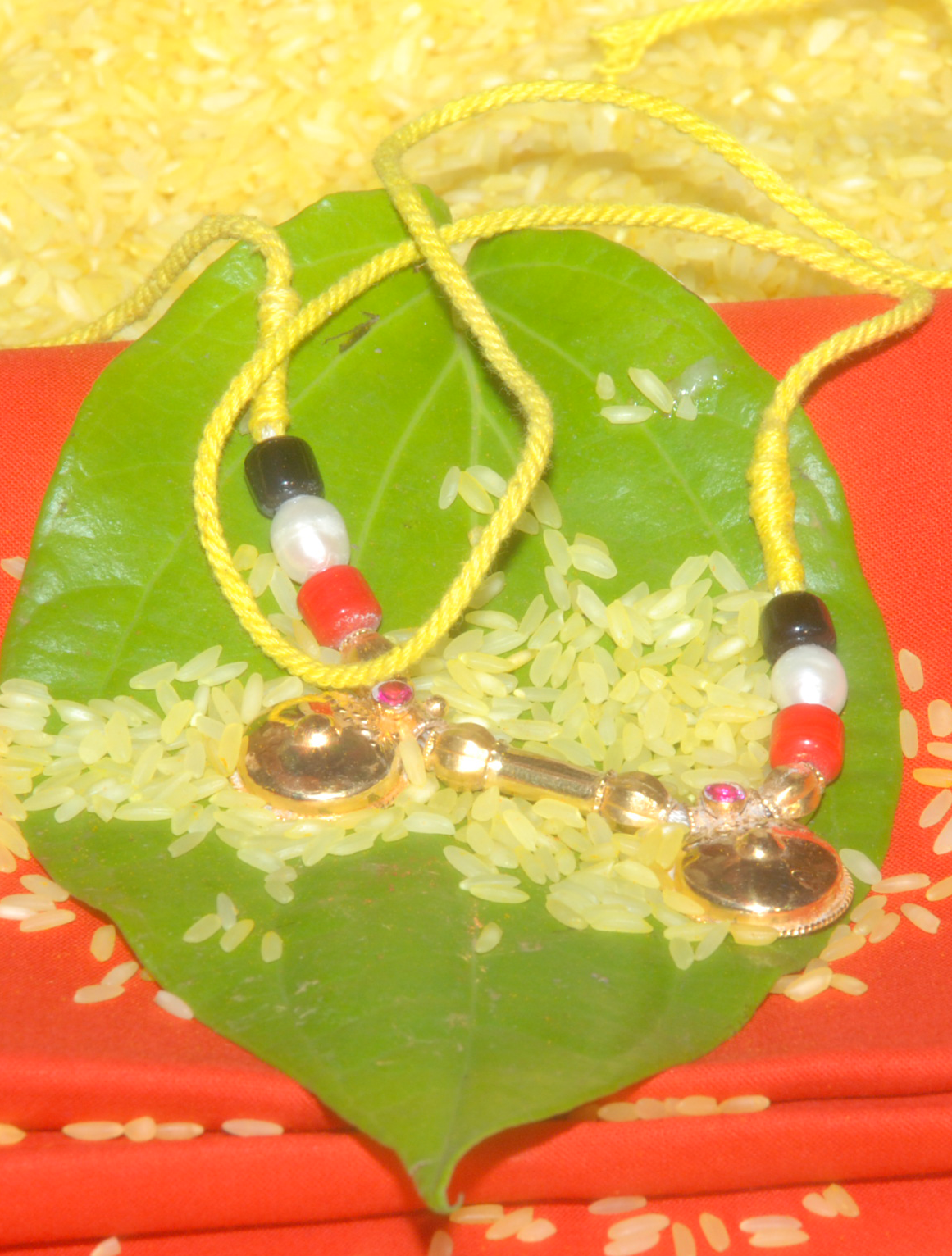 🇮🇳 India and 2 moreMangalsutraमङ्गलसूत्रम् (maṅgalasūtram)
The sacred necklace tied around the bride's neck to mark her marriage.Adornment · The ceremony
 🇨🇳 ChinaFengguan xiapei凤冠霞帔
The traditional Han Chinese wedding ensemble of a phoenix crown and embroidered robes worn by brides in the Ming and QinAttire · The ceremony
🇮🇳 IndiaHindi wedding songs
Film and folk music that accompanies the stages of a North Indian Hindu wedding.Performance · Engagement and betrothal
 🇫🇷 Paris, FranceGlobe de mariée
A glass bell jar used in France to hold the bride's bouquet or crown, later kept as a family memory box.Adornment · Procession and arrival
 🇰🇷 South Korea and 1 morePyebaek폐백
A Korean post-ceremony ritual where the couple bows to the groom's parents and shares symbolic foods.Blessing · After the wedding
🇮🇳 India and 1 moreChuraचूड़ा (Hindi)
The red and white bangle set worn by brides in North India to mark her new status as a married woman.Attire · The weeks before
 🇨🇳 ChinaHonggaitou紅蓋頭
The red bridal veil worn by Han Chinese brides to cover their faces before the wedding night.Attire · Procession and arrival
 🇦🇿 Nakhchivan, AzerbaijanAzerbaijani wedding traditionsAzərbaycanın toy adətləri
A multi-stage family ceremony in Azerbaijan featuring matchmaking, dowry exchange, and henna rituals.Rite · Finding a match
 🇮🇳 Delhi, India and 4 moreSindoorसिंदूर (Hindi)
The vermilion powder a Hindu husband applies to his wife's hair parting to mark her marriage.Adornment · Engagement and betrothal
 🇮🇳 IndiaDejhoor
A hexagonal ear ornament worn by Kashmiri Pandit women to mark their marriage.Adornment · The eve
 🇮🇳 Delhi, India and 2 moreKarva Chauthकरकचतुर्थी (Karakachaturthī)
A Hindu festival where married women fast from sunrise to moonrise for their husband's health and life.Betrothal · The weeks before
 🇰🇿 Kazakhstan and 2 moreKimeshekкимешек (Kazakh/Karakalpak), элечек (Kyrgyz)
The traditional white headgear worn by married women with children in Central AsiaAttire · After the wedding
🇨🇳 ChinaHebao荷包 (Hébāo)
A traditional Chinese embroidered pouch used for gifts, medicine, and romantic tokens.Adornment · Engagement and betrothal
🇷🇴 Romania and 3 moreMărțișor
The red and white string charm worn in early spring to welcome the new year.Adornment · The weeks before
 🇵🇱 Poland and 3 moreEaster palmPolish: palma wielkanocna; Lithuanian: verba
A decorated willow or juniper bundle blessed on Palm Sunday to protect homes and crops.Blessing · The weeks before
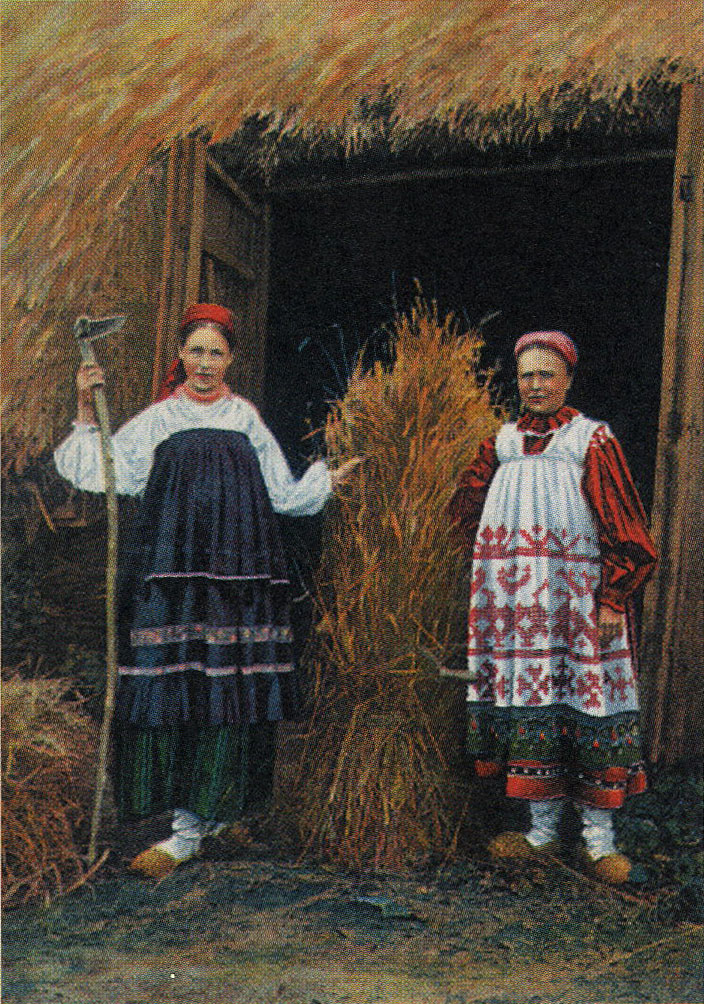 🇵🇱 Poland and 5 moreDożynki
A Slavic harvest festival where farmers bring the last sheaf of grain to the village in a ceremonial wreath.Feast custom · After the wedding
Photo credits on this page
The small pictures above come from Wikimedia Commons under free licences. Some are cropped to fit.
- Dożynki: Unknown author, Public domain, source
- Sindoor: Masum-al-hasan, CC BY-SA 3.0, source
- Pyebaek: halfGoku, CC BY-SA 2.0, source
- Honggaitou: kanegen, CC BY 2.0, source
- Maithil Vivah: Sntshkumar750, CC BY-SA 4.0, source
- Globe de mariée: Alain Amet, CC BY 4.0, source
- Ulos: Boy Lawson, CC BY-SA 3.0, source
- Bandhani: RubyGoes, CC BY 2.0, source
- Chinese pre-wedding customs: Pande Putu Hadi Wiguna, Public domain, source
- Kimeshek: https://www.flickr.com/photos/kjfnjy/, CC BY 2.0, source
- Bengali Muslim wedding: NahidSultan, CC BY-SA 4.0, source
- Ayyavazhi wedding: Vaikunda Raja, CC BY-SA 3.0, source
- Shankha: Salil Kumar Mukherjee, CC BY-SA 4.0, source
- Fengguan xiapei: Unknown author, CC0, source
- Azerbaijani wedding traditions: Azim Azimzadeh, Public domain, source
- Hindu wedding: Dinesh Cyanam, CC BY-SA 2.0, source
- Ochipok: Unknown author, CC0, source
- Karva Chauth: Iamwiki001, CC BY-SA 4.0, source
- Baci: Dalbera, CC BY 2.0, source
- Mangalsutra: Ackroydman, CC BY-SA 3.0, source
- Odia Hindu wedding: Aditya Mahar, CC BY-SA 3.0, source
- Huipil: Gift in memory of Elizabeth Ege Freudenheim, No restrictions, source
- Easter palm: Evaldas Liutkus, CC BY 2.0, source
- Dejhoor: Unknown author, Public domain, source