🇮🇳 India
A Hindu bride often wears red, maroon or gold in silk, such as a Banarasi or Kanjivaram sari, or a lehenga. Bengali brides wear red and white, and Kerala brides often wear a cream and gold kasavu sari.
Read: Wedding sariWhat a couple wears to marry is one of the clearest signs of where, and with whom, they belong.
Presented by ClearTrust Free for couples, families, guests and the curious.
What a couple wears to marry is one of the clearest signs of where, and with whom, they belong. Red is the colour of luck across much of Asia, white is the Western choice since the nineteenth century, and the Ghanaian kente, the Scottish kilt and the Korean hanbok each carry a story. Garments are often inherited, borrowed or made by relatives, and may be the most expensive clothes a person ever wears.
Red stands for luck, joy and fertility in India, China, Vietnam and much of the Middle East, so brides wear red saris, lehengas, qipao and cheongsam, and guests avoid wearing it as outsiders to the family. White became the usual bridal colour in Britain and America after Queen Victoria married in a white gown in 1840, and has spread worldwide through film and magazines. In Japan a bride may begin in white, shiromuku, then change into a red or patterned kimono. Many cultures use several colours across the days: green and yellow for the henna and turmeric nights, gold for the ceremony.
Grooms wear the sherwani and turban in North India, the dhoti and angavastram in the South, the barong Tagalog in the Philippines, the kilt in Scotland, the hanbok in Korea and the morning suit or dark suit in much of Europe. The couple's parents, attendants and guests often wear matching colours or fabrics. Family members may wrap the couple in a shawl, tie their garments together, or give them a cloth as a blessing, so clothing is part of the rite and not only the decoration.
Many wedding garments are textile heritage: the Kanjivaram and Banarasi saris of India, the piña cloth of the Philippines, the Hungarian Kalocsa embroidery, the Norwegian bunad with silver brooches, the Palestinian thobe stitched by the bride's female relatives. Family gowns and jewellery are altered for the next bride. Renting, borrowing and wearing a dress more than once are common in some places, and the resale and rental of gowns is growing.
Couples now mix: a white dress for the vows and a red outfit for the tea ceremony, or a sari with a veil. Dress codes include tailored suits for women and gowns for grooms. Sustainability and cost are pushing a rise in rented and second-hand outfits, and designers such as those who work in handloom revive local weaves. Because the clothes carry meaning for those who wear them, the choice is best left to the couple and their families.
A Hindu bride often wears red, maroon or gold in silk, such as a Banarasi or Kanjivaram sari, or a lehenga. Bengali brides wear red and white, and Kerala brides often wear a cream and gold kasavu sari.
Read: Wedding sariThe Kandyan bride wears the osariya, a sari draped in a particular layered style, with ornate jewellery, and the groom wears a Kandyan costume with a long cloth and a decorated jacket. The bride and groom dress as if in the old royal court.
Read: OsariyaThe groom wears a barong Tagalog, a sheer embroidered shirt in pineapple or abaca fibre, over a white undershirt. The bride may wear a white gown or a terno with butterfly sleeves, with matching cloth cords, the yugal, drawn around the couple.
Barong Tagalog, being writtenRed is the colour of the Han bride, who traditionally wore a phoenix crown and an embroidered robe, and later a qipao. Many couples today wear Western white for the ceremony and red for the tea.
Qipao, being writtenThe couple wear hanbok for the pyebaek, the formal greeting to the groom's parents, the bride in red and yellow with a hwarot (ceremonial robe) and the groom in a blue or dark robe with a hat. A Western gown and suit for the main ceremony are now more usual.
Hanbok, being writtenThe shiromuku is a pure white kimono worn with a white headdress, the tsunokakushi or wataboshi. After the ceremony the bride changes to an uchikake, a heavily embroidered robe, often red, and then a Western gown at the reception.
Shiromuku, being written Wedding dressThe overview of bridal clothing.
 Kente clothGhana's ceremonial woven cloth.
 LehengaThe long skirt of the South Asian bride.
Also part of it, and being written: Shiromuku (The Japanese white bridal kimono.), Hanbok (Korean traditional dress, worn at weddings.), Barong Tagalog (The Filipino groom's shirt.), Qipao (The Chinese one-piece dress.), Bunad (Norwegian regional costume.).
White became the fashion after Queen Victoria wore it in 1840, and magazines and shops spread it. Earlier brides wore their best dress in any colour.
Across much of Asia, red stands for luck, joy and long life, so it is used for gowns, envelopes and decorations. It is also the colour of the bride's hands in many henna traditions.
It can be, and many couples now rent, borrow, buy second-hand or have an keepsake altered. Costs differ widely by country and by family choice.
Customs vary. In many Western weddings guests avoid white, and in many Asian ones guests avoid red if they are not family. Checking with the hosts is the safest course.
Written by the EveryShaadi desk with AI assistance. Customs differ from place to place and family to family. If this is your tradition and we have it wrong, tell us.
The traditions written up so far, best known first.
 🇮🇳 IndiaOdia Hindu weddingBahaghara (ଓଡ଼ିଆ ବାହାଘର)
The traditional Hindu marriage ceremony of the Odia people in India.Rite · Engagement and betrothal
 🇨🇳 Guangdong, China and 2 moreQungua裙褂
A two-piece embroidered jacket and skirt worn by Cantonese brides for their wedding ceremony.Attire · The ceremony
🇮🇳 India and 2 moreLehenga
An ankle-length skirt from the Indian subcontinent, often worn as part of a gagra choli for weddings.Attire · The ceremony
 🇲🇳 MongoliaDeel
The traditional long robe worn by Mongol people for daily life and special occasions like weddings.Attire · The ceremony
 🇱🇰 Kandy, Sri LankaOsariyaඔසරිය
The traditional sari worn by Sinhalese women in Sri Lanka for weddings and formal occasions.Attire · The ceremony
🇮🇳 India and 1 moreChuraचूड़ा (Hindi)
The red and white bangle set worn by brides in North India to mark her new status as a married woman.Attire · The weeks before
 🇨🇳 ChinaHonggaitou紅蓋頭
The red bridal veil worn by Han Chinese brides to cover their faces before the wedding night.Attire · Procession and arrival
 🇨🇳 China and 1 moreTraditional Chinese wedding dress
The wedding attire worn by Han Chinese couples, from the fengguan xiapei to the qunguaAttire · The ceremony
 🇰🇷 South Korea and 1 moreHwarot활옷
The traditional Korean red and blue robe worn by brides during the ceremony and pyebaek.Attire · The ceremony
 🇲🇦 MoroccoTakchitaⵜⴽⵛⵉⵟⴰ / تَكْشِيْطَة
A two-piece Moroccan dress worn by women at weddings and celebrationsAttire · The ceremony
 🇮🇷 Iran and 1 moreIranian weddingمراسم عروسی در ایران
A multi-stage celebration rooted in Zoroastrian tradition and adapted by Islamic customs across Iran.Rite · Finding a match
 🇰🇷 South KoreaDangui당의
A long upper garment worn by Korean brides over a chima and jeogori during the Joseon period.Attire · The ceremony
 🇺🇸 United States and 5 moreBridesmaid
A female attendant who supports the bride during a Western wedding ceremony.Family role · Engagement and betrothal
 🇯🇵 Tokyo, JapanShinto weddingShinzen kekkon (神前結婚)
A Shinto purification ritual where couples exchange sake and offer prayers to the spirits.Rite · The ceremony
 🇺🇬 UgandaGomesi
The floor-length traditional dress worn by women in Buganda and Busoga for weddings and formal events.Attire · Engagement and betrothal
 🇮🇳 India and 1 moreToporটোপর
The fragile white conical crown worn by the Bengali Hindu groom for luck.Attire · The weeks before
🇮🇳 IndiaLehenga-style sari
A pre-draped Indian wedding garment that combines the look of a lehenga with the drape of a sari.Attire · The ceremony
 🇬🇧 United KingdomBoutonnière
A single flower or small arrangement pinned to the lapel of a groom's suit at a wedding.Attire · The ceremony
 🇯🇵 JapanTsunokakushi角隠し
A white silk headdress worn by Shinto brides to cover the hairline and symbolize modesty.Attire · The ceremony
 🇨🇳 China and 4 moreCloud collar云肩 (yúnjiān)
A detachable shoulder collar worn by Han Chinese brides to frame the face and symbolize cosmic order.Attire · The weeks before
 🇨🇳 China and 1 moreTuanshan團扇 (tuánshàn)
A rigid silk fan held by the bride to hide her face before revealing it to the groom.Adornment · The ceremony
 🇰🇪 Kenya and 1 moreAdumuEnkipaata or Aigus
The high-jumping warrior dance performed by the Maasai at weddings and rites of passage.Performance · The ceremony
🇮🇳 IndiaLohepfhe
A black shawl with red and green bands worn by Angami and Chakhesang Naga men at weddings.Attire · The ceremony
 🇮🇷 Isfahan, IranDebit trousersShalvār Debit (شلوار دبیت)
The wide black cotton trousers worn by Bakhtiari men as a badge of tribal identity.Attire · The ceremony
 🇩🇿 Tlemcen, AlgeriaChedda of Tlemcenشدة تلمسانية (Shadda Tlimsānī)
The velvet and gold kaftan worn by brides in Tlemcen, Algeria, for their wedding ceremony.Attire · The ceremony
 🇺🇦 UkraineWax wedding head wreathвосковий вінок
A paraffin and paper bridal crown worn in parts of Ukraine until the late twentieth century.Attire · The ceremony
 🇳🇬 Nigeria and 1 moreOkpu Aguokpu agụ
A traditional knitted cap worn by Igbo men at weddings and ceremonies to signal status and heritage.Attire · The ceremony
 🇳🇬 Iseyin, Nigeria and 2 moreYoruba wedding attire
Traditional garments worn by Yoruba couples and guests to mark marriage celebrations.Attire · The ceremony
 🇩🇪 GermanyBollenhut
A straw hat with woolen pompoms worn by women in specific Black Forest villages as part of their traditional dress.Attire · The weeks before
 🇨🇳 China and 1 moreDaxiushan大袖衫
A traditional Chinese upper garment with wide sleeves worn by royal women for ceremonies.Attire · The ceremony
 🇮🇳 Jaipur, IndiaGhoomarघूमर
A twirling folk dance performed by women in Rajasthan to welcome a bride or celebrate auspicious occasions.Performance · The ceremony
 🇨🇳 ChinaPhoenix crown凤冠 (Fèngguān)
A traditional Chinese bridal headdress adorned with pearls, gemstones and kingfisher feathers.Attire · The ceremony
 🇹🇳 Tunis, TunisiaTunisian jebbaجبة
A loose traditional tunic worn by Tunisian men and women for weddings and festivals.Attire · Procession and arrival
🇮🇩 Palembang, IndonesiaSeting clothes and Cual cloth
The red velvet top and intricate ikat skirt worn by Bangka Belitung brides and grooms.Attire · The ceremony
 🇨🇳 China and 1 moreXiapei霞帔
The embroidered scarf or waistcoat that marks a woman's status in Chinese and Korean weddingsAttire · Engagement and betrothal
 🇮🇩 IndonesiaKawung batikBatik Kawung
A traditional Indonesian textile pattern inspired by the kawung fruit and lotus flower.Attire · The ceremony
🇮🇷 Bojnord, Iran and 1 moreTurkmen embroidery
Intricate silk embroidery on wedding and daily wear that marks territorial identity and family skill.Attire · The weeks before
 🇿🇦 South Africa and 1 moreShweshweSeshoeshoe
A printed cotton fabric worn by Xhosa and Sotho brides and married women in Southern Africa.Attire · The ceremony
 🇮🇱 Jerusalem, Israel and 1 moreBekisheבעקישע (bekishe) or בעקעטשע (beketche)
A long black coat worn by Hasidic men on the Sabbath and at weddings.Attire · The ceremony
 🇬🇧 United Kingdom and 5 moreWhite tie
The highest level of formal Western evening attire for men and womenAttire · The ceremony
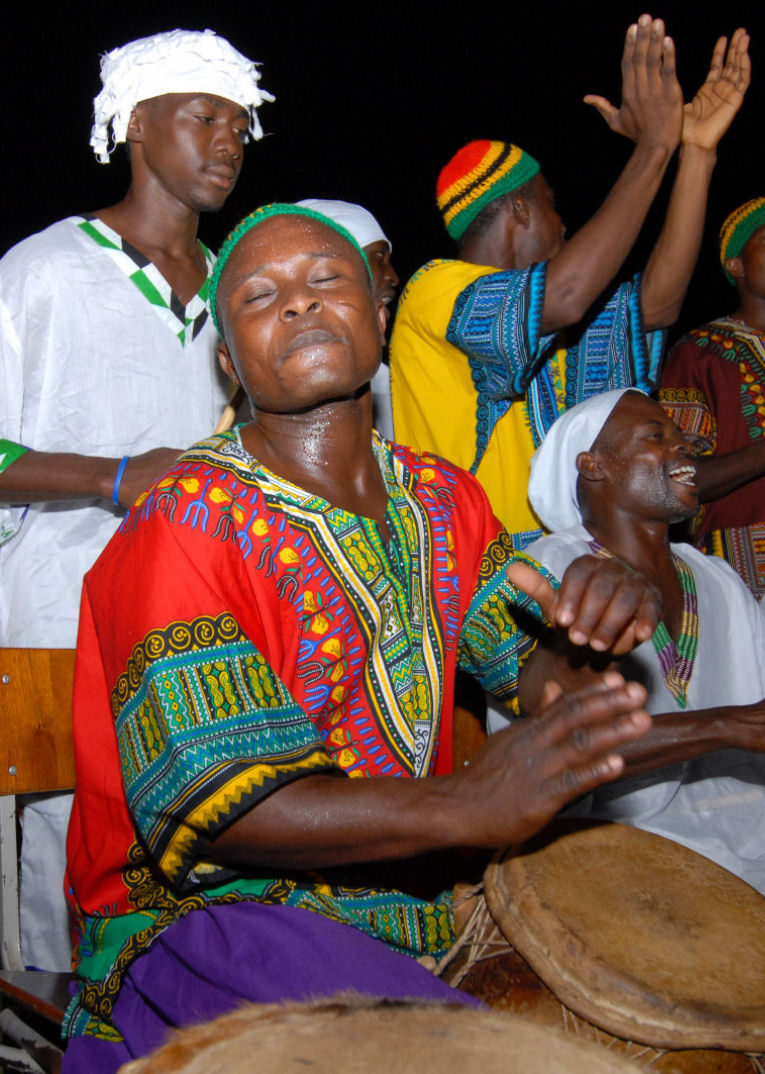 🇳🇬 Nigeria and 5 moreDashiki suit
The tailored tunic and trousers worn by grooms in West African and diaspora weddingsAttire · The ceremony
 🇮🇳 Firozabad, India and 1 moreBangle
A rigid circular bracelet worn by women in South Asia and beyond, often marking marital status or festive occasions.Adornment · The ceremony
 🇮🇳 Amritsar, India and 1 moreJutti
The embroidered leather slip-on shoe worn by Punjabi brides and grooms at weddingsAttire · The ceremony
 🇻🇳 Huế, VietnamÁo nhật bình
A rectangular-collared court robe worn by Nguyễn dynasty women for weddings and ceremonies.Attire · The ceremony
The small pictures above come from Wikimedia Commons under free licences. Some are cropped to fit.
Every week: one wedding tradition from somewhere new, the wedding days coming up around the world, and one idea explained.