Wedding traditions with gold and jewellery
Gold is the wedding metal.
Gold is the wedding metal. It does not tarnish, it can be melted and reworked, and it is a store of value for a bride who may own little else. In many cultures a bride's gold is her own security and her family's pride.
Gold as security
In India a bride's gold, from the mangalsutra to a full set of necklace, bangles and earrings, is part of her stridhan, a woman's property. In the Arab world and North Africa, gold in the mahr and the shabka, the gift from the groom's family, is a settlement in her name. In Turkey guests pin gold coins to the bride at the henna night or the wedding, and in Egypt the shabka is a set of jewellery. Berber and Bedouin brides wear silver as a portable asset.
Weight and worry
The price of gold is a concern for families, and in India and the Gulf the cost of a wedding can rise and fall with it. Some governments and communities have capped weights or asked for smaller gifts. Recycled gold and gold from certified mines are choices for those who are concerned about the environment.
Written by the EveryShaadi desk with AI assistance. Background on Gold and jewellery (symbol). Customs differ from place to place and family to family. If this is your tradition and we have it wrong, tell us.
 🇪🇬 Egypt and 3 moreWaist beads
Beads worn round the waist or hips, from coming-of-age rites to the Igbo bride's attireAdornment · The weeks before
 🇲🇽 Oaxaca, Mexico and 1 moreHuipilhuīpīlli
The traditional tunic worn by indigenous women in Mexico and Central America for weddings and daily life.Attire · The weeks before
 🇮🇳 IndiaOppanaഒപ്പന
A Mappila wedding dance where women circle the bride while singing teasing songs in Arabi Malayalam.Performance · The weeks before
 🇳🇬 Lagos, Nigeria and 2 moreAso ebiAsọ-Ẹbí
Matching outfits worn by groups to show unity at Yoruba celebrationsAttire · The weeks before
 🇲🇱 MaliWeddings in Mali
Multi-day Malian wedding customs blending Islamic, civil and traditional rites with bazin attire and henna.Feast custom · Engagement and betrothal
🇮🇳 Kuthampully, IndiaKasavuകസാവ്
The handwoven cotton and silk garments with gold borders worn in Kerala weddings.Attire · The weeks before
 🇮🇳 India and 1 moreMayian
A pre-wedding cleansing ritual in Punjabi culture where turmeric paste is applied to the couple.Blessing · The weeks before
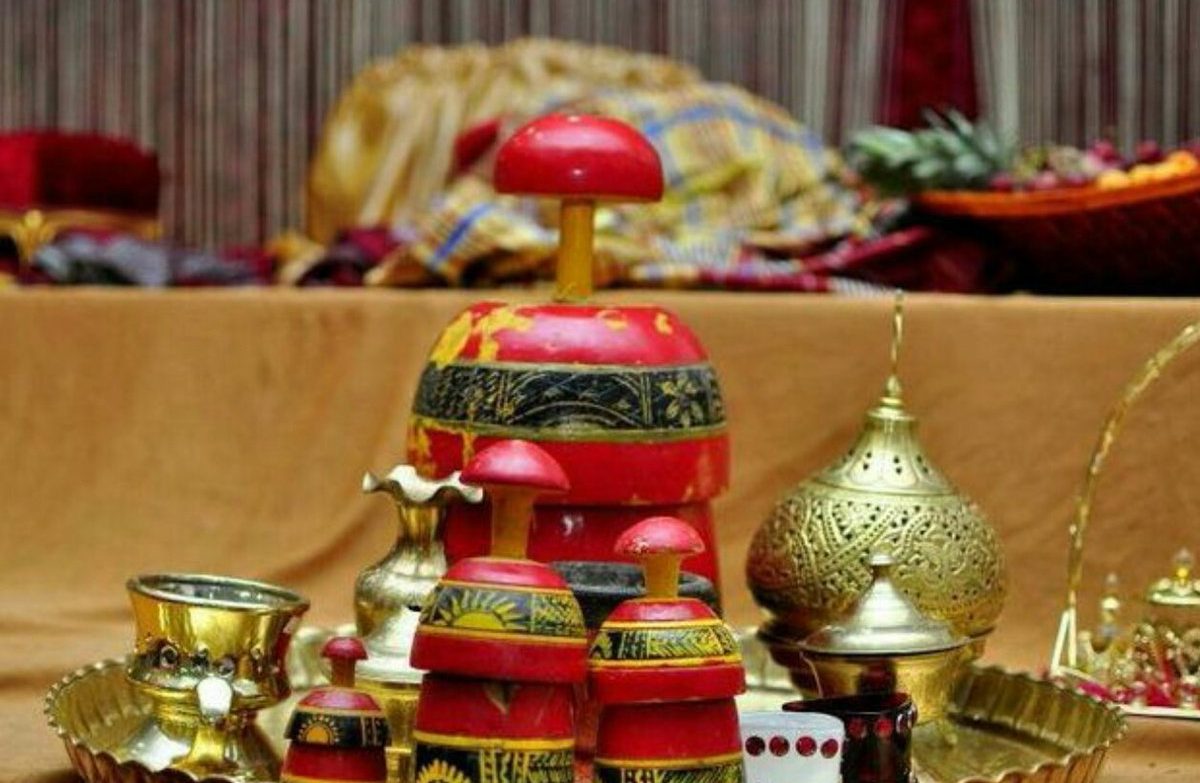 🇸🇩 SudanJirtigالجَرْتِقْ
A Sudanese rite where the groom is symbolically crowned as king before the wedding procession.Rite · The weeks before
 🇮🇳 IndiaIndian wedding clothes
Traditional garments worn by Indian couples and guests across multiple days of celebrationAttire · The weeks before
 🇲🇦 Tangier, MoroccoNegafanggafa (Tamazight); ziyyāna (Arabic)
The traditional Moroccan bridal dresser who manages the bride's appearance and wedding rituals.Attire · The weeks before
 🇻🇳 VietnamTraditional Vietnamese weddingLễ cưới truyền thống Việt Nam
The multi-stage ceremony of betrothal, engagement and union that marks a marriage in Vietnam.Attire · Finding a match
🇲🇦 Morocco and 1 moreBerberisca dressKiswa al-Kubra (Arabic: الكسوة الكبيرة)
A gold-embroidered velvet wedding gown worn by Moroccan Jews to honour their Sephardic heritage.Attire · The weeks before
 🇳🇬 NigeriaLefe
The presentation of gifts from the groom to the bride in Hausa weddings.Gift custom · The weeks before
 🇨🇳 China and 2 moreChinese pre-wedding customs三書六禮 (sàam syù luhk láih)
The six traditional rites from the Book of Rites that guide betrothal, gift exchange, and date selection in Chinese weddBetrothal · Finding a match
 🇨🇳 China and 3 moreDouble Happiness双喜 (shuāngxǐ)
The red calligraphy symbol made of two joy characters that marks Chinese wedding celebrations.Adornment · The weeks before
🇮🇳 IndiaTamilar marriage
A Tamil wedding tradition that combines ancient ethical codes with communal feasting and games to unite families.Feast custom · The weeks before
🇮🇳 India and 1 moreChuraचूड़ा (Hindi)
The red and white bangle set worn by brides in North India to mark her new status as a married woman.Attire · The weeks before
 🇺🇸 United States and 5 moreEngagement ring
A ring given to mark a promise to marry, usually worn on the left hand in Western cultures.Adornment · Engagement and betrothal
 🇳🇵 Bhaktapur, NepalIhiईही (Nepal Bhasa)
A pre-puberty rite where Newar girls in Nepal are symbolically married to a deity or fruit.Betrothal · The weeks before
 🇧🇩 Bangladesh and 1 moreBengali Muslim weddingবাঙালি মুসলিম বিয়ে
A multi-day marriage ceremony practiced by Bengali Muslims in Bangladesh and West Bengal, blending Islamic rites with loRite · Engagement and betrothal
🇮🇳 IndiaKettu KalyanamTālikettukalyānam
A mock marriage ritual in Kerala that marked a girl as ready for real unions by tying a sacred thread.Betrothal · The weeks before
 🇹🇴 Tonga and 2 moreTaʻovala
The woven pandanus mat worn around the waist for formal occasions and weddings in Tonga.Attire · The weeks before
🇧🇳 BruneiBrunei Malay wedding
The sequence of ceremonies that mark the engagement and marriage of Brunei Malays.Rite · Finding a match
 🇬🇧 United Kingdom and 5 moreWedding superstitions
Traditional beliefs about luck and omens that shape wedding rituals across culturesAttire · The weeks before
 🇮🇳 India and 1 moreIndian wedding invitationskankotri, laganapatrikā, Nimantraṇa patra/Patrikā (निमन्त्रण पत्र/पत्रिका)
Invitation cards that announce Indian marriages and carry religious symbols to bless the union.Attire · The weeks before
 🇮🇳 IndiaOdia Hindu weddingBahaghara (ଓଡ଼ିଆ ବାହାଘର)
The traditional Hindu marriage ceremony of the Odia people in India.Rite · Engagement and betrothal
 🇳🇵 Nepal and 2 moreKhata
A ceremonial scarf offered to show respect and welcome at weddings and other gatherings in Tibet and Nepal.Adornment · Reception, dance and gifts
 🇷🇴 Romania and 4 moreCălușariCălușarii
A traditional Romanian spring dance and male society known for acrobatic leaps and ritual healing.Performance · The weeks before
 🇮🇳 Madurai, IndiaGoluBommai kolu (Tamil), Bommala Koluvu (Telugu), Gombe Habba (Kannada)
A tiered display of dolls and figurines arranged in South Indian homes during the Navaratri festival.Feast custom · The weeks before
 🇵🇱 Poland and 5 moreTuroń
A horned effigy that visits homes during Carnival to wish for fertility and collect gifts.Blessing · The weeks before
 🇮🇳 Delhi, India and 2 moreKarva Chauthकरकचतुर्थी (Karakachaturthī)
A Hindu festival where married women fast from sunrise to moonrise for their husband's health and life.Betrothal · The weeks before
 🇰🇷 South KoreaHahoe byeolsingut talnori하회별신굿탈놀이
A rare Korean masked dance-drama performed to appease the village deity Seonangsin in Hahoe.Rite · The weeks before
 🇵🇭 Quezon City, PhilippinesBinukot
A Visayan custom of secluding young noblewomen to preserve their purity and elevate their marriage value.Betrothal · The weeks before
 🇨🇳 China and 4 moreCloud collar云肩 (yúnjiān)
A detachable shoulder collar worn by Han Chinese brides to frame the face and symbolize cosmic order.Attire · The weeks before
🇷🇴 Romania and 1 morePerinița
A Romanian circle dance where a pillow marks the last partner dance for unmarried youth before a wedding.Performance · The eve
🇺🇬 UgandaNaleyo
A courtship dance of the Karamojong people where men and women jump facing each other to find partners.Performance · Engagement and betrothal
 🇮🇳 Patiala, IndiaParanda
A silk thread hair ornament worn by Punjabi women during weddings and festivals.Adornment · The weeks before
🇨🇳 ChinaHebao荷包 (Hébāo)
A traditional Chinese embroidered pouch used for gifts, medicine, and romantic tokens.Adornment · Engagement and betrothal
 🇮🇳 Ahmedabad, India and 1 moreGarba
A circle dance from Gujarat performed around a sacred flame during the Navaratri festival.Performance · The weeks before
🇰🇷 South KoreaChaesang채상 (Chaesang)
Woven bamboo boxes used to store dowry items in traditional Korean weddingsGift custom · Engagement and betrothal
 🇩🇪 Germany and 5 moreLenten veilFastentuch
A large painted or embroidered canvas that covers the altar during Lent to create a period of visual penance.Rite · The weeks before
 🇮🇳 India and 2 moreNose jewelNath
A nose piercing ornament that signals marital status and social standing in South Asia and beyond.Adornment · The weeks before
Photo credits on this page
The small pictures above come from Wikimedia Commons under free licences. Some are cropped to fit.
- Turoń: Museum: The Seweryn Udziela Ethnographic Museum in Kraków, CC0, source
- Nose jewel: Etan Doronne @ www.myindiaexperience.com, CC BY-SA 3.0, source
- Double Happiness: kanegen, CC BY 2.0, source
- Aso ebi: SUPREME LACE, CC BY-SA 4.0, source
- Engagement ring: Photo by Derek Ramsey ( Ram-Man ), CC BY-SA 2.5, source
- Weddings in Mali: HawaG, CC BY-SA 4.0, source
- Ihi: Dirghaman Chitrakar, Public domain, source
- Binukot: Francisco Ignacio Alcina, Public domain, source
- Chinese pre-wedding customs: Pande Putu Hadi Wiguna, Public domain, source
- Mayian: Rakzika, CC BY-SA 4.0, source
- Bengali Muslim wedding: NahidSultan, CC BY-SA 4.0, source
- Indian wedding clothes: Lee Jordan, CC BY-SA 2.0, source
- Negafa: Amine.elbahij, CC BY-SA 4.0, source
- Traditional Vietnamese wedding: Gabrielle M. Vassal, Public domain, source
- Lefe: Useendk, CC BY-SA 4.0, source
- Waist beads: Amuzujoe, CC BY-SA 4.0, source
- Khata: Wiki-uk, CC BY 3.0, source
- Jirtig: Alzain Mohammed, CC BY-SA 4.0, source
- Karva Chauth: Iamwiki001, CC BY-SA 4.0, source
- Paranda: Biswarup Ganguly, CC BY 3.0, source
- Golu: Ksiva21, CC BY-SA 4.0, source
- Taʻovala: James Foster, CC BY-SA 2.5, source
- Garba: anurag agnihotri, CC BY 2.0, source
- Lenten veil: Plutowiki, CC0, source
- Hahoe byeolsingut talnori: Ian Sewell, CC BY-SA 2.5, source
- Oppana: Shagil Kannur, CC BY-SA 4.0, source
- Cloud collar: Unknown author, CC0, source
- Wedding superstitions: Anonymous Unknown author, Public domain, source
- Indian wedding invitations: Onef9day, CC BY 3.0, source
- Odia Hindu wedding: Aditya Mahar, CC BY-SA 3.0, source
- Huipil: Gift in memory of Elizabeth Ege Freudenheim, No restrictions, source
- Călușari: El bes, CC BY 3.0, source