Wedding traditions with gold and jewellery
Gold is the wedding metal.
Gold is the wedding metal. It does not tarnish, it can be melted and reworked, and it is a store of value for a bride who may own little else. In many cultures a bride's gold is her own security and her family's pride.
Gold as security
In India a bride's gold, from the mangalsutra to a full set of necklace, bangles and earrings, is part of her stridhan, a woman's property. In the Arab world and North Africa, gold in the mahr and the shabka, the gift from the groom's family, is a settlement in her name. In Turkey guests pin gold coins to the bride at the henna night or the wedding, and in Egypt the shabka is a set of jewellery. Berber and Bedouin brides wear silver as a portable asset.
Weight and worry
The price of gold is a concern for families, and in India and the Gulf the cost of a wedding can rise and fall with it. Some governments and communities have capped weights or asked for smaller gifts. Recycled gold and gold from certified mines are choices for those who are concerned about the environment.
Written by the EveryShaadi desk with AI assistance. Background on Gold and jewellery (symbol). Customs differ from place to place and family to family. If this is your tradition and we have it wrong, tell us.
 🇩🇪 Haslach, Germany and 5 moreBridal crownBrautkrone
A headdress worn by brides in Central and Northern Europe to mark purity and family status.Attire · The ceremony
 🇮🇳 India and 2 moreHindu weddingvivaha (विवाह)
The traditional marriage ceremony for Hindus, centered on sacred fire and seven vows.Rite · Engagement and betrothal
🇲🇦 Morocco and 1 moreBerberisca dressKiswa al-Kubra (Arabic: الكسوة الكبيرة)
A gold-embroidered velvet wedding gown worn by Moroccan Jews to honour their Sephardic heritage.Attire · The weeks before
🇮🇶 Baghdad, IraqWedding traditions in Iraq
A structured sequence of arranged matches, religious vows, and family feasts across Iraqi communities.Betrothal · Finding a match
 🇳🇬 NigeriaLefe
The presentation of gifts from the groom to the bride in Hausa weddings.Gift custom · The weeks before
 🇯🇵 Tokyo, JapanShinto weddingShinzen kekkon (神前結婚)
A Shinto purification ritual where couples exchange sake and offer prayers to the spirits.Rite · The ceremony
 🇬🇧 Edinburgh, United KingdomLuckenbooth brooch
A Scottish heart-shaped silver token of love and protection worn at weddings.Adornment · Engagement and betrothal
 🇨🇳 ChinaXiuhefu秀禾服
A modern two-piece Chinese bridal outfit inspired by Qing dynasty styles and popularized by a 2001 television drama.Attire · The ceremony
 🇹🇴 Tonga and 2 moreTaʻovala
The woven pandanus mat worn around the waist for formal occasions and weddings in Tonga.Attire · The weeks before
 🇬🇧 United Kingdom and 3 moreWedding dress
The formal attire worn by the bride during her wedding ceremony.Attire · The ceremony
 🇮🇳 Hyderabad, IndiaKhara dupattaکھڑا دوپٹہ
The elaborate traditional wedding ensemble worn by Hyderabadi Muslim brides.Attire · The ceremony
 🇬🇷 Greece and 4 moreWedding ring
A metal finger ring that signals its wearer is married.Adornment · Engagement and betrothal
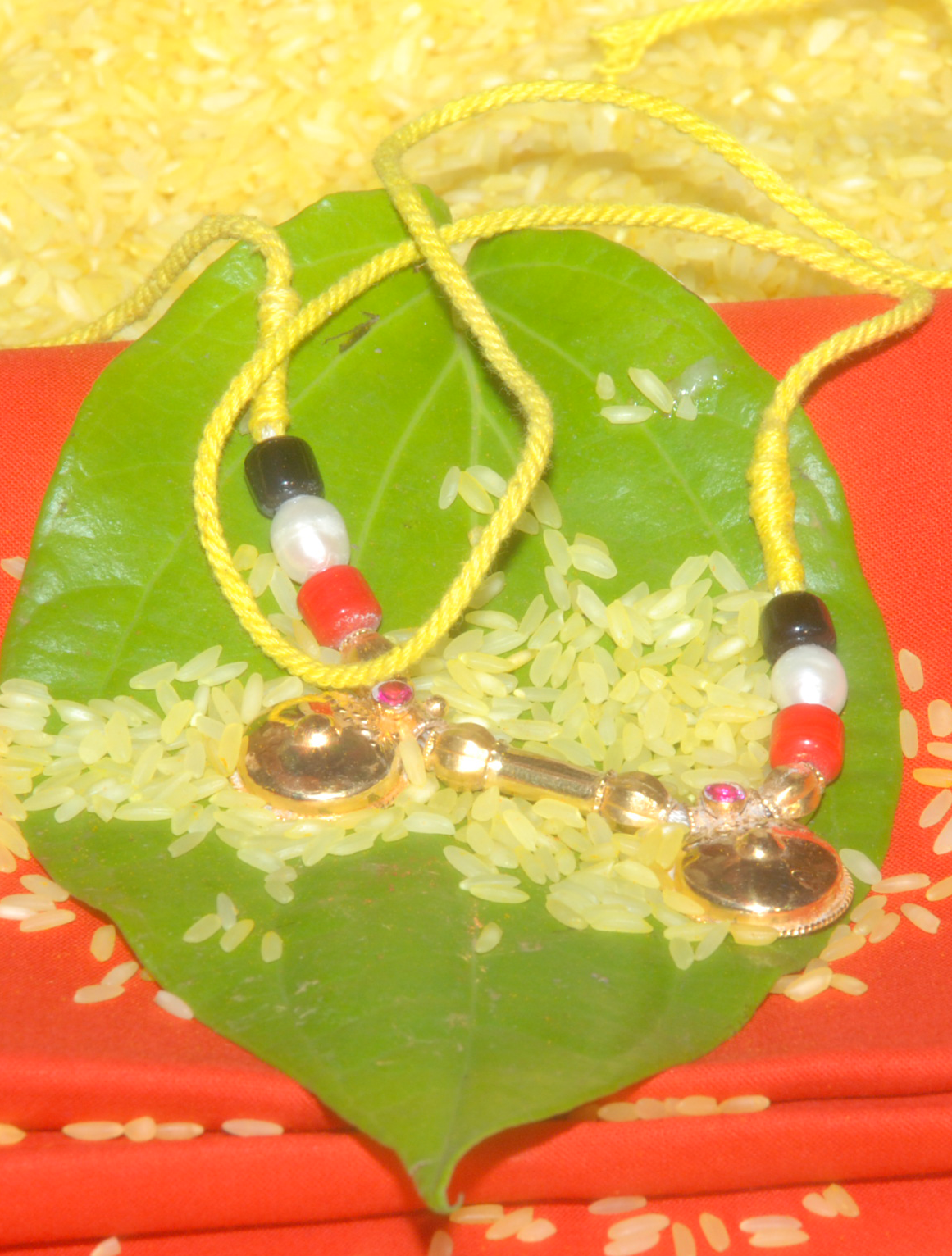 🇮🇳 India and 2 moreMangalsutraमङ्गलसूत्रम् (maṅgalasūtram)
The sacred necklace tied around the bride's neck to mark her marriage.Adornment · The ceremony
🇧🇳 BruneiBrunei Malay wedding
The sequence of ceremonies that mark the engagement and marriage of Brunei Malays.Rite · Finding a match
 🇬🇧 United Kingdom and 5 moreWedding superstitions
Traditional beliefs about luck and omens that shape wedding rituals across culturesAttire · The weeks before
 🇮🇳 India and 1 moreIndian wedding invitationskankotri, laganapatrikā, Nimantraṇa patra/Patrikā (निमन्त्रण पत्र/पत्रिका)
Invitation cards that announce Indian marriages and carry religious symbols to bless the union.Attire · The weeks before
 🇮🇳 IndiaOdia Hindu weddingBahaghara (ଓଡ଼ିଆ ବାହାଘର)
The traditional Hindu marriage ceremony of the Odia people in India.Rite · Engagement and betrothal
 🇨🇳 Guangdong, China and 2 moreQungua裙褂
A two-piece embroidered jacket and skirt worn by Cantonese brides for their wedding ceremony.Attire · The ceremony
 🇮🇳 India and 2 moreLehenga
An ankle-length skirt from the Indian subcontinent, often worn as part of a gagra choli for weddings.Attire · The ceremony
🇮🇳 IndiaLehenga-style sari
A pre-draped Indian wedding garment that combines the look of a lehenga with the drape of a sari.Attire · The ceremony
 🇳🇵 Nepal and 2 moreKhata
A ceremonial scarf offered to show respect and welcome at weddings and other gatherings in Tibet and Nepal.Adornment · Reception, dance and gifts
 🇮🇳 India and 5 moreWedding veil
A cloth covering the head or face worn by brides and grooms to mark marriage.Attire · The ceremony
 🇫🇷 France and 1 moreAcrostic ring
A jewelled band where gemstone initials spell a secret romantic word.Adornment · Engagement and betrothal
 🇮🇳 IndiaDejhoor
A hexagonal ear ornament worn by Kashmiri Pandit women to mark their marriage.Adornment · The eve
 🇷🇴 Romania and 4 moreCălușariCălușarii
A traditional Romanian spring dance and male society known for acrobatic leaps and ritual healing.Performance · The weeks before
 🇲🇦 Morocco and 5 moreMimounaמימונה (Hebrew), ميمونة (Arabic)
The Maghrebi Jewish feast held the day after Passover to welcome leavened bread and good fortune.Feast custom · After the wedding
 🇵🇱 Poland and 5 moreTuroń
A horned effigy that visits homes during Carnival to wish for fertility and collect gifts.Blessing · The weeks before
 🇮🇳 Madurai, IndiaGoluBommai kolu (Tamil), Bommala Koluvu (Telugu), Gombe Habba (Kannada)
A tiered display of dolls and figurines arranged in South Indian homes during the Navaratri festival.Feast custom · The weeks before
 🇩🇪 GermanyLandshut WeddingLandshuter Hochzeit
A four-year historical pageant in Bavaria re-enacting the 1475 royal marriage of George and Hedwig.Setting · Engagement and betrothal
 🇰🇿 Kazakhstan and 2 moreKimeshekкимешек (Kazakh/Karakalpak), элечек (Kyrgyz)
The traditional white headgear worn by married women with children in Central AsiaAttire · After the wedding
 🇮🇹 Venice, ItalyMarriage of the Sea ceremonySposalizio del Mare
The annual ritual where Venice symbolically marries the Adriatic Sea with a golden ring.Rite · The ceremony
 🇮🇳 Delhi, India and 2 moreKarva Chauthकरकचतुर्थी (Karakachaturthī)
A Hindu festival where married women fast from sunrise to moonrise for their husband's health and life.Betrothal · The weeks before
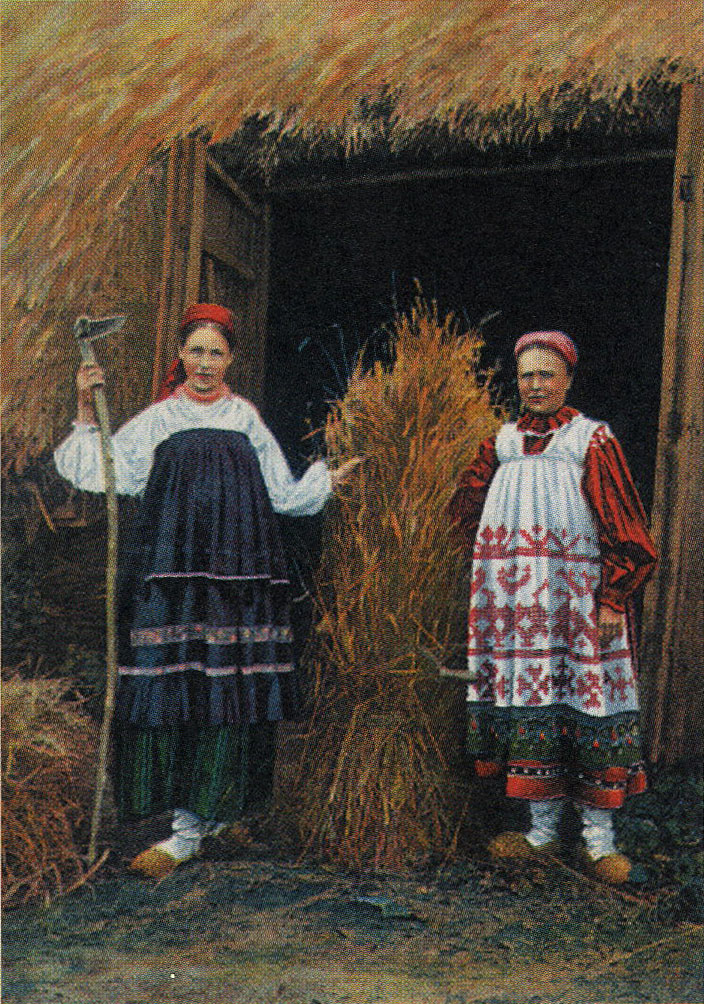 🇵🇱 Poland and 5 moreDożynki
A Slavic harvest festival where farmers bring the last sheaf of grain to the village in a ceremonial wreath.Feast custom · After the wedding
 🇮🇳 Ahmedabad, India and 1 moreGarba
A circle dance from Gujarat performed around a sacred flame during the Navaratri festival.Performance · The weeks before
🇰🇷 South KoreaChaesang채상 (Chaesang)
Woven bamboo boxes used to store dowry items in traditional Korean weddingsGift custom · Engagement and betrothal
 🇮🇹 Viterbo, ItalyMacchina di Santa Rosa
The annual procession in Viterbo where men carry a towering structure to honor their patron saint.Blessing · Procession and arrival
 🇩🇪 Germany and 5 moreLenten veilFastentuch
A large painted or embroidered canvas that covers the altar during Lent to create a period of visual penance.Rite · The weeks before
 🇨🇳 ChinaPhoenix crown凤冠 (Fèngguān)
A traditional Chinese bridal headdress adorned with pearls, gemstones and kingfisher feathers.Attire · The ceremony
 🇹🇳 Tunis, TunisiaTunisian jebbaجبة
A loose traditional tunic worn by Tunisian men and women for weddings and festivals.Attire · Procession and arrival
🇨🇳 ChinaHebao荷包 (Hébāo)
A traditional Chinese embroidered pouch used for gifts, medicine, and romantic tokens.Adornment · Engagement and betrothal
🇮🇩 Palembang, IndonesiaSeting clothes and Cual cloth
The red velvet top and intricate ikat skirt worn by Bangka Belitung brides and grooms.Attire · The ceremony
 🇦🇿 Azerbaijan and 1 moreKelaghayiKəlağayı
A traditional silk headscarf exchanged as a marriage proposal and worn at henna parties in Azerbaijan and Armenia.Attire · Engagement and betrothal
 🇮🇳 Patiala, IndiaParanda
A silk thread hair ornament worn by Punjabi women during weddings and festivals.Adornment · The weeks before
 🇵🇭 Quezon City, PhilippinesBinukot
A Visayan custom of secluding young noblewomen to preserve their purity and elevate their marriage value.Betrothal · The weeks before
 🇺🇬 UgandaEkitaguriro
A traditional Ankole dance celebrating cattle and community milestones like marriage.Performance · The wedding feast
 🇳🇱 NetherlandsPoffer
The elaborate white headdress worn by married women in the Netherlands to mark their status.Attire · Engagement and betrothal
 🇨🇳 China and 1 moreXiapei霞帔
The embroidered scarf or waistcoat that marks a woman's status in Chinese and Korean weddingsAttire · Engagement and betrothal
🇮🇹 Siena, ItalyMarch of the PalioMarcia del Palio
The brass anthem played during the historical parade before Siena's horse race.Performance · Procession and arrival
Photo credits on this page
The small pictures above come from Wikimedia Commons under free licences. Some are cropped to fit.
- Dożynki: Unknown author, Public domain, source
- Turoń: Museum: The Seweryn Udziela Ethnographic Museum in Kraków, CC0, source
- Landshut Wedding: Oktobersonne, CC BY-SA 4.0, source
- Acrostic ring: Jlblackmore, CC BY-SA 4.0, source
- Traditional Chinese wedding dress: Tunere, CC BY-SA 4.0, source
- Binukot: Francisco Ignacio Alcina, Public domain, source
- Kimeshek: https://www.flickr.com/photos/kjfnjy/, CC BY 2.0, source
- Ekitaguriro: Aubry Arihona, CC BY-SA 4.0, source
- Wedding veil: David Ring, CC0, source
- Bridal crown: Daderot, CC0, source
- Hindu wedding: Dinesh Cyanam, CC BY-SA 2.0, source
- Lefe: Useendk, CC BY-SA 4.0, source
- Shinto wedding: Jakub Hałun, CC BY-SA 4.0, source
- Phoenix crown: Unknown author, Public domain, source
- Tunisian jebba: Touzrimounir, CC BY-SA 4.0, source
- Luckenbooth brooch: Walker14806, CC BY-SA 4.0, source
- Khata: Wiki-uk, CC BY 3.0, source
- Marriage of the Sea ceremony: Francesco Guardi, Public domain, source
- Kelaghayi: Urmen19, CC BY-SA 4.0, source
- Karva Chauth: Iamwiki001, CC BY-SA 4.0, source
- Paranda: Biswarup Ganguly, CC BY 3.0, source
- Golu: Ksiva21, CC BY-SA 4.0, source
- Taʻovala: James Foster, CC BY-SA 2.5, source
- Xiapei: Unknown author, Public domain, source
- Wedding dress: Statens historiska museer, CC BY 2.5, source
- Garba: anurag agnihotri, CC BY 2.0, source
- Khara dupatta: Kinshuk Sunil, CC BY 2.0, source
- Wedding ring: CLW at English Wikipedia, Public domain, source
- Mangalsutra: Ackroydman, CC BY-SA 3.0, source
- Lenten veil: Plutowiki, CC0, source
- Mimouna: U.S. Embassy Tel Aviv, CC BY-SA 2.0, source
- Wedding superstitions: Anonymous Unknown author, Public domain, source
- Indian wedding invitations: Onef9day, CC BY 3.0, source
- Odia Hindu wedding: Aditya Mahar, CC BY-SA 3.0, source
- Qungua: Fduyjfroea Homz, CC BY-SA 4.0, source
- Macchina di Santa Rosa: Amras Carnesîr, CC BY-SA 3.0, source
- Călușari: El bes, CC BY 3.0, source
- Lehenga: Iwaqarhashmi, CC BY-SA 4.0, source
- Dejhoor: Unknown author, Public domain, source
- Poffer: Unknown author, Public domain, source